A Lamp, a Lifeboat, a Ladder
This piece is part of a storytelling collaboration between Yaqeen Institute and Muslim Youth Musings (MYM), written by an MYM author.
Authored by Zahra Wadia
Published: February 6, 2026 •Shaban 18, 1447
Updated: September 30, 2026 •Rabi al-Thani 19, 1448
Read time: 8 min

It was March when I became unemployed.
Alhamdulillah.
I had known for a while it was coming, and my departure was treated with more compassion than I could have hoped for or expected. Still, there is a difference between anticipation and outcome. Between knowing the forecast and hearing that first clap of thunder.
I remember the month for two reasons. First, March has always felt like the longest month of the year. The shine of a new year dulled, promises and resolutions long negotiated and conceded. In Ontario, snow once fresh and fluffy now banks street corners as muddy blocks of ice. Itʼs still too soon to look forward to tulips and cherry blossoms.
With a lighter than usual laptop bag and trembling hands clutching HR paperwork, I willed myself to pull it together when I left work. Itʼs not a big deal; people lose their jobs all the time. Perhaps this was a rite of passage into adulthood. I had a loving family, my health, a roof over my head. I could even take the time to travel, move cities, or visit family abroad. The fact that this now sounds like a punchline is the second reason I remember the month well.
It was March 2020. Early days of the pandemic. The emergency grocery runs for paper towels and hand sanitizer had only just begun. Events had started getting pushed out an optimistic (though naive) two weeks. The phrase “unprecedented times” still carried novelty and authority.
In the beginning, I did what any unemployed, high-achieving person who gets a boost of serotonin from crossing things off their to-do list would have done: I baked bread and updated my online professional profile. Building an online community from the comfort of home wasnʼt so bad. For the first time in my millennial life, I began to enjoy speaking on the phone rather than texting. I even started reading for pleasure again, a hobby lost to academic textbooks years ago.
In June 2020, four months after being laid off, and three months into a global shutdown, my mother was diagnosed with cancer.
Alhamdulillah.
There is so much baraka in the timing of Allahʼs plans. If her routine checkup had been a month earlier, we would have endured the waitlist for surgery in an overflowing, understaffed hospital. A month later and the doctorʼs hours would have reduced back to emergencies only due to COVID restrictions. Even the fact that I was at home and idle was a blessing (I have never heard my community put such a positive spin on being unmarried).
When faced with caregiving for a parent who is navigating cancer, time bifurcates and shifts gears. Thereʼs an urgency, a lodged breath you canʼt fully exhale, as you pray and plead and pray and plan and pray and pray some more. But time also slows. Thereʼs the waiting between the seemingly endless cycles of tests and results and treatments. With social distancing and capacity limitations, my mother attended these alone while I stared at concrete and trees from the hospital parking lot. Maybe itʼs a manifestation of our fitra that when faced with lifeʼs fragility, we loosen how tightly we hold other things. Dunya things. The next job. That dream vacation. The words of those people.
I had been raised on tawakkul and the pursuit of academic excellence. Have complete trust in Allahʼs plan, but that camel better be tied with a knot that rivals the most seasoned traveler. This framed how I viewed my rizq and my purpose. My capacity to be of service to others was optimized through my work. It was where I felt knowledgeable, my best self, and most useful. And if you chase enough gold stars, you can begin to believe that theyʼre lighting up the sky.
A Lamp
“So whatever you are given, that is only a provision of this worldʼs life, and what is with Allah is better and more lasting for those who believe and rely on their Lord” (Qur’an 42:36).
When the oncologist asked my mother if sheʼd like to speak to an emotional support counselor about her diagnosis, she laughed. Laughed. “I have my faith,” she said matter-of-factly, as if that explained everything. “I speak to God.”
The room she prays in is illuminated by a single desk lamp. The chunky black plastic kind with the adjustable neck. It was mine as a teenager, before I rebranded my childhood bedroom a home office and redecorated. I tell her Iʼll get her a more suitable fixture for her prayer space: an elegant floor lamp or a reading light. She laughs and says light is light; she only needs to see her finger on the page in front of her to know which ayah comes next.
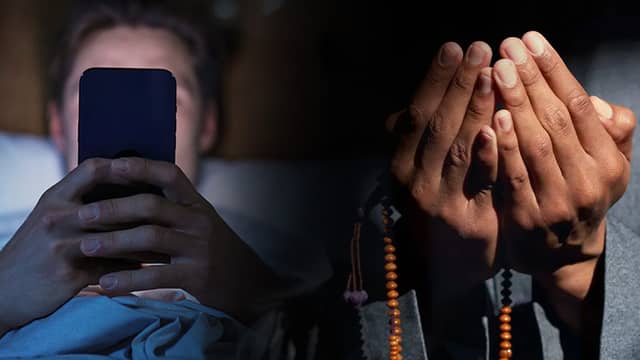
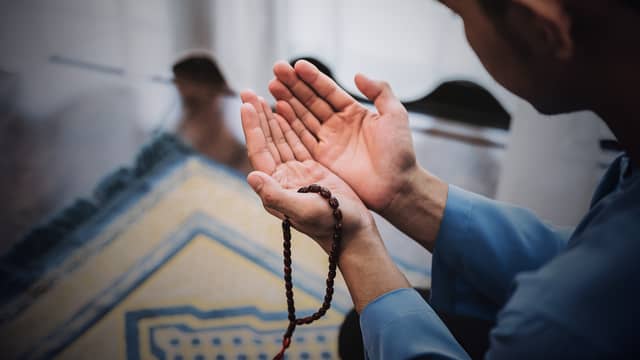
In the week leading up to her surgery, my motherʼs hands were either raised in prayer or busy with housework. She prepared for cancer the same way she prepared for guests. I used to tease her about the latter as she put me to task. Surely guests wouldnʼt check if there were crumbs behind the oven range, if the garage was swept and organized, or if the fridge was fully stocked with meals. It didnʼt matter; she wanted to make sure others were taken care of.
My hands now shook as I helped her prepare meals, scooping food into Tupperware containers, labeling them with masking tape and a Sharpie, and loading them into the freezer. Even though I could have cooked or ordered in, there were enough frozen dinners to last my Dad and me months.
It has always been this way. News arrives—good or bad—my mother gets to work.
A month later when the chemotherapy treatments are in full swing, I will boil ginger on a stovetop, organize pillboxes, and gently nudge her through her home. In these moments, my hands wonʼt feel like mine, but how I remember hers.
When those who love Allah so dearly are tested, it feels like youʼre closer to Him by being of service to them.

A Lifeboat
“He has given you everything you asked Him for. Had you wanted to count a single blessing of Allah, you would not have been able to do it” (Qur’an 14:34).
It started with a guava tree. An elderly couple moving closer to family during the lockdown gave us their plants, including the six-foot-tall one with mottled green bark, sporadic pointy leaves, and a promise to bear fruit. The fruit never bloomed, but a gardening hobby did.
I grew eight different types of herbs and vegetables in our garden. If giving starts at home, then what better place to begin than from oneʼs backyard. Neighbors sent my mother wellness gifts from their gardens. Baskets of apples, pears, and squash; bunches of coriander and mint; even a dozen lemons. I combined them with my harvest and sent back mason jars of apple, plum, and mint chutneys and pesto sauce.
I had grown so accustomed to LED screens and public transport commutes that I had missed how grounding nature could be—even from oneʼs home. One night, I sat on the deck after dinner. The moon was a perfect crescent; something I would never have thought to admire unless it was the night before Eid al-Fitr. It had been a summer of firefly sightings, and their glow danced throughout the garden. I later learned that we only see fireflies toward the end of their life; they spend years underground in their bioluminescence, surrounding us with their living light before they rise from it. That is nature—constantly sustaining, constantly giving.
A Ladder
The Prophet ﷺ said, “A kind word is a form of charity.”1
A parking spot is eight feet wide. Longer than the enforced six-feet social-distancing rule. I sat in the passenger seat of my car and my friend sat in the driver seat of hers. Even though we were outside and neither of us were sick, these were the rules we agreed on. No risks when it came to keeping her premature newborn and my immunocompromised parents safe. In the dark, empty parking lot, the light of the drive-through ice cream parlor cast a glow over us. We were both unmasked and I was thankful to see her face and for her to see mine. Neither of us knew what to say; the balm we tried to make from our words fell short every time it met the air. Eventually, we settled for taking turns letting the other cry, our grief filling the parking space between us instead.
I have a friend who often speaks to others in the form of making dua for them. You could tell them about an upcoming camping trip and theyʼll wish you a journey filled with the most perfectly toasted sʼmores and an unexpected meteor shower. My aunt silently absorbs every little fact or preference anyone tells her. I told her I liked cherry cola when I was thirteen. There will be a bottle waiting for me in her fridge when I visit, even after all these years. A former coworker who lives across the country and who I havenʼt seen for over a decade continues to send me birthday and new year well wishes.
These people, and so many others, showed up in the most unexpected and beautiful ways when my mother was sick. There were trays of food, flowers, words of support, and when I needed to laugh, messages with funny videos. It was through a community that my prayers for ease and a softened heart were answered. The more aware I became of the divine qualities of endless generosity (al-Karim) and abundant kindness (al-Raʾuf) in others, the more my desire grew to reflect them in myself.
“Be a lamp, or a lifeboat, or a ladder. Help someoneʼs soul heal. Walk out of your house like a shepherd.”
—Rumi2
I had believed that blessings from Allah would bring me closer to Him, but it was the opposite. The blessings that came my way expanded when I became closer to Him. I had also believed that the capacity to give and serve—to teach, to donate, to help others—grew with having more. But that year of unemployment and my motherʼs illness taught me that purpose and service can grow in hard places. Places where thereʼs urgency and a feeling of scarcity rather than abundance. These places are often where the most spiritual growth and meaningful action is possible. These are the places where I found Allahʼs mercy in abundance. His lamps, lifeboats, and ladders.
References
1. ^
Ṣaḥīḥ al-Bukhārī, no. 2989; Ṣaḥīḥ Muslim, no. 1009.
2. ^
Jalāl al-Dīn Rūmī, Like This: 43 Odes, trans. Coleman Barks (Maypop Books, 1990), 13.


Disclaimer: The views, opinions, findings, and conclusions expressed in these papers and articles are strictly those of the authors. Furthermore, Yaqeen does not endorse any of the personal views of the authors on any platform. Our team is diverse on all fronts, allowing for constant, enriching dialogue that helps us produce high-quality research.
Want to appear on Yaqeen?