The human quest to answer what it means to be human has, in the modern age, splintered into countless competing ideologies—liberalism, Marxism, individualism, atheism, and many others—each vying for our allegiance in the manner of idols. These "isms" are the offspring of a great rupture that occurred when the pre-modern world gave way to modernity. As George Makari explains, in the older Greco-Christian synthesis the soul was regarded as "the knot of the universe," the binding link between nature, humanity, and God. Yet by the mid-seventeenth century, thinkers began to propose that the mind was not spirit but embodied matter, and the grave implication of this "embodied mind" theory was the abandonment of the soul and the entire transcendent order. As Makari observes, once such a shift occurred, "convictions regarding truth and illusion, innocence and guilt, health and illness" all had to change. From this collapse of conviction emerged a climate of doubt, and thus was born the first fruit of modernity and the Enlightenment: secularism.
To grasp what secularism truly is helps explain a puzzling reality: our predecessors before modernity possessed less material knowledge and fewer resources than we do, yet they held greater conviction in their faith and built a profound civilization, whereas we, despite our abundance of knowledge and resources, suffer from diminished conviction and contribute less to our communities. Drawing on Charles Taylor, the Secular Age may be understood through three components. The first is that public spaces have been stripped of all reference to any ultimate or transcendent reality. In pre-modern Muslim civilizations, living meant being immersed in social, economic, political, and intellectual conditions oriented toward moral and spiritual life, externalized in art, architecture, dress, poetry, and literature. Taylor notes that whereas every pre-modern polity was grounded in some notion of God or ultimate reality, the modern Western state functions by norms "internal to the 'rationality' of each sphere"—maximum gain in the economy, the greatest benefit to the greatest number in politics—without reference to God. In such an age, humanity no longer seeks fulfillment beyond this world, and all drives are reduced to what the Qur'an calls the nafs and the hawa, the self and its whims.
The second component is a general decline in belief in God and in religious practice even among believers, a consequence of the first. This does not mean disbelievers did not exist among pre-modern Muslims, but that disbelief was not normalized; even in Western Europe, atheism was scarcely conceivable before the seventeenth century. In the Secular Age, belief and disbelief have become equally conceivable and equally acceptable, and the sheer multiplicity of options for what it means to be human has drawn even Muslims into doubt, so that certainty (yaqeen) in belief is no longer a given. The third component follows: new conditions of belief, in which doubt itself becomes the norm and is thereby rendered acceptable. From the Prophet's migration from Mecca to Medina until just after the First World War, Muslims lived where belief in God was never seriously challenged; now few such places remain. This proliferation of alternatives is what has been termed the Nova Effect. The condition may be likened to standing before a grocery aisle once holding two or three kinds of cereal, now crowded with dozens of choices—an overabundance that leaves one dazed or drives one away, conditioning us to reject simple submission to divine authority.
What does this mean for the Muslim? We live without constant societal reminders of God, under conditions where belief and unbelief are treated as equal rivals, and amid an ever-widening array of lifestyles each promising fulfillment. We still ask moral questions as our predecessors did, but the conditions surrounding those questions push us to doubt the answer before it is even given. The remedy is to ignore the multiplicity of options and instead seek certainty itself. The very first revelation of the Qur'an presents the human being as one who learns, which is the prerequisite for departing from doubt: "He taught man that which he did not know." The Prophet (peace and blessings be upon him) said, "Leave that which makes you doubt, for that which does not make you doubt." Doubt (shakk) stands two stages from certainty; leaving it, one enters belief (zann), which may or may not be justified, and as belief intensifies it becomes conviction (ghalabat al-zann), described by some scholars as between seventy-five and ninety-eight percent surety, until at ninety-nine percent one attains certainty (yaqeen).
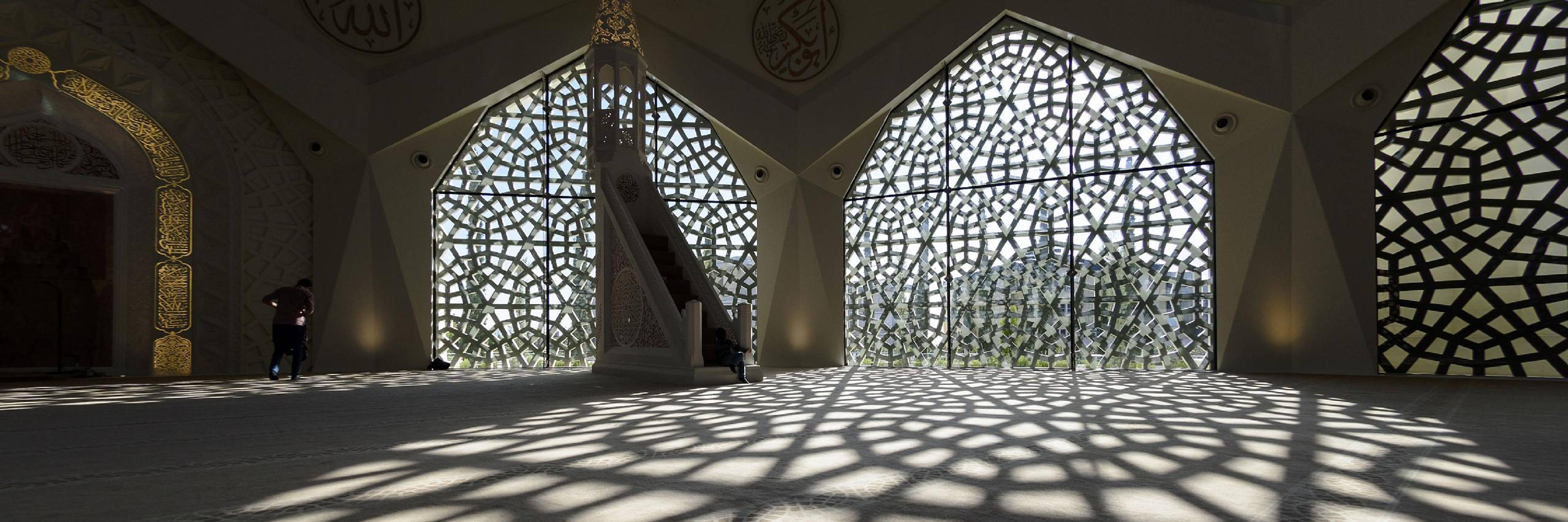
Certainty appears in the Qur'an in three forms. The first is 'ilm al-yaqeen, certainty grounded in knowledge and learning, which requires accurate conceptualization and sound judgment—the ability to define terms precisely and reason correctly, a central concern of Aristotelian logic. The Nova Effect has produced such doubt that many no longer genuinely "know." The second is 'ayn al-yaqeen, certainty born of witnessing, for the overwhelming majority of sensory input is visual; yet when the structures, media, and art we witness daily are emptied of sacred reference, we are reduced to certainty in material phenomena alone, and our skepticism grows so severe that we doubt even what we have seen. The third is haqq al-yaqeen, certainty arising from personal experience. Our experiences have shifted drastically: we seek artificial fright in horror films, whereas those who believe in possession and the Jinn have no such need. We have traded spiritual experience for rationalized routine, content to live fully in material terms while neglecting life's spiritual depths. The object of experience itself has changed, becoming the self in a radicalized individualism—an inversion of the Islamic eschatological order, wherein one imagines rewarding and punishing oneself, and self-sufficing humanism becomes the dominant option, making any goal beyond human flourishing difficult to conceive.
Certainty is mentioned twenty-seven times in the Qur'an. The Prophet (peace and blessings be upon him), and by extension his followers, are commanded to "worship your Lord until what is certain (al-yaqeen) comes to you." According to scholars of Qur'anic exegesis, "what is certain" here indicates two things. The first is death, the ultimate answer to what it means to be human, so that the believer is to remain steadfast in principle, practice, and conviction through the deaths of others until his own passing. The second is certainty itself, meaning that daily ritual worship ('ibada) serves to facilitate and reinforce certainty in all its forms: through learning how to worship and Whom we worship, certainty of knowledge is nurtured; through practicing and witnessing the conviction of ourselves and others, certainty of witnessing is inspired.
Al-Attas illuminates the underlying shift, explaining that the term secular derives from the Latin saeculum, carrying a dual connotation of time and place—"this age" and "this world"—and that secularization is "the deliverance of man first from religious and then from metaphysical control over his reason and his language," extending even to the cultural sphere as "the disappearance of religious determination of the symbols of cultural configuration." This cultural reach means that our values, identity, symbols, language, and even our understanding of gender are altered, and most gravely, consciousness itself, so that Muslims today conceive of being Muslim differently than their predecessors. As has been observed, once the Enlightenment rejected principles imposed by a higher being and the Scientific Revolution rendered the world "normatively mute," the conclusion appeared inescapable that "we alone must be their sources"—and because we thus rely upon ourselves, we doubt more and certainty recedes further. Certainty is achieved through knowledge gained by learning, not through sound bites and rhetoric; it is enhanced by proper religious practice, not by disengaged half-belonging; and it reaches its height through profound, reflective, transcendental experience, not through fleeting encounters on social media or fiction. These forms of certainty, and the pursuit of certainty itself, must endure until our certainty meets what is ultimately certain about our existence—its end.