Imam Tom Live
Falsehood is Bound to Vanish | Imam Tom Live

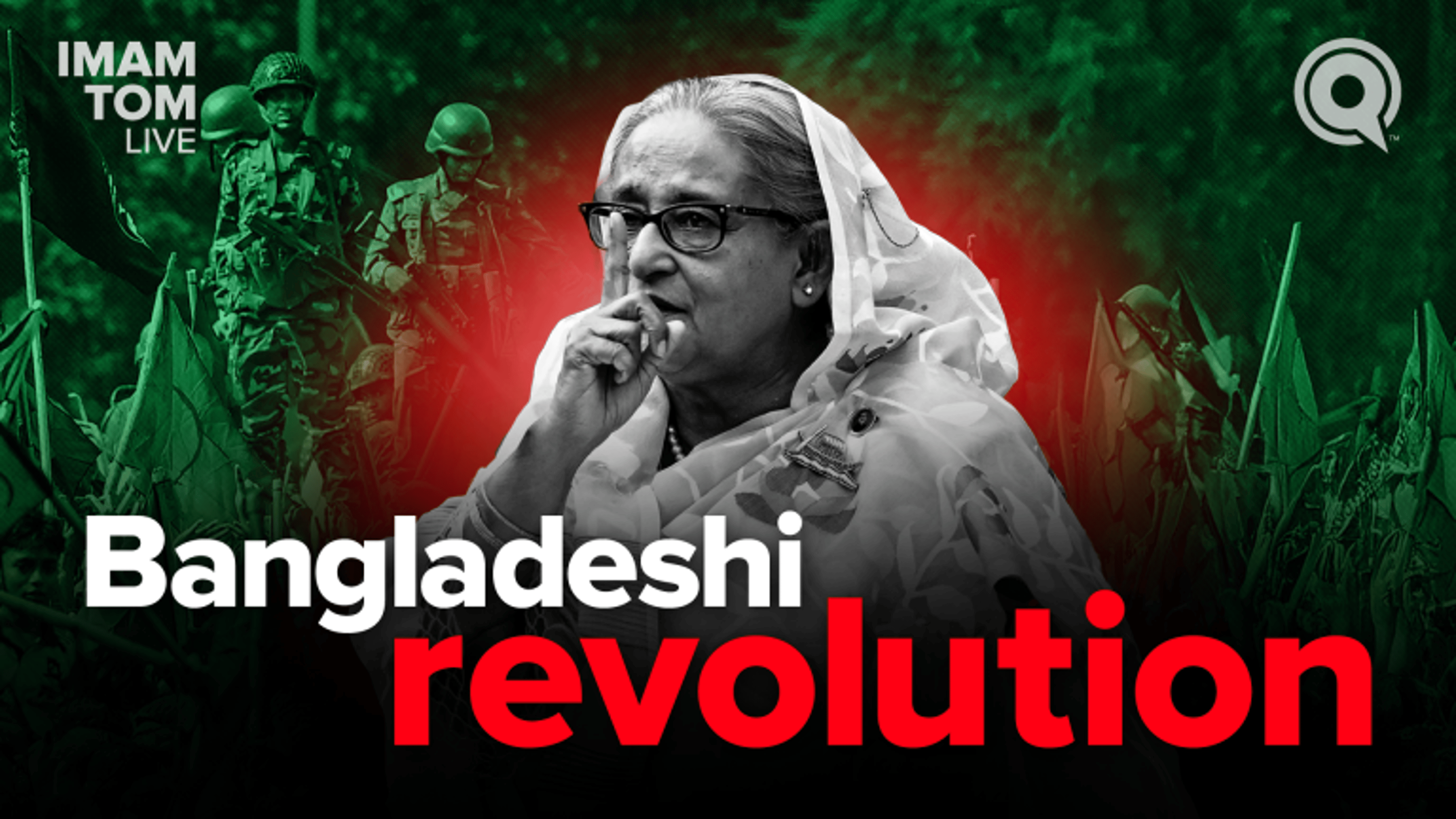
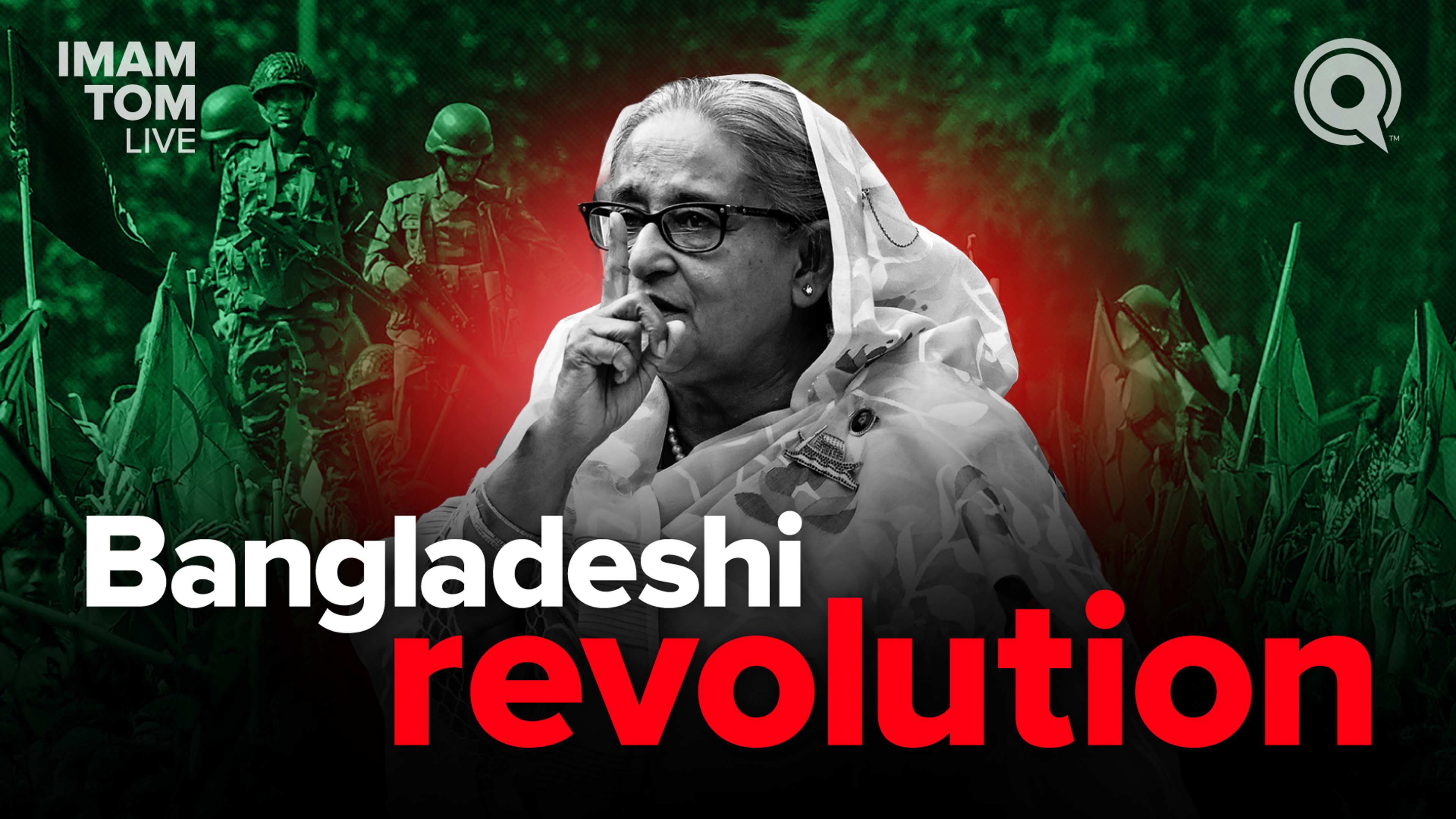
We explore the Bangladeshi revolution, examining its implications for the country's political landscape. We also look at how online misinformation, similar to the distorted narratives of the October 7 event, fueled tensions in the UK following a tragic stabbing attack. We analyze these events through the lens of faith and justice, offering insights and reflections on how to navigate the complex web of truth and falsehood in today's world.
This transcript was auto-generated using AI and may contain misspellings.
00:00As-salamu alaykum wa rahmatullah. Welcome everybody to our live stream program here at Yaqeen Institute. I'm your host Imam Tom. And boy do we have a show for you. We have revolution going on in Bangladesh. Congratulations to our brothers and sisters in Bangladesh.
00:14And we pray for your success. We're going to be unpacking it and talking about it. Super exciting. We have in the UK, there are horrible riots going on. Anti-Islamic riots, anti-Muslim riots, anti-immigrant riots. We're going to talk about that.
00:28We also have a revamped version of our M-segment where we're going to be transitioning to talk about tafsir. And we've got some cool questions and polls and some things that you probably don't know to talk about there.
00:41And finally we'll be getting into our self-development book, which is Atomic Habits, with some really interesting activities and reflections about environment.
00:49And the role that environment plays on your habits. But first, let's go to the chat. Let's see who we have viewing with us tonight.
00:56Drop us a line where you're from. And if there's anything on your mind, I know I've already taken a peek and I see that Bangladesh is in the house.
01:04Great to see everyone from Bangladesh and Bangladeshi diaspora in the comments. Rahima Armstrong from Cardiff, Wales.
01:18Assalamu alaikum. Welcome to the program. Asadullah Al-Ghalib from Bangladesh. Alhamdulillah. Thanks to Allah that saved you from the dictator. Alhamdulillah. Allah is capable.
01:30And you know your name Al-Ghalib, if I understand it correctly, if I'm correct here. La ghaliba illallah. That there is no one who can prevail except Allah, subhana wa ta'ala. And there's so many benefits to take from what's going on. Not that we're out of the woods yet.
01:44Everything is peachy and easy now. And it's a critical time, as everybody in Bangladesh knows. However, we have reason to celebrate our successes.
01:53Shahraz, wa alaikum assalam. Wa rahmatullah. Very good. Welcome to the program. Let's see. I have not yet learned how to read Bengali, so I can't pronounce that username.
02:05But yes, they killed a lot of people. We'll be talking about sort of the lead up to the events. I was able to have some communication back and forth this week with some people who are actually regular viewers of the show that kind of gave me some further background and detail about the political history of Bangladesh
02:18and the Hasina Sheikh regime and all the crimes that were committed. So we'll be talking about a little bit of that as well.
02:27Nazia Ali Shah, wa alaikum assalam. Welcome to the program. Yes, congratulations to the people of Bangladesh.
02:33Safina Kausar, wa alaikum assalam. Wa rahmatullah. I really appreciate the back and forth between Safina and some of the other folks in the chat that are pointing out.
02:43We're going to talk about this as well. So Safina cautions people, requests to Bengali brothers and sisters to not harm minorities and allow the Sunnah of the Prophet, alayhi salatu wasalam, to guide all the decisions we take.
02:55And some responses to that in the chat about how this is a trope. This is a narrative that is pushed, especially in India, especially by the Indian government,
03:04in order to justify intervention, violation of Bangladesh's sovereignty and establish its garrison state and its puppet regime. We will talk about that as well. Here we go. Yes. And so Shamim Haque, she intervenes and says,
03:18no one is harming minorities. On the contrary, Muslims are giving them protection. And that is very good to hear. And we're not surprised by it. Bidayah Pete brought up a great point.
03:30Most amazing part of this extraordinary revolution is that a fully equipped government with all its armed forces have severely failed against unarmed youths. Subhanallah, victory is for the brave. 100 percent. Great comment there.
03:42Mrs. S, wa alaikum assalam. Wa rahmatullah, tells us that you enjoyed the interview on Islam 21C. Alhamdulillah, I'm glad that you benefited and thought it was interesting and informative.
03:52May we all benefit and unite upon what is true. Dr. Salman and I had a great time together in Malaysia.
04:00And interviewing is something that, wherever we've done, I think we've had three interviews in three places. I was with him and now even more than that, we keep running across each other. And he's a lovely brother. May Allah preserve him.
04:14Rahman Balok, wa alaikum assalam. Wa rahmatullah. Looks like he got cut off there. Jannatul Mawwarah, so I appreciate your comment, Janna. Wa alaikum assalam. Wa rahmatullah from Bangladesh as well.
04:26About how you made to point out your other comment, Muslims are guarding the minorities. Don't worry. They want to spread rumors. We're going to talk about this. Don't listen to them. For example, some Muslims are guarding the Hindu temples just to protect them.
04:40Thank you very much for that comment. I appreciate that. Pestify from the Maldives. Wa alaikum assalam. Wa rahmatullah. Good to have you back. I am Sameeha. Wa alaikum assalam. Wa rahmatullah from Dallas, Texas. I will be in Dallas for a very, very short time on Saturday, insha'Allah, for the MSA National slash Qalam event.
04:54And whatever else I have time for. So if you're able to come through, come through. Aqadri from SoCal. Wa alaikum assalam. Good to have you back. MB from Hershey, Pennsylvania. Wa alaikum assalam. Wa rahmatullah. Don't eat too much chocolate.
05:07Yes, Rahma. So you're from Durham, North Carolina. Hope to get down there sometime soon. And yes, congratulations. I echo your wishes of congratulations to our brothers and sisters in Bangladesh. May Allah allow us to witness the liberation of Palestine, insha'Allah.
05:21And these two things are related. They are related. And we will talk about it. And that is why some of the interesting and powerful images come out of Bangladesh in the last week. You have many of the protesters, many of the young people having Palestine flags right next to Bangladesh
05:34flags right next to flags that have the Shahada on them. Very, very interesting and important things that are going on. Percept Wisdom. Wa alaikum assalam. Wa rahmatullah. Sariha Ahmed from Atlanta. MashaAllah. Atlanta in the house. Wa alaikum assalam. Wa rahmatullah.
05:48Momof2 from New Jersey. Wa alaikum assalam. Wa rahmatullah. Which part of New Jersey, Momof2? I'm a Jersey guy. Aqadri says, my younger brother's birthday today. 39. Allahu Akbar.
05:59May Allah give him many more healthy and happy years. Ameen. Ya Rabb. Shorbon. Woop woop. Indeed. Sara. Wa alaikum assalam. Wa rahmatullah. From Canada. Welcome to the program. Atia Amir from Pakistan. Wa alaikum assalam. Wa rahmatullah.
06:12KB from London. London Sharif. Wa alaikum assalam. I hope you're well, KB. I hope that things are going good for you. May Allah protect you and all our brothers and sisters in the UK. Shorbon also from New Jersey. Wa alaikum assalam. If you're tuning in from New Jersey, you have to tell me where.
06:26Tayyiba Chowdhury. Wa alaikum assalam. Wa rahmatullah. We have Sara from California. Welcome to the program. Naf Khan from Bangladesh. Wa alaikum assalam. Wa rahmatullah. And congratulations. Congratulations are for everybody because we're one ummah.
06:40Aminata Ngobdiop. Wa alaikum assalam. Wa rahmatullah. Happy to have you back with us again from Atlanta. Chris M. Wa alaikum assalam. Wa rahmatullah. From Minneapolis. Welcome to the program.
06:54Nusayb Qasim. Wa alaikum assalam. Wa rahmatullah. Yes. Hope all is well. Phew. What a saga. Saga's not over, Nusayba. Saga's not over. We ask Allah for khair.
07:06Sara asks. I always expect the hard, meaty questions to come from Sara at this point. Are there any valid critiques towards Khalak? Of course. Everybody there's valid critiques to everybody. Nobody is masoom.
07:18Also, nationalism, patriotism, a proper definition of them. Okay. That's interesting. Let's shelve that for a second. I'll try to come back to that. That's good. I like the way you're thinking though.
07:30So Abjeel says, Ya Allah, don't allow corruption to exist anymore. Anywhere anymore. Allahumma ameen. Beautiful du'a. Shafi'ul-Islam. Divine intervention was the sole reason. The cause, tremor in the hearts of those in power in the country.
07:43Alhamdulillah. Allahu Akbar. Well said. Allah has the ability and he tells us this in the Qur'an. He tells us this in other, in many of the surahs.
07:52That Allah is the one who can place fear in people's hearts or take it away. And you'll see when Allah describes some of the battles that the early Muslims had to face. He describes it in terms of removing fear from their hearts.
08:06Such as at Badr and elsewhere. And placing fear in the hearts of the disbelievers and the enemies of Islam. Yes. Let's see. What do we have? Yes, Tayyabah Chaudry. We do. We make du'a for Bangladesh.
08:20We ask for Allah's protection and aid and help and for their success. A. Ali. Wa alaikum assalam wa rahmatullah. Good. Excellent.
08:33Seamus. Welcome back. Wa alaikum assalam wa rahmatullah. Yeah. That's a point. That's a point. Seamus has a point there. There's a larger discussion for sure.
08:44And unfortunately, this is how sometimes things get polarized, right? You have people reacting to policies. And so sometimes these things run out of control.
08:58Anam Ali from Dallas. Wa alaikum assalam wa rahmatullah. Wa alaikum assalam wa rahmatullah. Zayshan Milana. From Richardson, Texas. Bengali from Richardson, Texas.
09:12I'll be in your area this week insha'Allah. Ameen wa alaikum. Alhamdulillah. Richardson was lovely. I had a very pleasant experience there. Alhamdulillah. May Allah bless you and may Allah accept from us. Yes. We'll talk about that, Jannatul Mawwarah.
09:27The rumors and how they function. Is that Ash 1KH. Wa alaikum assalam from Bangladesh. I love how many people are tuning in this week from Bangladesh. I'm so happy that you're with us.
09:41It's true Seamus brings up a good point. Bengalis should study Egyptian and Sudanian revolutions and not make the same mistakes. We have to learn and we have to learn fast. That's definitely true. A lot of these things are happening in real time. And we can't afford to not learn fast.
09:55Let's just put it that way. Ahmed Salim, official in the house. Welcome. Ahlan wa sahlan. Atlanta's finest. MashaAllah.
10:08Good to have you with us, Sheikh. I'm hoping to come down to Atlanta some point before too long. It's been too long already. May Allah bless you and your family. Imam Ahmed Salim, a well-known figure in Atlanta. And before that Canada.
10:22Mom of two from Union. That's a bit far away from my neck of the woods. When will this start? It's already started, Jannatul Mawah. We're going to get there, insha'Allah. Ismat Barakat. We have to collect all the folks around.
10:35Especially the people tuning in from Bangladesh. We've got Ismat Barakat from Dhaka. Wa alaikum assalam. Okay. Sharbene from Howell. Very good. Okay. Jannatul Mawah. Wow. Awesome. From Dhaka. Very good.
10:52Excellent. Excellent. Excellent. Dirsi from Los Gatos, California. Very good. Welcome. Wa alaikum assalam. Rasul Islam. Looks like the politics are here in the chat.
11:09Yeah. Well, you know. Listen. We'll get into a bit of it. We're not going to be able to give an exhaustive treatment of it. And people are going to disagree for sure. But there's a certain structure
11:20to the way that the Muslim-majority countries are being managed by India and the likes. And we need to shine light on that structure and challenge it. Wa alaikum assalam. Mowdu. Barrow from The Gambia. Welcome. Muhammad Omar. Wa alaikum assalam. Rasul Allah, Ariana.
11:34Wa alaikum assalam. Rasul Allah from Bangladesh. Welcome to the program. Ameen. Saladin is my hero. Ameen. Okay. Saladin gets right into it. What are your thoughts, analysis on Sinwar?
11:48I'm just going to say this. I'm just going to say this, Saladin. That Israel assassinating Haniyeh to get Sinwar just demonstrates the arrogance and the foolishness of Israel.
12:02And Allah SWT will take care of the rest. Carol Ann Duggan. Wa alaikum assalam from Ireland. I think I might know you. Wa alaikum assalam. Rasul Allah. That last name sounds familiar.
12:16Halima Nasser. Wa alaikum assalam. Rasul Allah. Shahroz asks about Islamic education. We might get to that but probably not. There's a lot of other things to talk about.
12:29Sarah Pinkadel. Wa alaikum assalam. Rasul Allah. It's good to see you again. I remember I think a few episodes ago you were with us. Obaidullah Haley. Wa alaikum assalam. Rasul Allah. Jahangir Ahmed. British Bangladeshi. Watching from the UK. Welcome to the program.
12:42Human. Wa alaikum assalam. Rasul Allah. I'm trying to run to the end of the comments so we can get into it because I know that everybody wants to talk about the nitty gritty. So I'll just say a quick wa alaikum assalam, Rasul Allah, to everybody and let's get into it.
12:56So the first issue we want to talk about. I will get to the rest of the comments. Don't worry. We'll go back to them. So revolution in Bangladesh. As we already see in the comments, things are very divided. But I think that we have to celebrate our successes
13:10and look at the positive, especially when we understand the structure of these post-colonial states that exist in the Muslim countries, the Muslim-majority countries all across the world,
13:19and how it has hindered our capacity for action on Palestine. And somebody in the comments was talking about, Hasina Sheikh did this for Palestine and that for Palestine. And I would say, what? Let's talk specifics.
13:33Are we talking about lip service? Are we talking about actual action? Are we talking about any sort of boycotts, any sort of diplomatic punishment? What were the actual policies? Let's get into the specifics if we want to get into specifics. The reality is that the majority of the countries,
13:47the nation states that are set up across the Muslim world are meant to control the Muslims and keep them down and keep them from uniting as an Ummah, especially to keep them from liberating Palestine. So anyway, in the past week, again, I was mentioning that some of the people who tune into this program regularly
14:01were in conversation with me via email and otherwise, educating me a bit about the history of Bangladeshi politics, about what the movement really sort of began as just talking about the quota system,
14:14but really it became a much larger movement with a much larger cause. That Hasina Sheikh was somebody who weaponized the framework of the war on terror after 9/11
14:26and even Islamophobia and Islamophobic tropes in order to do the bidding of India and Bangladesh. And I don't think that that's very controversial. I know people personally here in the United States
14:38who are Bangladeshi, who have relatives that have been arrested or killed by the Hasina Sheikh regime. Okay, so that's not fake news. That's not made up. This was a person who was a dictator.
14:51This is a person who was relentless against her opponents and used the war on terror framework and anti-Islamic tropes in order to basically cover up for what she was doing. That anybody that was opposed to her,
15:05and we can critique, this is not to paint in a 100% positive light anything that this group and that group, I know some people are going to say, oh, Jama'at-e-Islam or this group or whatever, they have their own excesses. Nobody's perfect. This is politics.
15:18But two wrongs don't make a right. The type of brutal crackdown and oppression that Bangladeshis have suffered under this regime is not justified by even any of the, let's say, excesses or possible excesses
15:31or alleged excesses of some of the other groups that were on the ground. Especially understanding that, I think it's very significant to notice that, and we can run the images, guys, like the other images that we have to show,
15:46where did Sheikh Hasina flee to when she was given 45 minutes to leave the country and resign? She left to India. That is very significant. It's not incidental. It's not accidental.
16:00Hasina Sheikh, for all intents and purposes, was India's person on the ground controlling, managing Bangladesh. That Bangladesh was a garrison state, like many of the other Muslim nation states
16:13or garrison states, not just once but twice over. A garrison state for India and the BJP, the Hindutva narrative and the secularizing narrative and the anti-Islamic narrative,
16:24and was also with the approval of the United States. Two birds, one stone. The former regime in Bangladesh was doing the bidding of both India and the United States.
16:36There were tons of issues of violations of sovereignty when it came to Bangladeshi sovereignty and Indian encroachment upon Bangladeshi sovereignty. So we see here something that is remarkable,
16:49a popular movement, a youth movement that rose up and put its foot down even though they didn't have, as some of our viewers pointed out, they didn't have guns, they didn't have weapons, they didn't have anything. All they had were numbers and courage
17:03and faith in Allah subhanahu wa ta'ala, and Allah 'azza wa jall gave them assistance. Now, these things are very, very sensitive. And the specter of violence against religious minorities in Bangladesh
17:16has been a trope, okay, that has been used to justify the policies of the previous regime and also to justify Indian meddling into Bangladesh itself, which is not to say that no instance is ever true.
17:30But as somebody who's very familiar with the history of politics in the United States, it is also true that agent provocateurs is the easiest thing in the world for a government to put somebody in plain clothes and go have them attack somebody
17:43to make it look like a certain thing is happening. And that's not to say that that's every single situation, but definitely we know that this is something that governments do. So the important thing is that we are in a super critical time in Bangladesh and we ask Allah subhanahu wa ta'ala
17:57to grant the people of Bangladesh success and safety and courage to not go down, as one of our viewers pointed out, the way of the mistaken way of some of the previous revolutions where things got out of hand or things became paranoid
18:11or where you end up becoming the oppressor trying to avenge the wrongs of what happened before. We hope that they are able to keep cool heads
18:21and build a truly representative Islamic society that delivers justice and the best outcomes for everybody. Now, Allah subhanahu wa ta'ala, he says something in the Qur'an, a very, very significant verse.
18:35Let's cut to it guys. He says in Surah Al-Isra, وَقُلْ جَاءَ الْحَقُّ وَزَهَقَ الْبَاطِلُ إِنَّ الْبَاطِلَ كَانَ زَهُوقًا An amazing ayah, which always I think should play in our minds when we think we look back just a few weeks ago,
18:49the regime of Sheikh Hasina seems maybe impossible to topple, just as at some point, the Zionists or the Zionist occupation of Palestine
18:59seems unstoppable or a certain sort of political force seems unstoppable. But Allah subhanahu wa ta'ala promised us something very significant, that truth will always prevail.
19:11Falsehood will always perish and truth will always prevail. Allah subhanahu wa ta'ala just wants to see who is going to support his cause, right? So the fact that falsehood is going to fall is already predetermined.
19:25What side are you going to be on? Are you going to be a person who's sort of a coward and tried to save your own neck, right? Or worse than that, collaborated with the oppressors and did whatever they asked you to do? Or are you going to be somebody who stood tall
19:38and was part of the group that Allah subhanahu wa ta'ala gave his aid and assistance to? That was an instrument of Allah subhanahu wa ta'ala in ending falsehood. This was actually one of the ayat.
19:51And it was interesting as we saw the video of the statues being torn down, right? These statues. And if we want to, you know, these are the idols of nationalism. We'll just put it plain. These are the idols of nationalism, right?
20:06We know that this type of statue making is already haram in Islam, right, religiously, let alone the sort of hero worship and cult-like hero worship that this is sort of, this is not anything to be proud of, any sort of statues like this, whether it's in Bangladesh or any other country, okay?
20:21So the idols of nationalism being smashed in Bangladesh, this was the same ayah that the Prophet, peace and blessings be upon him, recited when he cleaned out the Ka'bah from the idols of the Quraysh, when he took them and smashed them with his bare hands.
20:34And we ask Allah subhanahu wa ta'ala to allow us to cleanse all of the idols, both the explicit external and the implicit internal idols that all of us carry in our hearts and in our countries.
20:48Now, the fact that she fled to India, we have another verse here that came to mind. We can cut to that guys in Surah Al-Anfal, right? وَالَّذِينَ كَفَرُوا بَعْضُهُمْ أَوْلِيَاءُ بَعْضٍ إِلَّا تَفْعَلُوهُ تَكُن فِتْنَةٌ فِي الْأَرْضِ وَفَسَادٌ كَبِيرٌ I find this verse very, very instructive.
21:03Allah subhanahu wa ta'ala said, those who disbelieve, they are allies and supports of one another. If you do not act likewise, meaning if you don't unite people of truth, believers, ummah, if you don't unite like they are uniting,
21:17then there will be oppression in the world and great corruption. You see the Hindutva regime, Modi's regime in India, being able to unite with the Sheikh Hasina regime in Bangladesh and be able to coordinate
21:31and look at the type of fasad and fitna that they have caused for decades, okay? So if you don't unite, if we don't unite, all the brothers and sisters in Bangladesh, all of us here across the world, across the ummah, if we don't unite,
21:45what kind of harm and mayhem is going to result from that? So we see that this is extremely significant. The ability to be united as an ummah and to stand up for what is right. And finally, and we'll end on this point when it comes to Bangladesh, before getting to the comments, I know you're gonna have a million comments
22:00and some of you are gonna hate my guts and some of you are gonna say that I'm wrong and I don't know what I'm talking about, which is true. But when we talk about solidarity for Palestine, I challenge anybody to tell me what the Sheikh regime did for Palestine,
22:12concrete, because the genocide still happened, the quote unquote two-state solution, the quote unquote peace process, the actual literal de facto selling out of Palestine still took place under the watch of that regime. Okay, what were their sanctions imposed?
22:27Were there boycotts? Were there, like, what was going on? Especially if it was working in cahoots with the regime, the current regime in India. Let's talk specifics, right? These particular types of regimes, just like we have in Jordan,
22:41just like we have in Egypt, just like we have in, yes, in Saudi Arabia, just like we have in many, many other places, Morocco, just like we have in many, many other countries in the Muslim world,
22:52they have stopped the Muslim Ummah from helping Palestine. They have prevented us. They have tied our hands. They have threatened us with imprisonment. They have threatened us with torture. They have intercepted any sort of aid
23:06or any sort of attempt to alleviate the people of Palestine. This is what they were designed to do. Now, this is what a garrison state means. It means that it's a state that has been set up in order to keep the people under control, to keep them divided, to keep them fighting. And as long as that is our reality,
23:21then we will not have the capacity that we need as an Ummah to do anything for Palestine. May Allah Subhanahu wa Ta'ala aid us. Let's hit the comments. Let's see what people are saying. I know we're gonna stir the pot a bit here, but we don't stray away from that.
23:38Okay, we see Sharjah says, even today some goons have been attacking different parts of Dhaka at night in groups. The people and army have been on watch. It's 6:20 a.m. right now. Things have eased, but just now. So it's very, very difficult in these times. There's gonna be a lot of chaos.
23:52People are going to be acting with different types of motivations. There are false flag operations. There are PSYOPs. There are fake news. We're gonna talk about fake news in a second when we get to the UK and this whole sort of powder keg
24:04that exploded with the racist, anti-immigrant, anti-Muslim riots that are going on. It all started because of fake news. So we see that this is a very, very, very important and sensitive thing.
24:17So we see that in times of fitna, the Prophet, sallallahu alayhi wa sallam, told us what to do. In times of fitna, you try to stay put. Yes, we want to alleviate and end oppression. Yes, we want to build a better society, but you can't act hastily.
24:31You have to verify things. As Sheikh said, this is Ashik Khan. Okay, we have cast out fascism from Bangladesh, but at what cost? I often ask. I found out that Dr. Muhammad Yunus is running the Grameen America Foundation,
24:46which is a prime donor to Israel. Yeah, that's a really important point. I'm glad that you brought that up. The post-revolution period is extremely critical, right? There are always multiple factions, multiple motivations that are behind the ouster
25:00of any previous oppressive regime. Some of those actors are benevolent. They're sincere. Some of them are not. Some of them are trying to save their own skin. Some of them are trying to establish something new that looks new,
25:15but really is going to be a continuation of the old, okay? The critical moment that you're in here is trying to outmaneuver and outflank each other when it comes to this. So that's why the people of Bangladesh need our du'a now more than ever,
25:29to come out on the other side with having something genuinely different, something genuinely just, and something that is genuinely pleasing to Allah Subhanahu wa Ta'ala. All right. Wa alaikum assalam wa rahmatullah.
25:43Yossi Evelina from Indonesia. Welcome. Car 13A asked, assalam wa alaikum, wa alaikum assalam wa rahmatullah, do you think she still has a chance to repent at the door of Allah's?
25:56No, of course, everybody has a chance to repent. She's not on her deathbed yet, but there's a difference between someone repenting to Allah Subhanahu wa Ta'ala and someone receiving the consequences of what they've done.
26:08Those two things are not mutually exclusive. You can oust the oppressor and we hope the oppressor repents, but we're not gonna wait around for the oppressor to repent before we get rid of them.
26:26Okay, who else do we have? Munif. Arabic always comes out very, very small. So I can't really see it. Ashik is asking: fascism out and Zionism in.
26:40Is it? I wouldn't say so far, but hopefully not. But that's something for the people of Bangladesh to figure out now. They have to make sure that those sorts of forces don't come in and take control.
26:54Good point from No. There you go, Jannah to the Momineen, 100%. She can repent anytime before death. Yes, Sada. Welcome, alhamdulillah. Glad to have you back. Sada says, your thoughts on trying to have a discussion
27:08with the dissident right, or do you think that it'd be like shooting ourselves in the foot? I'm guessing you're talking about the UK. We'll talk about it, insha'Allah, in a bit. Shahnaz Ahmed, wa alaikum assalam wa rahmatullah, from Florida. Welcome.
27:23Mowdo wants to speak to me personally. Well, this is not a personal livestream. You can send any emails to [email protected]. Mustafa Hamid, wa alaikum assalam, from Bangladesh. Congratulations to you, sir.
27:37Nope, from the Midwest. Midwest is a little general. Nope, wa alaikum assalam wa rahmatullah, we're in the Midwest. You're talking about Wisconsin? You're talking about Chicago? You're talking about... Shameless is a good point.
27:51Ahmed, Malaysian in California. Wa alaikum assalam wa rahmatullah, salamat datang. Welcome. Hope you're well. KB, we are definitely making du'a for the UK. Things are very tense right now, and I've seen some horrific videos. Many riots are happening right now,
28:05and they are being targeted towards Muslims and ethnic minorities. In fact, one of the Shaykhs that many of us admire, is one of our colleagues, Fatima Barakatullah, posted some really scary stuff, harrowing stuff,
28:18about something that she experienced today, where people are threatening her life and things like that. So, very worrying times indeed, and we do pray for peace and all the people of the UK, especially our Muslim brothers and sisters are definitely in our prayers.
28:32Salam gives us salam, wa alaykum assalam. Shameless, yes, okay. Watching from Cardiff. Shere Bangla, the tiger, Allahu Akbar. Nice username there. Ahmed, yes, that's correct. Very good.
28:46Iqbal Hussain, from Bangladesh. I'm so happy to have so many people from Bangladesh watching this program today. May Allah elevate all of you. Here we go, Mohammed Abdullah says,
28:59every anti-national agreement made by fascist Hasina with the Modi government will be revoked. Hasina killed so many university students, but in the end, the students ousted her. Walillahil hamd. Fama bakati alaihimu al-samaa'u wa al-ard.
29:12As Allah says in the Qur'an. Right, we hope for their repentance. But when the oppressor is punished by Allah Subhanahu Wa Ta'ala, Allah Subhanahu Wa Ta'ala says in the Qur'an, the heavens and the earth did not weep for them,
29:26and the heavens and the earth didn't cry for them. The heavens and the earth didn't cry for them. So you shouldn't necessarily either. Amin, Sharjeel.
29:40Yes, 100%, Sada, lip service. Yeah, it's possible. It's possible, Seamus, yeah. Yes, Sada, that's great. I've got that in my watch later list. I haven't been able to see it yet,
29:55but Dilli from Five Pillars, shout out to Dilli and our brothers in the UK, did a really good video on it, on the Thinking Muslim. Yes, that's in my things to do.
30:11People making great points. Yep, Sada, she did try to get into the UK. The UK denied her and so did the US, and I find that rich, which shows you that crime doesn't pay, Sada. It shows you that crime doesn't pay.
30:23Trying to align yourself with US interests or UK interests or being a puppet, you're getting played, right? You might succeed for a little bit, but in the end, crime doesn't pay. They will abandon you. They will abandon you because they only use you
30:37for however long they think you're useful for. Obey the law, yep, hit it on the head. Very good, people making great comments. Seamus, you're also right.
30:52India told her to leave as well. So we have no idea where she's going to go. However, it is significant that she was let into India, and India was her idea of where to go.
31:10Good points by Nusaybah, awesome. Yep, there's this sort of, that's a great point, Nusaybah. I'm glad that you brought that up. Calling people wartime traitors, this type of thing, everything was sort of the manipulation of any type of rhetoric
31:25in order to punish your political opponents. That's what we saw from the Hasina regime. There we go, people dropping facts. Mashallah, Muhammad Abdullah, thank you for educating us.
31:44A lot of people turned the war on terror into a grift. That's one thing we gotta know. One thing why I tell Muslims in the United States that one of the most important things we can do is to change the foreign policy of the United States from within, because the war on terror became a grift
31:59for many, many dictators across the world. They realized that all they had to do was call their opponents terrorists, and then they could get blank checks from the United States and from the Western governments to do whatever they wanted, horrible oppression. All they had to do was call their opponents
32:13Islamic extremists or Islamic fundamentalists, and then they, here come the weapons, here comes the aid, here comes everything else. So this has been a really, really difficult time, but we see that the ummah, as Sami Hamdi always says, the ummah is roaring, right?
32:27The ummah is coming back. Every time they try to hit us and put us down, the ummah keeps on coming back. MB makes a good point. The problem will be if there's not the right people ready to lead, that is true.
32:42Removing a problematic person from power is an entirely different matter from putting someone that is a good leader and a competent leader in power. Those things are entirely different. Yep, and we have people like Nusaybah pointing out
32:56that Dr. Yunus is kind of a darling of the U.S., so people are a little queasy about that, and I think you have a right to be. We'll see what happens. Hopefully, it is not, yep, I am Samiha. Samiha also points out she's also feeling iffy
33:11about Dr. Yunus. Hopefully, there's room to negotiate here. Yep, Shere Bangla also makes the same point, and we've seen that.
33:25Let's learn from that from the U.S., okay? Let's take it back to the U.S. political developments that are happening, okay? Biden stepped down, and then Harris was going to pick Shapiro who's a very, very sort of out there Zionist
33:38for her running mate. Due to backlash, went to Walz. Walz is not good either. He's also something of a Zionist. However, he's less bad, and so we see that with power, you have to keep them on the run, right? And this is an important point.
33:53So don't think that the job is over, people of Bangladesh. It's just beginning, okay? You may have cleared the highest hurdle, but there are more hurdles that many times power is going to just present to you a little bit less bad of an option
34:08and a little bit less bad of an option, hoping that you'll say, okay, that's enough, okay? And so tie up your lungi, right? Tie up your lungi tight and get ready to work.
34:23Human asks, are public protests permissible in Islam? Many scholars say it's not. By default, public protests are permissible. There might be things that are particular to certain protests in which
34:37that would make them impermissible, just like anything else. But the default ruling for protests is that they're permissible because this is something that is not worship. It is something that you do not need a precedent for, right? It is simply an expression of popular sentiment.
34:51Nor is it accurate to say, as some scholars have done mistakenly, that protesting is khuruj or rebellion against the government, that is not true. And so the default ruling, again, it can be changed depending on the specifics,
35:05but the default ruling is that it is permissible and Allah Subhanahu wa Ta'ala knows best. Yes, a caller brings up a good point about Algeria. Sometimes it takes 100 plus years.
35:23Shamus, 100%, yep, I've been reading Al-Anfal and At-Tawbah a lot these days. Al-Anfal and At-Tawbah are very, very important these days. So many lessons.
35:37Yep, Ariana Akhtar, good point. You know things are not good, let alone not Islamic, when a leader's face and portrait and statue is plastered everywhere.
35:59Ah, good point, Naz. She doesn't care for her own people, so she ain't helping Palestine, good point. Shahasi, wa alaykum assalam wa rahmatullahi wa barakatuh, thank you. Yeah, Ashik, that's very possible, okay? A CIA asset or something that's a little bit less than that, that's definitely, we know that that happens. That happens all the time, okay? So that's why we're saying that. It's just beginning. Human makes a good point.
36:13Nationalism is such a divide into reuniting the Ummah. 100%, I agree 100%. Murad Ali asks about my thoughts on UK and far-right pro-Palestine folks. We will talk about that in just a second. That's up next. Janital Firdaus from Maryland.
36:28Wa alaykum assalam wa rahmatullahi wa barakatuh. Thank you so much for tuning in. Human asks, will Yaqeen create a live program for fiqh-related questions like Huda TV, or will it be a live program for fiqh? On previous programs, I've demonstrated, or I've spoken about how the quality of fatawa and religious advice is dependent upon tasawwur, proper tasawwur, so proper.
36:42I don't think it's an issue of convincing. Let's just say that. Very good stuff. Good stuff. Okay. We've got a lot of great comments. Mashallah. I'm trying to just pick out if there's any particular questions that we have before turning our attention to the UK. Blue Maroon, someone just mentioned it a little bit down in the comments about buying spy software. Iyaka Nastaghfiru, Iyaka Nesta'in asks, Imam Tom, how do American Muslims prepare for being used as scapegoats? Yeah, well, that's definitely a question that's relevant also to the UK thing. There's two prongs to this, and we're going to talk about it with the UK situation. Prong one is, Dawah, that you do have to take a responsibility to have relationships with the people around you so that the narratives that are spun by Zionists or hateful right-wing media don't have as much sticking power. If people know you personally, sometimes, not all the time, Wadi and Chicago proved that sometimes that's not enough. But we do have to tie our camel in that sense and make sure that we do have active positive relationships and contributions to our local communities. And the second prong is to build deterrent power, that nobody should be able to mess with you. You should be able to defend yourself both as an individual and as a community. Yes, Sada, good point. Check out what Raf'at and also Finkelstein have to say about such a person. Kristen Marie Myers, wa alaykum assalam, welcome. Don't leave you behind. I'll try not to. The comments are coming fast and furious. Please forgive me if I miss some comments.
36:57John Rahman asks from New York City, can you thoroughly explain what nationalism is, please? It's more of a political imaginary that believes in that your fundamental sort of allegiance is to this fictitious entity that is the nation. My family came from Italy to the United States in 1905. But Italy is a construct. Italy doesn't really exist. Venetians didn't think of themselves in the same thing as Sicilians, as the same thing. Even today, they don't really. Right. But prior to 1861, when Italy became a nation state, definitely not. Right. And then if you go back further than that, even among Venetians, there's different subgroups and subethnicities. And all of these things are very historically contingent. They don't have any Janital Firdaus from Maryland. Wa alaykum as-salaam wa rahmatullah. Thank you so much for tuning in. Human asks, will Yaqeen create a live program for FIC related questions like Huda TV, or will it be a live program for FIC? I'm not sure. I'm not sure. I'm not sure.
37:11 I'm not sure. I'm not sure. I'm not sure. I'm not sure. I'm not sure. I'm not sure. I'm not sure. I'm not sure. I'm not sure. I'm not sure. I'm not sure. I'm not sure. I'm not sure. I'm not sure. I'm not sure. I'm not sure. I'm not sure.
37:25 I'm not sure. I'm not sure. I'm not sure. I'm not sure. I'm not sure. I'm not sure. I'm not sure. I'm not sure. I'm not sure. I'm not sure. I'm not sure. I'm not sure. I'm not sure. I'm not sure. I'm not sure. I'm not sure. I'm not sure.
37:39 I'm not sure. I'm not sure. I'm not sure. I'm not sure. I'm not sure. I'm not sure. I'm not sure. I'm not sure. On previous programs, I've demonstrated, or I've spoken about how the quality of fatawa
37:54 and religious advice is dependent upon tasawwur, is proper tasawwur, so proper.
37:59 I'm not sure. I'm not sure. I'm not sure. I'm not sure. I'm not sure. I'm not sure. I'm not sure. I'm not sure. I'm not sure. I'm not sure. I'm not sure. I'm not sure. I'm not sure. I'm not sure. I'm not sure. I'm not sure. I'm not sure. I'm not sure. I'm not sure. I'm not sure. I'm not sure. I'm not sure. I'm not sure. I'm not sure. I'm not sure. I'm not sure. I'm not sure. I'm not sure. I'm not sure. I'm not sure. I'm not sure. I'm not sure. I'm not sure. I'm not sure. I'm not sure. I'm not sure. I'm not sure. I'm not sure. I'm not sure. I'm not sure. I'm not sure. I'm not sure. I'm not sure. I'm not sure.
38:29 I'm not sure. I'm not sure. I'm not sure. I'm not sure. I'm not sure. I'm not sure. I'm not sure. I'm not sure. I'm not sure. I'm not sure. I'm not sure. I'm not sure. I'm not sure. I'm not sure. I'm not sure. I'm not sure. I'm not sure. I'm not sure. I'm not sure. I'm not sure. I'm not sure. I'm not sure. I'm not sure. I'm not sure. I'm not sure. I'm not sure. I'm not sure. I'm not sure. I'm not sure. I'm not sure. I'm not sure. I'm not sure. I'm not sure. I'm not sure. I'm not sure. I'm not sure. I'm not sure. I'm not sure. I'm not sure. I'm not sure. I'm not sure. I'm not sure. I'm not sure. I'm not sure.
38:59 I'm not sure. I'm not sure. I'm not sure. I'm not sure. I'm not sure. I'm not sure. I'm not sure. I'm not sure. I'm not sure. I'm not sure. I'm not sure. I'm not sure. I'm not sure. I'm not sure. I'm not sure. I'm not sure. I'm not sure. I'm not sure. I'm not sure. I'm not sure. I'm not sure. I'm not sure. I'm not sure. I'm not sure. I'm not sure. I'm not sure. I'm not sure. I'm not sure. I'm not sure. I'm not sure. I'm not sure. I'm not sure. I'm not sure. I'm not sure. I'm not sure. I'm not sure. I'm not sure. I'm not sure. I'm not sure. I'm not sure. I'm not sure. I'm not sure. I'm not sure. I'm not sure.
39:29 I'm not sure. I'm not sure. I'm not sure. I'm not sure. I'm not sure. I'm not sure. I'm not sure. I'm not sure. I'm not sure. I'm not sure. I'm not sure. I'm not sure. I'm not sure. I'm not sure. I'm not sure. I'm not sure. I'm not sure. I'm not sure. I'm not sure. I'm not sure. I'm not sure. I'm not sure. I'm not sure. I'm not sure. I'm not sure. I'm not sure. I'm not sure. I'm not sure. I'm not sure. I'm not sure. I'm not sure. I'm not sure. I'm not sure. I'm not sure. I'm not sure. I'm not sure. I'm not sure. I'm not sure. I'm not sure. I'm not sure. I'm not sure. I'm not sure. I'm not sure. I'm not sure.
39:59 I don't think it's an issue of convincing. Let's just say that.
40:13 Very good stuff. Good stuff. Okay. We've got a lot of great comments. MashaAllah. I'm trying to just pick out if there's any particular questions that we have before turning our attention to the UK.
40:26 Blue Maroon, someone just mentioned it a little bit down in the comments about buying spy software.
40:41 Iyaka Nablu, Iyaka Nesta'ina asks, Imam Tom, how do American Muslims prepare for being used as scapegoats? Yeah, well, that's definitely a question that's relevant also to the UK thing.
40:52 There's two prongs to this, and we're going to talk about it with the UK situation. Prong one is, Dawah, that you do have to take a responsibility to have relationships with the people around you
41:02 so that the narratives that are spun by Zionists or hateful right-wing media don't have as much sticking power. If people know you personally, sometimes, not all the time,
41:14 Wadi and Chicago proved that sometimes that's not enough. But we do have to tie our camel in that sense and make sure that we do have active positive relationships and contributions
41:25 to our local communities. And the second prong is to build deterrent power, that nobody should be able to mess with you. You should be able to defend yourself both as an individual and as a
41:35 community. Yes, Sada, good point. Check out what Rafat and also Finkelstein have to say about
41:48 such a person. Kristen Marie Myers, wa'alaikum salam, welcome. Don't leave you behind. I'll try not to. The comments are coming fast and furious. Please forgive me if I miss some comments.
42:04 John Rahman asks from New York City, can you thoroughly explain what nationalism is, please? It's more of a political imaginary that believes in that your fundamental sort of allegiance
42:19 is to this fictitious entity that is the nation. My family came from Italy to the United States in 1905. But Italy is a construct. Italy doesn't really exist. Venetians didn't think of themselves
42:33 in the same thing as Sicilians, as the same thing. Even today, they don't really. Right. But prior to 1861, when Italy became a nation state, definitely not. Right. And then
42:44 if you go back further than that, even among Venetians, there's different subgroups and subethnicities. And all of these things are very historically contingent. They don't have any
42:54ultimate basis in reality. They have a contingent basis in reality that when people believe in them and act on them, then they start to have some sort of effect. But they're not any sort of
43:04replacement for your allegiance to Allah ﷻ and your allegiance to the Ummah. And in fact, the Prophet ﷺ warned us against nationalism, not by name because nationalism as a word did
43:15not exist then, but against tribalism and sort of calling to, you know, even fighting on the basis of tribe. You know, this is something that the Prophet ﷺ warned us against. He said,
43:25there's one of the four qualities that the Ummah will not leave off. That is from Jahiliyyah, that's from pre-Islamic times. So Chris M. asks the big question, has the sun risen from the West yet? No. There you go. That was the easiest question all night.
43:42What can Bangladesh learn from the Egyptian revolution so they don't end up with a Sisi? Salahuddin asks. Similar to what other folks said, you have to put someone in power who has legitimacy, credibility, and also knows how to lead. It's not compromised. And if that's, a lot
43:55of people are very suspicious about Dr. Yunus. So it sounds like, you know, this is the time where
44:01these things are made or they fall apart. Okay, what else do we have? So Seamus says, Sahaba and biggest scholars have protested, LOL, even Ibn Taymiyyah. Under a certain understanding,
44:15that's possible to say that. Lillet Institute, Wadi al-Salam, what's going on? You tell me
44:26what's going on. Yeah, Lillet Institute, Wadi al-Salam. 100%. Sharjah, I not only know what
44:32a lungi is, I often wear lungis. There. Scott Ritter's home was raided. I didn't know that,
44:42subhanallah. Abby asks, how can we express appreciation for the victory without being
44:53overly naive? That's through doing what pleases Allah. Juju, from Orange County. Here we go. Very good, Muhammad Abdullah, still educating us. We appreciate you.
45:11Trying to get to the end of the comments here. So that we can move on to the UK. I hate to feel it and let everyone feel neglected. Rekit Felix, from Lebanon.
45:30Yeah, that's a good point. Listen, everybody in their localities has different issues that we face. That's absolutely true. And oftentimes politics is very antagonistic. So sometimes we start supporting somebody or stop supporting somebody for very antagonistic reasons.
45:50Yeah, okay. A. Khadri brings up a good point about, you know, it comes to Harris and Walz and Shapiro. Yeah, Ashok brings up a great point. So let's transition here. Let's transition to the UK.
46:05All right. So let's go. We've got riots going on in the UK. All of our beloved brothers and sisters in the UK are under a very, very sensitive time and a very, very sensitive
46:17political situation. We've got some images and some footage we're going to play for you. That's basically based off of misinformation, yeah, we can run the footage. There was misinformation
46:28that there was an attack on some young people, some children that was carried out by a Muslim. And of course, it turned out to not be a Muslim. In fact, it was all fake news. But this started
46:40a perception that this was another sort of classic case of so-called immigrant violence or immigrant criminality. It sparked riots across the country. We've seen the WhatsApp
46:53messages and the Telegram messages of people saying that they're going to click up and group up here. There's been burnings. There's been attacks. There's been attacks on mosques. There's been
47:03attacks on Muslim graves. Okay. So this is a very, very sensitive situation. It's a very dangerous situation. We ask Allah subhanahu wa ta'ala to protect our brothers and sisters in
47:14the UK. Now, a lot of people, there's been a little bit of a debate about the far right and sort of how do Muslims relate to the far right, especially those people who are very online.
47:26You notice that some people on the far right are anti-Zionist or at least against Israel, some of them for good reasons, some of them for bad reasons or problematic reasons. How do we deal with those sorts of things? I really appreciated the intervention today of
47:41both Paul Williams' video on this, but also the intervention of Muhammad Jalal from The Thinking Muslim. Shout out to my friends and colleagues. When it comes to the constitution of the far
47:52right and the specific character of these riots that are going on in the UK, somebody or a few people in the chat here called them pogroms. I think that that is accurate, that these are not
48:06your average everyday sort of anti-immigration sort of rallies. This is very, very bold racism, very anti-Muslim sentiment. It's not even just about the sensitivities of the far right who are
48:21concerned with the Great Replacement or being replaced, which honestly, you can have a tiny bit of sympathy for those people in the sense that it is true that local culture is under assault
48:35everywhere. But what they get wrong is that it's not under attack or assault from Muslims or immigrants, it's actually under attack and assault from neoliberalism and neoconservatism. These
48:47forces that bring in McDonald's and bring in Dunkin' Donuts and bring in Starbucks and bring in these sorts of different global brands and replace the local stores and replace the local ways of doing things, that's the thing that's actually threatening you to replace your culture
49:00and stop. Or the neoliberal sort of economics that squeeze more and more money out of you so that you can't afford to sustain your marriage or to have children or to have large families
49:10or these sorts of things that enact all of the sort of social engineering that neoliberal regimes have engaged in in order to stop people from living comfortable lives and eroding the middle
49:23class and making sort of working class life impossible. That's really your enemy, not the immigrant, not the Muslim. And so I don't buy into the discourse that, oh, Muslims, they should
49:35just be necessarily more English or they brought it upon themselves by not being English enough or not integrating enough. I don't necessarily buy that. And two, that it doesn't
49:45account for the Zionists who are deliberately manipulating the situation and fanning the flames. Tommy Robinson being one of them. We're talking about here an Israeli asset and the other Israeli
49:58assets that are out there that are fanning the flames to this mischief, coordinating it. I thought it was funny that we saw that Tommy Robinson, I guess his accountant is Muslim,
50:07though she quit on him. So we see that even they, they play a double game. So I don't think that, yes, I think, let's see, like Ashok says, Tommy Robinson is running pogroms in the cloak of
50:19original British weaponizing emotions and nationalism. Yes, I think that's a very good summary of what's going on. So I don't necessarily think that this is a problem of the Muslims
50:30not engaging with the right. I think that the particular character of these riots and the people who have been fanning the flames, such as the Nigel Farages and the Tommy Robinsons,
50:40other people, they are not the pro-Palestinian right at all. And that was Mohammed Jalal's main point, that these are people that are very deeply anti-Muslim, very deeply anti-Islamic,
50:53very deeply racist, these sorts of things. And so my advice or my sense of what's going on when it comes to, and this was asked just a second ago, is that you need a two-pronged approach.
51:07Approach number one, and this is a long-term sort of a strategy, is to build relationships and do things, the sort of biryani diplomacy, which is a da'wah tactic. It's not a political tactic. Biryani diplomacy does not work in politics, but it does work in da'wah, to give people
51:22samosas and things like that. That can work in da'wah, but it's not enough. We have to realize that there are always people that are trying to dehumanize Muslims and fan the flames,
51:34and that these people are very dangerous. And at the end of the day, you need to have a certain deterrent capacity, the ability to defend yourself individually and as a community. That does not mean hooliganism. That does not mean vigilantism, but it does mean being able to
51:48withstand attack and deter attack. And we have an ayah from the Qur'an, if we can cut to that, guys. I believe Surah Al-Hajj.
52:01Yes. So we see Allah ﷻ says, nope, that's not it. That's the one for fake news. Okay. So Allah ﷻ says, إِن جَاءَكُمْ فَاسِقٌ بِنَبَأٍ فَتَبَيَّنُوا أَن تُصِيبُوا قَوْمًا بِجَهَالَةٍ
52:15So that you don't, sorry, let me go to English, that you should verify news when it comes to you, especially when it's brought to you by someone who's not trustworthy, because if you don't, because if you don't, right,
52:29أَن تُصِيبُوا قَوْمًا بِجَهَالَةٍ فَتُصْبِحُوا عَلَى مَا فَعَلْتُمْ نَادِمِينَ So that you would do something that you would eventually regret. This is not something that you want to do. But there's another ayah when it talks about deterrent power, 22:40, do we have that,
52:43guys? Adam Ashuri, wa alaykum as-salam, from Newport News, Virginia. Glad to have you with us.
52:54Noah asks, how do we shift the Ummah's mindset from waiting for Allah's victory to striving for it? And as Deen, I think these things like Bangladesh and Palestine are waking us up. So in Surah Al-Hajj, what do we have here? Yes, from وَلَوْلَا دَفْعُ اللَّهِ النَّاسَ بَعْضَهُمْ بِبَعْضٍ
53:08لَهُدِّمَتْ صَوَامِعُ وَبِيَعٌ وَصَلَوَاتٌ وَمَسَاجِدُ And to the end of the verse. So we have that Allah subhanahu wa ta'ala says, if it weren't for
53:18it weren't for Allah checking people, some by means of others, then what would happen? All houses of worship would be destroyed. Monasteries, churches, synagogues, and mosques,
53:30places where Allah's name is mentioned. So yes, a certain amount of deterrent capacity is praiseworthy in our Deen. And it is important. Allah subhanahu wa ta'ala also says, just coming
53:42off the top of my head, وَأَعِدُّوا لَهُمْ اسْتَطَعْتُمْ مِنْ قُوَّةٍ That you should prepare for them what you can of power. Why? Is it because we look for trouble? No, Muslims don't look for trouble, but we also don't want people to mess with us. And sometimes establishing something of a reputation stops people from
53:57messing with you. Let's hit the comments before we move on.
54:16People praising Shaykh Haifa Younus. I appreciate that. Give her flowers. She's amazing. May Allah bless her and preserve her. Gojo95, wa alaykum as-salam wa rahmatullahi wa barakaatuh. From Azad, Kashmir. Masha'Allah, tabarakallah. Welcome to the program.
54:32Middle East Ambassador, wa alaykum as-salam wa rahmatullahi wa barakaatuh. Can you tell Ustadh Nazir Khan to prepare more content about skepticism? Yeah, I'll get him on the phone. I can actually get him on the phone and prepare more content about skepticism.
54:42Increased Turkish translations. I wish. That's not something that I personally do, but yes, insha'Allah, it's definitely futariq, insha'Allah. It's definitely something we're working on.
54:57Very good. Great comments tonight, everybody. I appreciate the conversation. We're learning. We're benefiting from each other. This is grounding with our brothers and sisters. This is what we're here for. Nusaybah brings up a good point about nationalism and overpopulation and the arbitrary nature of
55:10borders. 100%. That's a great point. I love the end there. They'll always blame it on us having
55:17too many kids, as opposed to other factors, such as the arbitrary drawing of borders. We know that the British did this on purpose, and I would assume the French as well. The French who were
55:30perhaps even worse colonizers than the British. They drew borders around the countries in such a way as to create no clear majority or to play off different tribes, ethnicities, even religions against each other.
55:48Yeah, it is subhanallah. I've seen a lot of videos from the UK, and it is scary. Definitely, definitely, definitely, you are in our prayers.
56:12Yeah, Seamus brings up a good point too. He says, it's only in places where Muslims are one in a thousand, pulling families out of cars at checkpoints. Part of deterrent capacity is just
56:23numbers. Population is power. Having those many kids, Nusaybah, that's what we're ... Honestly, it's pretty smart. For thousands of years, that's how humans operated, where they knew that
56:37having many kids was an insurance policy and it was protection. Sarjeel, yes, I promise you, I'm well acquainted with the lungi.
56:53Some people are not believing me. Yep, Gojo, 100%. We pray for Pakistan and all the other Muslim nations as well.
57:07Human brings up a good point that the anti-Islam narrative is planted in society in order to, for reasons, right? It's definitely a strategic thing. We got lots of people talking about lungis now, that's great.
57:29Okay, Sara says, a lot of Muslim leaders in the UK were urging the youth to not follow
57:44along with violence, but only to defend. That's good to hear. Because it can get carried away, you don't want to do anything. And we've seen the videos a couple of times where a Muslim youth is, you know, with their face covered and like being like
57:59sort of a thug, right? Or being sort of like, you know, a little bit too aggressive, right? Unprincipled, out of control, then that's just fodder. That's going to just fuel the sort of, you know, the far right is going to say, look, look, we told you so, this is what they're out for, this is what they do.
58:23Noah asks, what is the Islamic ruling on illegal immigrants and refugees? That's funny. Well, I mean, I would, I would encourage people, we talked about this in
58:33Malaysia at the Umayyah conference, and many people, especially the Indonesians, but also the Malaysians were disappointed with how many people on the ground treated the Rohingya when they came to
58:45Malaysia and Indonesia. And definitely this is one of the consequences of nationalism, right? That nationalism stops us from having the attitude that the Prophet ﷺ encouraged the Ansar to
58:56have towards the Muhajirun, right? When he made mu'akhah bayna humah, when he actually made them as literal brothers. We're a far cry from that. When the attitude of refugee is, well, you can
59:09maybe come here for a couple of years, but then you got to find somewhere else to go. That that is not very Islamic. Now it's true that in a population crisis, there needs to be very,
59:19very well thought out policies for what to do, what to deal with a large influx of immigrants or refugees. However, right now it's exposing our nationalistic sort of constitution
59:32and programming. And to watch from Egypt via Massachusetts.
59:49Ashik asks, what do you think about the great war that is looming over our head between the
59:59West versus axis of resistance (us Muslims and the effort of Project 2025)? Well, we got to disentangle a lot of stuff there because the axis of resistance is not just us
01:00:11Muslims. I think it's a little more complicated than that. When people say the axis of resistance, they mean the different people that are challenging explicitly militarily the Zionist occupation right now. So that's one thing. The Muslim world is another thing.
01:00:27And the looming war or whatever, I mean, listen, sometimes you can only see one step ahead of you and you just have to worry about that one step and Allah will show you what is the step after that
01:00:37once you get there. Project 2025, I mean, I think that it's, yeah, it's real, but I mean, these things are done all the time. This one just happened to be leaked and hit the news. Everybody makes their plans. And in fact, Muslims should make their own plans, right? What's our
01:00:51Project 2025? What would we want if we could achieve anything, unlimited money, unlimited support, et cetera, right? This is just scenario building and thought planning, right? So that you can feasibility studies. So you can actually think through how to achieve objectives. There's
01:01:04nothing wrong with that. In fact, this is a reaffirmation of what we just saw in the ayah, the enemies, our enemies are already plotting. If we don't plot similarly, then we're going to be
01:01:18sitting ducks. Artforge also asked about possibility of World War III. It depends on who's on what side. I don't know. I'm not really sure. We've heard a lot about World War III for quite
01:01:29some time right now, and it still hasn't happened. So, you know, a lot of times things seem inevitable and they're not. Juju asks, what do you think about the mask ban in Nassau County, New York?
01:01:43Do you think it will deter the protest or have any impact? I'm not familiar with it, unfortunately. I did hear something about it, but I didn't read it deeply. So I'm going to
01:01:52withhold comment on that. Have I ever been to Bangladesh? No, not yet, though. I want to go, especially now, even more, even more so now.
01:02:07I mean, does Shane say it? Good. KB brings up a good point. I agree 100%. We need to learn more about history so we can understand
01:02:18the world better and our place in it. History will also help us see what is to come, 100%. I agree with that 100%.
01:02:37That's a good analogy, Seamus. So Seamus brings up a really good thought experiment. Imagine Muslims backing Hasina, equivalent like Assad in Syria or US invasion and calling themselves resistance a decade later. That's, I think that's illustrative. That's nice.
01:02:54Excellent. Whew, I made it to the end of the comments. I really appreciate it. Everybody, your participation is most valued and cherished. But we've got more to talk about today. We're
01:03:04going to revamp our 'ilm section. We're going to pivot now to tafsir time. So our 'ilm section now, we're going to pause our going through the hadith book, and we're going to focus on tafsir. So it's a new sort of style of doing our 'ilm section. Hopefully, it's going to be a little bit more
01:03:18interactive and a little more boots on the ground. So what we're going to do, here's how it's going to work. Every single week, we're going to focus in on a surah. We're going to go through the short
01:03:27surahs started today with Surah Al-Fatihah. And we're going to ask you two questions. Okay, it's always going to be the same two questions. So you can actually anticipate and do your homework ahead of time if you're sharp. So question number one is going to be, as many of you have heard,
01:03:42one of the linguistic miracles of the Qur'an is that every single surah has at least one word that is completely unique to it, meaning that it does not exist in any other surah in the Qur'an.
01:03:56Okay, so the first question is going to be, what is that word in the surah that we're covering today? And then the second is going to be simply, what does that word mean? So let's get to it.
01:04:05We've got, well, there's the answer. Subhan'Allah. Come on, guys, let's spill the beans. Okay, the first one is supposed to ask a question about Surah Al-Fatihah. What is the one word or what
01:04:20is one word in Surah Al-Fatihah that does not appear anywhere else in any other surah? And there's two possible answers. Let's see. Well, okay, so we gave you one. What's the other?
01:04:33Number one is al-maghdub. Guys, do not hit any buttons in the studio. Okay, what's the second one? There's another one in Surah Al-Fatihah that does not exist in any other surah of the Qur'an.
01:04:50What is that word? And we're going to talk about al-maghdub and what its meaning is and what its significance. Okay, Seamus is already on it with what it means.
01:05:01Yeah, Gojo, that's not a serious question, man. Like the Israel that's mentioned in the Qur'an is not the same as the Israel, the nation state of today. It's ridiculous.
01:05:12Bani Isra'il, the followers of Israel. Israel was the name of Jacob, was a title given to Jacob. Ya'qub, a prophet. If I named my cat Israel, does that make it the Israel that Allah talks
01:05:25about in the Qur'an? Come on, it's ridiculous. But that's about how deep Zionist logic goes.
01:05:37Okay, so we definitely have al-maghdub. We've established, yes, it means those who have earned Allah's anger or those whom Allah is angry at.
01:05:50Alhamdulillah, Pestify, thanks for your feedback. Okay, nobody else hit the other word. Oh, we got it. Mamaf too. Yes, al-dalin. Very good. Excellent. Al-dalin is the other word. Yeah,
01:06:01shout out Nusaybah. Let's highlight Nusaybah's comment. Shout out to the guys in the studio. The guys in the studio hold this down. We appreciate them. And they very, very seldom make mistakes, which is why I have to joke because it's very rare that I catch them doing something
01:06:15like that. So 100%. So we have, no, actually, al-dalin, wayal is elsewhere in the Qur'an.
01:06:24But al-maghdub and al-dalin are in no other surah of the Qur'an. Okay, now al-maghdub,
01:06:31what does it mean? It means, as you said, many of you said, those who Allah is angry at,
01:06:40or those who have earned Allah's anger, which is implied in the first because nobody gets Allah's anger except that they have earned it. Allah always is just in His anger. He's never arbitrary.
01:06:52Okay, so what's the significance of this word? Many of you are probably aware that the way that Surah Al-Fatihah ends is basically a cliffhanger setting us up for the following two surahs to
01:07:05come, Surah Al-Baqarah and Surah Al-'Imran. That Allah doesn't explicitly tell us who He is referring
01:07:14to when He says, ghayri al-maghdubi 'alayhim wa al-dalin. He said, we ask Allah subhanahu wa ta'ala to not make us of those who are maghdubi 'alayhim, to not make us of those who have earned Allah's
01:07:26anger, and to not make us of those who have gone astray, wa al-dalin. But who are those people? Right? Now there's a hadith of the Prophet ﷺ where he was asked, who are those people? And
01:07:38he gave the answer, the Jews and the Christians. However, this answer is illustrative and not exhaustive. What that means is that the Prophet ﷺ was giving an example. It means he wasn't
01:07:51giving a comprehensive list. Okay? And so an example of maghdubi 'alayhim was that he gave were the Jews and an example of wa al-dalin are the Christians. But why? We have to get into why,
01:08:06because the Qur'an is not sent necessarily to Jews and Christians. Well, it is in a sense, you know, but it's addressed to everybody. So when Allah subhanahu wa ta'ala said that what makes somebody
01:08:20al-maghdub, the scholars of tafsir have explained that it is somebody who knows the truth, but chooses to not follow it. And that this is sort of gone into in detail in the next surah,
01:08:34Surah Al-Baqarah, where Allah explains what Bani Isra'il did to earn Allah's anger. What did the Jews, the historical Jews, do to earn Allah's anger? They had the truth with them, but they
01:08:46chose to follow other than the truth. Okay? Now, what about wa al-dalin? Who are they? The example that the Prophet ﷺ gave were the Christians. Why? What makes someone fall into that category?
01:08:58If you basically lose the truth to the point where you don't even know what's true and what's false anymore. And if you go into your average Sunday church service where you see the rock band on
01:09:08stage, you know, doing their thing, then you will see clearly how with the statues and the pictures of Jesus, supposedly white, supposedly crucified, all these sorts of things that
01:09:19nobody has, well, we'll just say that they're not true. That this is clearly wa al-dalin, the people who are astray. And Allah subhanahu wa ta'ala correspondingly goes into more detail about
01:09:30that in Surah Al-'Imran. So, the takeaway for us is that we also, we should not relate to this verse
01:09:40in an identitarian way, meaning that we do not say, oh, well, the maghdubi 'alayhim are just the Jews and the al-dalin are just the Christians. And so we're saved. We're cool. No, you can do
01:09:53something. You can commit acts that put you in either of those categories. If you know the Qur'an, you understand the truth of Islam, and you choose to follow something else, then you have put
01:10:05yourself in the category of al-maghdub 'alayhim. If you don't educate yourself about Islam so that you don't even know anything, and we're not talking about converts here. We're talking about people that had every reason. They're born into a Muslim household. They had everything at their disposal,
01:10:20and yet they don't even know how to pray. They don't even know how to make wudu properly. They don't even know if their livelihood is permissible or not, or pleasing to Allah or not. Then you have
01:10:30put yourself in the category of wa al-dalin. And so we ask Allah subhanahu wa ta'ala in Surah Al-Fatihah every single day, at least 17 times, to not make us of either of those categories. Okay, we're going to hit our personal development segment. But first, let's go to the chat. I know
01:10:45I saw Abdullah has a funny comment. Abdullah is behind the scenes. Yes, and we're touching buttons. I know. The buttons, especially the shiny red ones, man,
01:10:56they're the hardest ones to resist. Abdullah says, you have to forgive me. I drink decaf. That's the reason. We just found out the reason, Abdullah. Abdullah drinks decaf. That's the root of all
01:11:08our problems. Speaking of it, day two of asking you to do a decaf review assignment. I mean, I could drink decaf right now and go to sleep in a minute and be no problem.
01:11:21Atika Rahman, wa'alaikum assalam, buona notte, buona sera, welcome to the program. Or for you, buongiorno. Welcome back to the program. Human, breaking it down. Very good. Excellent.
01:11:36Abud, muhaisan, wa'alaikum assalam, rafatullah. Sarjeel asks a question. I don't know the answer to that one. I've heard in the Day of Judgment
01:11:49the original form of the Injil and Tawrat will come upon us and be shown. Is that true? I don't know. Never heard of that before. I'm not saying it's not true. I just don't know.
01:12:00Shane Sayed asks, are these the end of times? Eh, Allah knows best, man. It's possible. It could be, but it could not be. If you look into the history, many, many people, you read stuff from a thousand
01:12:10years ago. The people who lived at the time of the Mongols, they swore that this is the end times
01:12:17that were upon Judgment Day. So it's hard to tell. Which is why we're not supposed to know in the first place. It's less important to determine whether these are the end times or not, as opposed
01:12:30to trying to do what Allah subhanahu wa ta'ala is happy with. What does Allah want us to do? How does Allah want us to respond to the challenges that we live in? Human brings up a good point.
01:12:45Christianity is very tied to Roman paganism and to white supremacy, 100%. That's very true.
01:12:57And Seamus reminds us that all of the ayat, let's just say all of the ayat, apply to Muslims. They apply to Muslims. These things are not just revealed for other people, they're also for us.
01:13:11Wa alaikum assalam wa rahmatullahi wa barakatuh. Sharon from Puerto Rico. Bienvenido. Hopefully you're well. All right, let's move on and wrap this up. We've got our personal development section. We're going
01:13:24to talk about the next chapter in Atomic Habits. As you know, I'm at war with book covers. My dust jacket has landed in the bin a long time ago. Now this chapter is really super interesting.
01:13:38Very, very, very super interesting. Yes, 100%. The Prophet ﷺ told us to focus on what we can prepare. Brilliant. Love your intervention there. So the chapter in Atomic Habits, we're talking
01:13:51about environment versus motivation. We have habits. We try to make habits. We fail in our habits. Hey, let's get back to it. For those of you who were with us last time, we said that you
01:14:04were going to attempt to start a new habit. Either you were going to say, at this time, I'm going to do this action, or you were going to stack your habits by saying,
01:14:16after I do this, a habit that I'm already doing, I will do that. How did it go? Gracias, MB. I try.
01:14:29I try.
01:14:40It's not very good. No es tan bueno. That's okay. We try. All we can do is try. So what were your habits? My habit I was trying to do,
01:14:50my habit that I was trying to do, was to work on my language study,
01:14:55that I would do it after Dhuhr. The anatomy of my habit that I had set is that, in the car,
01:15:06before I go back from the masjid to home, I'm going to sit in the car and do my language study, like my language app, my words or whatever. I totally failed. Totally failed. So everybody
01:15:21can feel better. I totally bombed it. I bombed it for two reasons. One, because my car broke down. I actually got in a minor accident this week. So the car is no more. So I wasn't going
01:15:35to the masjid for Dhuhr. And so that totally wrecked my whole habit. Now, I was able to sign up. As motivation, I was able to get motivation to do it here and there, but it was very sporadic. It was all over the place. Sometimes it'd be at night, sometimes it'd be in the morning, sometimes
01:15:50it'd be in the middle of the day. I did not successfully execute this lesson. So I'm going to try again to re, let's say, I'm going to make...
01:15:59my goal for next week that I'll do my language study at... let's see, what's a good time?
01:16:07I'll say as soon as I stop work for the day. Okay? So before, when I close my computer, there we go,
01:16:15I'll use this sort of trick as I close my laptop. When I'm done work, sorry, I was told that that's a New Jersey statement, done with work, that I will do my language study. That's going to be my
01:16:29aspiration for this week. How did you all do?
01:16:44Wa alaikum assalam. Bakari Kante from Mali. Well, very good. Let's see what we got. Irfah Renner Kunde, can you explain to the viewers the three forms of
01:16:56disbelief? Stating an ayah from Allah subhanahu wa ta'ala. Well, you just told us. Mashallah, great job. Samiha confesses, I couldn't decide which one to start with. Too many things I want to change.
01:17:08Just pick one Samiha. Just pick the easiest one because you want confidence, right? Pick the easiest one. I think that's what I want. Before we end, I want you to tell us in the chat which one you're going to do for this coming week. And hopefully my failure inspires you. Mamaf2 says my habit
01:17:22because of my kids. I tried to read five pages of Qur'an after each salah in the office. They were too much distraction. Oh, okay. Well, I'll have to say Mamaf2 that five pages after each salah
01:17:32is ambitious with kids. So maybe we tried to bump it down. You can try to adjust your habit to be a little bit less ambitious from five pages. And maybe you can work your way up to doing five
01:17:44pages after each salah. Or if the kids are a distraction, hmm, let's see. Maybe I don't know what time they go to bed versus what time you go to bed or what time you wake up versus what time
01:17:55they wake up. But maybe there's a time of day where they're kind of engaged and busy that you can tie your Qur'an reading to that time of day versus the salah when they're causing mayhem.
01:18:08Human said I couldn't start any because I didn't make any specific peaceful ones. I'm not following. Let's see. Specific ones. Okay.
01:18:28Jenna Tomoa meme are all the habits mentioned in the atomic habits book. Are they habits of the Prophet, sallallahu alaihi wa sallam used to do? No, not at all. It's a written habit.
01:18:37It's a book to try to help you be more effective in the habits that you make. So there's really a lot of application for being a Muslim because our days are very regimented. We have things that
01:18:51we want to be doing that we're not doing. So reading Qur'an and doing dhikr and doing all these sorts of things, or even just being a healthier person. So this is sort of in maslaha mursala territory. This is something that the Shari'ah tells us to do in principle,
01:19:05in general, but not necessarily the individual specific things. That's where this book is taking us. Okay. Sada confesses, she says, I think I failed after other things came up,
01:19:18though I did become a bit more continuous with knowledge getting good. Excellent. That's good to hear. So sometimes, you know, again, the very first chapter, 1% improvement. That's all we're
01:19:27looking for. If you're 1% better a day, you're winning. Ashik says, as a computer programmer, I was trying to achieve 100 words per minute. You mean like writing 100 words per minute?
01:19:38Typing? That's pretty, that's pretty fast. Last week, atomic habits helped me achieve that, though I was trying for a long time. Yes, alhamdulillah, success. Well, we're happy for you, Ashik. Even those of us who failed, we will take our inspiration from you. Good work.
01:19:58Okay, Juju says, I was able to memorize more of the Qur'an. Good. I added it to Fajr time. I read a small section, about 10 minutes. I decided to add 30 more minutes two times a week, Sunday and
01:20:06Wednesday to memorize it works so far. Excellent job. Juju, that's awesome. Okay, Shorban says,
01:20:16I thought I could work out right after Fajr. Moment of silence for that. Say al-Fatiha for that habit. Okay, good. So you need to, so you're in my situation, Shorban, you need to readjust.
01:20:28Okay, working out right after Fajr didn't work. Why though? Why didn't it work, Shorban? I'm really interested. Because he uses this idea of,
01:20:39this example of working out after Fajr very specifically. And he has some really interesting thoughts. I'll get ahead because he doesn't mention it until later chapter. But sometimes
01:20:48you need to only make the smallest cue, like a runway to the larger thing. Like working out is actually quite a hard thing to develop the motivation to do. However, if you just look at
01:21:03getting changed into your workout clothes, you set out your workout clothes ahead of time, next to your prayer mat, right? And your shoes are by the door and everything is very sort of ready to go. Actually, we will talk about that a little bit today, right? That this is sometimes
01:21:18easier than telling myself, I'm just going to work out after Fajr. You pray Fajr, you have to go into your closet, you have to find something to wear, you have to find your shoes, right? All of those
01:21:28little hiccups are obstacles to you being able to, to succeed in your habit. MB says, I stopped listening to music during workouts. Now I just listened to Islamic content. Alhamdulillah, it's
01:21:41been consistent. Great job, MB. Very good. Okay, Nusayba says, I have been doing my morning adhkar with my tea and coffee. Excellent work. Nusayba, fantastic. Do you drink tea and coffee
01:21:54at the same time? I'm really curious because you said like with my my tea and coffee, or is that like, I'm interested. But good job. That's fantastic to hear. Sharjah says, what would you say to someone
01:22:08who's trying to pray the five prayers daily, always on time and is failing at sometimes? Well, you need to look at your habits. What's taking you away from it? Right? Will I teach you Arabic? On this
01:22:22program? Probably wouldn't work. Though I'm happy to teach people Arabic. No problem. Abdullah, I did my walks at lunch at the park. Fantastic. Succeeding. You did better than me this week, Abdullah.
01:22:34Nice work. Aminata Diop. New du'a. Excellent work. Motivation is very important, Juju. I'm glad that you mentioned that. However, there are other things
01:22:47that are more important than motivation. And we'll get to that today. Reading four to five ayah with translation. Sadiha, great. Good to hear. Nice. Sounds like we had a lot of success. And that's really great to hear.
01:23:03Dhikr going up the stairs. I like that idea. Jannah too. You should do both. As much as possible.
01:23:19Sayyida Islam from Sydney. Wa alaikum assalam, Abdullah. Yes, I was just accosted and ambushed by tons of guys from Australia when I was in Malaysia. And they forced me. They said, you have to come to Australia in 2025. So insha'Allah, I'm going to
01:23:33try to make it work. Okay. So Miha gives us her plan. The habit I'll start with, I will read one page of Qur'an right after I pray Asr prayer before I get up from the prayer rug. That's excellent. Welcome, Amy.
01:23:48A new habit of reading one page of Qur'an before I get on social media. Excellent. Good. That's good. That'll tie it to social media. That'll actually provide almost a disincentive to get on social media.
01:24:00I'm going to read one page of Qur'an right after I pray Asr prayer before I get up from the prayer rug. That's excellent. Now, I'll give you success. We look forward to hearing about it next week.
01:24:13Okay, you switch them around. Okay, Nusaybah. So Nusaybah, you're from the group of people who thinks that tea and coffee is part of the same category. Because I'm not. For me, tea is fun.
01:24:25I drink tea for fun, but I drink coffee is business. It's also art, but it's also business. Yeah, Elias brings up, yeah, audience tour. Let's do it, Elias. Audience tour.
01:24:35Okay, Attika. Great. Try to make a habit of working out right after Fajr. Good. Again, I would suggest putting as much as you can into making it as easy as possible.
01:24:51Samiha asks about dhikr and sort of doing it in your head versus doing it with, okay, a lot of people interested in Arabic classes. Anybody interested in Arabic classes,
01:25:01email me. Email me, TomFacchine, F-A-C-C-H-I-N-E at gmail.com. We'll see what we can do. But don't think of it, Samiha, as like counting or not counting. It's better to do with your lips, because you're actually internalizing it then. You're making it easy for you to say.
01:25:15Okay, because you want to basically train yourself to be able to say it spontaneously in a difficult moment. Okay, so if you're only doing it in your head, then that's not really doing that work. Yeah, it's better than nothing, right? Like doing it
01:25:28in your head is better than nothing, but doing it in your lips and even with your fingers is something that's even better. Ashik makes a nice new habit, reciting Sayyid al-Istighfar a thousand times, Allahu Akbar, leaning on my work desk after finishing my computer work.
01:25:42Excellent work. That's it. Looks like a potentially successful habit. Attika's father, Rahmatullahi alayh, used to have coffee and chai together, Allahu Akbar.
01:25:56I'm going to try to follow that sunnah, insha'Allah. Okay, so for this particular chapter, and we're going to wrap up after this,
01:26:07the author talks about environment versus motivation. Okay, that motivation is important, as Juju said. Motivation is important. However, motivation falters very easily. Okay, falters very easily. You're not always going to be motivated. You might be super motivated at
01:26:21the beginning, but you're not always going to be motivated at the end. So, you're not always going to be motivated. You might be super motivated at the beginning of a habit. You might be super motivated when something happens in your life that causes you to sort of
01:26:35put more importance or attention on something, but that motivation will wane. It will falter. It will eventually decrease. And so, how do you actually overcome that with your habits
01:26:47through those moments of low motivation? The author talks about environment, that you do that through structuring your environment to assist your habits. Okay, so he gives some studies.
01:26:59Some people, they found that in a cafeteria, that when they placed bottles of water literally everywhere, not just in like one cooler by the checkout, but like literally everywhere,
01:27:09people started drinking more water. Okay, that it was suggestive. They didn't necessarily go into the cafeteria thinking that they were going to drink water. Maybe they wanted to drink soda. Maybe they wanted to drink juice, but the placement of water everywhere got people to drink
01:27:23more water and drink healthier. Okay, the same thing with can happen in a bad way. Okay, so office snacks. If you work in an office, sometimes there's a centralized place with snacks,
01:27:35and this is usually where your poor eating habits happen, because that's sort of this sort of habit you get into where all this junk food is in one place, and you constantly go to it, even when
01:27:47you're not hungry. Now, the author also makes the point that of the different types of cues that we have, cues are sensory, but they're also especially visual, that human beings are more visual than
01:28:02anything else. Other creatures, it's different. Okay, they have a very strong sense of hearing or smell or taste, but for human beings, we're extremely, extremely visual. So you need to make
01:28:13the cues for your habits visually obvious. So some of the people who are saying that they want to work out after Fajr, leaving your workout clothes right on your prayer rug, next to your
01:28:28prayer rug so that you can pick them up and do it, that's a great idea. You're making the habit visually obvious. It's actually a huge difference whether you leave it in the closet or whether you put it out, right? That's the sort of type of environmental design that we want to do in order
01:28:42to assist us in our habits. So there's lots of data on this. For example, there was some people that, you know, the electric meters that measure how much electricity you're using. They did an
01:28:54experiment where they put these electric meters in the main hallway of people's houses, and they noticed because it's in an obvious place, they use a lot less electricity. Whereas if the electric
01:29:06meter is outside the house, then this is something that is out of sight, out of mind, you're going to forget about it. So you basically have to figure out how to make your cue a big part of your
01:29:17environment. Whatever your cue is for you to do your habit, whether it's dhikr, whether it's working out, whether it's Qur'an, how do you make that cue a big obvious visual part of your habit?
01:29:29One of the ways to do this is through context. He said often that our cues are not limited to one thing, but they're contextual, right? That they're spatial, meaning that sometimes we get in
01:29:44the habit of doing things just by the room that we're in, just by the piece of furniture that we're sitting on or that we're using, right? You have certain memories and experiences that are
01:29:53tied to these specific rooms. So he advises basically dividing up your tasks that you want to do according to rooms. He says if you're able to do it, if you have the space to do it,
01:30:06have every room in your living quarters dedicated to one purpose, right? And if you're limited on space, or even if you're not, even if you want to subdivide, have every piece of furniture in your
01:30:19room dedicated to one purpose and one type of task. This is huge when it comes to people who deal with insomnia. A lot of times people who can't sleep at night, they don't have any context
01:30:33or cues from their bed that they should be sleeping. They are on their phone in their bed, they watch movies or TV in their bed, and they eat in their bed, and they do all these other things, they read in their bed. And so their body has stopped associating the bed with sleep, or at
01:30:46least the association of the bed with sleep has become crossed and confused with all these other associations. Make the bed just for sleep. Make your desk just for work. Make your chair just for
01:30:59reading, etc. This type of division will really, really help you focus and it will really help you keep to your habits. Of course, habits are easier to change when you move into a new environment,
01:31:12okay? If you move into a new house or new apartment, or even if you are not happy with a certain habit, and you're doing it in a certain room, maybe you need to change rooms, maybe you need to rearrange the furniture, maybe you need to get a new piece of furniture, paint the walls,
01:31:27to change and introduce some new thing into your environment to disrupt your habits that you're trying to get over. He gives lots of different examples, and one of the more, I think, relevant
01:31:39to me examples, because I work remotely for Yaqeen Institute and otherwise, is the author says that he had a really, really hard time for a long time distinguishing between his work and his non-work
01:31:52life. So he would find himself sort of tucking in work everywhere and anywhere, and it was creeping into his life, it was putting strain on his relationships. He wasn't able to turn work off,
01:32:05and he realized that he didn't have any specific limitation to where he did his work. And so he basically decided that he was going to make one specific room the only place where he was going
01:32:18to get work done. Whereas before, he would take his computer around with him, he would sit at the kitchen table, he would go on the couch, he would go upstairs on his bed, the context and the cues
01:32:27were everywhere. So he eliminated that confusion, and he only put one room and one piece of furniture to his work. When he was done work, he shuts the laptop, he leaves the room. And then he was able
01:32:39to very, very easily distinguish and delineate between what was work time and what was not work time. Which is why, and we'll end on this, which is why the smartphone is really, really bad for
01:32:53habits. And that's part of perhaps, you know, people who do language apps and things like this, yes, they're good, but they're very bad for habits because the context is too general. The cues get
01:33:05confused and mixed up too much. You do a lot of things on your phone, you check your email on your phone, you have social media on your phone, you have messenger apps on your phone. When you open your phone, you're now getting the cues for all of these things. That's exactly why you open up your
01:33:20phone sometimes, and you wanted to check WhatsApp, but now you're on Instagram. And then you close your phone. And you're like, wait a second, I opened my phone to check WhatsApp, I didn't even check WhatsApp. That's why it happens because it's too confusing. And a lot of people are trying to
01:33:32think about now how to disentangle all these things. And like there's different things like the Light Phone, there's different types of phones now they're coming out that only are used for
01:33:42calls or only used for this or they only use their laptop for email. And they only use maybe a different phone for messaging apps and etc. Like this is how you can split up your tasks
01:33:57in a way to make them more purposeful and to keep your habits better. Let's see what we got in the comments, then we'll sign off for tonight, inshallah.
01:34:07People talking about conquering galaxies in the chat. All right. Do your worst. Yeah, somebody throw my email down the chat, Abdullah or anybody else.
01:34:19Early? Yes, it's just literally Imam and then my first and last name at gmail.com. So Jill, may Allah guide you, doesn't like either tea or coffee. I don't know how you live.
01:34:30No, Saba says, "Wow, didn't know that was a category. They're all caffeine." No, no, no, no, no, no. They are not all caffeine. It doesn't work like that. Coffee is distinct. Okay, chai is fun. Chai is great, you know, but coffee is distinct. Well, they come, Simon off to the cat to Chieftain. Okay, what do we have? What we got?
01:34:44I mean, to Shane saying Muhammad F., Bob, what I can sit down after al-'Asr. It's nice to be on a first name basis with each other. Morning of kar was saying "sort of buckler." I mean, awesome. Great to hear that. I'm happy that it's working for you. All right, inshallah, jannatu. We'll see what happens. Like I said, email me your interest. I'll try to gauge interest and we'll see.
01:34:59Allahumma Ameen. The book being discussed is Atomic Habits. We do that every week.
01:35:21There you go, human, pin that comment right there. If you help yourself, you can help the ummah by getting yourself to be better and going into the community.
01:35:32 Allah Samar duck. The book being discussed is atomic habits. We do that every week.
01:35:43 There you go, human pin that comment right there. If you help yourself, you can help the Oma by getting yourself to be better and going into the community.