Justice as Rooted in the Divine Nature
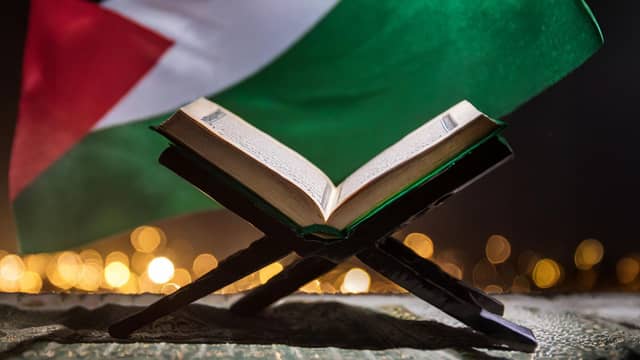
The concept of justice in Islam begins not with human society but with the very nature of God. The Qur'an affirms, "Verily, God does not do even an atom's weight of injustice" (Qur'an 4:40), and the Prophet Muhammad ﷺ relates that God has said, "O My Servants, I have forbidden injustice upon Myself and have made it forbidden amongst you, so do not commit injustice." From this we understand a foundational principle of Islamic theology: that the human being's quest in life is to draw near to God by emulating His Divine Names. The theologian Abū Ḥāmid al-Ghazālī (d. 505 AH/1111 CE) devoted a chapter of his work on the concept of God to explaining that the worshipper's perfection and salvation lie in emulating the Divine qualities and embodying their meanings to the extent humanly conceivable. Thus belief in God's Justice is inseparable from one's commitment to strive for justice and avoid oppression, and it is those who uphold justice who truly testify to God's grandeur: "God testifies that there is none worthy of worship except Him, as do the angels, and those endowed with knowledge standing firmly for justice" (Qur'an 3:18). Spiritual justice, the love of God, is therefore the wellspring from which all other forms of justice flow.
Balance in the Cosmos and the Rights of Others
Justice is woven into the fabric of creation itself. When the Qur'an states, "God raised up the heavens and established the Scales of balance" (Qur'an 55:7), commentators understand this to mean that He established justice (athbata al-ʿadl). Justice in Islam entails upholding the rights (ḥuqūq) due to others—giving what is owed to the one to whom it is owed. This begins with God's own right, acknowledging Him as the sole Sovereign worthy of worship. To deify creatures or worship others alongside Him is shirk, which the Qur'an calls "a grave injustice" (Qur'an 31:13), and whose primary victim is one's own soul, deprived of the fulfillment of a meaningful connection with its Creator. One's relationship with God must then manifest in dealings with all creation—family, neighbors, humanity, animals, and the environment. The Qur'an, in a verse routinely recited at the close of the Friday sermon, commands "justice, excellent conduct, and caring for one's relatives" while forbidding "all forms of immorality, evil and transgression" (Qur'an 16:90). So essential is impartiality that believers are told to stand firm in justice even against themselves, their parents, and relatives (Qur'an 4:135), and not to let hatred of a people prevent them from being just (Qur'an 5:8).
The Social Dimension and the Duty of Activism
Justice possesses both a vertical dimension between humanity and God and a horizontal, social dimension among human beings. The Qur'anic term that best expresses social justice is qisṭ, denoting fairness and equity in distribution so that all members of society receive their due share. Political justice requires governance through mutual consultation (Qur'an 42:38), and the Prophet ﷺ praised the just ruler and declared that the most noble struggle is to speak a truthful word before a tyrannical ruler. Upon hearing that an elderly woman had been pushed in Abyssinia, he said, "How would God sanctify a nation that does not protect its underprivileged from its powerful?" Islam is in this sense a faith of activism, for the believers are characterized by "enjoining good and forbidding evil" (Qur'an 3:110, 9:71). The Prophet ﷺ instructed, "Whoever witnesses something evil, let him change it with his hand, and if he is unable then with his tongue, and if he is unable then with his heart, but that is the weakest form of faith." This duty, however, is bound to wisdom, so that removing an evil does not produce a greater one. It is discharged both collectively (farḍ kifāyah) and individually (farḍ ʿayn). Injustice itself is termed ẓulm, linguistically linked to darkness (ẓulmah), and the Prophet ﷺ warned, "Verily, injustice will become darkness on the Day of Judgment," while God, "the Light of the Heavens and the Earth" (Qur'an 24:35), guides humanity from darkness into light.
Custodianship and the Purpose of Prophethood
The Qur'an describes humankind's role as one of khilāfah, or custodianship (Qur'an 6:165, 27:62), understood in one famous interpretation as humanity being God's appointed steward on earth, charged with promoting virtue according to the Divine plan. As Ramon Harvey notes, this stewardship implies "upholding justice, establishing his law, and rectifying worldly corruption." When people drift from this mission, God sends messengers to restore justice: "We have sent Our Messengers with clear signs and sent down with them the Scripture and the Scales of balance so that humanity may uphold justice" (Qur'an 57:25).
Justice in Wealth
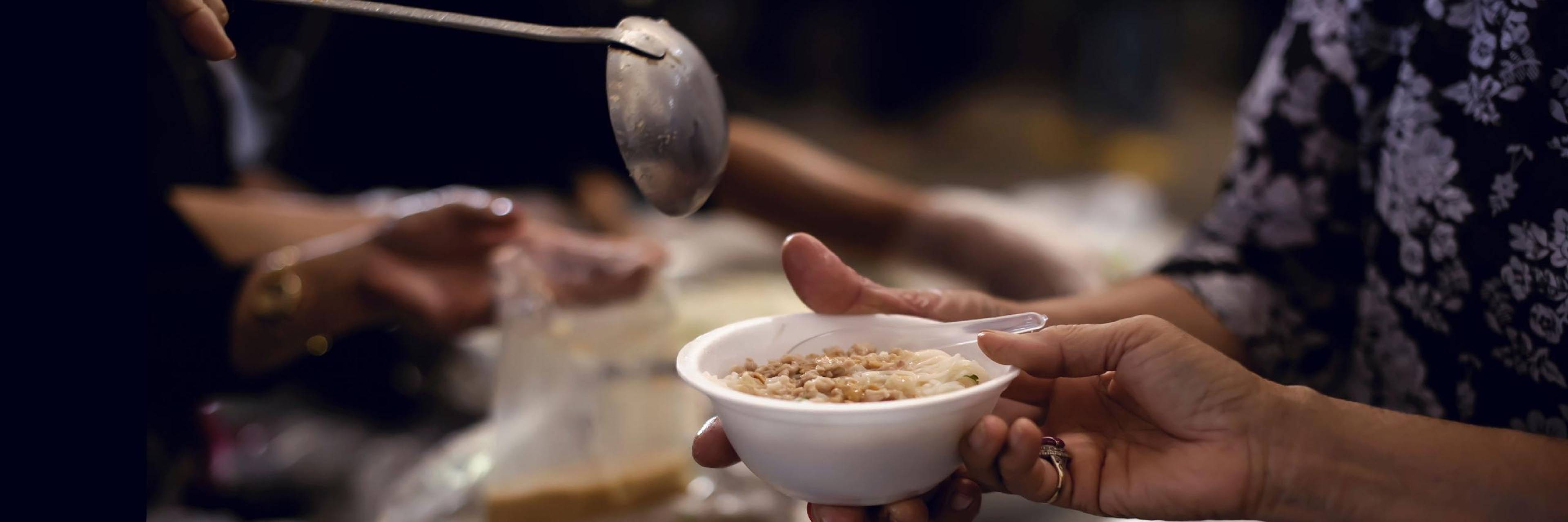
Social justice demands fairness in the distribution of goods, and Islam places extraordinary emphasis on caring for the poor. The two duties the Qur'an repeatedly pairs (e.g., Qur'an 27:3) are prayer and the giving of zakāh, the obligatory alms of 2.5% of one's wealth. Wael Hallaq observes that zakāt is unique in its dual nature as both ritual and a substantive legal sphere functioning as a tax law, making it "one of the most important instruments of social justice." Beyond the obligatory, Muslims are urged toward voluntary charity (ṣadaqah), for the Prophet ﷺ relates that God says, "O son of Adam, spend in charity and I shall spend on you." This generosity is not confined to one's own community—the Prophet ﷺ advised, "Donate in charity to people of all faiths," and himself regularly sponsored a Jewish household. So closely is proximity to God tied to proximity to the poor that God will say on the Day of Judgment, "O son of Adam, I sought food from you but you failed to feed Me… a particular servant of Mine asked you for food but you did not feed him." Yet individual charity must be joined to collective reform of systemic injustice. When ʿUmar ibn al-Khaṭṭāb learned that a woman was hastening to wean her infant to obtain a stipend, he instituted a policy documenting all newborns and allocating support to their mothers.
Standing with the Marginalized
Upon arriving in Madinah, the Prophet ﷺ enjoined "supporting the weak, helping the oppressed, and spreading peace." He warned, "Beware the supplication of the oppressed, for there is no barrier between it and God," and the Qur'an permits the public mention of wrong by one who has been wronged (Qur'an 4:148). Concerning orphans—the most vulnerable in tribal Arabia—the Qur'an commands standing "firmly for justice towards orphans" (Qur'an 4:127) and links repelling the orphan to the rejection of faith itself (Qur'an 107:1-2), mentioning orphans no fewer than twenty-three times. The Prophet ﷺ, himself an orphan, was reminded, "Did He not find you an orphan and grant you refuge?" and instructed, "So therefore, do not treat the orphan with harshness" (Qur'an 93:6, 9).
The Case of Slaves
Islam confronted the entrenched institution of slavery by making the freeing of slaves part of the spiritual ascent: "What will make you understand the uphill climb? It is the freeing of a slave" (Qur'an 90:12-13). The Prophet ﷺ taught, "He who frees a slave, God will set free every limb of his body from Hell." He himself freed sixty-three slaves, Aisha freed sixty-nine, and ʿAbd al-Raḥmān ibn ʿAwf freed thirty thousand. Ṣaḥīḥ Bukhārī records the Prophet's praise of Ḥakīm ibn Ḥizām for freeing one hundred non-Muslim slaves in the pre-Islamic period. He forbade abuse, saying that one who slaps or beats his slave must free him in expiation, and that slaves are "your brothers" whom masters must feed and clothe as themselves. He forbade even calling them "slaves," saying, "you should say 'My young man.'" He condemned the enslavement of free persons, declaring he would prosecute such a one on the Day of Judgment. When ʿUmar heard of a Christian peasant abused in Egypt, he asked, "Since when did you treat people as slaves, when their mothers bore them as free souls?" Muhammad Rashīd Riḍā (d. 1935 CE) held that the gradual abolition of slavery was Islam's ultimate goal, and the Tunisian ruler Ahmad Bey issued an abolition decree in 1846 with the support of the Ḥanafī Shaykh al-Islam Muhammad Bayram IV and the Mālikī Mufti Ibrāhīm al-Riyāḥi.
Persons with Disabilities
Islamic history offers precedents of dignity for those with disabilities. ʿAbd Allāh ibn Umm Maktūm, a blind companion, was one of two men appointed to call the prayer. When the Prophet ﷺ once frowned at his interruption, the opening of the eightieth chapter was revealed to correct him, reminding that only God knows who will benefit most from the message. Qālūn (d. 220 AH/835 CE), the leading reciter of Madinah whose recitation prevails today in Qatar, Libya, and Tunisia, was deaf and corrected his students through lip-reading. And when a woman whose condition affected her cognition approached the Prophet ﷺ, he prioritized her request, addressed her with an honorific, and patiently stood with her at the roadside until her needs were met—an example, as the Prophet is the moral exemplar for Muslims, of providing accessible, dignified, and non-stigmatizing care.
Racial Equality and Other Faith Communities
The Qur'an proclaims, "O Humankind, verily we created you from male and female and made you into nations and tribes so that you may know one another. Indeed, the most honorable of you in the sight of God is the most pious" (Qur'an 49:13). In his farewell sermon the Prophet ﷺ declared, "there is no superiority of an Arab over a non-Arab… nor a black over a white. Only piety causes one to excel." Bilāl ibn Rabāḥ, an Abyssinian freed by Abū Bakr, was honored to call the prayer atop the Kaʿba, and Malcolm X later wrote that Islam "erases from its society the race problem." Islam's justice extends to all faiths: there is "no compulsion in faith" (Qur'an 2:256), the believers are told to "cooperate in moral virtue and piety" (Qur'an 5:2), and the Prophet ﷺ honored the pledge of Ḥilf al-Fuḍūl to protect any oppressed person. A tradition among scholars holds that "God will support a just nation, even if it be a nation that rejects faith, and He will not support an unjust nation even if it be a nation of believers." ʿUmar's decree granting the Egyptian Christian retribution against his Arab Muslim abuser embodies this.
Women's Rights
Islam transformed the status of women, condemning female infanticide (Qur'an 16:58-59, 81:8-9) and affirming that a daughter is a gift from God (Qur'an 42:49). When the Prophet ﷺ saw a man favor his son, he asked, "Why did you not treat them equally?" The Qur'an affirms spiritual equality: "I shall not lose sight of the labor of any of you… be it man or woman" (Qur'an 3:195), and the Prophet ﷺ said, "Women are the equal counterparts of men." A companion testified that before Islam "we used to have no regard for women whatsoever," until God made mention of them. Women served as market supervisors like Samrāʾ bint Nuhayk and Shifāʾ bint ʿAbd Allāh, as scholars like Aisha who taught over three hundred students, as the jurist ʿAmrah bint ʿAbd al-Raḥmān (d. 98 AH/717 CE) whose authority could overturn a court ruling, and as the scientist Maryam al-ʿIjlīyah (d. 356 AH/967 CE), after whom an asteroid belt is named. In the science of Ḥadīth alone there have been over eight thousand renowned women scholars.
Conclusion
The Islamic tradition of social justice is rooted in spirituality, casting humankind as custodians of the world, divinely entrusted to stand always on the side of the oppressed and to speak truth to power. Through the teachings of the Prophet Muhammad ﷺ and his companions, Muslims seek to revive the essence of a faith that calls the human being to serve God by caring for those in need.