fbpixel

Read along with us in the Yaqeen Book Club.

Join the book club

Confronting Today's Pharaoh and the Propaganda War on Palestine

The propaganda war on Palestine uses the same tactics that Pharaoh used to subjugate the Children of Israel. What does the Qur'an say about how we should confront it?

Authored by Faisal Malik

Published: November 28, 2023 •Jumada al-Awwal 14, 1445

Updated: October 10, 2026 •Rabi al-Thani 29, 1448

Read time: 21 min

Confronting Today's Pharaoh and the Propaganda War on Palestine | Blog

Introduction

The unthinkable violence unleashed against our brothers and sisters in Palestine over the past three years has exposed the violent, inhumane nature of the apartheid state of Israel and the corrupt governments and media outlets that have been enabling it for years. The world’s first genocide livestreamed for humanity to watch in real time—yet in a true Orwellian sense, every video, every picture, and every piece of evidence of innocent Palestinians killed, tortured, and oppressed has been confronted with a well-financed propaganda machine. A propaganda machine that justifies the killing of innocent children because they are “human shields,” the bombing of hospitals because they are “terrorist cells,” the killing of journalists passed off as “collateral damage,” and the torture of humanitarian workers because Israel “has a right to defend itself.” A propaganda machine that continues to perpetuate lies that reach millions; lies that dehumanize Palestinians and seek to justify the use of white phosphorus on civilians; lies that frame the aggression of one of the world’s most well-armed and financed militaries against an oppressed population, half of whom are children, as being defensive. A propaganda machine that justified carpet-bombing the most densely populated region of the world, which human-rights experts declared an open-air prison and which others called “the biggest concentration camp in the world,” before the genocide even began. It seems we are witnessing the time foretold by the Prophet ﷺ:

وَظُهُورُ الشَّهَادَةِ بِالزُّورِ وَكِتْمَانُ شَهَادَةِ الْحَقِّ

. . . False testimony will prevail and truthful testimony will be concealed. 

While the propaganda that has been used to justify violence against Palestinians is well-financed and backed by powerful forces, we should understand that history repeats itself. This propaganda machine is a tool that has been used by oppressors for thousands of years. We should also be aware that Allah ﷻ has not left us without guidance on how to deal with it. Indeed, the Qur’an provides us guidance on how to engage with and confront deceit and propaganda.

A Perennial Struggle

To understand the history of propaganda we must first understand that every prophet or messenger Allah ﷻ sent to guide humanity faced forces who worked against the light of guidance. Allah ﷻ says,

وَكَذَٰلِكَ جَعَلْنَا لِكُلِّ نَبِىٍّ عَدُوًّۭا شَيَـٰطِينَ ٱلْإِنسِ وَٱلْجِنِّ يُوحِى بَعْضُهُمْ إِلَىٰ بَعْضٍۢ زُخْرُفَ ٱلْقَوْلِ غُرُورًۭا ۚ وَلَوْ شَآءَ رَبُّكَ مَا فَعَلُوهُ ۖ فَذَرْهُمْ وَمَا يَفْتَرُونَ

And so We have made for every prophet enemies—devilish humans and jinn—whispering to one another with elegant words of deception. Had it been your Lord’s will, they would not have done such a thing. So leave them and their deceit.

In the above verse (aya), we are confronted with the reality that every prophet faced opposition, one of the most consistent tools of which has been “elegant words of deception.”
At the time of the Prophet Muhammad ﷺ, we know that his opponents were adamant about spreading lies about him. They called him a poet, fortune teller, madman, and a renegade and rebel, and said he was inspired by the devil, among many more accusations. It is narrated that on one occasion, every time the Prophet ﷺ would approach a person to call them to Islam, Abu Lahab would immediately follow them and try to counteract the dawah.
Today, the modern manifestation of the falsehood that the prophets confronted is the multimillion-dollar Islamophobia industry. This industry too consists of nothing but elegant words of deception. It is an industry that seeks to dehumanize and vilify Muslims and Islam. An examination of anti-Muslim hate crimes in North America, such as the Quebec City mosque shooting in 2017, the killing of the Afzaal family in 2021 in London, Ontario, or the brutal murder of Wadea Al Fayoume, a six-year-old Palestinian boy in 2023, reveals that the underlying theme of these acts of terrorism and hate incidents is that they were perpetrated by people who had internalized Islamophobic discourse. The Islamophobia industry’s vilification and dehumanization of Muslims not only leads to violence against Muslims in the West, but also justifies the war and violence against Muslims abroad, such as our brothers and sisters in Palestine. 
The Israeli state’s violence against Palestinians is sustained through a racist state discourse that dehumanizes Palestinians. In 2023 several statements made by high-level members of the Israeli government and society reached a global audience; this includes Israeli Defense Minister Yoav Gallant’s justification of the siege in Gaza in 2023 and cutting off water, electricity, and food, by stating, “We are fighting human animals.” Prime Minister Netanyahu himself made biblical references to the destruction of the Amalek, insinuating a complete annihilation of the people of Gaza. In the past three years, the world has witnessed more and more brazen and violent rhetoric against Palestinians coming from the highest levels of the Israeli government, including the most recent AI-generated video mocking the starvation and torture of Palestinians posted by Ben-Gvir, Minister of National Defense of Israel. Far from being isolated incidents, these are just a few examples of the level of dehumanization that has existed against Palestinians in Israeli society for decades. 
While it is indeed horrifying to confront the fact that there is a well-financed propaganda machine that seeks to justify killing innocent people, it is important to note that this type of propaganda has existed for millennia, and the Qur’an itself highlights how propaganda was used to justify violence and oppression.

Tactics of Pharaoh

Vilifying and Dehumanizing the Oppressed

One of the most repeated stories in the Qur’an is the story of Moses’s confrontation of Pharaoh. When one reflects on the oppressive Pharaonic regime, one finds that its power rested on five pillars: (1) a dictatorial tyrant, who believed he possessed absolute authority over the people; (2) a a hypocritical vice-assistant (Haman); (3) a wealthy financier of corruption (Qarun); (4) a corrupt clergy (the magicians); and (5) media and propagators (the Hashirun). The five pillars that Pharaoh used have continued to manifest throughout history. Today they are embodied by wealthy corporations and institutes, powerful media outlets, corrupt politicians and people of influence (such as celebrities, social media influencers, marketing platforms, etc.) who endorse the current genocide against the people of Gaza.
Furthermore, the dialogues of Pharaoh and Moses (as) give insight into the tactics oppressors use to justify violence against those they subjugate. For instance, when Moses (as) confronted and exposed Pharaonic society’s false ideology, corruption, and oppression, he was met with a wide range of responses to try to suppress his message. In Surah al-Aʿraf, Allah ﷻ says regarding the cabinet of Pharaoh:

وَقَالَ ٱلْمَلَأُ مِن قَوْمِ فِرْعَوْنَ أَتَذَرُ مُوسَىٰ وَقَوْمَهُۥ لِيُفْسِدُوا۟ فِى ٱلْأَرْضِ وَيَذَرَكَ وَءَالِهَتَكَ ۚ

And the eminent among the people of Pharaoh said, “Will you leave Moses and his people to cause corruption in the land and abandon you and your gods?”

The political elite who benefited from the violence and corruption of the Pharaonic state accused Moses (as) and his people of causing corruption in the land. The irony is that it was actually the people who accused Moses (as) of causing corruption in the land who had set up and sustained a corrupt social order that allowed for the oppression, murder, and enslavement of the Children of Israel. They were the ones who caused corruption by tormenting the Children of Israel, killing their male children and sparing their girls, yet they accused Moses (as) and his followers of what they were guilty of—that is, being corrupt.
By accusing Moses (as) of sowing corruption, they were trying to delegitimize his divine message of tawhid, which would expose their false gods and unveil the crimes they were committing. The accusation of the Pharaoh’s cabinet illustrates that the tactic of oppressors is to blame those they oppress in order to maintain power over them and diminish their struggle for truth, justice, and dignity.
Indeed, oppressive regimes throughout history have used similar tactics against the populations they oppress. Sir John A. Macdonald, the first prime minister of Canada, referred to the Indigenous people of the land as savages. He stated in 1883,

When the school is on the reserve, the child lives with its parents, who are savages; he is surrounded by savages, and though he may learn to read and write, his habits, and training and mode of thought are Indian. He is simply a savage who can read and write.

Macdonald’s language framed the Indigenous people as savages, although it was the colonial settlers who were stealing their land and killing innocent people.
Another example can be seen in the 1960s, when Frantz Fanon noted regarding the media coverage of the Algerian struggle for independence against French colonial rule,

When a Western journalist interviews us, however, it is seldom done to render us service. In the war in Algeria, for example, the most liberal-minded French reporters make constant use of ambiguous epithets to portray our struggle. When we reproach them for it, they reply in all sincerity they are being objective. For the colonized subject, objectivity is always directed against him. 

Fanon noted how the Algerians were constantly portrayed in a negative light in the media, so that their struggle against the French colonial forces would seem illegitimate. Algerians were portrayed as violent and extreme, despite it being France that was brutally occupying their land.
Another example of this type of propaganda was the negative portrayal of Black Americans in the American media before and during the civil rights era and even in recent times. El-Hajj Malik El-Shabazz (famously known as Malcolm X) noted that such tactics were used against Black people to delegitimize their struggle against the racism and oppression they faced in American society. He stated,

They take the newspapers and make the newspapers blow you and me up as if all of us are criminals, all of us are racists, all of us drug addicts, or all of us are rioting. . . . They master this imagery, this image-making. They give you the image of an extremist, and from then on anything you do is extreme.”

He noted how the American media portrayed Black people in America in a manner that labeled anyone who struggled for freedom, justice, and equality as an extremist while depicting those who benefited from and enabled the racism that oppressed the Black community as victims of Black extremism.

This is the press, an irresponsible press. It will make the criminal look like he’s the victim and make the victim look like he’s the criminal. If you aren’t careful, the newspapers will have you hating the people who are being oppressed and loving the people who are doing the oppressing. 

What we learn from the above examples is that oppressors create propaganda to blame those whom they oppress for their own oppression. This is done in order to justify their state of oppression and delegitimize any attempt to challenge the system. Pharaoh accused Moses (as) of causing corruption because his message was causing discord and exposing the corrupt Pharaonic system. The French colonialists did the same against the Algerians, the American media was used against Black civil rights activists, and we have been witnessing similar tactics against Palestinians for decades now. The past three years in particular saw an exponential rise in propaganda against not only Palestinians but also pro-Palestinian voices throughout the Western world, with smear campaigns directed at peaceful protestors, student encampments, and activists. 
The propaganda used by an occupying power against those they occupy is based on the fact that for an oppressive state to exist it requires an ideology to legitimize that oppression. The famous Palestinian intellectual Edward Said noted as much when he stated,

Neither imperialism nor colonialism is a simple act of accumulation and acquisition. Both are supported and perhaps even impelled by impressive ideological formations that include notions that certain territories and people require and beseech domination, as well as forms of knowledge affiliated with domination. 

Once an ideology can be created that allows for a people to be seen as subhuman, savage, and barbaric, then violence against them is easier to justify.

Justifying Violence and Oppression

قال سَنُقَتِّلُ أَبْنَآءَهُمْ وَنَسْتَحْىِۦ نِسَآءَهُمْ وَإِنَّا فَوْقَهُمْ قَـٰهِرُونَ

[Pharaoh] said, “We will kill their sons and keep their women alive; and indeed, we are subjugators over them.”

After claiming that Moses (as) was causing corruption, Pharaoh declared that he was going to kill the sons of the Children of Israel and let their women live. As such, he framed a narrative that because Moses (as) and his followers were corruptors, he was therefore justified in killing them and subjugating them. Pharaoh’s statement “we are subjugators over them” reflects the derogatory manner in which he viewed the Children of Israel and has strong parallels to dehumanizing language about Palestinians.
Interestingly, though Pharaoh threatened to kill the Children of Israel’s sons and enslave their women in response to Moses’s supposed corruption, this violence was present even before Moses’s birth. Therefore, the violence of the Pharaonic state was not a reaction to Moses (as), but rather part of its inherent nature.
The manner in which Pharaoh justified his violence reflects the fact that oppressors refuse to acknowledge the violence of the system they create and maintain to oppress others. Therefore, when the violent nature of their system is exposed, they blame the resulting violence on the oppressed who simply demand dignity and freedom.
Returning to the case of Sir John A. Macdonald, after he portrayed Indigenous populations as savages, he then justified forcefully taking their children and putting them in residential schools. In these schools, Indigenous children were often further abused and even killed. Macdonald stated,

It has been strongly pressed on myself, as the head of the Department, that the Indian children should be withdrawn as much as possible from the parental influence, and the only way to do that would be to put them in central training industrial schools where they will acquire the habits and modes of thought of white men.

The justification of violence toward the children of Canada’s Indigenous population bears striking resemblance to the Israeli state’s justifications for the violence it carries out against Palestinian children. The brutal muder of six-year-old Hind Rajab, who was shot 335 times by the IOF, is one example of a long pattern of violence against Palestinian children. Golda Meir, one of the instrumental founding figures of Israel and its fourth prime minister, once stated, “We can forgive the Arabs for killing our children, but we can never forgive them for forcing us to kill their children.” 
El-Hajj Malik also noted in the 1960s how the West justified their violence toward the “third world” by seeking to dehumanize those they attacked. Regarding the Western media during his time, he stated, “It always has words to justify their destruction of the people they’re destroying.”
One example he gave was Western media coverage of the Congo’s attempt to gain independence from Belgian and Western control. He stated,

Right now, in the Congo, defenseless villages are being bombed, black women and children and babies are being blown to bits by airplanes. Where do these airplanes come from? The United States. The U-n-i-t-e-d S-t-a-t-e-s. Yes, and you won’t write that. You won’t write that American planes are blowing the flesh from the bodies of black women and black babies and black men. No. Why? Because they’re American planes. As long as they’re American planes, that’s humanitarian.

They take the press with their ability to control you with image-making, and they make mass murder, cold-blooded murder, look like a humanitarian project. All these thousands of black people dying, butchered and you have no compassion in your hearts whatsoever for them, because the victim has been made to look like he’s the criminal and the criminal has been made to look like he’s the victim.

His criticism of the bombing of innocent women, children, and civilians in the Congo bears a striking resemblance to the current situation in Gaza. The carpet-bombing of Gaza, which has been estimated to be over 223,000 tons of explosives (equivalent to 16 Hiroshimas), has killed over 73,000 Palestinians, of which over 21,500 were children, including 1,022 babies. The bombing has destroyed 85–90 percent of Gaza’s infrastructure, leaving 68 million tons of debris, which will take 140 years to clear. All this destruction and suffering has been justified with the same statement—“Israel has a right to defend itself.”

Narcissistic Benevolence

In Surah al-Shuʿaraʾ, Moses (as) and Aaron (as) are commanded by Allah ﷻ to tell Pharaoh to free the Children of Israel from slavery and oppression.

فَأْتِيَا فِرْعَوْنَ فَقُولَآ إِنَّا رَسُولُ رَبِّ ٱلْعَـٰلَمِينَ • أَنْ أَرْسِلْ مَعَنَا بَنِىٓ إِسْرَٰٓءِيلَ

Go to Pharaoh and say, “We are messengers from the Lord of all worlds, let the Children of Israel go with us.’’

How does Pharaoh respond to this demand from Moses (as) and Aaron (as)? Pharaoh accuses Moses (as) of being ungrateful.

قَالَ أَلَمْ نُرَبِّكَ فِينَا وَلِيدًۭا وَلَبِثْتَ فِينَا مِنْ عُمُرِكَ سِنِينَ

Pharaoh protested, “Did we not raise you among us as a child, and you stayed several years of your life in our care?”

Instead of conceding to Moses (as) and Aaron’s request to end the oppression of the Children of Israel, Pharaoh reminds Moses (as) of how he was raised in the Pharaonic palace, and how ungrateful he was, coming from a “slave class,” having had the opportunity to be raised in Pharaoh’s palace among “the civilized class.” Of course, what Pharaoh ignores is that he was raised in his palace because his forces were killing the male children of the Children of Israel, and Allah ﷻ miraculously saved Moses (as) by causing him to be found in the river and raised in Pharaoh’s palace without anybody knowing who Moses (as) was going to be. As such, Moses’s being raised in Pharaoh’s palace was a divine intervention that saved him from Pharaoh’s murderous government and had nothing to do with Pharaoh’s magnanimity.
The idea that an oppressor sees themself as a benign and civilizing force toward those they oppress was an idea that permeated European colonial discourse over the past few centuries to justify the colonial project. Mahmood Mamdani (the father of the famous New York City mayor Zohran Mamdani) noted over two decades ago,

The idea “imperialism had served civilization by clearing inferior races off the earth” found widespread expression in nineteenth-century European thought, from natural sciences and philosophy to anthropology and politics. 

Colonial discourse tried to remain consistent with its alleged humanitarian ideals by claiming that colonialism was a civilizing force for the world. If the colonized population was treated violently by their colonizers, it was not due to the violent nature of colonialism but rather due to the colonized’s failure to reach the level of being “civilized” as determined by their oppressors. Fanon notes this phenomenon in his statement:

Western bourgeois racism toward the “n*gg*r” and the “towelhead” is a racism of contempt—a racism that minimizes. But the bourgeois ideology that proclaims all men to be essentially equal, manages to remain consistent with itself by urging the subhuman to rise to the level of Western humanity that it embodies.

One of the pivotal figures in the founding of Zionism, the Austro-Hungarian Theodore Herzl, sought support from European colonial powers for his Zionist vision partly by justifying it through the Eurocentric racist worldview that saw non-Europeans as less civilized. He stated that among the benefits of establishing the state of Israel on the land of Palestine would be that “we should there form a portion of the rampart of Europe against Asia, an outpost of civilization as opposed to barbarism.”
Furthermore, Herzl fully acknowledged that his vision of the Zionist state was to be modeled after European colonies, where Europeans colonized and exploited non-Europeans. Herzl wrote to the white supremacist Cecil Rhodes, the brutal colonial dictator of South Africa:

Please send me a text saying you have examined my programme and approve it. You will ask yourself why I address myself to you, Mr. Rhodes. It is because my programme is a colonial state.

Devaluing the Lives of the Oppressed

Another propaganda tactic used by Pharaoh against Moses (as) was to minimize or ignore the suffering of the Children of Israel while amplifying the alleged “crime” committed by Moses (as). After Pharaoh responded to the request to let the Children of Israel go by highlighting how Moses (as) was raised in his palace, he then proceeded to discuss Moses’s accidental killing of an Egyptian.

وَفَعَلْتَ فَعْلَتَكَ ٱلَّتِى فَعَلْتَ وَأَنتَ مِنَ ٱلْكَـٰفِرِينَ

Then you did what you did, being [utterly] ungrateful! 

When Moses (as) saw one of the Children of Israel being oppressed by an Egyptian, he sought to stop the oppression, causing him to fight the Egyptian and accidently kill him. This incident is what led Moses (as) to flee from Egypt. Notice how Pharaoh completely ignores the years of violence by his regime and instead amplifies an accidental killing that was actually the result of the oppressive conditions Pharaoh himself had created.
Again we can see such double standards practiced throughout the twentieth century by various Western media outlets in how they cover conflicts in which the West has a vested interest. Fanon noted that the Western media was almost silent when it came to the murder of thousands of Algerians and Malagasy by French colonial rule and the murder of thousands of Kenyans by the British in the 1940s and 1950s. El-Hajj Malik noted a similar double standard in the media’s coverage of the violence occurring in Congo during the 1950s and 1960s:

If you’ll notice, as long as blacks in the Congo were being slaughtered on a mass scale, there was no outcry. But as soon as the lives of a few whites were involved, the whole world became in an uproar. What caused the world to become involved in an uproar? The press.

Within the context of the current situation in Palestine, it is extremely hypocritical to only focus on October 7, 2023, as if history began then and to completely ignore seventy-five years of oppression and violence against Palestinians. The media has never batted an eye at the over 650,000 illegal settlers in the West Bank and East Jerusalem. The media never bothered to contextualize the living conditions of the people of Gaza, which are caused by the Israeli blockade of the past sixteen years. This brutal blockade resulted in 70 percent of Gazans being refugees, 82 percent living in poverty, 63 percent food insecure, and 95 percent not having access to clean water. Nor has there been any coverage of the fact that Israel has killed more than three thousand Palestinian children in the twenty years prior to this conflict. The media highlighted the hostage situation on October 7, but they rarely if ever mention that 20 percent of Palestinians have been arrested by Israel since 1967, or that an estimated 500–1,000 Palestinian children were held in Israeli military detention each year prior to 2023. Even after three years of global outrage; worldwide protests; charges of genocide and crimes against humanity by the highest international bodies, such as the UN; the destruction of 85–90 percent of Gaza’s infrastructure; and the killing of over 73,000 Palestinians, including over 21,500 children; there are still very powerful political figures, media outlets, and institutions that refuse to condemn Israel’s crimes. 
Despite the power and wealth that has gone into enabling the genocide in Gaza, the past three years have shown a global awakening to the oppression of the Palestinians. From worldwide protests, student encampments, boycotts, and flotillas to activism from the most grassroots level to the most influential institutions in the world, millions of people from all backgrounds have stood up against empire, oppression, and a multimillion-dollar propaganda machine that tried to erase Palestine from the world but utterly failed. While progress has been made, the struggle continues, and just as the Qur’an provides us insight into the Pharaonic method of propaganda, it also gives us insight into how to confront it.

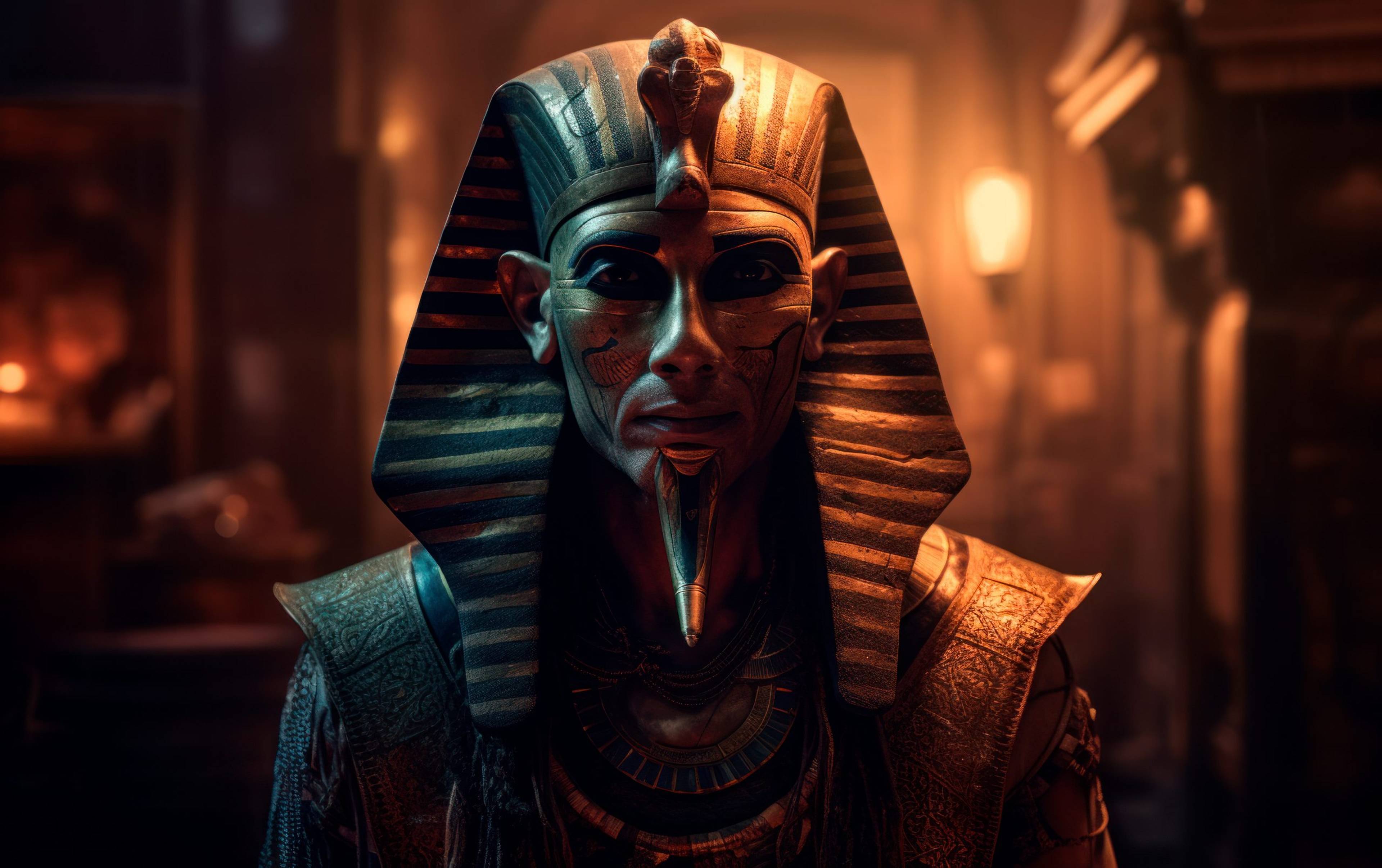
Confronting Pharaoh

Don’t Be Afraid or Feel Helpless

One of the commands of the Prophet ﷺ is “do not feel helpless.” Allah ﷻ is aware of everything that is going on and His help will one day come. Throughout the Qur’an, when Moses (as) is commanded to go to Pharaoh, Moses (as) expresses his fear and reservation, yet Allah ﷻ reassures him that His help is with him. In Surah Taha for instance, when Moses (as) and Aaron (as) are commanded to go to Pharaoh, they say:

قَالَا رَبَّنَآ إِنَّنَا نَخَافُ أَن يَفْرُطَ عَلَيْنَآ أَوْ أَن يَطْغَىٰ • قَالَ لَا تَخَافَآ ۖ إِنَّنِى مَعَكُمَآ أَسْمَعُ وَأَرَىٰ

They said, “Our Lord, indeed we are afraid that he will hasten [punishment] against us or that he will transgress.” [Allah] said, “Fear not. Indeed, I am with you both; I hear and I see.”

We learn from these ayat that Allah ﷻ is with those on the side of truth when they confront an oppressor. Although the righteous will be severely tested, their cause will always ultimately end in victory.

Know Your History and Have the Knowledge to Confront Propaganda with Truth

As mentioned earlier in Surah al-Shuʿaraʾ, Pharaoh tried to deflect from his own deceit and oppression by selectively portraying events in Moses’s life to make it look like Moses (as) was the extremist troublemaker. Moses (as), however, knew the true history, so he responded to this deceit by explaining the context of his situation before returning to the actual issue at hand, which was the oppression of the Children of Israel by Pharaonic society and its false ideology of shirk:

وَتِلْكَ نِعْمَةٌۭ تَمُنُّهَا عَلَىَّ أَنْ عَبَّدتَّ بَنِىٓ إِسْرَٰٓءِيلَ

And is this a favor of which you remind me—that you have enslaved the Children of Israel?

Moses (as) understood that Pharaoh was trying to spin history, and he was able to counter his propaganda by highlighting the obvious injustice of the enslavement of the Children of Israel. In this regard, one must keep themself as educated as possible and benefit from the many resources available to be equipped to counteract the propaganda that continues to proliferate. Below is just a small list of relevant resources. 
Documentaries
  • How Israel Was Created | AJ+
  • Occupation 101
  • The Letter That Led to the Founding of Israel
  • Al-Nakba: The Palestinian Catastrophe 1948
  • The Price of Oslo
  • Israelism
  • The Voice of Hind Rajab
  • Gaza: Doctors Under Attack 
Books
  • Ismail Adam Patel, A Brief History of Palestine
  • Rashid Khalidi, The Hundred Years’ War on Palestine
  • Norman Finkelstein, Gaza: An Inquest into Its Martyrdom
  • Norman Finkelstein, Gaza’s Gravediggers: An Inquiry into Corruption in High Places 
  • Miko Peled, The General’s Son: Journey of an Israeli in Palestine

Continue to Speak Up and Never Give Up

When Moses (as) was commanded to confront Pharaoh, he didn’t run away from the task, but rather asked Allah ﷻ for His support.

 قَالَ رَبِّ ٱشۡرَحۡ لِى صَدۡرِى • وَيَسِّرۡ لِىٓ أَمۡرِى • وَٱحۡلُلۡ عُقۡدَةً مِّن لِّسَانِى • يَفۡقَهُواْ قَوۡلِى • وَٱجۡعَل لِّى وَزِيرًا مِّنۡ أَهۡلِى • هَـٰرُونَ أَخِى • ٱشۡدُدۡ بِهِۦۤ أَزۡرِى • وَأَشۡرِكۡهُ فِىٓ أَمۡرِى

[Moses] said, “My Lord, expand [i.e., relax] for me my breast [with assurance]. And ease for me my task. And untie the knot from my tongue. That they may understand my speech. And appoint for me a minister [i.e., assistant] from my family. Aaron, my brother. Increase through him my strength. And let him share my task.”

Moses’s famous dua showed how he asked Allah ﷻ to untie the knot of his tongue and allow people to understand his speech. He understood that Allah’s help would be with him, and He would use His prophet’s dawah to effect change. We know that Moses’s dawah led Pharaoh’s own magicians to enter into Islam, as well as others from the corrupt Pharaonic system. The global shift and support for Palestine has shown us how Allah ﷻ has turned the tides and how millions of people from across the globe and in the least expected places have stood in solidarity with the Palestinian cause.
We should never underestimate the power of our words. The Prophet Muhammad ﷺ was constantly confronted with lies and propaganda against his message. ʿAbdullah ibn Rawaha (ra) once recited poetry in defense of Islam. When ʿUmar (ra) saw this, he was taken aback that he would dare to recite poetry in front of the Prophet ﷺ; however, the Prophet ﷺ told ʿUmar,

خَلِّ عَنْهُ يَا عُمَرُ، فَلَهِيَ أَسْرَعُ فِيهِمْ، مِنْ نَضْحِ النَّبْلِ

Leave him alone, O ʿUmar, for it will strike them down quicker than a shower of arrows! 

We learn from this incident that just as words can deceive people, the opposite is also the case: Truthful words can be a means of unveiling the reality of a situation to people. In the past three years, there have been countless attempts to bully people into silence, but we should be aware that those who spoke out and continue to speak out in these difficult times to counteract the multimillion-dollar propaganda machine will, by the mercy of Allah ﷻ, have the opportunity to fulfill one of the greatest forms of jihad. 

عَنْ طَارِقِ بْنِ شِهَابٍ أَنَّ رَجُلًا سَأَلَ رَسُولَ اللَّهِ صَلَّى اللَّهُ عَلَيْهِ وَسَلَّمَ أَيُّ الْجِهَادِ أَفْضَلُ قَالَ كَلِمَةُ حَقٍّ عِنْدَ سُلْطَانٍ جَائِرٍ

A man asked the Messenger of Allah, peace and blessings be upon him, “What is the best jihad?” The Prophet said, “A word of truth in front of a tyrannical ruler.”

In this regard, we all have opportunities to speak out against what is happening within our spheres of influence through whatever means we have access to, such as social media, WhatsApp, and friend circles. The past three years have demonstrated that no effort is too small and that a whole generation changed the algorithm and global opinion by constantly sharing what was going on in Gaza, something that many big news outlets failed to do.

Always Make Dua to Allah ﷻ

In the story of Moses (as), we constantly see him turning to Allah ﷻ for help, assistance, and strength. Therefore, we should know that Allah ﷻ hears the countless people calling on Him to aid the Palestinians, and although the ummah is currently facing a great test, the help of Allah ﷻ is near.

أَمْ حَسِبْتُمْ أَن تَدْخُلُوا۟ ٱلْجَنَّةَ وَلَمَّا يَأْتِكُم مَّثَلُ ٱلَّذِينَ خَلَوْا۟ مِن قَبْلِكُم ۖ مَّسَّتْهُمُ ٱلْبَأْسَآءُ وَٱلضَّرَّآءُ وَزُلْزِلُوا۟ حَتَّىٰ يَقُولَ ٱلرَّسُولُ وَٱلَّذِينَ ءَامَنُوا۟ مَعَهُۥ مَتَىٰ نَصْرُ ٱللَّهِ ۗ أَلَآ إِنَّ نَصْرَ ٱللَّهِ قَرِيبٌۭ  

Or do you think that you will enter Paradise while such [trial] has not yet come to you as came to those who passed on before you? They were touched by poverty and hardship and were shaken until [even their] messenger and those who believed with him said, “When is the help of Allah?” Unquestionably, the help of Allah is near.

References

1. ^
Raz Segal, “‘A Textbook Case of Genocide’: Israeli Holocaust Scholar Raz Segal Decries Israel’s Assault on Gaza,” Democracy Now!, YouTube video, October 16, 2023, https://www.youtube.com/watch?v=ZWGGjLZNuyg; “Israel/OPT: Ceasefire Must Be a Pathway to Ending Israel’s Unlawful Occupation, Apartheid and Genocide,” Amnesty International, October 9, 2025, https://www.amnesty.org/en/latest/news/2025/10/israel-opt-ceasefire-pathway-ending-occupation-apartheid-genocide/; “The First Livestreamed Genocide,” Al Jazeera, April 15, 2025, https://www.aljazeera.com/news/longform/2025/4/16/israeli-soldiers-filmed-themselves-destroying-gaza-see-the-video-evidence.
2. ^
Francesca Albanese, “Gaza Genocide: A Collective Crime,” October 20, 2025, https://www.un,.org/unispal/document/special-rapporteur-report-gaza-genocide-a-collective-crime-20oct25/; Francesca Albanese, “Torture and Genocide,” UN, March 23, 2026, https://docs.un.org/en/A/HRC/61/71.
3. ^
Report of the Independent International Commission of Inquiry on the Occupied Palestinian Territory, including East Jerusalem, and Israel (A/79/232), United Nations, September 11, 2024, https://www.un.org/unispal/document/report-of-the-independent-international-commission-of-inquiry-on-the-occupied-palestinian-territory-including-east-jerusalem-and-israel-11sep24/.
4. ^
“Israel Remained Leading Killer of Journalists in 2025: RSF,” Al Jazeera, December 9, 2025, https://www.aljazeera.com/news/2025/12/9/israel-the-top-killer-of-journalists-worldwide-once-again-says-rsf-report.
5. ^
David Gritten, “Gaza Flotilla Activists Allege Abuse by Israeli Forces While Detained,” BBC, May 23, 2026, https://www.bbc.com/news/articles/cglp5z63k9no; Nils Adler, “Outrage Over Israel’s Ben-Gvir Flotilla Abuse Video: What We Know,” Al Jazeera, May 21, 2026, https://www.aljazeera.com/news/2026/5/21/outrage-over-israels-ben-gvir-flotilla-abuse-video-what-we-know.
6. ^
“Gaza: Israel’s ‘Open-Air Prison’ at 15: Israel, Egypt Movement Restrictions Wreak Havoc on Palestinian Lives,” Human Rights Watch, June 14, 2022, https://www.hrw.org/news/2022/06/14/gaza-israels-open-air-prison-15; Basem Naim, “A Letter from Gaza to Justin Trudeau,” Al Jazeera, June 11, 2018, https://www.aljazeera.com/opinions/2018/6/11/a-letter-from-gaza-to-justin-trudeau#:~:text=You%20are%20perhaps%20unaware%20of,concentration%20camp%20ever%20to%20exist%E2%80%9D.
7. ^
Al-Bukhārī, al-Adab al-mufrad, no. 1049.
8. ^
See Elis Gjevori, “Israel to Pour $730m into Propaganda Arm Amid Reputational Crisis,” Middle East Eye, May 1, 2026, https://www.middleeasteye.net/news/israel-pour-730m-propaganda-gaza-genocide-iran-war-turns-it-pariah.
9. ^
Qur’an 6:112.
10. ^
Qur’an 69:41–42.
11. ^
Qur’an 81:22.
12. ^
Yasir Qadhi, The Sirah of the Prophet (PBUH): A Contemporary and Original Analysis (Kube Publishing, 2023), 93.
13. ^
Qur’an 81:25.
14. ^
Musnad Aḥmad, no. 16023, https://dorar.net/h/Hp7Bt6lE; Aḥmad ibn Ḥanbal, Musnad Aḥmad, ed. Shuʿayb al-Arnāʾūṭ (Muʾassasat al-Risāla, 2000), no. 16023.
15. ^
See “Anti-Muslim Hate Hits New High in US: Advocacy Group,” Al Jazeera, March 11, 2025, https://www.aljazeera.com/news/2025/3/11/anti-muslim-hate-hits-new-high-in-us-advocacy-group; “Documenting the Palestine Exception,” Islamophobia Research Hub, York University, 2025, https://www.yorku.ca/laps/research/islamophobia/wp-content/uploads/sites/874/2025/09/documenting-the-palestine-exception-2025.pdf.
16. ^
“Israeli Defence Minister Orders ‘Complete Siege’ on Gaza,” Al Jazeera, October 9, 2023, https://www.aljazeera.com/video/newsfeed/2023/10/9/israeli-defence-minister-orders-complete-siege-on-gaza.
17. ^
“Netanyahu Faces Backlash for Evoking Biblical Amalek amid Heavy Civilian Casualties in Gaza,” Middle East Eye, YouTube video, October 29, 2023, https://www.youtube.com/watch?v=pMVs7akyMh0.
18. ^
Arwa Mahdawi, “Ben-Gvir Posts Palestinians on Conveyor Belts to Detention Camps. The World Is Silent,” The Guardian, September 3, 2026, https://www.theguardian.com/commentisfree/2026/sep/03/ben-gvir-palestinian-comments.
19. ^
Simon Speakman Cordall, “Dehumanisation: How Israel Is Able to Commit Its Genocide in Gaza,” September 17, 2025, https://www.aljazeera.com/news/2025/9/17/dehumanisation-how-israel-is-able-to-commit-its-genocide-in-gaza.
20. ^
Many thanks to Sh. Yousef Wahb for this insight.
21. ^
Francesca Albanese, “From Economy of Occupation to Economy of Genocide,” Human Rights Council, June 30, 2025, https://www.ohchr.org/sites/default/files/documents/hrbodies/hrcouncil/sessions-regular/session59/advance-version/a-hrc-59-23-aev.pdf; Federica Marsi, “UN Report Lists Companies Complicit in Israel’s ‘Genocide’: Who Are They?,” July 1, 2025, https://www.aljazeera.com/news/2025/7/1/un-report-lists-companies-complicit-in-israels-genocide-who-are-they; Katherine Blouin, Nathan Kalman-Lamb, and Derek Silva, “Canadian Universities Too Should Be in Francesca Albanese’s Report,” July 13, 2025, https://www.aljazeera.com/opinions/2025/7/13/canadian-universities-too-should-be-in-francesca-albaneses-report.
22. ^
Martin Lukacs, Dania Majid, and Jason Toney, eds., When Genocide Wasn’t News: How Canadian Media Covered Up the Destruction of Gaza (Breach Books, 2025).
23. ^
“How Israel Is Paying Influencers to Push Propaganda,” TRT World, YouTube video, October 2, 2025, https://www.youtube.com/shorts/_034ksJscMw; “Israel Pumps Millions into a Disinformation Campaign to Deny Gaza Starvation,” TRT World, September 16, 2025, https://www.trtworld.com/article/26aa3a47f85b; Ahmet Alioglu, “Digital Occupation,” Al Jazeera, May 5, 2025, https://studies.aljazeera.net/en/analyses/digital-occupation-pixelated-propaganda-censored-platforms-and-battle-narrative-gaza; Enjy El-Kadi, “Ben Shapiro’s Anti-Muslim Film Is Nothing New,” Al Jazeera, August 27, 2026, https://www.aljazeera.com/opinions/2026/8/27/ben-shapiros-anti-muslim-film-is-nothing-new.
24. ^
Qur’an 7:127.
25. ^
Qur’an 2:49.
26. ^
“Residential Schools in Canada: Education Guide,” Historica Canada, accessed October 23, 2023, p. 2, http://education.historicacanada.ca/files/103/ResidentialSchools_Printable_Pages.pdf.
27. ^
Frantz Fanon, The Wretched of the Earth (Grove Press, 2004), 37.
28. ^
George Breitman, ed., Malcolm X Speaks (Grove Press, 1990), 92.
29. ^
Breitman, Malcolm X Speaks, 93.
30. ^
See Ahmad Ibsais, “Encamp, Divest and Keep Your Eyes on Gaza,” Al Jazeera, April 30, 2024, https://www.aljazeera.com/opinions/2024/4/30/encamp-divest-and-keep-your-eyes-on-gaza; Jake Offenhartz, “Mahmoud Khalil Files Suit Alleging a ‘Public-Private’ Conspiracy to Target Israel’s Critics,” AP News, July 14, 2026, https://apnews.com/article/mahmoud-khalil-israel-conspiracy-lawsuit-critics-3691fdff6a5d19b9456cddba6c29ba15.
31. ^
Edward Said, Culture and Imperialism (Vintage Books, 1994), 9.
32. ^
Qur’an 7:127.
33. ^
“Residential Schools in Canada.”
34. ^
“Hind Rajab’s Story,” The Hind Rajab Foundation, https://www.hindrajabfoundation.org/hind-rajabs-story; Brad Parker, “What’s Not a Target for Israel?,” Al Jazeera, July 30, 2014, https://www.aljazeera.com/opinions/2014/7/30/whats-not-a-target-for-israel/; “Israel Continues to Commit Genocide and Other Atrocity Crimes by Deliberately Targeting Palestinian Children,” UN Commission of Inquiry Press Release, June 23, 2026, https://www.un.org/unispal/document/uncoi-press-release-23jun26/.
35. ^
“‘We Can Never Forgive the Arabs for Making Us Kill Children’ - CBS’ Schieffer Quotes Golda Meir,” Haaretz, July 28, 2014, https://www.haaretz.com/israel-news/2014-07-28/ty-article/we-can-never-forgive-them/0000017f-e587-da9b-a1ff-edefe0bd0000.
36. ^
Breitman, Malcolm X Speaks, 97.
37. ^
Breitman, Malcolm X Speaks, 93.
38. ^
“Gaza War’s 1,000 days: 90% of Strip ‘Destroyed’, 80% ‘Seized’ by Israel,” Al Jazeera, July 2, 2026, https://www.aljazeera.com/news/2026/7/2/gaza-wars-1000-days-90-of-strip-destroyed-80-seized-by-israel.
39. ^
Qur’an 26:16–17.
40. ^
Qur’an 26:18.
41. ^
Mahmood Mamdani, Good Muslim, Bad Muslim (Random House, 2004), 6.
42. ^
Fanon, Wretched of the Earth, 110. The original source prints the racial slur in full; it has been partially redacted here by the editors.
43. ^
Theodor Herzl, A Jewish State (Federation of American Zionists, 1917), 12.
44. ^
Cited in Ismail Adam Patel, A Brief History of Palestine (Al-Aqsa Publishers, 2020), 90.
45. ^
Qur’an 26:19.
46. ^
Fanon, Wretched of the Earth, 38.
47. ^
Breitman, Malcolm X Speaks, 96.
48. ^
Patel, Brief History of Palestine, 217.
49. ^
“Gaza as 100 People,” Visualizing Palestine, October 2023, https://www.visualizingpalestine.org/visuals/gaza-as-100-people?locale=en.
50. ^
“Know Their Names: Palestinian Children Killed by Israeli Forces,” Al Jazeera, https://interactive.aljazeera.com/aje/2021/palestine-know-their-names/index.html.
51. ^
Patel, Brief History of Palestine, 221.
52. ^
“Palestinian Children Abused in Israeli Detention: NGO,” Al Jazeera, July 10, 2023, https://www.aljazeera.com/news/2023/7/10/palestinian-children-abused-in-israeli-detention-ngo.
53. ^
“Global Rallies Demand End to Israel’s War on Gaza and Unrestricted Aid,” Al Jazeera, August 10, 2025, https://www.aljazeera.com/gallery/2025/8/10/global-rallies-demand-end-to-israels-war-on-gaza-and-unrestricted-aid; “‘Let Gaza Live’: Pro-Palestinian Protests Erupt Worldwide After Flotilla Intercepted by Israel,” Global News, YouTube video, October 3, 2025, https://www.youtube.com/watch?v=2AL79AG2vEg; “Hundreds of Thousands March for Gaza Across Europe,” France24 English, YouTube Video, October 6, 2025, https://www.youtube.com/watch?v=nLTEFfNBlzw; “Hundreds of Thousands Worldwide Take Part in Pro-Palestine Protests,” TRT World, YouTube video, October 5, 2025, https://www.youtube.com/watch?v=c3RDP34M4tc.
54. ^
Report of the Independent International Commission of Inquiry on the Occupied Palestinian Territory, including East Jerusalem, and Israel, Human Rights Council, May 8, 2026, https://www.ohchr.org/sites/default/files/documents/hrbodies/hrcouncil/coiopt/2606092E.pdf.
55. ^
“Gaza War’s 1,000 Days.”
56. ^
Sunan Ibn Māja, no. 4168.
57. ^
Qur’an 20:45–46.
58. ^
Qur’an 26:20–21.
59. ^
Qur’an 26:22.
60. ^
Qur’an 20:25–32.
61. ^
Qur’an 20:70–73.
62. ^
Sunan al-Tirmidhī, no. 2847.
63. ^
Sunan al-Nasāʾī, no. 4209.
64. ^
Myriam François, “War on Gaza: The TikTok Generation Is Seeing the Truth About Israel,” Middle East Eye, June 17, 2024, https://www.middleeasteye.net/opinion/war-gaza-tiktok-generation-seeing-truth-israel.
65. ^
Qur’an 2:214.
Faisal Malik

Faisal Malik

Guest Contributor

Faisal Malik has a BA in religion from Concordia University, an MA in Near/Middle Eastern civilizations from the University of Toronto, and a diploma in Arabic from the International Open University. Along with his academic studies, he has and continues to pursue traditional Islamic studies from various institutes and scholars. His interests include topics such as tafsīr, tazkiya, Islamic psychology, colonialism, and Islamic education. He currently serves as a University Chaplain for Mcgill University and is a regular khaṭīb, public speaker, and lecturer throughout Montreal. He is the author of Trials & Tribulations: An Islamic Perspective (Ta-ha Publishers, 2022).

Disclaimer: The views, opinions, findings, and conclusions expressed in these papers and articles are strictly those of the authors. Furthermore, Yaqeen does not endorse any of the personal views of the authors on any platform. Our team is diverse on all fronts, allowing for constant, enriching dialogue that helps us produce high-quality research.

Want to appear on Yaqeen?