fbpixel

10 years of Yaqeen. Help power the next 10.
Donate Now

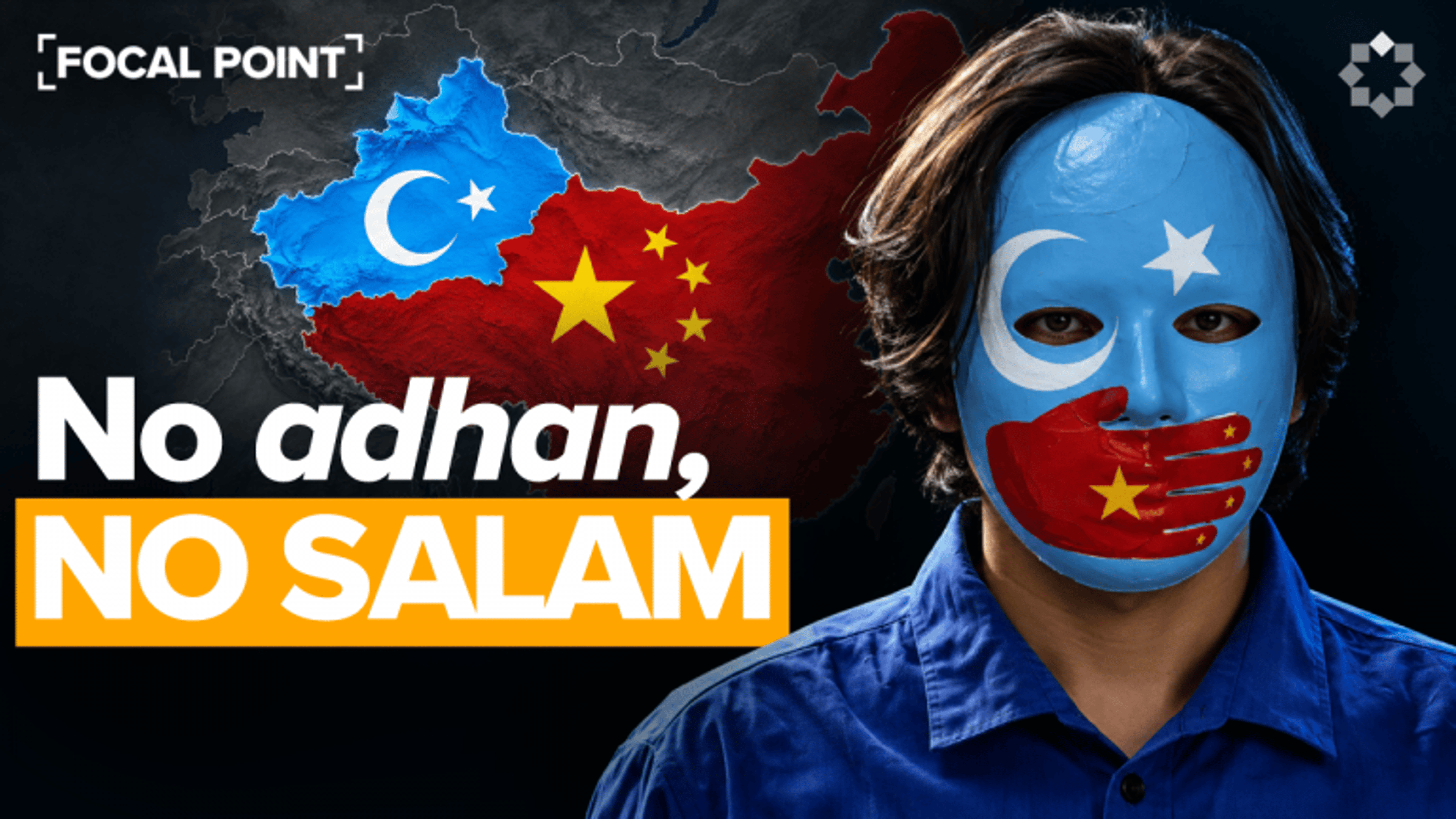
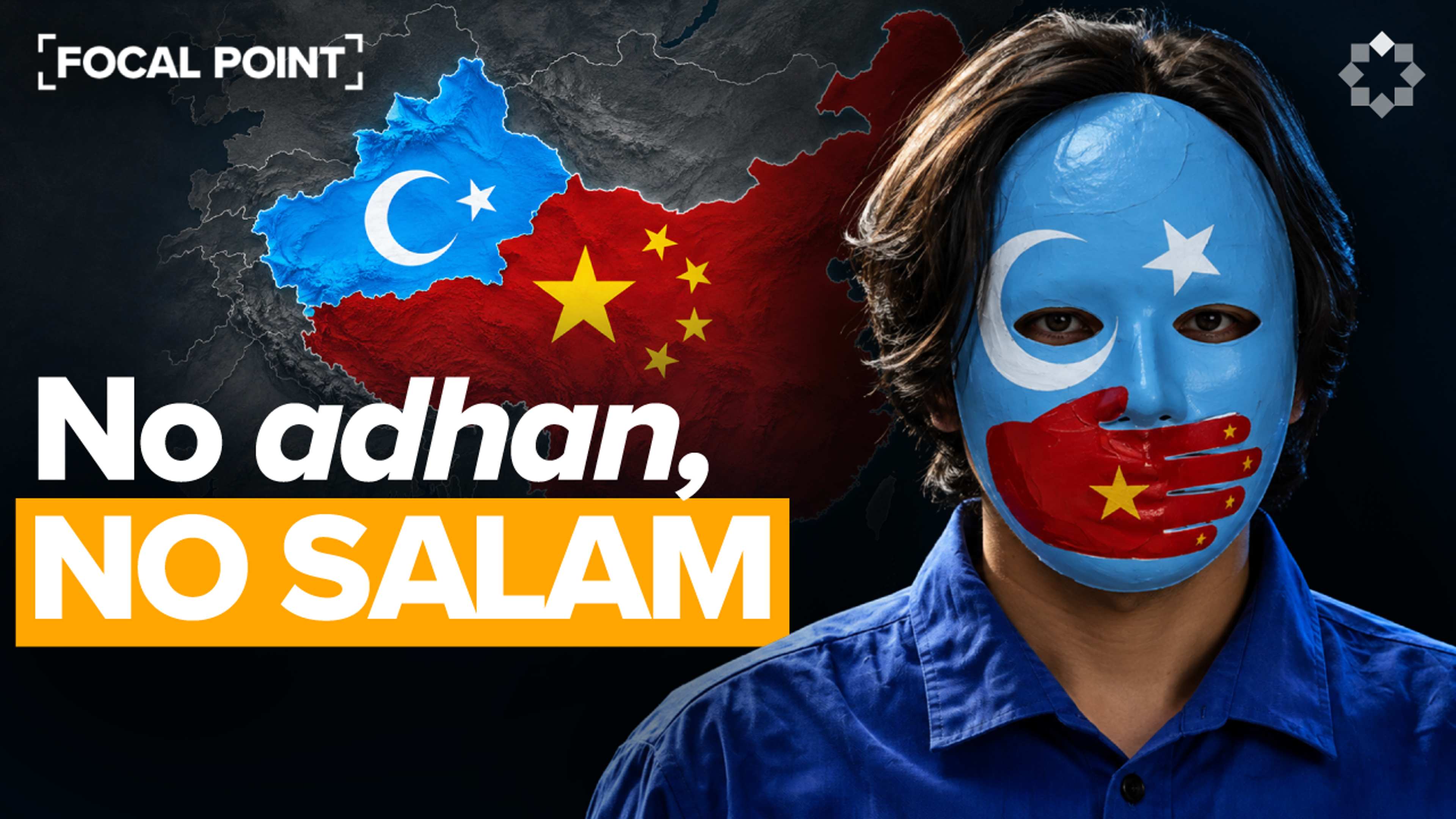
China Is Erasing the Uyghurs From Their Thousand-Year Homeland | Focal Point with Imam Tom Facchine

Focal Point

China Is Erasing the Uyghurs From Their Thousand-Year Homeland | Focal Point with Imam Tom Facchine

Installing WhatsApp, avoiding alcohol, or having too many children can be flagged as signs of “extremism” in East Turkestan. These are just a few of China’s 75 “pre-crime” signals tracked by an algorithm. People are then detained not for what they’ve done, but for what a system predicts they might do. And when the system targets ordinary faith, ordinary life starts to disappear.

In June 2025, a Turkish journalist spent eight days in the region’s Silk Road cities and never once heard the call to prayer. He was turned away from a major mosque three times. Then, an elderly woman on the street whispered a greeting she knew could get her arrested: “As-salamu alaykum.” How does a greeting become a crime in a land Muslims have called home for a thousand years? And why has so much of the Muslim world looked away? In this Focal Point, Imam Tom Facchine traces how the Uyghurs became the target of one of the worst human rights crises of our time, from the betrayals by major powers to the terror label and surveillance system that now police their daily lives.

This episode covers:

— Why the Uyghurs’ roots in East Turkestan run back a thousand years, and how every major power abandoned them

— How the US designated the East Turkestan Islamic Movement as a terrorist group and labeled Uyghurs at Guantánamo, while seeking China’s support for the Iraq War

— How a system of 75 “pre-crimes” and an estimated $7.2 billion in security investment punishes Uyghurs for what an algorithm predicts they might do

— A recording obtained by RFA’s Uyghur service in which the state describes religious belief as an “ideological illness”

— Why China is committing ethnic cleansing: counterterrorism, resources, or nation-building, and what we can do about it

References: https://yqn.io/uyghurs-fp

This transcript was auto-generated using AI and may contain misspellings.
00:00We continue our series, China, Power and Prosperity, with what the U.S. calls one of the worst
00:18human rights crises of our time.
00:41In June of 2025, a Turkish journalist named Taha Kilinc spent eight days walking the old Silk Road cities of East Turkestan. But in his eight days there, Kilinc said that he heard the call to prayer zero times, not once. He tried to pray at the Idkah Mosque,
00:55one of the most important mosques in all of Central Asia, but he said that he was turned away three separate times. He counted just five women in headscarves during his entire time there, all of whom seemed to be tourists visiting from Uzbekistan, as far as he could tell. The few mosques
01:08open at all were open mostly to the elderly, and he watched as they were forced to recite a loyalty pledge to the Chinese state before they were allowed to step inside and pray. And then one afternoon, an old woman passed him on the street. She recognized
01:21that Kilinc was a Muslim, and as she passed, she leaned in and whispered, As-salamu alaykum. She was whispering it because she knew very well that she could be arrested for doing so. How does As-salamu alaykum become outlawed in a place that Muslims have
01:34called home for a thousand years? And why are so many Muslims today ignoring it? Most of us are already a little bit familiar with the Uyghurs. You've probably heard about the work camps, the detention centers, the surveillance. The water starts to get muddy on two or
01:48three points. The first point is the claim that East Turkestan isn't really the ancestral home of the Uyghurs, that they migrated there within the last couple hundred years, and therefore don't really have the same rights to self-determination as other groups. The second claim is the accusation that
02:02the Uyghurs attempt to achieve their political aims through terrorism. And the third claim is that the U.S. government supports the Uyghur case, therefore the whole thing is engineered by the U.S. to undermine China. Let's quickly deal with that last point
02:14since this one is very common and also applies to how people think about Syria and other places. The fact that Western governments support something opportunistically does not mean that it's not true, or that the thing that they're supporting is a conspiracy. We'll show you later in this episode how the U.S. government is selective,
02:29bringing what's happening to the Uyghurs only when it's useful and then dropping it the moment that it's not. Two things can be true at the same time. The Uyghurs can be enduring a genocide and the U.S. government can be trying to exploit it for its own purposes when
02:43In fact, pretty much every major power is guilty of backstabbing the Uyghurs, including the Soviets, as we will soon see. It's also important to mention that we can prove what's happening in East Turkestan without resorting to a single Western source.
02:54The most damning witness in the whole case is the Chinese government itself, its white papers, its leaked recordings, its own published policies. Now let's get back to the first claim. How rooted are the Uyghur people
03:06in East Turkestan? In the 7th century, the Göktürk Khaganate ruled a vast territory from Mongolia to Russia, and it governed various Mongolo-Turkic groups, including the Uyghurs. The Uyghurs eventually allied with other local groups like the Karluks to defeat the Göktürks, and
03:20afterwards, when the alliance fell apart, the Uyghur Khaganate was established, lasting from 744 to 840. There was no real Muslim influence at this point, and the empire fell to the Kyrgyz. The Uyghurs then migrated south and split into two distinct groups. The first
03:35group is called the Yellow Uyghurs. They were established in the Ganju Uyghur kingdom near Tibet. They retained Tibetan Buddhism as their religion, and they lost their last government in 1036. Today, only about 15,000 of them remain. The other was called the Kingdom of
03:49Kocho, and they were established in the Tarim Basin, which is modern-day East Turkestan. This state actually interacted heavily with other Indo-European groups, Persians, as well as Turkic peoples, forming the ancestry of the modern
04:02Uyghur population. The Kharakhanid Khanate, founded by descendants of the Karluks, were rivals of the Kocho kingdom and established themselves in Kyrgyzstan and western Kashgar. They became a Sunni Muslim state in 934, after the conversion of Prince Satuk
04:17Bughra Khan, which marked the beginning of the Islamization of the region. While the neighboring Uyghur Kocho kingdom didn't immediately accept Islam, a period of gradual cultural interaction began. In the 13th century, the Mongols conquered the region, turning the Kingdom of Kocho into a
04:32vassal state, and the Mongols themselves became gradually Islamized, influenced by the character, strength, and religion of the Kharakhanids. By the 15th century, the Chagatai Khan dominated the region, and the Kocho kingdom became subsumed under their rule.
04:45Rulers like Mubarak Shah, the first Chagatai Khan to convert to Islam, the Tarim Basin became a bastion of Sunni Islam, with the Uyghurs converting around this time as well. By the 17th century, the Naqshbandi Sufi Khojas replaced the Chagatai Khanate as the rulers of the
04:59Tarim Basin. These were Uyghur Sufis who mixed with people from Central Asia and Persia, since the Chagatai Khanate had imported many Muslims from Central Asia into the region. Internal strife between the Afaqi and Ishaqi Khoja factions
05:11led the Afaqis to seek help from the fifth Dalai Lama, the leader of the Tibetans in 1677. Consequently, the Buddhist Dzungars, which were Tibetans, took control in 1680,
05:22installing a puppet Afaqi ruler. They ruled for just 16 years, and the Uyghurs were persecuted heavily during this time. Following this persecution, the Uyghurs allied with the Qing dynasty to expel the Dzungars in
05:341696. This marked the first Chinese imperial control of the region in over 1,000 years. During the Qing dynasty, which ruled China from the 17th through the 20th century, the Chinese emperor and government pursued westward expansion into Central Asia
05:47by incorporating East Turkestan into the empire. In 1755, the Qing dynasty invaded parts of the region. Under the Qing, the Uyghurs lived in the semi-autonomous Kumul Khanate and were referred to
05:59as the Chantau, or the Turban Heads. They were often lumped together with the Hui, the Chinese Muslims. The Afaqi Khojas instigated many revolutions against the Qing to gain control of the region, which were all quelled, and the Khoja resistance eventually died out
06:13about 1860. Between 1862 and 1877, the Dungan revolution saw Yakub Bey, who was an Uzbek, join a Hui revolution and establish a state recognized by the Ottomans and the British. They revolted against the
06:26Qing and the Kumul Khanate, and it became one of the main Muslim regions. However, the Qing eventually reconquered the territory, officially naming it Xinjiang, the New Frontier, in 1884, and began the settlement of Han convicts and criminals in the Tarim Basin
06:40to populate the frontier and develop agricultural resources. The Uyghurs, because of tensions with the newly implanted convicts, began to spread out and migrate. Following the 1912 collapse of the Qing, the warlord era sparked a newfound sense of Uyghur nationalism.
06:53As various warlords ruled over different provinces, Mongolia and Tibet broke away from the Republic of China, and the Uyghurs sought to follow suit and gain independence as well. In 1921, the Soviet Union sponsored a conference in Tashkent to encourage Uyghur identity.
07:07At this point, the Soviets had established their communist influence throughout the region and had devastated Islamic influence. Mosques were destroyed, Imams were killed, and thousands had been massacred resisting the restructuring of Muslim society. The Soviets were interested in
07:20spreading Uyghur nationalism to push their own agenda among the minorities in the region and to prey on ethnic tensions. They gave promises of independent states, similar to that of Uzbekistan, and the Uyghurs embraced their name of Uyghur people, tracing their lineage
07:34back to the original old Uyghur Khanate. The Republic of China countered Soviet propaganda by emphasizing how areas under Soviet control had completely lost their religious heritage. The Kumul Khanate was abolished in 1930, the same year the Soviet government had
07:48effectively abolished the institution of the Waqf in Central Asia, leading to a three-way power struggle between the Chinese communists, the Soviets, and the Republic of China. This era saw two short-lived independent attempts. One is the first
08:02Islamic Republic of East Turkestan in 1933. This was led by Sabit Damullah Abdul-Baki. It implemented the shari'ah, they expelled Swedish missionaries from entering the region, and they ensured religious freedom for the citizens. They also nationalized industry and mined
08:16underground resources before being crushed by the Republic of China-backed Hui Muslim forces. In 1933, on August 9th, the Hui Muslim General Ma Zhang Kang killed and beheaded the Uyghur leader Timur Beg, displaying his head on a spike at Idkah Mosque.
08:29Sabit Damullah Abdul-Baki called for the expulsion of the Hui Muslims from the region and the Hui armies. With backing from the Republic of China, they crushed the armies of East Turkestan and the Islamic Republic fell, leading to the Soviets installing a
08:42Chinese puppet leader named Sheng Shicai. By the end of 1941, Sheng's brutal totalitarian regime in East Turkestan created widespread discontent among Uyghurs, Kazakhs, Tatars, and even Mongols living in East Turkestan, resulting in renewed calls for
08:57independence. The Republic of China actually supported the Uyghur uprising against Xichai, and in 1941, Xichai betrayed the Soviets and pledged loyalty to China and expelled all Soviet personnel from
09:09the region in 1942. At this stage, the Soviets were aiding the Uyghurs to remove the Chinese communists from power. In April 1942, Isak Beg Munono, director of the Society for the Promotion of
09:21Kazakh and Kyrgyz Culture, sought political asylum in the Soviet Union alongside hundreds of other Uyghur, Kazakh, and Kyrgyz, as well as Tatar and Mongol leaders. This mass exodus signaled a major geopolitical shift.
09:34The Soviet Union abandoned its support for Sheng Xichai's regime and pivoted towards backing the burgeoning Turkic national independence movements in East Turkestan. The second attempt was the Second Republic
09:46of East Turkestan from 1944 to 1949. By mid-1943, these leaders established the East Turkestan National Liberation Organization, securing covert military and logistical support from Moscow to combat Chinese occupation.
09:59Following the Soviets' victories against Germany in 1944, Sheng sent a letter to Stalin offering to incorporate East Turkestan into the USSR as its 18th Soviet Socialist Republic. Stalin, in turn, forwarded the letter to Chiang Kai-shek, who removed Sheng from
10:14his post and recalled him to the Chinese interior. Following Sheng's departure, a rebellion slowly broke out in East Turkestan. In mid-August of 1944, Uyghur and Turkic rebels formed the Nilka Guerrillas, a group led by Ren Batur
10:28to secure independence for East Turkestan. They succeeded in capturing Nilka County on October 8th, 1944, and just a month later, members of the East Turkestan National Liberation Organization led by Abdul Kareem Abusov
10:41and Alihan Toray attacked KMT, which is the Republic of China. They had police quarters in Gulja, and that was the location of their attack. At the same time, groups of other Uyghur, Kazakh, and other Turkic rebels began to
10:53attack the outskirts, capturing the city of Gulja by November 12th, as Chinese government forces fled the city. On April 8th of 1945, the founding of the East Turkestan Republic's National Army was proclaimed
11:06with a large military parade. The Republic of China responded by sending Chinese warlord Ma Fuyang and his Hui army to reinforce the Republic of China's troops and assist them in protecting Urumqi from an impending attack by East Turkestan National Army.
11:20Urumqi was the principal stronghold of the Republic of China in East Turkestan. By early September of 1945, over 100,000 Han and Hui Chinese troops had been deployed to East Turkestan
11:31under the command of the Republic of China's KMT. In September of 1945, the East Turkestan National Army captured Manas and began preparations to cross the Manas River, intending to advance eastward towards
11:43Urumqi. However, Soviet military advisors abruptly pressured the leadership of the East Turkestan Republic to halt all further military operations. The ETR's assertion of national sovereignty was reflected in President Alihan Toray's refusal to comply with those
11:57Soviet demands. Now, unbeknownst to the ETR leadership, the fate of their republic had already been shaped by negotiations among the great powers that were happening behind their backs. Agreements reached at the Yalta Conference in February of 1945
12:09laid the groundwork for subsequent Soviet policy in the region. The Sino-Soviet Treaty of Friendship, which was signed on August 14th of 1945, revealed that the Soviet Union was prepared to subordinate support for the East Turkestan Republic to broader strategic
12:24interests. Under the terms of this arrangement, the Soviet Union agreed to discontinue its assistance to the ETR and effectively acquiesce to efforts by the Republic of China to reassert control over the territory and suppress the Turkestani Republic.
12:37Soviets pressured the East Turkestan Republic's leadership to enter peace negotiations with the Republic of China. The East Turkestan Republic's leadership became divided as President Alihan Toray and his supporters in the East Turkestan Republic's government council fiercely opposed the idea of peace
12:51negotiations with China. He condemned the peace negotiations as an act of betraying the interests of the Uyghur people, an action betraying the achievements of the revolution, and an action to court the favor of the Chinese. The peace talks proceeded and triggered
13:03significant strife within the ETR government council. In 1946, the Soviet Union imposed a final mediated plan designed to strip the ETR of its military advantage. The army was to be downsized and reformed with KMT-supervised regiments stationed in Urumqi,
13:18Kashgar, and Aksu. A commander-in-chief would be installed as a mere deputy with the Chinese Xinjiang provincial government. While Chinese forces were prohibited from the three regions, the ETR was forced to disband its political police and to reduce its
13:32defensive footprint. Soviet advisors abandoned the ETR and representatives of the Soviet consulate detained and forcibly escorted President Alihan Toray and his staff to Almaty. He was subsequently placed under house arrest in Tashkent, where he remained until his
13:45death in 1976, effectively a political prisoner of the Soviet-Chinese collusion. In 1947, the ETR wrote a letter to the Soviet consul in Urumqi pleading for the Soviet Union and Stalin to protect the interests of the ETR and its people. However, the Soviet
14:00Union continued to negotiate with Mao Zedong, who was the new leader of the Chinese Communist Party, which took over the ETR. And by June of 1949, the Soviet Union had agreed to let Mao
14:11take over ETR entirely. In August of 1949, as the Chinese Communist Party prepared to take control of ETR, a small covert reconnaissance team led by Deng Likun arrived in the East Turkestan Republic's
14:23capital of Gulja with Soviet assistance. At the same time, the Republic's senior leadership were summoned to Moscow for consultations. The 14-member delegation departed from Almaty, Kazakhstan on August 24th. Shortly afterward, Soviet authorities informed Education Minister
14:38Seypeddin Azizi that the delegation's aircraft had crashed and that there were no survivors. Azizi was instructed to remain silent about the incident and prepare to travel to Beijing. Following the collapse of the Soviet Union years and years later, former
14:50Soviet security officials revealed that the leaders had in fact been detained upon arrival in Moscow, imprisoned for three days, and executed on Joseph Stalin's orders on August 27th, 1949. The operation was
15:03reportedly overseen by MGB Chief General Victor Abakumov, who personally interrogated the delegation before ordering their deaths. At the same time, approximately 30 other senior East Turkestan Republic officials were arrested by Soviet authorities in East Turkestan itself
15:17and subsequently disappeared, clearing the way for the political transition that followed later that year. Two months after Mao announced the establishment of the People's Republic of China, the East Turkestan Republic was officially dissolved on December 22nd,
15:301949. The Communists started to encourage Han immigration to dilute the population and discourage nationalist attitudes. In 1949, Han Chinese made up just five percent of the East Turkestan population. Also in 1949, Stalin and the Chinese Communist Party leaders
15:45agreed that China should occupy the region. They started to limit religious freedoms and enforced Sinicization, Chinification, to have the Uyghurs assimilate with the Chinese. And by the 1950s, the Chinese state moved
15:56several million former soldiers into the northern part of the region to work as farmers on military colonies. These settlers, members of the Xinjiang Production and Construction Corps, were pulled into the borderlands
16:09through a combination of economic incentives and ideological persuasion. The government developed a sprawling system of state-owned agriculture, factories, mines, and fields in the region, all overseen by Han settlers. East Turkestan became a very strategic location for both the Chinese and the Soviets.
16:23The Chinese didn't want a Soviet invasion into Afghanistan, as they would be closer to East Turkestan, and could further exert their influence in inciting nationalism when it benefited them. The Chinese funded and supported the Mujahideen in Afghanistan against the Soviets,
16:37while the Soviets made sure that the Uyghurs didn't support the Mujahideen in Afghanistan. The 1991 collapse of the Soviet Union intensified Uyghur desires for independence as neighboring states gained sovereignty.
16:47Beginning in the late 1990s, Imams had to undergo training and state certification in order to practice. Religious weddings and funerals became highly regulated affairs, requiring written permission from the state. That was a thorough but necessary introduction, but it proves without a shadow of a doubt
17:01that the Uyghurs and Islam have been at home in East Turkestan for quite some time. Now for the last claim, which is terrorism. Prior to 2001, Chinese officials generally described Uyghur discontent as ethnic separatism,
17:14a term that at least acknowledges a political struggle for self-determination. However, within just one month of the September 11th attacks, the state began using the label East Turkestan terrorist to describe protesters and assailants.
17:27This shift was a strategic attempt to garner international sympathy and also to silence foreign criticism of its repressive policies. By reframing its domestic crackdowns as a contribution to the global war on terror,
17:40the CCP successfully integrated its campaign into ready-made grand narratives of the global Islamist threat. Three months later, in January 2002, the State Council Information Office of China
17:51issued a public report that revised the past history of Uyghur civil protest and political violence, changing the already questionable term of ethnic separatism,
18:00since most Uyghur protests were directed towards local injustices rather than national self-determination, to the dehumanizing label of terrorist.
18:08In August 2002, Chinese authorities guided a Beijing-based FBI investigation of Uyghur terrorism in China. The CCP succeeded in framing Uyghur nationalism as a cause of terrorism within China.
18:20Uyghurs who tried to flee East Turkestan were often accused of being violent terrorists seeking overseas training, and the separatist threat allegedly posed by traditional Uyghur culture was conflated with another threat
18:32allegedly emerging from the Islamic religious practice. The anthropologist Talal Asad has written that words like terrorism are not neutral descriptions, they are actually categories. Somebody constructs them and decides what goes in them.
18:44And what the label terrorism does is it allows governments to instantly remove people outside the protection of ordinary law. The target goes from being a citizen with a complaint to a security threat.
18:56And pretty much anything can be done to him or her, and it's justified. And just like the location of embassies or the recognition of statehood itself, nations actually compete to have their own adversaries recognized by other nations as terrorists.
19:09In the decades ahead, the United Nations and other multilateral organizations must continually confront terror. A turning point in the targeting of Uyghurs was the 2002 decision by the U.S. and the U.N.
19:20to list the East Turkestan Islamic Movement, ETIM, as a terrorist organization. In 2002, the Bush administration sought Chinese support, or at least a non-veto, for a U.N. Security Council resolution authorizing the Iraq War.
19:33As a quid pro quo, the U.S. agreed to designate the East Turkestan Islamic Movement, ETIM, as a terrorist organization and label the Uyghurs in Guantanamo Bay as members of that group.
19:44They were handled not as prisoners of war but as unlawful combatants, another new legal designation created by the United States military that denied them rights under the Geneva Convention.
19:54Unlike other foreign delegations, Chinese officials were permitted to enter the base with cameras and photograph their own citizens. And they were given classified information about the detainees. It was turned over to them by U.S. interrogators.
20:06By late 2002 and early 2003, U.S. military tribunals, known as CSRTs, and the Department of Defense, concluded that these men posed no threat to the United States and were not even enemy combatants.
20:17However, the U.S. was stuck. It could not return them to China because they were likely going to be tortured and executed upon return, nor could they be set free anywhere else.
20:25This created a legal limbo where innocent men remained in prison because no third country was willing to accept them for fear of Chinese retaliation. In one instance, a judge dismissed their petition for release because he felt he could not order another country to take them
20:38and could not order them released into the U.S. over government objections. Political expediency led to the years-long detention of these individuals who had done nothing wrong. Even after being cleared, they became commodities in diplomatic negotiations.
20:51They were bargaining chips, with their resettlement often contingent upon foreign aid deals. The ETIM listing allowed China to argue that Uyghur separatist groups were part of a global network that was linked to al-Qaeda.
21:02It created a racialized bad Muslim slot, producing a state of exception where Turkic Muslims were viewed as undeserving of civil and human rights. The war on terror discourse has been used to shield the CCP from international consequences.
21:16China justified its internment system as a vocational training program and studied Western counterterrorism tactics. For example, authorities in occupied East Turkestan hosted British counterterrorism experts to share UK best practice, specifically the PREVENT program.
21:30Many Muslim-majority nations have remained silent or supported China's policies, often due to economic dependence or their own interest in using counterterrorism rhetoric to suppress domestic dissent. There has been a blatant display of feigned ignorance.
21:43They turned their backs on Muslim Uyghurs for fear of a potential retaliation from China. The significance of the global war on terror to the targeting of Uyghurs lies in its ability to normalize violence.
21:54By pathologizing Turkic Muslim identity as an ideological virus, the CCP has made genocide psychologically permissible for the Han majority, framing it not as a crime, but as a necessary task of social hygiene.
22:08Ultimately, the global war on terror provided the legal and moral cover for a human engineering project aimed at the total epistemic transformation and cultural erasure of the Uyghur people.
22:20In August of 2020, U.S. Secretary of State Mike Pompeo removed ETIM from the U.S. terror list, but the initial international endorsement already set things in motion.
22:30The cover of the war on terror allowed the CCP to exercise its suppression of any Uyghur resistance to state policies under the guise of the global battle against religious extremism.
22:40In fact, the removal of ETIM from the list proves just how cynical and arbitrary the designation was in the first place. It happened again, meaning the removal happened again for political reasons when the Trump administration took a hard turn against China.
22:54It should go without saying that a legal designation that can be switched on or off at a whim has little to do with the truth. So if there's no legitimate Chinese claim on East Turkestan,
23:03why would the Chinese government pour this much money, technology, and sheer attention into its distant border region? Let's run through some of the common answers that are given and evaluate them. The first is the answer given by the Chinese government, counterterrorism.
23:17They point to the 2009 uprising, massacre, riots, depending on your perspective, in the city of Ürümqi. There was an unknown number of people that were killed and many more injured. The ensuing government crackdown was extremely brutal.
23:32Now, at first glance, this seems like a typical enough situation until you ask two questions. First, what provoked the violence? Where did it come from? And second, how proportionate was the response? What happened in Ürümqi in 2009 didn't happen in a vacuum.
23:45In fact, there had been a tradition of unrest for years as the Uyghur population experienced frustration and alienation from government policies. This particular event also had a short-term cause.
23:57What began as a peaceful, student-led protest against injustice escalated into a citywide ethnic conflict and a massive militarized crackdown, leading to thousands of deaths, disappearances, and a nine-month region-wide internet blackout.
24:10On June 25, 2009, a rumor spread that several Uyghur men had raped two Han women at a toy factory in southern China, about 2,000 miles away.
24:19In response, a mob of Han workers stormed the factory dormitory, attacking Uyghur laborers who had been moved there under the government labor transfer program. They attacked them with iron bars and knives.
24:31Grainy videos of the lynching showing jeering crowds and beaten workers went viral on nascent Uyghur internet platforms, sparking outrage over the perceived lack of government protection for Uyghur citizens.
24:42On the afternoon of July 5, Uyghur students and residents gathered in Ürümqi's People's Square. They waved Chinese flags to signify their loyalty as citizens, and they demanded that the government arrest the Han workers responsible for these killings.
24:55The protests remained peaceful for approximately three hours until around 8 p.m., when armed police and paramilitary forces arrived to disperse the crowd.
25:03Witnesses reported that police used live gunfire against the unarmed protesters, which acted as a catalyst for a citywide riot. In the ensuing chaos, Uyghur groups overturned buses and attacked Han passing by.
25:14The government reported that over 130 Han civilians were beaten to death during these initial two days of violence.
25:21On July 7, bands of Han vigilantes responded. Armed with kitchen cleavers, bricks, and sharpened sticks, they took to the streets to carry out revenge killings against Uyghurs. Witnesses described police standing by as these mobs engaged in hand-to-hand combat.
25:35The state then launched a hard-strike campaign, and at night, automatic gunfire from police was heard in Uyghur-majority neighborhoods. The government completely shut down the internet and international cell service in the region for over nine months to manage the narrative and prevent further organization.
25:49Official Chinese figures eventually listed 197 dead and over 1,700 injured, stating that the majority were Han. However, Uyghur groups and international observers suggest the number of Uyghurs killed by police and mobs was much higher and remains unknown.
26:02In the weeks following the violence, police conducted sweeps, taking away thousands of Uyghur men overnight. Local police stations even issued forms for families to fill out to request news on the whereabouts of missing loved ones. That shows you the scale of the disappearances.
26:16The state used the Urumqi massacre to justify the permanent shift toward high-pressure security within East Turkestan.
26:24It began framing all Uyghur discontent as terrorism and separatism, orchestrated by foreign forces, paving the way for the People's War on Terror and the eventual creation of the mass internment camp system.
26:36The July 5th massacre stands as a haunting prelude to the horrors that unfolded, a chilling proof that Uyghur cries for justice were met with intensified repression. In 2014, the Xi Jinping administration formally declared the People's War on Terror.
26:50This campaign moved beyond reacting to violent incidents to a proactive system of pre-crime detection, and they began to use techniques of counterinsurgency, a mode of military engagement that stresses mass intelligence gathering, to assess the Uyghur population.
27:05China uses high-tech surveillance to operationalize a system of pre-crime detection, where individuals are identified for detention not by the illegal acts that they've committed, but for signals of future deviance or religious extremism identified by algorithms.
27:20Chinese state authorities began to circulate a list of 75 official signs of Islamic extremism.
27:27Things like possession of digital files with religious content, using a VPN, or installing WhatsApp were categorized as pre-crimes that could lead to detention.
27:35This system relies on a digital enclosure that converts the daily life and biometric data of Turkic Muslims into code matched against datasets of untrustworthy behaviors.
27:45Urumqi and the rest of the Uyghur homeland have become an experimental place for the Chinese techno-security industry and the authoritarian statecraft it supports.
27:54In 2016 and 2017, the state invested an estimated $7.2 billion, specifically in the region's information security industry, as part of an increase of public security spending over 90%.
28:07Over those same years, the state awarded an estimated $65 billion in private contracts to build infrastructure and $160 billion more to government entities in the region, an increase of nearly 50%.
28:19The majority of the increase in construction spending was centered on the building of detention facilities and related systems. Now, rather than targeting a small number of criminals, the campaign targeted the entire Muslim population of 15 million people in East Turkestan.
28:33It precipitated a criminalization of Islamic practice and a number of Uyghur and Kazakh cultural traditions.
28:39Initially, only religious leaders were sent to the camps, but by 2017, the War on Terror became a program of preventing Uyghurs from being Muslims at all. And, to a certain extent, preventing them from being Uyghur or Kazakh.
28:52In the space of half a decade, the state built a system of checkpoints, first between counties and then within urban jurisdictions.
28:59They established a pass-card system that restricted the movement of the Uyghurs within the region and confiscated passports from the few Uyghurs and Kazakhs who had obtained them.
29:07They sent as many as 1.1 million state workers into Uyghur and Kazakh rural communities to conduct assessments of the untrustworthy Muslims.
29:15They hired over 90,000 additional assistant policemen who were tasked with scanning Muslim phones and IDs, producing a density in policing that rivaled East Germany before the fall of the Berlin Wall.
29:27They also began building a network of highly securitized internment camps, which at the height of detentions would hold between 10 to 20% of all the adult population.
29:37That's the proportion of the population that regional authorities deemed to have developed the tumors of religious extremism.
29:44At the same time, the state's civil affairs ministry began to enforce a zero-illegal birth policy that, along with endemic family separation caused by detentions, precipitated a drop in birth rates of 50 to 80%.
29:57According to the East Turkestan state's prosecutor's office, between 2017 and 2020, over 533,000 people were formally prosecuted in East Turkestan, a rate that's six times higher than the national average for that same period.
30:12Since the conviction rates in Chinese courts are higher than 99%, it's fair to assume that nearly all criminal prosecutions resulted in formal sentences. The following six technologies and methods are central to China's pre-crime infrastructure.
30:25One, the IJOP, the Integrated Joint Operations Platform. The IJOP acts as the central nervous system for the surveillance of East Turkestan.
30:33It's a regional data system that aggregates information from tens of thousands of checkpoints, facial recognition cameras, and manual house visits.
30:40The platform uses big data analytics and artificial intelligence to analyze patterns of human behavior, such as communication, financial habits, and migration, to flag micro-cues of deviant behavior.
30:51Analysis of the IJOP app reveals that authorities are collecting massive amounts of personal information from the color of a person's car to their height, down to the precise centimeter, and feeding it into the IJOP central system, linking that data to the person's national identification card number.
31:08The second one is smartphone scanners. So, smartphones are transformed into tracking devices through several invasive methods, such as mandatory spyware. Residents are required to install apps that monitor phone content for suspicious material. There are counterterrorism wands.
31:22These are police using external scanning devices to plug into phones at checkpoints, searching for deleted files, religious imagery, or illegal apps like WhatsApp and VPNs.
31:32Checkpoints use specialized data doors to ensure that the smartphone a person is carrying is actually registered to their ID and biometric profile. Authorities make sure that the smartphone was registered to the person whose face and ID were scanned in the high-traffic urban areas.
31:46Local authorities use real-time vehicle tracking to be able to tell where everyone's going all the time.
31:53Automated facial and phenotype recognition. China has implemented a sophisticated facial recognition network featuring Uyghur alarms. Yes, tech companies have developed tools designed to automatically detect and flag individuals based on
32:07ethno-racial phenotypes as they pass in front of cameras. They also have emotion recognition. Some facilities utilize affect recognition to assess the mental and emotional states of
32:18prisoners in real time, attempting to detect ideological problems through facial expressions. According to documents from the private prison contractor Lonbon, face recognition and so-called emotion or affect recognition
32:30technologies have been installed throughout the Uyghur region prison system. In their most elaborate forms, such systems purport to monitor the emotional states of prisoners using constant assessments of facial expressions through high-definition video cameras. The systems are designed to
32:45quote, eliminate the ideological problems of prisoners by alternating between mandatory interruptions that correspond to the supposed mental states of prisoners and cultural programming that ensures the thought change is carried out in a
32:58subtle way. Number four, biometric data collection. Under the guise of public health initiatives, the state has collected high-fidelity biometric data from nearly every single adult resident in East Turkestan.
33:09This includes DNA samples, blood types, fingerprints, voice signatures, and iris scans, all of which are integrated into the policing database. Number five, trustworthiness ratings and the 75 signs that we mentioned earlier. The state utilizes a points-based system to categorize
33:24Muslims as trustworthy, average, or untrustworthy. This assessment is guided by a list of 75 signs of religious extremism, which criminalize ordinary behaviors such as using a VPN, having too many children,
33:37violating family planning rules, abstaining from alcohol, abstaining from smoking, visiting a mosque too frequently, or having relatives living abroad or possessing a passport.
33:46Those who were determined to be untrustworthy were then sent to detention centers where they would be interrogated, asked to confess their pre-crime violations, such as teaching their children about Islam, or
33:58teaching fellow Uyghurs how to pray, or to read the Qur'an. And then they were also required to name other people who were doing the same things. In this manner, and with the help of tech-enabled cyber-violation detections, the parameters of the techno-political system
34:13determined which individuals should be slotted for transformation through education, aka internment camps. Women are often said to be guilty of sharing images of Islamic practice or Qur'anic verses via social media.
34:25One 25-year-old woman said that her interrogators had shown her that they had found four extremist images in her WeChat account. She told a reporter, I deleted them a long time ago, but somehow they restored them. They were just pictures of women in veils. In one of them,
34:39a little girl is holding her hands up in prayer. The woman was sent to a detention center for her association with the images that she thought she had deleted years before. Number six, the urban policing grid. Surveillance is
34:51physicalized through people's convenience police stations built every 200 to 300 meters. These hubs monitor a grid system where walking beyond the designated neighborhood without permission can trigger an automatic alarm. If a person is flagged, the system sends a push
35:06notification to local police, often leading to immediate interrogation or internment in smart camps. Authorities began detaining thousands of Uyghurs, and by 2018, as many as a million people were held in a vast network of prisons and re-education centers. Scholarly estimates of
35:21the size of the internment drive, called the Transformation Through Education Program, by the Communist Party officials, fall in the neighborhood of a million
35:30extrajudicially detained people. An internal report by the region's Agricultural Department, taken at the height of the internment drive, lamented that, quote, all that's left in the homes are the elderly, weak women, and children.
35:42It's like the largest internment of ethnic and religious minorities, likely since World War Two. Satellite images suggest that there may be more than 380 detention facilities in East Turkestan, and between
35:542016 and 2017, authorities advertised more than 90,000 police and security jobs and built more than 7,000 police stations. China's State Council Information Office recently released a white paper titled
36:06CPC Guidelines for Governing Xinjiang in the New Era. Like many official Chinese government publications, the document presents itself as a celebration of development, stability, and progress. A closer reading, however, reveals language that aligns with
36:19long-standing concerns raised by Uyghurs, researchers, and human rights organizations regarding mass detention, forced assimilation, and the erosion of Uyghur identity. Published in 2025, the white paper describes efforts to strengthen public education on the history of the CPC, conduct extensive educational
36:34campaigns, and promote modern values through specialized education centers. It further emphasizes the promotion of standard spoken and written Chinese across the region, and presents these initiatives as necessary for future development.
36:46Although the document does not explicitly refer to prisons or detention camps, the language is notable. The policies described are not framed as voluntary
36:54educational programs, but as state-directed efforts to reshape beliefs, cultural practices, and social behavior. The report highlights the construction of
37:03771 education bases for patriotism, presenting them as evidence of successful governance and ideological transformation. For years, Chinese authorities had denied the existence of mass internment facilities in East Turkestan. Only after the emergence of satellite imagery, survivor
37:16testimony, and leaked government documents did officials acknowledge the facilities, but they rebranded them as vocational training centers. The 2025 white paper no longer focuses on defending the policies. Instead, it presents them as achievements and describes them as part of a broader governance strategy.
37:31Additionally, the paper states that approximately 86,000 elementary and secondary school children from East Turkestan participated in educational exchange and study programs in other provinces and
37:41municipalities across China during 2024. The document presents these initiatives as part of a broader patriotic education strategy aimed at strengthening national identity and promoting interaction among different ethnic groups. Students are placed in mixed classes
37:54and even mixed dormitories, where they are expected to study, live, and socialize alongside peers from diverse backgrounds. The white paper also highlights hand-in-hand partnerships linking schools in East Turkestan with schools elsewhere in China,
38:05including institutions affiliated with the Xinjiang Production and Construction Corps. Chinese authorities characterize the programs as mechanisms for educational cooperation, social integration, and national unity. The programs facilitate the long-term
38:18relocation of Uyghur students into predominantly Han Chinese educational environments during key developmental years. Extended separation from family community networks,
38:26language environments, and religious practices contribute to cultural assimilation and weaken the transmission of Uyghur identity across generations. Particular attention has been drawn to the involvement of the XPCC, the state-administered paramilitary organization that operates its own education,
38:42security, and administrative systems in the region. While the white paper presents the XPCC schools as ordinary participants in educational exchange programs, these institutions play a significant role in advancing state objectives related to political socialization.
38:55The document does not discuss the degree of parental consent involved in the students' participation or the extent to which families can decline enrollment to such programs, leaving important questions regarding agency, choice, and implementation unanswered.
39:07The continued emphasis on specialized education centers is significant. Even after years of international scrutiny and official claims that the camps had been closed, the document suggests that state-led programs aimed at ideological and cultural transformation remain open
39:21and central to governance in the region. The white paper also outlines expectations regarding religion. It states that religions must conform to Chinese realities and be guided to adapt to socialist society. It further calls for believers to be led to
39:36foster a keen sense of national identity and identify more closely with the motherland, the Chinese nation, the Chinese culture, the CPC, and socialism with Chinese characteristics. This language does not describe religious tolerance.
39:48It establishes conditions under which religious expression is considered acceptable. For Uyghur Muslims, these directives indicate that religious practice is expected to align with state-defined political and cultural objectives.
39:59The document makes clear that religion is to be reshaped in ways that serve the priorities of the Chinese Communist Party, reinforcing broad concerns about the assimilation of Uyghur cultural and religious identity.
40:09Additionally, an official Chinese Communist Party recording recently obtained by RFA's Uyghur service characterizes Uyghurs who have been sent for political re-education as, quote,
40:19infected by ideological illness. Members of the public who have been chosen for re-education have been infected by an ideological illness. They have been infected with religious extremism and violent terrorist ideology, and therefore they must seek treatment from a hospital as an inpatient.
40:33There is always a risk that the illness will manifest itself at any moment, which would cause serious harm to the public. That is why they must be admitted to a re-education hospital in time to treat and cleanse the virus from their brain and restore
40:45their normal mind. Former inmates from these camps say that they were made to renounce their faith, sing Communist Party songs, consume pork, drink alcohol. Other reports suggest some of the truly ideological sick have been tortured and killed.
40:57I think we can safely conclude that basically nothing could justify this degree of intervention and retaliation. Counterterrorism is just an excuse, not an answer.
41:06The second common answer is the material analysis. East Turkestan is a region of immense strategic and economic value to China due to its vast reserves of energy and mineral resources, as well as its dominant role in global agricultural production. The region,
41:19which is about the size of Alaska and shares borders with nine neighboring countries, operates as a peripheral colony that supplies raw materials to China's major industrial metropoles, such as Shanghai and Shenzhen, and is a critical pillar of Chinese economic security,
41:33serving as a primary source of domestic energy. Indigenous Uyghurs have historically protested the exploitation of their land, noting that resources flow out of the region to benefit China's interior, while locals face rising costs of living and job discrimination.
41:46Additionally, massive industrial farming, particularly cotton, has caused significant environmental concerns, including water scarcity and devastation, similar to that seen in the Aral Sea. East Turkestan accounts for approximately 20% of China's oil and natural gas production.
42:00Large-scale pipeline infrastructure was completed in the early 2000s to facilitate the transfer of these resources to eastern China. The region possesses an even higher percentage of Chinese coal reserves than it does of oil and gas.
42:11It also contains substantial quantities of gold, uranium, and other non-ferrous metals. The land is also utilized for large-scale renewable energy projects, such as massive wind farms. Beyond that,
42:20there's a concept Darren Byler calls terror capitalism. Once a permanent security emergency has been declared, the emergency itself becomes a business. Billions of dollars in contracts for the cameras and the scanners and the whole surveillance build-out flows to
42:33companies that get to treat the region as its own laboratory with unlimited market potential. But the economic answer still doesn't explain the extent of the government's intrusion into every aspect of Uyghur life. You can pump oil without scanning your grandmother's messages for the Qur'an verses or shipping her
42:48grandchildren into a boarding school in another province. The third answer is not one that many people talk about, nationalism and the practices of nation-building that it requires. Nation-states can be thought of as experiments in just how many distinct groups of people you can combine under a single artificial identity
43:02within one territory. How are you going to convince different groups of people that they should be or remain part of just one nation? The answer is by both carrot and stick. Sometimes it's done willingly through benefits, real or perceived. Often
43:15it's done by force, resulting in ethnic dilution, ethnic cleansing, or genocide. Policies on language, culture, migration, demographic composition, birth rates, pretty much anything is considered fair game for the nation's government to create a collective identity and subordinate or crush
43:29all rival identities. All of the policies we've discussed in this episode involve the same elements of cultural erasure and assimilation by force. This also explains why the Hui, another large Muslim group in China, are not subject to the same repression as the Uyghur. The Hui
43:43, held up as the model Chinese Muslims and an example of successful assimilation, are dispersed over many regions. They don't have a territorial claim of their own. In fact, even the category Hui is a product of the 1950s classification project that fused together
43:56every Chinese-speaking Muslim community from Hainan to Beijing, racializing the Muslim identity, as was done in places like Bosnia. Before 1949, Hui simply meant Muslim. Also,
44:06historically, the Hui assimilated and we've already mentioned certain points in history where the Hui forces fought alongside the government against the Uyghurs. The factor that determines whether your group is erased or not is whether you will submit to the state as the ultimate authority.
44:18Muslims recognize the quest for ultimate obedience in the story of Firaun. Rulers like Firaun specifically target the family because the family is the mechanism through which faith is transmitted from one generation to the next. If the Firauns of the world were able to completely cut an entire generation off from its roots,
44:33the truth doesn't have to be defeated. It just has to be withheld. Every tyrant in history has wanted obedience, but the nation-state allows this logic to be taken to a disturbing level, where the
44:42interior conscience is policed as much as the outward actions. The nation-state seeks the surrender of a person's ultimate loyalty, that the state be the highest thing he loves with nothing and no one above it.
44:53This is the only context in which the state bureaucrats in their own documents speak of thought reform as the first necessary intervention. It's why the leaked indoctrination sessions instruct Uyghurs to drop the salaam and greet one another with nihao instead, and it requires them to fill
45:07out forms reporting whether they or their own relatives have a beard or wear a headscarf or pray. It's why the system adopts the Orwellian language that rebrands the camps as vocational education and training centers. It's also why Islam has been reclassified as a disease.
45:20This is the significance of the whispered salaam that Taha Kilinch received on the street. The surveillance state can reach almost everything. It can destroy mosques. The Chinese government has destroyed thousands of them. It can take the language. It can take the adhan away.
45:32It can stop people from having beards or from wearing headscarves, but it can't get inside the human heart. The decision to bow to Allah or to bow to the state takes place in the heart, where no camera can see and no recording device can listen.
45:45That is the meaning of the whispered salaam, a quiet but firm act of defiance, a statement that the heart remains alive and free. When we recognize this, the Uyghurs stop being simply victims and become people heroically resisting and hanging on despite all odds.
45:58They become members of an elite group that includes the Moriscos of Spain, the Muslims of the Balkans and Central Asia, and Muslims everywhere, where they tried but failed to erase Islam. At the level of the ummah, there are some difficult truths that we have to face.
46:10We say it from the pulpit and the minbar all the time that believers are one body. When one aches, then the rest of the body has to respond. But is this something that we actually practice or just something that we nod our heads to? We can start by bringing the Uyghurs back into our regular awareness, including our prayers.
46:25We also need to be aware of the ways in which our consumer habits are complicit in the oppression of our Uyghur brothers and sisters. Campaigns like Stand for Uyghurs call for the boycott of fast fashion giants Temu and Shein who profit from the
46:38exploitation and forced labor in East Turkestan. You should also consider funding independent Uyghur-run journalism, people who are putting their lives and families at risk to expose the truth. And if you have Uyghurs living in your area, consider helping the orphans and the stranded students.
46:51Facilitate opportunities for them to share their stories, if they want to, at your local mosque. And if you're not a Muslim watching this, you have skin in the game too. A system that punishes a person for what an algorithm predicts he will do is not a technology that's going to be used on Muslims alone.
47:06It's actually a template that is going to be studied and admired by governments around the world, just like the labels terrorism and terrorist were. Everyone will end up suffering for what was allowed to happen first to the Muslims. As-salamu alaykum has not been erased from East Turkestan, not yet.
47:21It has been whispered to visiting journalists and passed on to us. They have done their job and made their sacrifices. Will you also help keep it alive?