fbpixel
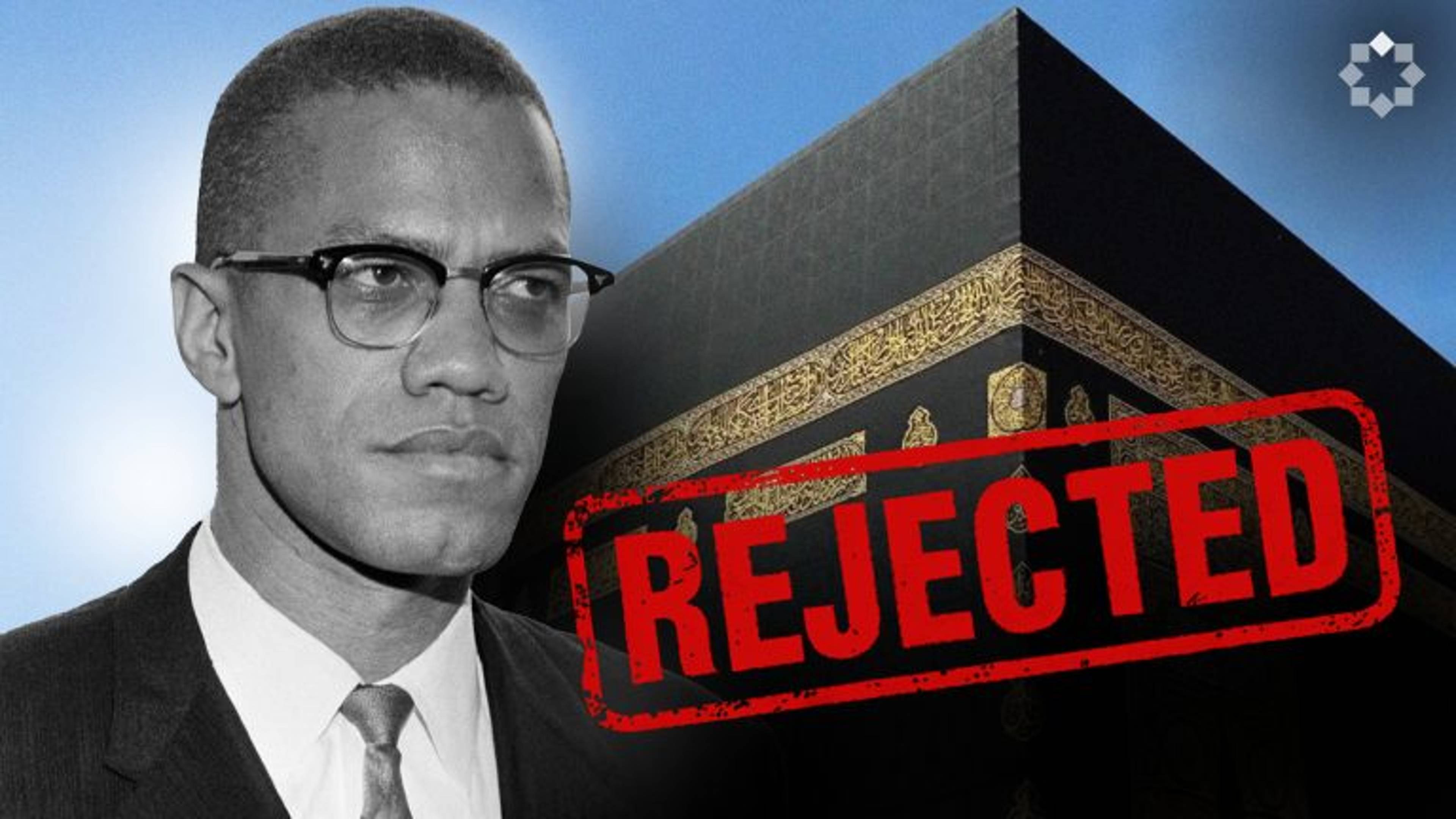
Malcolm X Was Denied Entry to Mecca. What Happened Next Changed History.
Explained

Malcolm X Was Denied Entry to Mecca. What Happened Next Changed History.

A century after his birth — and 60 years after his assassination — El-Hajj Malik El-Shabazz, or Malcolm X, continues to exert a powerful influence on efforts against racism and oppression from the United States to Africa.

After enduring the cruelty of overt and systemic racism at a young age, Malcolm made a lifelong commitment to uplifting himself and all African-Americans. Bold and uncompromising, but also a sincere seeker of truth, he embraced Islam, performed Hajj, and traveled widely. Malcolm found inspiration and solidarity in Africa’s decolonization movements, from Ghana to Algeria. And his little-known visit to Gaza and his sharp critique of Zionism were among these efforts, even while he continued to forcefully challenge anti-Black racism in America.

We highlight various points in Malcolm’s winding journey, relying primarily on his own ever-insightful words, and reflect on why he remains an inspiration today.

Works referenced:

– Maytha Alhassen, “The ‘Three Circles’ Construction: Reading Black Atlantic Islam through Malcolm X’s Words and Friendships,” Journal of Africana Religions 3, no. 1 (2015): 1–17

– Maytha Alhassen, “To Tell What the Eye Beholds: A Post 1945 Transnational History of Afro-Arab ‘Solidarity Politics,’” PhD dissertation, University of Southern California, 2017

– Hamzah Baig, ““Spirit in Opposition”: Malcolm X and the Question of Palestine,” Social Text 140 37, no. 3 (2019): 47-71

– Louis A. DeCaro, On the Side of My People : A Religious Life of Malcolm (New York: New York University Press, 1996)

– Malcolm X and Alex Haley, The Autobiography of Malcolm X (Ballantine Books Mass Market Ed.), (New York: Ballantine Books, 2015)

– Michael R. Fischbach, Black Power and Palestine: Transnational Countries of Color (Stanford University Press, 2019)

– Patrick Parr, Malcolm Before X (Amherst: University of Massachusetts Press, 2024)

This transcript was auto-generated using AI and may contain misspellings.
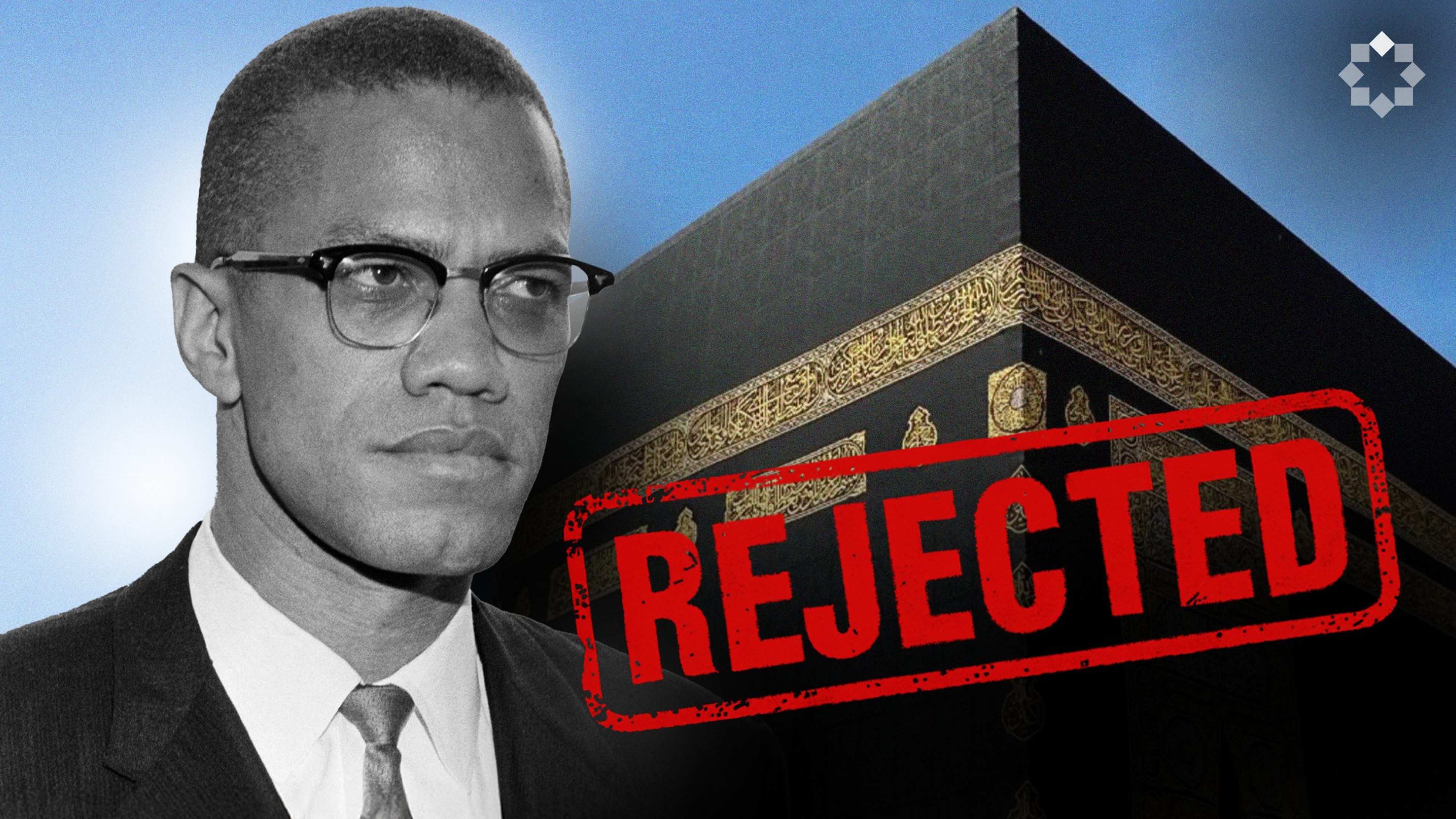
On April 12, 1964, a weary Malik al-Shabazz, the legendary Malcolm X, got off a plane in
Jeddah, Saudi Arabia. He was on his way to Mecca to perform Hajj. Then, airport officials seized his passport. It was their job to stop any inauthentic converts from entering. Malcolm was stuck until a judge could evaluate his case.
"It was about three in the morning on a Friday," he described, "and I had never felt more alone and helpless since I was a baby." His identity was put under a microscope. Imagine being a Muslim minister, a leader in Elijah Muhammad's Nation of Islam, and not knowing the prayer
ritual. "I was angry with myself for not having taken the time to learn more before leaving America. In the Nation of Islam, we hadn't prayed in Arabic." He suddenly remembered that
he had the number of a man who lived in Jeddah and could verify his Islam. As Malcolm made tawaf around the Ka'bah, he may have reflected on the long journey that
had brought him to this moment. His earliest known ancestor had been enslaved from Mali and brought to America. Amazingly, his name was Hajjah, though nothing is known about his religious beliefs. "What is your real name?" "Malcolm, Malcolm X."
"Would you mind telling me what your father's last name was?" "My father didn't know his last name. My father got his last name from his grandfather, and his grandfather got it from his grandfather, who got it from the slave master."
Malcolm's parents instilled in him a strong sense of Black pride, but after a tumultuous childhood, he found himself in prison. He spent his years there reading, sharpening
his debate skills, and learning about African American history and Islam. "Today, Black nationalists are moving in different ways toward the same goal, to control and shape their destiny in their own way."
He joined the Nation of Islam, or the NOI, attracted by its emphasis on Black self-determination. Despite many of their teachings being contradictory to Orthodox Islam, the NOI used much of the
language and concepts from the faith as part of its program to uplift African Americans. Malcolm, however, would eventually break away from the NOI.
His entire Hajj journey, and all that followed, became a profound reckoning. His beliefs were scrutinized, his misconceptions challenged and corrected. This was the culmination of his long search for truth.
In a letter to his wife Betty, he shared, "On this pilgrimage, what I have seen and experienced has forced me to rearrange much of my thought patterns previously held and to toss aside some of my previous conclusions. There were
tens of thousands of pilgrims from all over the world. They were of all colors, from blue-eyed blondes to black-skinned Africans. But we were all participating in the same ritual, displaying a spirit of unity and brotherhood that my experiences in America had led me
to believe never could exist between the white and the non-white." With every person he met, every hand and grace he was offered, Malcolm's call to justice expanded.
"When I was on the pilgrimage, I had close contact with Muslims whose skin would in America be classified as white, and with Muslims who themselves would be classified as white in
America. But these particular Muslims didn't call themselves white. They looked upon themselves as human beings, as part of the human family, and therefore they looked upon all other segments
of the human family as part of that same family." Following Hajj, Malcolm traveled widely, and his views on race and humanity changed profoundly.
In his letter to Betty, he had written, "America needs to understand Islam because this is the one religion that erases from its society the race problem. Throughout my travels in the Muslim world, I have met,
talked to, and even eaten with people who in America would have been considered white, but the white attitude was removed from their minds by the religion of Islam. I have never
before seen sincere and true brotherhood practiced by all colors, together, irrespective of their color."
As the world became more aware of Malcolm, Malcolm was also becoming more aware of the world. The peak of his efforts for African Americans coincided with a wave of movements for justice and decolonization across the world, and especially in Africa.
Malcolm's awareness of the global struggle against oppression increased significantly in 1959 when he traveled to several African nations and witnessed first-hand the fight
for liberation. A few years later, in 1962, Algeria offered a powerful example when its people freed themselves from over a century of French colonial rule. Malcolm increasingly
recognized the parallels between the African American struggle in the United States and the broader fight of oppressed peoples around the world.
Throughout his lifetime, within the continent of Africa, he had traveled to Senegal, Guinea,
Liberia, Ghana, Nigeria, Algeria, Morocco, Egypt, Sudan, Ethiopia, Kenya, and Tanzania.
And on September 4th, 1964, Malcolm headed to Gaza. Over two days, he met with local
leaders, visited refugee camps, a hospital, and stood at the ceasefire line with Israel. After praying Isha' in a mosque, he noted in his diary that, "...the spirit of Allah was strong."
As he climbed the steps to board his return flight in Arish, he churned back to wave, and chanted a moving line from Palestinian poet Harun Rashid, "...we shall return, we shall return."
Thirteen days later, Malcolm published an essay titled "Zionist Logic." He described Zionism as a new form of colonialism that was well-disguised and appeared more benevolent and philanthropic.
He coined the term "Zionist dollarism" to expose how US imperialism and Israeli offers of economic aid mask deeper control over struggling African nations.
In a later interview, noting that the US financially supported Israel while depriving Americans, especially black Americans, Malcolm said, "...Israel is just an international poorhouse which is maintained by money sucked from the
poor suckers in America." What Malcolm X was willing to do at every point was challenge his own prior beliefs for the truth. He was always prepared to make changes. "...by any means necessary."
"...American unity sees the only hope for the black man in America in a strong Africa
and the necessity of the Afro-American becoming inseparably linked with the overall program that's existing on the African continent."
In a final conversation with photojournalist Gordon Parks, Malcolm said, "...everybody's wondering why I've been going back and forth to Africa. Well, first,
I went to Mecca to get closer to the orthodox religion of Islam. I wanted first-hand views of the African leaders. Their problems are inseparable from ours. The cords of bigotry
and prejudice here can be cut with the same blade. I realized racism isn't just a black and white problem. It's brought bloodbaths to about every nation on earth at one time or another."
The Hajj experience had entrenched Malcolm's growing conviction that his struggle against racism in America was tied to struggles for justice around the world, and that Islam could uniquely guide all these struggles to success.
"...Islam is the greatest unifying force in the dark world today," he had once said. He had wanted African Americans to join efforts with "...the fast-awakening dark nations, who are tossing off the yoke of white imperialism."
From the United States to Sudan, from Kashmir to Gaza, the DNA of oppression is encoded with greed and supremacy. Tactics may vary, from surveillance and apartheid to displacement
and genocide, but the DNA remains the same. On February 21, 1965, Malcolm X, al-Hajj Malik al-Shabazz, was assassinated. As he stood
on stage at the Audubon Ballroom in Harlem to address the Organization of Afro-American Unity, three men rushed forward and opened fire.
Malcolm was hit at least 15 times. He was 39 years old. Malcolm learned, and we learned through him, that we cannot afford to care about one struggle
while ignoring another. The fight against oppression is one fight, and we must stand with all the oppressed, everywhere, against all forms of injustice.