Jump to:
Iman Cave
How To Be The Man Your Community Needs | Iman Cave
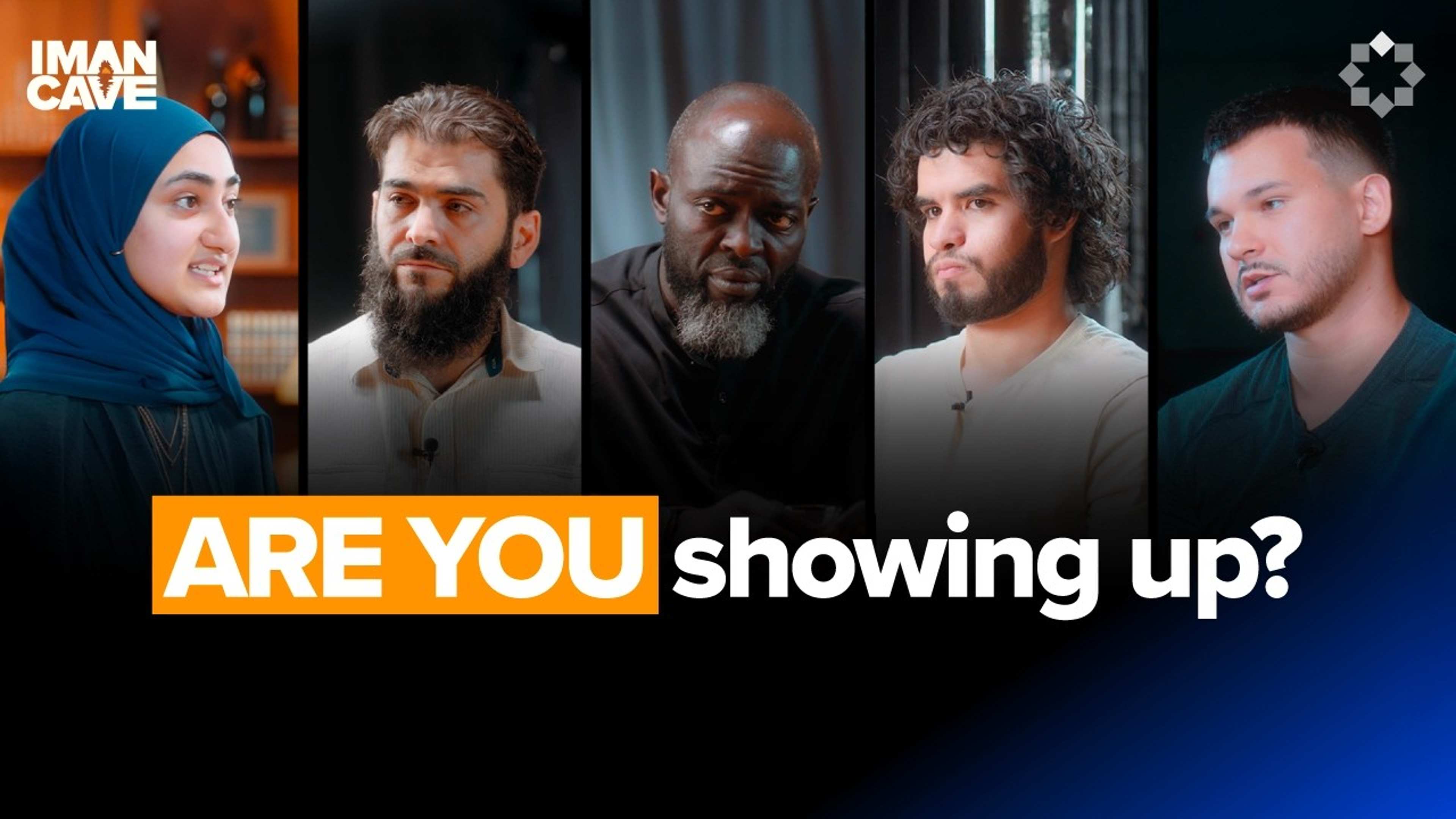
What role do you play as a young Muslim man living in a world riddled with Islamophobia? Are you accepting a position of victimhood or even perpetuating the harmful tropes, or are you manifesting your role as a masculine figure in the ummah?
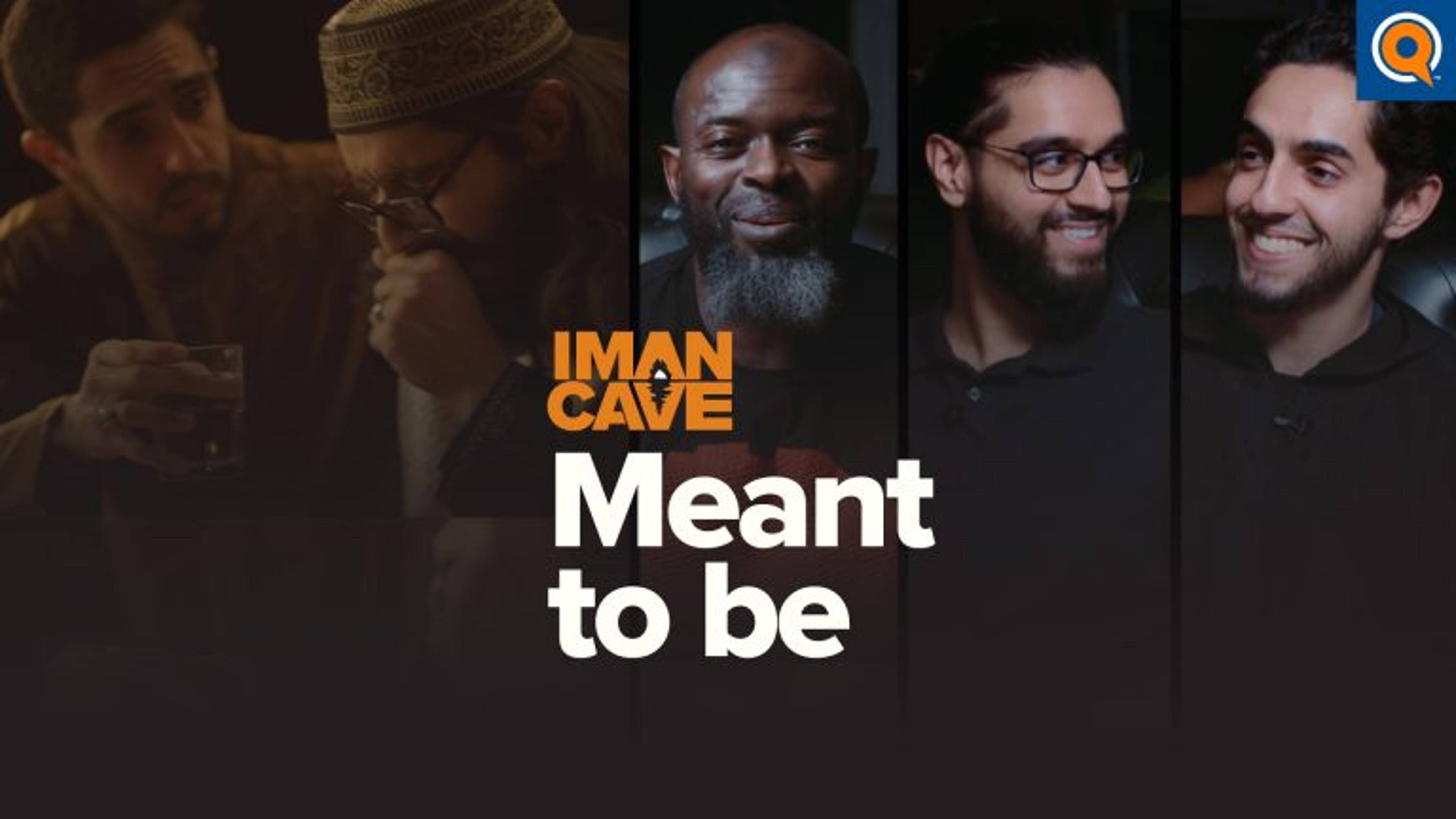
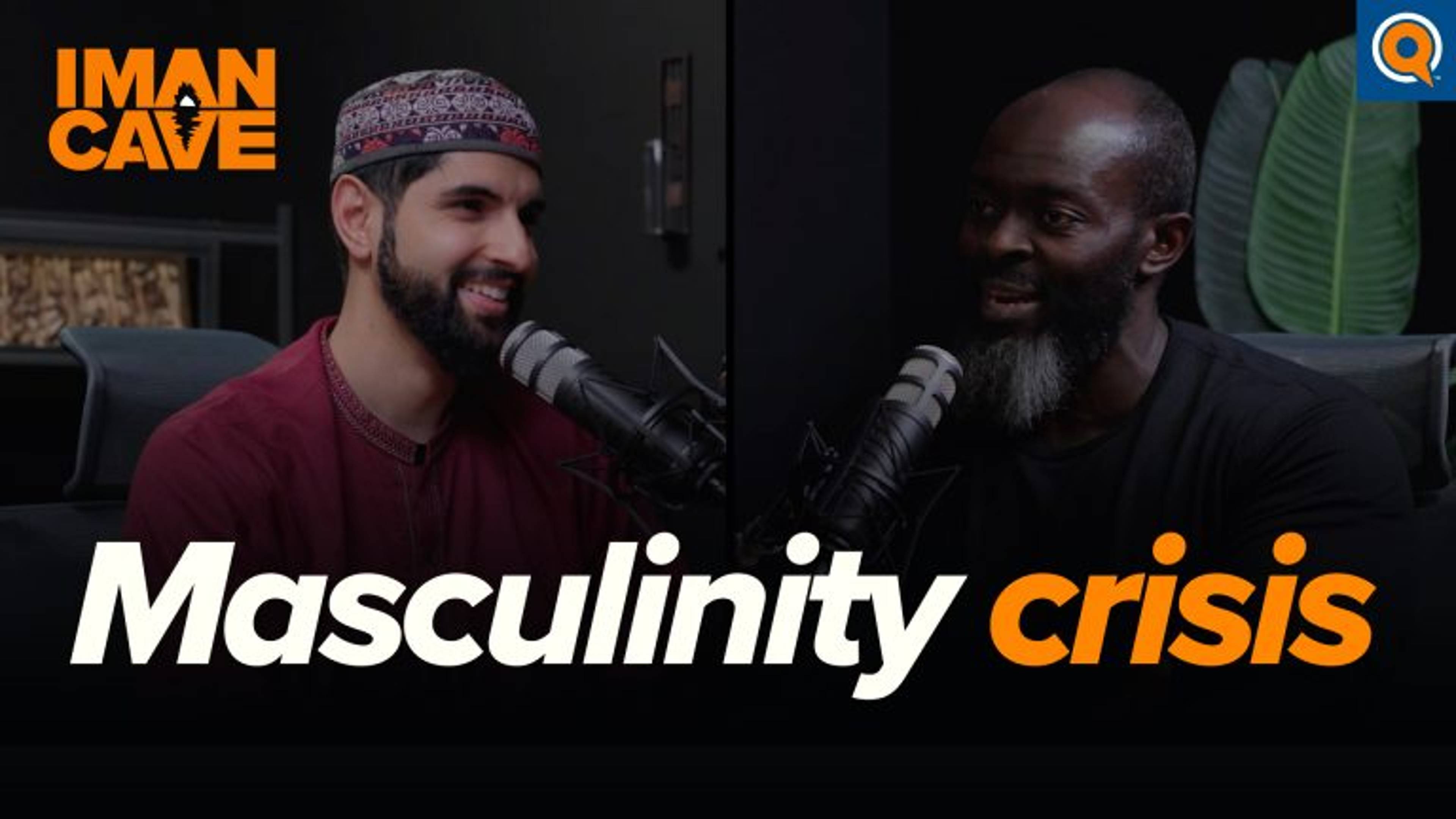
Shaykh Abdullah Oduro is joined by a few special guests to discuss how Muslim masculinity can be elevated and how it can be used as a means of protecting our Muslim sisters.
This transcript was auto-generated using AI and may contain misspellings.
00:00As-salamu alaykum wa rahmatullahi wa barakatuhu. May the peace and blessings of Allah be upon you all. I'm Abdullah Oduro and yes, some of y'all know me and some of y'all don't.
00:13For those of you that know us, know me, we're here with the Iman Cave show. And for those of you that don't, we're in an Iman Cave. And that really is all of us as men and as
00:23individuals coming together to talk about masculine excellence rooted in the Qur'an and the sunnah of the Prophet (ﷺ). But I want y'all to bear with me because we are doing something a little different today. And life is about differences. Life
00:36is about being different every now and then and changing it up in order to spice things up at times. And some of you know the individual to my right, masha'Allah, our old co-host, Murad Awad, masha'Allah, if you look on the earlier episodes. Alhamdulillah, may Allah bless you. How you doing, my man? Thank you, Shaykh. Alhamdulillah, doing good.
00:51Alhamdulillah. Check out our old episodes where we talk about a lot of issues that deal with masculine excellence. But as I mentioned to you, we're changing it up a little today. Alhamdulillah, Rabbil Alameen. Particularly in the issue of what we may know personally
01:05or we may have heard secondhand of Islamophobia. The phobia of Islam, where people may have a bad look on Islam and Muslims for whatever reasons. But does that leave a responsibility
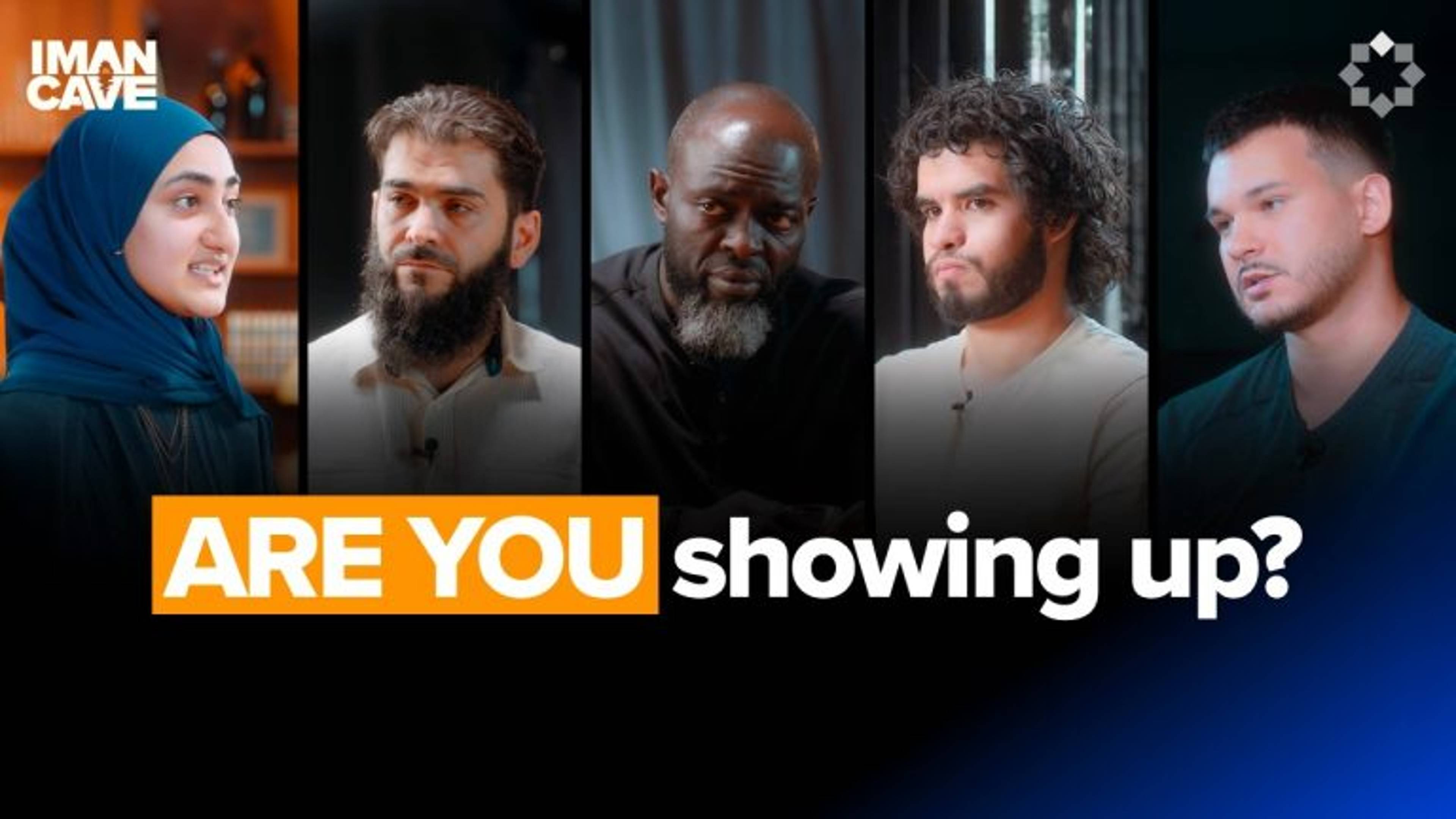
01:16for you as a young man that's going to grow up to be a father, a husband, etc. So we have a couple of illustrious people that have experiences that I want you all to listen to and to have some level of introspection, to look at yourself. To my left we have brother
01:30Fernando. As-salamu alaykum, Fernando. How you doing? Alhamdulillah, Shaykh. How are you? Masha'Allah, masha'Allah. Fernando, masha'Allah. And you are a revert convert to Islam? Yes, sir. Alhamdulillah. Closing in on three years now. Closing in on three years. In October, insha'Allah.
01:42Masha'Allah. Congratulations, man. Congratulations. And we have Dawud. Masha'Allah. How you doing, man? Alhamdulillah. It's great to be here. Glad to have you here. Glad to have you here. You converted as well? Alhamdulillah. Same as brother Fernando. Almost three years now. Masha'Allah. Almost three years.
01:56Alhamdulillah. Masha'Allah. And we have a surprise for all of you. Masha'Allah. As I said, we are switching it up and it's going to be very, very interesting. The stories that we hear from Dawud and Fernando
02:08and also from our sister, Hadiqa. As-salamu alaykum, Hadiqa. How are you doing? Wa alaykum as-salam, wa alaykum as-salam. There's a lot of pressure. There's a lot of pressure. No, no pressure whatsoever. Iman Cave. Iman Cave. Just a girl.
02:20Just a girl. Masha'Allah. No, you don't want to cater to these immature 16-year-olds. Just a girl on the show. No, no. You're someone that has something to offer and alhamdulillah, that's going to be something I think is going to be very, very insightful for all of us. So when did you convert to Islam? When I was born Muslim.
02:35She was born Muslim. Masha'Allah. Where are you from? I'm from New York. As we mentioned, we're going to talk about Islamophobia and particularly what is the role of young men in regards to that? Where can they counteract Islamophobia? Are there
02:49elements of victimhood that we face as Muslims? And if there is, what is a young man supposed to do about that in particular? And I think each one of your stories kind of highlights
02:59that and from different angles, right? So, Dawud, I mean, for you, Catholic school. Yeah. What prompted you? I don't want the whole story from the beginning. What prompted you
03:12to embrace Islam? The Christian apocrypha, Judeo-Christian apocrypha and the usage of terms that Allah subhanahu wa ta'ala elucidates through the Qur'an. To bring all those manuscripts in four to five
03:25different languages throughout the entire diaspora in that time period in the 7th century Hijaz region. It's rarer than catching lightning in a bottle. Apocrypha? Apocrypha. What is that?
03:39Non-canonical usages of religious themes such as the Proto-Evangelium of James or the Gospel of Thomas that never officially made the biblical or the canon of the Tanakh.
03:53So it was an elaborate study that you went to, like a comparison study between Christianity and... Yes. Okay. Okay. Okay. So that convinced you? Absolutely. Without a doubt. What was the day that you said, okay, I want to do this? I'm convinced. What did you do?
04:06I went to Qalam Institute. Okay. Shout out to Qalam. Big shout out to Qalam. To the Roots program. I look up with Shaykh Mikaeel Smith and I just felt like it was time. You went there by yourself?
04:20No. With a couple of friends, but originally by myself, yes. But it was just, it was time and I took shahada then and never looked back. Masha'Allah. How'd you feel at that moment, man? Speechless. Really? Alhamdulillah. Pure peace. Pure peace. Pure iman.
04:34So it was pure peace right then, but when you went back to Catholic school the next week or next day, what happened? Rocky. Alhamdulillah. But I don't know. A lot of different emotions flooding through
04:43your head and some doubts and some complete assurances and just trying to weave and bob your way through that sort of minefield. I like how you said there were some doubts, even though you just embraced Islam. But all
04:56of that study that you had, was it the social aspect of it that brought doubts? Did any of your instructors... Instructors to the Vatican and then a lot of my professors were their clergy members.
05:09So I've had nuns as my professors. I've had priests as professors and monks, stuff like that. Was there anything that they said to you that could possibly elicit some doubt or made you feel, was Islam really true or did I make the right decision?
05:23Yeah, absolutely. I think for me, they had sort of an emotional chokehold on my belief system. For me, it was, I think a lot of Christian converts as well, it just was 100%
05:36emotion. And there was some poking and prodding at that. I had some offers for private tutoring and reconversion sort of thing.
05:45So there's that element of pushing through integrity and resilience, I would say. Would you say that's the case? I mean, there's times you have to have integrity and pull through.
05:56Yeah, it's hardest. I mean, as easy as it was for me to accept Islam, it's the hardest thing I've done in my life. Why? Because of all the challenges and blessings disguised as challenges that come into my
06:09life because of my faith and my attitude about my faith, my uncompromising attitude to not
06:19tone down what I believe in and not hide it away and be this closed off Muslim. I'm very proud, alhamdulillah, of being Muslim, especially in the setting that I'm engaging on an almost
06:32daily basis. Yeah, it's a lot of trying to reconvert and engaging in Muslim-Christian dialogue and stuff like that. But alhamdulillah, Allah subhanahu wa ta'ala provides for me in ways that I could have never dreamed of.
06:46Yeah, it reminds me of, إِنَّ مَعَ الْعُسْرِ يُسْرًا Verily with hardship comes ease. I mean, and I like how you always say that, you know, those challenges in the end of the day were opportunities for you to become stronger. Absolutely. You did not compromise your faith.
06:59And imagine, you know, imagine not compromising your faith while wearing a veil. I'm not saying you. No, seriously. I mean, brothers need to recognize that. Brothers need to recognize that and that integrity and strength and lack of compromise, not compromising
07:13at all. So, Sister Hadiqa, you're from Dallas, Sharif as well, right? Apparently as of like three days ago. As of three days ago? Literally as of three days ago. I'm staying in Allen for a minute. Is it fair to call you an activist?
07:27It's pretty fair. I've self-proclaimed it a couple of times. But there was one particular moment, thank you, Sharif, in your life to where you had to take a stand. And as a result of that, something happened.
07:39Yeah. So I'm from New York. And back home in New York, I joined the Students for Justice in Palestine chapter at the City University of New York. So I was there since like my
07:51freshman year, organizing on campus for divestment from genocide that our university was invested into. And then I think the incident that we're referring to happened back in February, most
08:03recently at a protest that actually was because the governor of New York was coming to the campus. She's a governor who had pushed so many anti-Palestinian policies, supported
08:17investments in the genocidal state. And so we had protested her, you know, welcome to campus. And there was a moment when there was a line of police officers and our entire
08:30rally was on the street. We were told to pivot from the street to the sidewalk. And we're trying to do so. And then a sister of mine was moving. She's a Palestinian sister with hijab.
08:42A police officer threatened to hit her with a baton, was almost going for her hijab, which is a tactic that the NYPD is known for in terms of how they police protests. They go
08:55straight for the hijabs every time. Oh, OK. I'm sorry. Yeah. And they go straight for the hijabs. It's happened. OK. So many times, especially in the past two years, as my sister
09:08was experiencing this in the same moment I'm seeing on the other side, like half of the Muslim Student Association leadership is getting arrested for, again, just protesting a genocide.
09:21I read the badge of this officer that threatens my sister and it said Rafid. And I look him up real quick and it was some name like Muhammad Rafid something. Muhammad. His name was Muhammad.
09:36That's what that I don't remember exactly. But he was Muslim. I did. I did double, triple check it with him. And I said, are you Muslim? He said, yes. You asked him. I did. That was this before or after he tried to grab the thing. This was right after. And
09:50what did you say? I was just utterly disappointed. And shortly after, I said something that made its rounds. So that video that circulated was after that. Right. Oh, OK. Yeah. So you
10:04were just that's where you got all the. Yeah. But it's also it's been like I mentioned, like it's a continuous thing. It was a moment that was a byproduct of so many moments. You know, the NYPD especially has this tactic where they'll put Muslims at the front of
10:19the lines of these protests to police our own community. This has been a response to a lot of the flak that the NYPD and so many police departments have been getting over
10:28the years about racism. And so instead, their idea is to put Muslims at the front lines. And, you know, there's another level of heartbreak within that. And so we've noticed the badges.
10:39Every time I'm at a protest, I read the badges well before that moment. And I read Islam, I read Abdullah, I read Muhammad, I read Ali. So what we're seeing here is you're
10:52seeing these badges and it makes you feel what? I think it would be wrong to say mad
11:03or frustrated, even though that's how I tend to analyze the situation, but I think it's deeper than that, and I think it comes from just betrayal. So you felt betrayal because
11:14it was a Muslim man that was a police officer that tried to apprehend a Muslim, violate his own sister by pulling—you like you don't ever touch a Muslim sister at all. Right.
11:27You don't ever do that. I mean, even if it's my oldest son to his daughter, to my daughter, excuse me, you don't pull your sister's hijab like that. What's wrong with you, man? I'll pull him by his collar. You don't do that because I'm training him to respect Muslim
11:39women. And he's a Muslim. He should, quote unquote, he should know better. Police officers should know better times 10. But my question to you, I know that this rally was not only
11:51Muslim women. Were there any men out there? There were men out there. For sure. So you use the word betrayal, betrayal by the officers or by the men that were watching
12:04this happen or both. I don't expect anything from the same institutions that are, you know,
12:14so often they're repressing us. I don't expect anything from the Zionist entity, from, you know, administrations and companies that have shown where they stand. But
12:29I expect something from my brothers. So I think the betrayal comes from when it's your own people you see not showing up. So some of the Muslim men there did not show up.
12:43Just weren't there. Did you all hear that? Some of the Muslim men there did not show up. Can you imagine? Yeah. You know, somebody would say, oh, that's not my sister, my sibling.
12:57But Islam says, so what? You know what I mean? So the vibrance that we see with our young men out there, if you're in this situation, you don't show up. It's just foundationally
13:10wrong. It's obvious these Muslim men didn't understand their role and their responsibility towards the rest of the ummah and specifically towards the women of the ummah. You know,
13:23and that's what's disappointing. That's where the feeling of betrayal came. And especially in the East Coast. I mean, there's stories of, I gotta give a shout out to our old school brothers and sisters over there in the East Coast, like Masjid Taqwa, Masjid Hajj, and
13:37many other masajid out there in the East Coast communities where the women stood up too, masha'Allah, but the men, they felt that strength and they stood up because they knew that there would be some representation from the men as well. You know what I remember when we're
13:51talking about this, I remember Malcolm X, when he was talking about, I think they went out on a protest and he stood up in front of everyone. He was saying, we will never
14:05let anyone do anything to our women. We'll fight for our women. We'll die for our women. We'll stand, you know, we'll take anything for our women. And, and, you know, it was a long speech, but, but that was the whole point. And I felt like, you know, that, that
14:20was when protesting was the right way when the men were at the forefront and they, they didn't allow anything to happen. So after, I mean, after that, after that took place and you took Muhammad's or his name
14:32and his badge, he took the sister and apprehended her as well. Did y'all go to? No, she's okay. But I think that moment did stick. At least I hope that it did. Cause
14:46it was never really about him personally. It was more again, this cycle of frustration
14:54with the ummah and how we are allowing ourselves to carry a name so sacred and so beautiful with so much carelessness. You know, I remember the hadith that Prophet Muhammad (ﷺ) said,
15:07اللَّهُمَّ إِنِّي أُحَرِّجُ حَقَّ الضَّعِيفَيْنِ الْيَتِيمِ وَالْمَرْأَةِ اليتيم والمرأة, yes. Prophet Muhammad (ﷺ), he said, I declare the burden and I stress the importance
15:22of the two weak demographics. He's saying the woman and the orphan. And this came from who? The one who grew up as an orphan. The one that grew up as an orphan. So he knows exactly how it feels.
15:33Many of you may know about the EPIC Masjid. What took place in East Plano Islamic, East Plano Islamic Center area, and they call it EPIC, right? Masjid. Where they were building some, and you used to be the youth director at the masjid. Yes, of course.
15:47Right? Seeing how Islamophobia was present with Dawud. It was Islamophobic rhetoric from people that he probably grew up teaching, you know, learning from. And then we see the Islamophobia that was taking place. And from that, there's a level of resilience and consistency with and then, masha'Allah, maintaining your identity.
16:02But at the same time, there was a level of betrayal because young men didn't step up when it came to articulating your identity as Muhammad or as a follower of Muhammad (ﷺ). What can a young man do? Somebody, you know, what do we say to the youth out there?
16:14You know, they'll say, well, I don't go to protests or I wasn't raised in a Catholic school, but there's still something you can do. I didn't study in the Catholic school, right? There's still something you can do, which leads us to Fernando.
16:27Three years ago, you embraced Islam. And masha'Allah, tabarak Allah. And you're from the Plano community, correct? Yes, alhamdulillah. What level of involvement do you have
16:40with the Plano community? And if there is a level of involvement, what do you do on a consistent basis? First of all, I'm very blessed to be part of the EPIC community. I'll say that, alhamdulillah. I think that we would have alluded to it earlier, but almost like a second Madinah, subhanAllah,
16:54for the west side of the world, right? So, subhanAllah. But at EPIC, we do a lot of programs. And the one I'd say I'm most involved with is the food pantry. Right, so essentially we pack boxes. And this is not limited to Muslims. This is non-Muslims.
17:09This is any demographic. They stop by, sort of like a drive-through. Leave the box in there. If it's two families, subhanAllah, sometimes they're carpooling. We ask how many they need. We go ahead and deliver it to them.
17:23And subhanAllah, it's a form to get the EPIC name out there. And not just the EPIC name, but Muslim, right? Islam as a whole, right? It's been going on since like COVID. Yes. Like 2020. Yeah. Every single week.
17:38Wow, insha'Allah. That's beautiful. Every Saturday, alhamdulillah. Has there ever been a time where, because of that contribution, that consistent contribution from Muslims, that someone that does not know Islam and is receiving some food has said something
17:52that is very enlightening or very touching about the community? Yes, most definitely. So last year, I'll give an example. Last year we did the backpack drive and we sort of did like a questionnaire at the end. Okay. Right. We sort of asked them,
18:05how did you hear about this? Are you aware that this is a mosque? Some people just come in and they don't know until they see the people there, right? SubhanAllah. I'd say about more than half the demographic happens to be Hispanic. Alhamdulillah, I was able to ask them in Spanish.
18:20So they felt a little more comfortable, right? And some of the answers I was getting, subhanAllah, honestly, it changed my heart, you know, because I'd say more of an angle of that they weren't aware, right?
18:34And what I mean by that is, some of the answers are so simple, but so touching as in, I didn't know y'all did this. You know, I don't view that as Islamophobia myself. I view that more as a byproduct of Islamophobia because, you know, they're so used to hearing one thing
18:48that when we give something out, it's astonishing to them, right? SubhanAllah. Yeah. So it's usually familiar faces, you know, and just seeing the smile on their face when they see that somebody that speaks Spanish just like them, you know, it doesn't have to be,
19:03you know, a big bearded man. It doesn't have to be, you know, wearing a thobe every day, wearing a cap, right? SubhanAllah. Greet them in Spanish, you know. I say what I need to in Spanish, right? And I can definitely see how it opens their heart,
19:17you know, see their eyes open up, you know, subhanAllah, when they see somebody just like them, right? What does that do for you in your iman at that moment? Like when you're contributing to the community? Having people ask questions and, you know,
19:30seeing how I can be sort of a bridge for them in that situation, that's something that honestly pushes me to keep going, you know. Saturday at 1 p.m. it's not the most comfortable situation. It's hot. It's hot. It's very hot.
19:45You're outside. Yes, right. Outside. It's outside, you know, it's on a weekend, you know. So, you know, there are days you don't want to go. You know, there are days where, you know, subhanAllah, I'll have a workout before and like, oh, I'm already sweating.
19:59Right, right, right, right. I'm like, wow, do I have time to go home, get ready, come back, and all of that, you know. But, you know, I remind myself that, you know, if I were to be in that situation, you know, having somebody that speaks my language,
20:14that would, subhanAllah, that'd be a game changer. You know, let's be honest. I mean, subhanAllah, a lot of young guys right now, Saturday at 1 p.m., they're probably, probably, I may be wrong, there may be none, at Saturday at 1 p.m. playing video games. I may be wrong.
20:29I don't think you're wrong. I don't think so, but. He said that. We're saying insha'Allah, one of those insha'Allahs, you know. I see the dedication. I mean, I see that dedication and consistency of going out and, you know, contributing to the community and serving.
20:43And serving can be strength. Because, as you mentioned, you know, there could have been that one or two people that you spoke to and that smile on their face, as a young 18-year-old guy. You know, I mean, when I used to tell people about Islam when I was younger and they were older,
20:57I'm like, then this old man has learned, old woman is learning from me. This guy has kids. I don't have any kids. Yeah, subhanAllah. You know what I'm saying? When you're consistently serving people, it does strengthen your iman and your faith. There's something, Shaykh, you gotta know about Fernando.
21:12What's that? Obviously, first, before that, I wanted to mention that, you know, Islamophobia, a lot of it's talk and gibberish and just, you know, fear-mongering and all that. You know, and the way to combat it is through action, not by other talk.
21:25Fernando's been all about the action, you know, since he came in. I know him from day one. Alhamdulillah. How do you know him from day one? Don't do that, Shaykh. I just know him from the first day, Shaykh, when I was in the army. How do you know him? SubhanAllah, through my shahada. Alhamdulillah. Yes, sir.
21:39So he was there from day one. He was the first hug, subhanAllah. But he always, he went to work as soon as he started. He's like, yo, I found something. I gotta talk to my brothers. He brought his brother, you know, a couple weeks later,
21:54and then your other brother, and alhamdulillah, they eventually both came to Islam. So, and you've been coming to the pantry, masha'Allah. And I remember I even had a dars in DeSoto Masjid, right? About an hour away from EPIC.
22:08And him and his bros would drive there to DeSoto. Wow. Not only did you stand up for what you believed in, you also called your family. You went to your own brothers, you know, and told them, you gotta come in here. And that takes a real, like, a man to do that, right?
22:22To stand up for some, take ownership of it, and kinda lead by example. No, that's beautiful. I mean, and that's the important thing, especially with, you know, our men, is really to make sure that you ask yourself, what are you doing?
22:37You know, how are you contributing? You know, what action are you taking? Being proactive and not being a quietist. Like in, you know, for example, you know, as Sister Hadiqa mentioned, you know, you go out to the protest. Some just wanna go in and perpetrate.
22:50But when things really go down, something really happens, you're quiet. You don't do anything, you don't say anything. And it can be disappointing. And that's really a manifestation of your iman, is to stick up for your faith and your religion, especially when it comes to sisters.
23:04And at the same token, when you're surrounded in an environment where it's a Catholic school and people are looking at you, they're probably looking at you as maybe some people. I know when I embraced Islam, I'm from West Africa, man. You know, they're, cause you are going to hell.
23:18Like, it's like, it's not, you know, it's, you are not on the right way. Let's just say that. Parents, right? Parents, you're going to hell. Yeah. He said it so nonchalantly. Yeah, so I mean, to push through,
23:31to be resilient in that regard, but it's really most importantly, in the light of this Islamophobia, in the light of where people are speaking about Islam and Muslims, as a young man, that is probably in your age group,
23:44you're just about to be the one in the age group that you're going to be physically strong, the strongest, right? And you have full energy. How are you using it to service Islam?
23:57And I think these stories are very, very profound and very, very important. Very, very inspirational, right? I mean, it's not to say that, you know, it's just Hadiqa, there was a level of betrayal because brothers didn't speak out. You know, our young men didn't speak out
24:10because they haven't trained themselves to do things, to be in a community, to see the beauty of Islam by helping people, as Fernando did, right? Or Fernando does. And we see with Dawud, learning a religion to have that strong foundation,
24:25even if you're in the midst of a whole bunch of people that don't want you to be that, you still pull through. You know what I mean? And having all those dunya reasons not to do this. Like there's so much, like, you know,
24:37the decisions that you made, and I'm talking to all of you, like the decisions that you made to do what you did, like required a lot of sacrifice. And you had to see like, okay, this is what I'm gonna lose,
24:50but I need to put my trust in Allah. So I have a question for all of you guys. Do you think it's, that there's times where Muslim men perpetuate Islamophobia?
25:03Well, so I was recently suspended from my college, and in part because of that video, and the school administration said that, they basically alluded to the idea
25:16that I was being Islamophobic in that video. Wow, she was being Islamophobic. I don't know. I can't believe it. I don't know. How is that possible? The math doesn't add up, but you know,
25:29they were like, you targeted like a Muslim cop because his name was Muhammad, you know? So basically I'm Islamophobic now. Because they suspended so many people for antisemitism. They're like, let's balance it out and- Yeah, they didn't think it through.
25:43But subhanAllah, I think that's such a, I've been reflecting on that a lot lately, because, you know, to me, what that tells me is that when you're a Muslim who can fall within, you know,
25:57borders that the oppressor would love to put us into, if you are a Muslim that doesn't necessarily challenge the system, or kind of just sort of like capitulates into it, you are the type of Muslim that will be protected.
26:11You are the Muslim that we will protect you from Islamophobia, because you are serving us, and you're serving our interests. You're serving our interests of, you know, suppressing the movement for Palestine, of continuing our investments in genocide,
26:24versus, you know, a Muslim who is challenging that, and a Muslim who is trying to incorporate the Islamic worldview into our day-to-day actions and how we carry ourselves. That's not a Muslim who's protected within the fold of Islamophobia in the West,
26:38in sort of like the discourse that we have. But I wonder if the Muslims that do, you know, come off as palatable and do fall into that category, inherently sort of create this dynamic
26:52of like the good Muslim and the bad Muslim, and if that in itself is hurting our community more broadly. So not standing up for that, which is obviously right or true, whether it's through your voice or whether it's just showing an aspect of disagreeing
27:06with the powers that be that are out there that are trying to control the narrative. I've actually like seen firsthand, like we had one of the last protests that we had on campus last semester.
27:18It was peaceful protest and the CUNY public safety had cracked down on it super quickly, and they started pepper spraying a bunch of students in mass.
27:29And I saw a Muslim who is sort of like in the student government spaces, right, working with administration and working in the borders of what the good Muslim, you could say,
27:43sort of laughing and talking with the very same officers and the very same administrators who are making these orders. And in that moment, actually, I wasn't there, but a friend had told me that these officers were like, where's Hadiqa? Where's Hadiqa? Like, can you hear me?
27:57Wallah, like, it's, you know, there's been a very, very deep level of dehumanization. And to see, again, it's that betrayal element of like to see your brother in that same moment,
28:10you know, sort of rubbing elbows with those very same people. It's like, I can't, sometimes I can't differentiate between the two. Allahumma shahada. Allahumma shahada. I think Muslim men got that leisure more than the women,
28:23right, because you could come off as like, you don't know what your faith is until you actually tell them. But a sister, the moment they see that hijab, we know exactly, they got all that Islamophobic rhetoric, you know, like bouncing in their head.
28:37And, you know, they're trying to stick everything to the sister, where the brother, like, doesn't have to deal with that initial. So they're guarded enough. You know, you're talking to the people, they know you as a human. Then when you tell them I'm Muslim, they're like, wait a minute,
28:50you ain't what I heard Muslims are like, right? This ain't really Islam. And they're like, no, it is. And come here, let me introduce you to other Muslims. And then like, kind of, that's the avenue. I mean, have you ever seen any type of Muslims
29:04or, you know, heard from someone that, you've seen a young man perpetuate Islam in a way that brings more of a negative effect towards Muslims, like toward the non-Muslims they see? I'll give you an example.
29:18So one of our shows, we did it at a gun range, right? So when we got to the gun range, we had our camera crew and everyone was there. The owner of the gun range eventually comes and he asked, okay, what are y'all doing here? I said, what are you doing with the camera crew?
29:31I said, we're filming something on masculinity, masculine excellence. And he said, are you a religious organization? He said, well, we're Muslim men that are talking about Islam via, you know, protection of the honor and rights of your family, et cetera. He's like, oh, that's all I need to know.
29:45The end of the day, he didn't allow us to film there. And he was like, look, I'm an atheist. I don't care about any religion, right? So any religion doesn't matter to me. And then all of a sudden, coincidentally,
30:00said, well, yeah, because there was a Jewish woman that was here maybe a couple of weeks ago or something like that. And she felt scared to leave her station to go to the bathroom because she saw about 20 young Muslim men with a big flag yelling Allahu Akbar.
30:14Right? I like if that's true. Okay, that's not exactly right. I don't know if I fully agree with his depiction of it. Right? But that's what I'm talking about. If you see any young Muslim men that use strength
30:27in that way to where 51%, 200% could have a negative connotation on Islam and Muslims. Okay, I was at a protest in New Orleans
30:37a couple years back, maybe a year and a half back. And I did see there was an opposing side. So obviously we have the Zionists on one side and then we have the good guys on the other side.
30:51And then I saw our side. You know, rip the flag from their side and then get into a massive brawl and they initiated the brawl. And I will say one thing.
31:05I think social media, especially nowadays, you know you see a lot of things on social media and you know, skim through the replies and I see our Muslim brother resorting to insults when our religion is insulted. Right?
31:20And I always think to myself, you know, like SubhanAllah, we could have gone about this a lot better. Right? You could teach them with kindness, you know and didn't have to resort to that level.
31:32I think we can easily see from this, masha'Allah you know, someone, you know, having integrity when you have integrity in this environment you know what I'm saying? You may be in an environment where everyone you may feel is against you, but you still stay strong. And that strength primarily is couched
31:47and seated from knowledge of the religion as we see with brother Dawud, masha'Allah, tabarak Allah and allowing that knowledge to be manifest in a way to where you show your integrity. As we see with sister Hadiqa and her story of herself manifesting.
31:59But our young men out there that were there did not because they probably indirectly perpetuated Islamophobia by being the good old quiet, non-active Muslim at that time.
32:13When they see a Muslim sister physically oppressed, which is a travesty.
32:18But one way that you can start, you know, you have to see where you are in this equation, but make sure that you act and do something, you know, and the least you can do doesn't mean that it's nothing.
32:29Get involved in your immediate communities and that's how this can start.
32:34And that without a doubt is one of the strongest ways to manifest masculinity because it's very important that the Muslim man is involved in his immediate communities to give back for the sake of Allah subhanahu wa ta'ala.
32:45And that's what all these stories have that what they did, insha'Allah, was for the sake of Allah, whether you're doing it and you're active or you're not. And you see the perpetuation of that and you see the result of it.
32:56So what can you do as a young Muslim man and make sure that you're consistent on that in the name of Allah subhanahu wa ta'ala. Barakallahu feekum, we will see y'all soon.
33:04Who knows what kind of range it will be on what land it will be, sleet or snow, maybe in the sky on a plane, bungee jumping from a parachute and then maybe with another sister that has something to say to us.
33:17Barakallahu feekum, as-salamu alaykum wa rahmatullahi wa barakatuh. We thank our illustrious guests for being here with us today. Barakallahu feekum, barakallahu feekum.