Midnight Majlis
Be Your Own Toughest Critic | Midnight Majlis
The end of Ramadan is a time to redouble your efforts. Pray more, fast more—give more.
You can’t fix what you refuse to face.
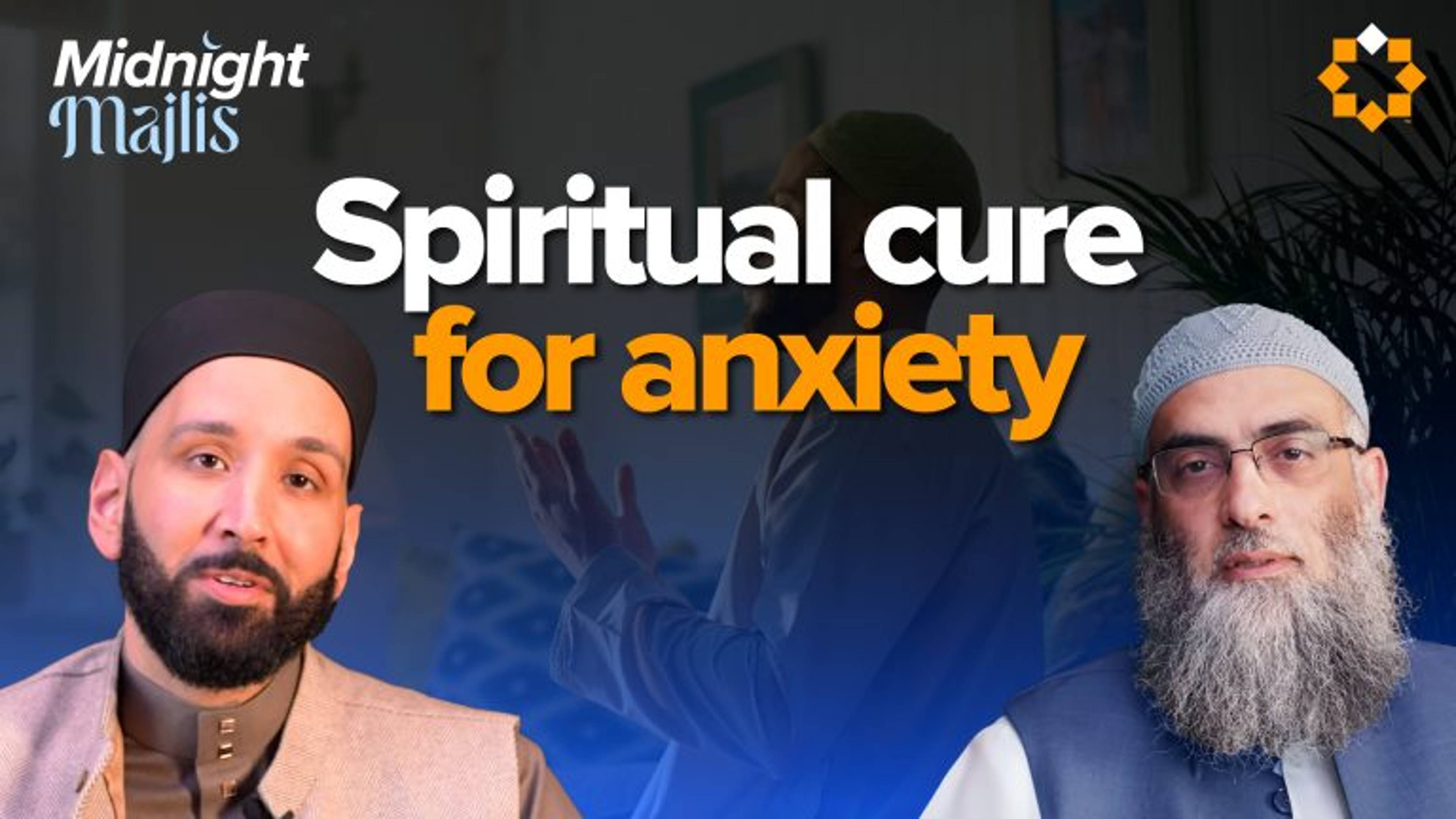
Dr. Omar Suleiman and Sh. Yaser Birjas reflect on how Ibn Hazm (rh)’s brutal honesty with himself made him a better man—and why confronting your own flaws is the key to real transformation.
This transcript was auto-generated using AI and may contain misspellings.
00:00As-salaamu alaykum wa rahmatullahi wa barakatuhu. Wa alaykum as-salam wa rahmatullahi wa barakatuhu. Alhamdulillahi rabbil 'alameen. As-salaamu alaykum wa rahmatullahi wa barakatuhu. Wa alaykum as-salam wa rahmatullahi wa barakatuhu. Wa alaykum as-salam wa rahmatullahi wa barakatuhu. Wa alaykum as-salam wa rahmatullahi wa barakatuhu.
00:13Wa alaykum as-salam wa rahmatullahi wa barakatuhu. Wa alaykum as-salam wa rahmatullahi wa barakatuhu. Wa alaykum as-salam wa rahmatullahi wa barakatuhu. Wa alaykum as-salam wa rahmatullahi wa barakatuhu.
00:30We are going to be talking about the beautiful book of Ibn Hazm. Ibn Hazm's book is called "Morals and Behaviour." Ibn Hazm's book is called "Morals and Behaviour." Last night we started talking about "Morals and Behaviour." Last night we started talking about "Morals and Behaviour." Part 1. In which we discussed a lot of these rules of engagement.
00:44In which we discussed a lot of these rules of engagement. Like what Ibn Hazm was introducing to people. How to interact with other people. How your code of conduct should be. Dealing with other people. And now today we are going to be talking about Part 2. And now today we are going to be talking about Part 2.
00:58Him defining some of these ideal standards of morality. Him defining some of these ideal standards of morality. Him defining some of these ideal standards of morality. But then coming back to be very transparent. But then coming back to be very transparent. Very personal with his readers. To the extent I could say even very vulnerable.
01:12Admitting his faults himself. And this is something very interesting that we are going to be starting tonight. And this is something very interesting that we are going to be starting tonight. Subhan'Allah. And it actually builds on something. What you will notice. Number 1 is that this is a person who is very secure with himself.
01:26Because if he was out to try to garner a certain reputation for himself. Because if he was out to try to garner a certain reputation for himself. If he was trying to put out, market himself basically. If he was trying to put out, market himself basically. In the way that a scholar would want to be marketed. In the way that a scholar would want to be marketed. Then he would not do this to himself.
01:40Then he would not do this to himself. And so the very first chapter here we are talking about. Everyone seeks the removal of harm. The removal of anxiety. Everyone seeks security. And he is a person who is clearly very secure with himself. To be able to openly talk about his faults this way.
01:54To be able to openly talk about his faults this way. By the way, he talks about faults that he is struggling with. He talks about faults that he has conquered. He talks about faults that he still wants to conquer. He talks about flaws that he is unsure if they are really flaws or not. He talks about flaws that he is unsure if they are really flaws or not. You know, where he is still trying to figure that out.
02:08So he is using 'ilm. He is using knowledge. What he is learning about Allah and the Messenger of Allah. And what he is learning about the process of disciplining the self. A tajribah. To try to experiment on himself basically. To try to experiment on himself basically.
02:22And to try to get the results of that experimentation. And this is something subhan'Allah that is tricky. And this is something subhan'Allah that is tricky. Because technically we know that the Prophet (ﷺ). Because technically we know that the Prophet (ﷺ). Told us about the importance of not exposing your sins. Told us about the importance of not exposing your sins.
02:36And one of the things that you will notice is that it is not like he is sitting there exposing specific sins. And one of the things that you will notice is that it is not like he is sitting there exposing specific sins. He is talking about personality flaws that he is trying to conquer. He is talking about personality flaws that he is trying to conquer. And there is a difference between these things. He is not sitting there giving you the details of sins that he committed. He is not sitting there giving you the details of sins that he committed.
02:50He is not sitting there giving you the details of sins that he committed. And making those things public. It is tricky. But just keep that in mind that he is speaking as a teacher to a student. Someone who has overcome certain flaws. Personality flaws. And in the process giving you some insight as to how you can overcome your own personality flaws.
03:04And in the process giving you some insight as to how you can overcome your own personality flaws. And the beautiful thing he is saying is that basically this is how you do it. And the beautiful thing he is saying is that basically this is how you do it. He is using the knowledge that he has been talking about all these chapters. He is using the knowledge that he has been talking about all these chapters. And how to use that knowledge in refining yourself. And how to use that knowledge in refining yourself.
03:18Because the whole purpose of this knowledge is what? Tazkiyah. The whole purpose of being faithful, being righteous, being a believer. The whole purpose of being faithful, being righteous, being a believer. The whole purpose is really to reach that level of tazkiyah. The whole purpose is really to reach that level of tazkiyah. Which means refining your character, yourself, and so on.
03:32As the Prophet (ﷺ) mentioned. I was sent for nothing but to perfect people's character. I was sent for nothing but to perfect people's character. The whole purpose of this message is to perfect your character. The whole purpose of this message is to perfect your character. And if you are not working on it. If you are not working on perfecting the knowledge.
03:46So that you have the degree. You have the ijazah and all that stuff. But it does not reflect into your manners. But it does not reflect into your manners. What is the point of it? So that is the whole message he is deriving into this chapter. So we begin, insha'Allah.
04:00Those who have the English book in their hands. It is on page 23, insha'Allah. Where it says point number 89. Where it says point number 89. So he is now defining the standard of manners and specific characters. So he is now defining the standard of manners and specific characters. So he is now defining the standard of manners and specific characters.
04:14He says that the pinnacle of generosity. He says that the pinnacle of generosity. The supreme objective of generosity. Is to give away the entire surplus of your possessions in charitable works. Is to give away the entire surplus of your possessions in charitable works. Like he says, being generous. Is not being generous by giving the essentials.
04:28Or whatever you have in your hand. That is more than that. Being generous is with whatever surplus. Whatever excess you have in your hand. That you give it away in charitable works. So he says. That is his understanding of it.
04:42And by the way, that is similar to Abu Dhar. And by the way, that is similar to Abu Dhar. Although Abu Dhar was actually a little bit on the next level. Although Abu Dhar was actually a little bit on the next level. He said. The best of your generosity should be given to whom? The best of your generosity should be given to whom?
04:56The needy neighbor. The needy neighbor. A relative who is poor. Someone who was once rich and wealthy. Someone who was once rich and wealthy. And now they have been financially tested. And now they have been financially tested.
05:10So they lost that prosperity. They lost that ni'mah. So now you have been kind to them. Because they are not used to being poor perhaps. Can you imagine that beautiful gesture? Obviously, he is speaking from what? From a very, what should I call it?
05:24His own personal experience, once being in the palace. And the next day he is actually running and hiding. And obviously, once having everything in his hand. And all of a sudden, barely could survive. So he says. When someone used to be in a certain position. Financial position.
05:38Now they are poor. Have mercy on them. Be kind, be generous. And always look for the one who is in urgent need. For that assistance. As we see some disasters. Require us to pay attention to that.
05:52Can I comment on that really quick? It is interesting because like in Islam. I don't think you will find any other religion. That emphasizes the self-esteem. Of the one that you are giving charity to. The way that you find it in Islam. The way that you give the charity.
06:06And the way that the person receives it. So when the Prophet, may Allah's peace and blessings be upon him, mentions. To smile in the face of your brother. Is a charity. In one narration, the Prophet, may Allah's peace and blessings be upon him, mentions. That you extend a drink of water. With your face full and bright.
06:20So you are not degrading the person. Because Allah, the Mighty and Majestic, mentions that. If a person follows up. Their charity. With harming the person. Or men. They boast about themselves in the process.
06:34They remind the person they are giving the charity to. You could be destroying that person's self-esteem. While feeding them. And Allah, the Mighty and Majestic, did not create us. As beings that just eat and drink. And that are only sustained by our stomachs. So this is a person that is concerned with his own psychology.
06:48And he is talking about the psychology of the one. Who receives charity. And you will notice this when you do humanitarian work, by the way. That it is different when you have people that grew up in poverty their whole lives. They are used to it. They have accepted it. They came to terms with it very early on in their existence.
07:02Whereas when you have populations of people. That were suddenly crushed. And now they are dealing with being refugees. And I did not see this with anyone more than the Syrian refugees. The first time I went to some of the Syrian refugee camps. People saying. I used to have.
07:16I was a dentist. I was a doctor. I had this many houses. I was this. They were not saying it from a place of arrogance. But they were saying it to convey. This was not who we were.
07:30We never saw ourselves becoming refugees. Living on the borders of countries. And passed on from place to place. They want to make it a point to tell you. Not out of arrogance. But just so you understand the human psychology. I did not decide one day to be a refugee.
07:44Or to be a beggar. Or to be in this situation. That is a lesson for all of us. Because look, if you're going to be generous with something that you stole. Or wrongfully earned. That's not generosity. That's double injustice.
07:58Double wrong, basically. From the way you earned it, and the way now you're spending it. So you need to be careful when you spend. It's not about, you know, like for example. Many people, they ask me about, unfortunately. The riba that occurs on their bank accounts. And I think that is a lesson for all of us.
08:12 And I think that is a lesson for all of us. And I think that is a lesson for all of us. And I think that is a lesson for all of us. And I think that is a lesson for all of us. And I think that is a lesson for all of us. And I think that is a lesson for all of us. And I think that is a lesson for all of us.
08:26 And I think that is a lesson for all of us. And I think that is a lesson for all of us. And I think that is a lesson for all of us. And I think that is a lesson for all of us. And I think that is a lesson for all of us. And I think that is a lesson for all of us. And I think that is a lesson for all of us.
08:40 And I think that is a lesson for all of us. And I think that is a lesson for all of us. And I think that is a lesson for all of us. And I think that is a lesson for all of us. And I think that is a lesson for all of us. And I think that is a lesson for all of us. And I think that is a lesson for all of us.
08:54 And I think that is a lesson for all of us. And I think that is a lesson for all of us. And I think that is a lesson for all of us. And I think that is a lesson for all of us. And I think that is a lesson for all of us. And I think that is a lesson for all of us. And I think that is a lesson for all of us.
09:08 And I think that is a lesson for all of us. And I think that is a lesson for all of us. And I think that is a lesson for all of us. And I think that is a lesson for all of us. And I think that is a lesson for all of us. And I think that is a lesson for all of us. And I think that is a lesson for all of us.
09:22 And I think that is a lesson for all of us. And I think that is a lesson for all of us. And I think that is a lesson for all of us. And I think that is a lesson for all of us. And I think that is a lesson for all of us. And I think that is a lesson for all of us. And I think that is a lesson for all of us.
09:36 And I think that is a lesson for all of us. And I think that is a lesson for all of us. And I think that is a lesson for all of us. And I think that is a lesson for all of us. And I think that is a lesson for all of us. And I think that is a lesson for all of us.
09:48 Because look, if you're going to be generous with something that you stole, or wrongfully earning, that's not generosity. That's double injustice. Double wrong, basically.
10:00 From the way you earned it, and the way now you're spending it. So you need to be careful when you spend. It's not about, you know, like for example, many people, they ask me about, unfortunately, the riba that occurs on their bank accounts. So, Sheikh, I have this riba in my bank account.
10:14What do I do with this? Can I give it to the masjid? Because they want to write off their taxes, and then just kind of like, it's haram, haram anyway, right? So, taxes haram, this is haram, we write it off like that. I said, look, don't you ever think that what you do with that amount
10:27is something virtuous? Regardless. It's wrong to begin with. But the point is, there is no virtue in trying to be generous in something that is not yours. And it's considered haram in that perspective.
10:41The second virtue right now that he's talking about, second point, what does it mean to be brave? The definition of courage is to fight to death
10:54in defense of your deen, the deen of Allah (SWT). Also, in defense of your family. Al-harim, he usually said that about their families, like we defend the families.
11:07Especially, subhanAllah, they use this word to say it's your job as the man to defend your women in your community. Meaning, your wife, your daughter, your mother, your sisters, the sisters of the community,
11:20all of that, that's part of being brave. Over here. Just a quick, subhanAllah, decline of morals in society and the framings of society. One of Malcolm X's, al-Hajj Malik al-Shabazz, most famous speeches is in LA.
11:34And they have that banner and he's talking about the Black woman in America. And he says, we will kill you for our women. And that used to be a sign, people used to share that and they took pride in that. That there was something that was truly beautiful about that.
11:48That ghira that was being expressed. We will protect, we will defend our women. Because he talks about the abuse of Black women in America. He says, we will kill you for our women. And he says it with such sincerity. And people appreciated that.
12:01Now, you talk about where society is and you talk about where things are going. These are values here, like this idea, no, I would defend my family. You're a man, you're gonna defend your family. And by the way, every child in Gaza grows up with that idea.
12:15Like I'm responsible, I'm gonna protect my family. And that's something that's beautiful. That's not something we shy away from in our religion. That is a powerful way of existing. And Ibn Hazm, rahimahullah, is being very unapologetic about that. That that's the peak of courage
12:29that you have that mindset. That for my religion, that for my values, I would die protecting my family. I would die protecting my family. That's chivalry here. The meaning of being a man or being actually true masculinity over here,
12:41that you protect your honor and your families. So, Hala, to your point about the society, the decay of morality in our society these days, somebody once was living in Europe.
12:53He said he wanted to talk to somebody about, astaghfirullah, committing zina or fahisha and kind of messing around with women, being a womanizer basically. So he said he went to this brother. He's a Muslim.
13:07He went to his brother and he wanted to use hadith nabi salallahu alayhi wa sallam. Do you accept this to your sister? He was shocked with the answer. The guy said, yeah, why not? Like he thought the man is astaghfirullah. No, of course not.
13:21Your mother? No. Your aunt? No. The Prophet told this young man, he says, look, the same thing. People don't like this to happen to their wives, to their mothers, to their sisters, to their daughters and so on. This is about a man who came to the Prophet salallahu alayhi wa sallam
13:35saying, Ya Rasulullah, I love everything about Islam except for zina. Allow me to practice zina, to fornicate. And the Prophet salallahu alayhi wa sallam brought him in. He says, come here. Do you accept this to your mom, to your sister?
13:49Someone take advantage of him in that fashion. And the man kept saying no, no, no, subhanAllah, because the sense of chivalry was still there. Today, this young man who wanted to practice some hadith with another person in the society, do you accept this to your mom, to your sister?
14:02And the man says, yeah, I mean, that's their business. It's to that level that you're free to do whatever you want to do regardless if it's halal or haram. So here he says, look, you need to make sure that you have that sense of chivalry, that sense of bravery,
14:15that you protect yourself and your honor. Also, the oppressed neighbor. Someone who is weak and being taken advantage of, you defend them as well.
14:28Also, people being oppressed in regard to their wealth and their property. And he says, and in all aspects of truth, like basically what he's saying over here,
14:40being brave means standing for justice. If you stand for anything else besides justice, this will be considered recklessness and foolishness.
14:54There is no virtue in being reckless and foolish, that's what he's trying to say in this chapter. And he also is indicating like a lot of people are really standing for their ego, but they dress their ego with a cause for justice
15:06to justify their intervention into the public space. Right? So I'm fighting for this. Are you sure? Is that really what this is about? Or is this because your ego got bruised? Because that's what he's talking about. In the state of demolishing the ego,
15:19those causes should be purified in the process too. That it's not about you. It's about something greater than yourself. So if you try to inflate your self-importance and then, you know, window dress your ego, tag on a cause.
15:33This is fi sabeelillah. No, it's not. Because if it was fi sabeelillah, you wouldn't be acting this way. If it was fi sabeelillah, you wouldn't be engaging these types of tactics. Right? What are you talking about fi sabeelillah? How can you do it fi sabeelillah
15:45and then oppose the way of Allah, Subhanahu wa ta'ala while supposedly fighting in the way of Allah, Azza wa Jal? It doesn't make any sense. Like you negate all of the ways of Allah, all the rules of engagement that we spoke about, but it's fi sabeelillah. How can it be fi sabeelillah?
15:58So he's saying that this is where the purity of cause comes out and the reality of it. And SubhanAllah, Shaykh, like a modern day example, by the way, because we're living in the moment that we're in right now. I do want to mention this, SubhanAllah.
16:11There are some of the sisters in the protests in New York and we see what's happening there. And may Allah, Azza wa Jal, make it easy for all of those that are being oppressed right now. And, you know, one of the sisters was mentioning that she was so devastated
16:23that when the police rained in on the protests, that the brothers fled. And how disappointed she was. I heard the opposite, by the way, in, I think it was UC, or one of the campuses over there,
16:37where the brothers formed a ring when the Zionists started to attack the protests and they started to throw things out. The brothers formed a ring and had that sense of protection kick into them. Like this is real stuff, right? So this is something that we do have to build in ourselves,
16:51a sense of courage for the moment. And be ready for that moment to do things out of integrity and truly from a sense of courage, a sense of sincerity, a sense of integrity. And this is not just about, you know, shouting for the moment, right?
17:05This is about truly grounding yourself in something that's greater, bi idhninAllah. Shaykh, I want to bring this to the point we discussed last night as well, too, in regards to the different values. Unfortunately, because in our society right now,
17:17a lot of Muslims even living in this society, we're holding on to values that are foreign to the Qur'an and Sunnah of the Prophet, sallallahu alayhi wa sallam, and we're holding on to these moralities. Like, for example, yes, we believe in freedom of choice
17:29and doing the thing that you believe in is good and so on, but you also have limitation when it comes to the Qur'an and the Sunnah of the Prophet, sallallahu alayhi wa sallam. Like, many people, for example, yeah, I mean, she's my sister, but, I mean, she's an adult, she can do whatever she wants to do, that's her choice.
17:42I hear you. But what is your responsibility as, for example, her brother, her father, her husband, for example, to make sure that, you know what, we align with what is right and what is not and the Sunnah of the Prophet, sallallahu alayhi wa sallam. Similarly, the sisters as well, too.
17:56Even though that's your brother, that's maybe your father, your husband, if they do something wrong and their justifications are like, I'm a free man, I'm an adult, I do what I want to do. True, because we're going to be accountable to Allah, Subhanahu wa ta'ala, you know,
18:10but at the same time, as Muslims, we have a special standard of morality that we need to adhere to over here. It's like the women, Shaykh, they refused to eat from the earnings of their husbands when their husbands earned in haram.
18:24SubhanAllah. And they'd send their husbands back out and say, you're going to earn in halal or else we're not going to eat it. We're not going to take part in this. Like these riwayah exist, right? So there's a sense of ghirah across the board, right? That like, integrity starts at home.
18:38Even some of the Jahili women, they had this sense of, you know, kind of protectiveness to their code of murud at that time. When the women in the Battle of Uhud and Badr as well, they told their husbands and their brothers, and they said, look, if you come back, if you leave the battlefield,
18:52you coward if you do so, never ever come to our place, to our house. Can you imagine that? I said, hey. Go die. That's what she's telling him basically.
19:03Like be a man, be brave, go die. I can live with that, but I cannot live, I cannot live the life of a coward. That's what they're saying to them, SubhanAllah. It's a serious thing, jama'ah.
19:17I'm lost at what's gonna happen tonight, Shaykh. You just opened up a can of worms. My emails and my phone is gonna start exploding right now. Shaykh, my wife is not allowing me home, please.
19:31She told me to go out, right? No, but we need, ya jama'ah, we need to realign our values to the right compass, really. And here the compass for us is the Qur'an and the Sunnah of the Prophet (ﷺ).
19:42That's the standard of akhlaq and morality for us, not what we learned from this culture. And we've seen how empty this culture is, and the liberal values that we, many even Muslims, for the past generation probably, they've been shouting out, hey, yeah,
19:58you know, these values that are missing in the Muslim world and so on. True to a certain extent, but we realize, you know, Gaza, SubhanAllah, exposed all these liberal values to be false.
20:09When it comes to a specific, let's say, group of people, religion, ethnicity, interest group, for example, there are different standards. But as a Muslim, it's always the same wherever we are.
20:22I just had to mention this and to remind ourselves that last time we talked about those sets of values. We need to understand our standard is the Qur'an, the Sunnah of the Prophet (ﷺ). Go on quickly, Shaykh, with a few of these standards that he mentioned.
20:36Haddu al-'iffah, like in terms of continence, he says, like being 'afeef, which means you're honorable, that you don't allow yourself to fall into bad akhlaq or manners in regards to, again, quote, immorality over here.
20:51So he says, the bare minimum is ghaddu al-basr, lower than your gaze. That's the bare minimum. He says, and you should protect your sight from looking into anything that is haram, anything that is inappropriate.
21:05That's the bare minimum to have that sense of 'iffah as a Muslim, he says. Amma ma'ada hadha qala fa-huwa fahush, anything besides that, like if you don't do that, then you fall into debauchery. That's how we describe it, fahush, basically, he says.
21:19And then he says, sometimes some people are taking too much of that, meaning they want to be so protective to the extent that they don't even actually approach what Allah made halal for them.
21:28Which is both, these two extremes. He also said, in terms of justice, the same thing, between two extremes. Justice is when you give from yourself what you owe people.
21:39So that's give it to them, as well take it from them, what is yours, as well, too, if you're capable of doing that. So, and that would fall into what we call generosity, when you forgive people, forgo some of your haqq,
21:53for the sake of Allah, Subhanahu wa ta'ala, even though you're capable of getting it back. Like what? Money, for example. Like someone owes me $1,000, and they keep, you know, they only have right now $700. So, short term, $300. Is it okay?
22:07Is it, I mean, where's generosity over here? To accept the $700, knowing that it's going to be too hard for them to collect the other $300. Forgiving that, now that's justice, in addition, ihsan as well, too. That's where generosity comes in.
22:21The Prophet (ﷺ) taught Ubay ibn Ka'b that. One time, the Prophet ﷺ, he overheard two people arguing in the masjid. Their voices started becoming loud. So the Prophet ﷺ, he looked out and he found Ubay with another man arguing about a debt that this man owes Ubay.
22:37And the man keeps telling Ubay, I don't have it all right now, I'm sorry. And Ubay telling him, it's due, you need to pay me my money. The man says, this is how much I have right now. And Ubay says, no, I want it in full.
22:49So the Prophet ﷺ, he comes and he goes, Ubay, ya Ubay. Qala, bayka ya Rasulullah. I hear you, Rasulullah, yes. So the Prophet ﷺ, he gestured with his hand, like slashing. Like it's okay, I accept that. Qala, qabiltu ya Rasulullah.
23:05Like I accept, okay, I accept. And the Prophet ﷺ told the man, go now, pay him. And ended. So yeah, that's part of 'adl versus ihsan. Generosity, you know, it's not always about being right.
23:19Sometimes it's about being kind. It sometimes even matters more being kind than being right in these circumstances. So that's basically some of those points. And now we come back, we come to the second part of this discussion, his own flaws.
23:33So he defined what's considered ideal. Now he's going to say, look, let me tell you something. I'm not saying these things like I'm perfect. No, I'm not. I'm telling you what bravery means, what generosity means, what kindness means, all these things.
23:47But look, I'm not an angel. I don't claim that I have mastered all these things. Here are some of my flaws. And subhanAllah, reading it just like a memoir really. He's just being now open to the public. And I was thinking when he was really writing it,
24:01ya'ni, subhanAllah, remember ya Umma, back then writing wasn't really typing. Which means when people used to write, it's deliberate. The thought is very deliberate, really. And you put ink on a parchment.
24:15Once you put it there, it doesn't go away. Khalas, and this is serious right now. And now he's opening up and he's just open to his own personal life, being very vulnerable, too personal with his readers.
24:27And I don't know, Sheikh, but I don't really remember reading subhanAllah for many scholars. I was going to say the same thing. It would be so, so personal. It's like this man was living, you know, way ahead of his time. I was going to, subhanAllah, the same thing that was on my mind.
24:39I don't know another scholar that scrutinized himself in his writing the way that he's doing here. It's actually powerful. So he's living way ahead of his time. Yeah. Rahim Allah ta'ala. Like many books these days, you find those, you know, when it comes to writers talk about self-improvement.
24:52And they go, hey, listen, I tried this. Once something happened to me. They're being very personal when they speak about themselves and these developments. So let's see what he says, rahim Allah ta'ala, about himself, he said. He said first, the first thing, He said,
25:20He says over here, I had some flaws. I had some flaws and I still, he says, I'm still dealing with them. It's not like he's not saying like, alhamdulillah, I mastered everything. No, no, he says, look, I have my own flaws. I'm still working with them.
25:34Which means I'm still exercising. I'm still trying and practicing, you know, going every now and then I fall short, but I come back again. Try one more time. So he says,
26:03Like learning from the experience of other people. So he says, I'm practicing on my own. I'm also learning from the experience of the righteous ones, such as the Anbiya, and also the wise people.
26:15All these things about training yourself to a high standard of character and akhlaq. And the etiquette for your nafs here says, I've been suffering for a long time with these things.
26:29But alhamdulillah, Allah subhanahu wa ta'ala, He helped me to rectify and fix many of these areas. And then here's the point before I open it for discussion with you, inshallah ta'ala. And that's a very, very important, important point.
26:44Qal, wa tamaam al-'adl. He says, like, look, the most important thing that what is fair and what the right thing to do over here. Wa riyaadah al-nafs and exercising all the time, working on yourself.
26:58Wa tasarrufu bi 'azimmat al-haqaiq. And always look for the truth, going after the truth. Huwa al-iqraar biha. The first thing in order for you to master these things is to admit and acknowledge your faults.
27:14Like, if you don't acknowledge your flaws and your faults, he says, you're not going to change. You're not going to benefit yourself or benefit other people.
27:22Like, imagine someone tells you, you know, you're very impatient all the time. And you start defending yourself. No, I'm not. Which is, of course, proving the point, right? Like, no, I'm not. Why are you saying that? And you start defending yourself.
27:37He said, just listen. If someone gives you feedback on your flaws, that's a gift. If it was right, alhamdulillah, fix it. If it was wrong, you're getting the reward. But he says over here, look, acknowledge your mistakes and your flaws. That's the beginning of fixing them.
27:52Ibn Qayyim, rahim Allah, like, I'm paraphrasing him, but he says something I remember in Bab al-Ujb, in the chapter of, like, self-deceit and conceitedness. He mentions the hardest person to treat is someone who doesn't believe he's sick in the first place.
28:05Like, and he kind of gives, like, the example of, like, someone, like, in a psychiatric ward, right? Who's, like, just not, doesn't know that anything is wrong with them. And he's saying, like, from a medical perspective, how hard is it to treat someone who thinks nothing is wrong with them whatsoever?
28:16And it's dangerous because if you have that sense of just always wanting to defend yourself and, you know, planting, you know, your feet into a certain cause and, you know, carrying the banner of truth, and you just don't believe that you're capable anymore.
28:30And even if you say you believe you're capable, but you've built, like, a layer between you and confronting the truth about yourself because you're afraid that if you allow yourself to start confronting yourself,
28:41then everything that you think you hold to is going to fall apart. And so it's a very vulnerable place to put yourself. And he does that masterfully. So should I just read his Ayyub now? Just want to mention one quick thing as well, too.
28:54So he says, while you're practicing, of course, you know, self-improvement on a regular basis, he goes, don't you ever, don't you ever, you know, take a nap or take a break. Never ever take a break. He says here, very important, he says,
29:06Qal, al-ihmalu sa'ata yufsidu riyadat al-sana. Because one hour of neglect can undo a year of pious effort. Remember when you tried to exercise or to practice, to run the marathon, for example?
29:19And you spend weeks to get yourself to run the mile under 12 minutes, for example. And then you decided to take two days break. And indulge in whatever is actually outside of the program.
29:32What happens when you try to come back again? It's hard and difficult. So he says, in order for you to control and keep yourself under control, it's a continuous process.
29:44Never ever, never ever take a break on improving yourself on a regular basis. And this will show, especially after Ramadan. Yeah. Right. If your Eid is a welcome back Shaitan party,
29:58then you can nullify your gains for the month on that very first day. Like, oh, wow. Back into this, right? Back into the social norms. And I'm telling you, those first three days after Ramadan are like the most important days to decide whether or not
30:12these are going to be lifestyle gains, or this was going to be a temporary sprint of yours. The way that you act in the first few days after Ramadan will decide whether or not you've actually changed. So make sure you're at Fajr on the day of Eid.
30:27That's like a challenge for all of you, by the way. Sheikh, not even Fajr. Isha. Isha on the day of Eid. On the night of Eid. Isha is empty on the night of Ramadan. Tell you what, on the night of Eid, Isha is empty. Yeah. That's one of the biggest issues, subhan'Allah. It's very depressing, to be totally true.
30:42You come to the masjid for Salat al-Isha, and suddenly it's dismissed. What happened? I mean, I thought that people, they had the exact same time for Isha for the past maybe two weeks or so. All of a sudden, right now, they become too busy to come for Isha.
30:56All of a sudden. And then the next day, same thing, Fajr. Now they're too tired to come for Salat al-Fajr, for example. Because they ate themselves into a food coma. Absolutely, right? The idea is that, he says, rahimahullah ta'ala,
31:08if you just take that break for one hour, it's going to ruin and undo our hard work of one whole year. So be careful with that. Yeah. And by the way, one more thing. Read some Qur'an on the day of Eid, even if it's 10 pages, five pages.
31:23Like, you're not fasting on the day of Eid, but just whatever habit you have going for you right now, make sure you don't completely abandon it, even on the day of Eid. Even if you're going to read a little bit of your juz, insha'Allah ta'ala, just something. We'll go insha'Allah ta'ala. So he says, fa-minha.
31:37So he starts to list now his `ayub. He starts to list his flaws.
31:40He said that one of my faults was that I tended to fall
32:04into extreme, like, rida, self-satisfaction when I was right, and an extremely bad temper when I was wrong. So I love being right to a point that I just took such gratification when I was right,
32:19and I had such a bad temper when I was wrong. So he said that in order to cure myself of this, I decided that I'm never going to show my irritation in anything that I do anymore. So I'm not going to show my irritation, my anger,
32:32in my words, in my actions, or my discussions. And he said, I renounced every type of triumph, every type of victory that is not permitted, and I suffered under the heavy burden of this decision. You know what that means? It's like you win something, or you win the argument,
32:46or you're right. And the desire to gloat, I told you so. I told you so is one of the most annoying things that you could say, even if you don't use the words, I told you so, right? Like, you know, I remember when we were all
33:00sitting in the masjid five years ago, and we were having this discussion. And I said, But you don't listen. Yeah, nobody listened to me. I remember, you know, two weeks ago we were sitting. I said, what are you trying to say?
33:13So out of six people, you were the one that was right? Good for you. Mashallah on it. Like, you have the purest mind. You got the purest heart. Like, that desire to always be right. Like, I said, and I was right, and I did this, and I did that. So gloating over a victory, right? A triumph.
33:27And he said, and I suffered tremendously for this, because Ibn Hazm was a debater. So he's like, when you're right, it feels so good to be right, and it feels so good to sort of be like, I told you so, but he doesn't do that. So he said that I had enough patience
33:41to bear a serious test, which nearly made me sick. But then he says, he says, وَأَعْجَزَنِي ذَٰلِكَ فِي الرِّضَىٰ وَكَأَنِّي سَمَحْتُ نَفْسِي فِي ذَٰلِكَ
33:53لِيَنَّهَا تَمَثَّلَتْ أَنَّ تَرْكَ ذَٰلِكَ لَوْمٌ He says that, but I decided that, you know what, like, I wasn't able to completely give up my desire to be right.
34:07Like, I like being right. But I forgave myself, because I said, that's not always a bad thing. Like, to want to be right is natural. So I still really like winning the argument, winning the debate, being right about something. But I just don't gloat about it.
34:21I don't show like that extreme sense of like self-praise and putting down the opponent with that. So he said, I gave myself some room to be a little bit okay with this particular attitude. Can we put this point, Sheikh, in context with Ibn Hazm himself, rahimahullah ta'ala?
34:35So those who don't really know the background of Ibn Hazm, rahimahullah, when he left politics, obviously, he left with a lot of enemies, right? And he also went to the field of knowledge, starts seeking knowledge right now. He also gained a lot of hostility and enemies.
34:47Why? Because many of the, let's say, scholarly elite of his society were somehow tied to the royal palace. And many of them were very literal traditionalists
35:00to the extent that they start serving the institution more than serving why the institution was made for, like the institution of fiqh. So the whole concept of uncritical following of scholarship, for example,
35:13and keeping fiqh very limited to specific elitist group in the society, not open for discussion, and of course, you know. So he had all these different views. And as a result, when his society opposed him, he wasn't really willing to settle with that.
35:28So he was always debating, he's always fighting, always angry. You can even hear him yelling while he's writing his book. Like if you ever read the book Al-Muhalla, bi'l-Athar, rahimahullah ta'ala, sometimes,
35:41it's funny how he sometimes describes some of his opponents. Like he doesn't say, qala ba'da al-Shafi'iyyah, qala ba'da al-Hanafiyyah. No, he says, he doesn't say some of the Shafi'is say something, he says, qala ba'da al-mutashafiya.
35:55Like some of those claim themselves to be Shafi'is, they say. Like he's trying to put them down, basically, in that fashion. So that tells you how angry he would be sometimes. Like his anger is a different level. So for him to come and say, look, I know myself.
36:07When I'm angry, oh my God. Like I am really angry. But thank God I was able to control myself. I was able to bring myself back again, especially if it was al-intisar al-haqq.
36:20Like I'm always angry for the truth, that's all. Not thinking for myself. You know what's amazing about Al-Muhalla, which is his most famous work, is that like practically none of the ulama or Zahiri like subscribe to his way of thinking. But everybody uses Al-Muhalla in fiqh.
36:32Like you can't take any, even intermediate class in fiqh without referencing Al-Muhalla. That's so profound. And yeah, he definitely, his personality shows. Like he challenged the entire culture of his time. Right. The entire culture of his time. He stood out.
36:47You know, someone very unique, rahimahullah ta'ala. So then he says, Sheikh, wa minha du'abatun ghaliba, faladhi qadartu alaiha fiha imsaaki amma yughdibu al-mumaziha wa samahtu nafsi fiha.
37:00He says that another fault that I feel is that I have this tendency to be extremely sarcastic. By the way, like most smart people are very sarcastic. Thank you. Yeah. Well played, Sheikh.
37:14Well played. So sarcastic. So, yeah. So most intelligent people tend to be sarcastic all the time. Right. So he's saying that I just realized that I have like this
37:27unbearable sarcasm to me. Like I'm sarcastic about everything. And he said, that's just the way that I've been my entire life. So he decided that he's going to refrain from anything that might irritate the person he's talking to.
37:39But he said he still allows himself to be funny because he says if he doesn't joke at all, then that in and of itself might be a sign of arrogance. So he's like, I tried to temper it a little bit.
37:51Like I'm not as sarcastic as I used to be, but I'm still funny. I'm still funny, Sheikh. I'm not as sarcastic as some people. But Sheikh, what do you think about this particular idea of his?
37:59I mean, that's a sign of the Prophet (ﷺ). I mean, who is more serious than the Prophet (ﷺ)? He was carrying the burden of a divine message to the world.
38:11If anyone needs to be the most serious in his life, that would be him (ﷺ). Even Rasulullah (ﷺ), he had those moments where he would,
38:21I mean, humanize his relationship with the people. Like when the lady came to the Prophet (ﷺ), she said, "O Messenger of Allah, my husband, you know,
38:34he wanted to go out with you, but he doesn't have any ride." He said, "We'll put him on the baby camel." And she said, "O Messenger of Allah, a baby camel?
38:44I mean, how so?" He says, "Isn't every camel a baby camel?" So like, basically, it used to be a baby camel. Now it's a camel. So it's maybe for us, we don't understand the joke in that moment.
38:56But for the Prophet (ﷺ), in that moment of serious conversation, he makes some sort of like a human connection. It's beautiful. Another lady came to the Prophet (ﷺ), and the Prophet (ﷺ), when she was talking about her husband as well, he said,
39:10"Oh, is that your husband? The one who has that white ring in his eye, right?" He said, "His eyes are okay. There's nothing wrong with his eyes." She goes, "No, I know him. He has that white thing in his eye."
39:23She goes, "Well, O Messenger of Allah, there's nothing wrong with him." He says, "Everybody has that white thing in their eyes." So even the Prophet (ﷺ), he was there, and he would make some of these nice, innocent jokes.
39:36And that is, subhanallah, what do those types of jokes do, right? They actually remove a barrier to where a person doesn't become so inaccessible and elite. So the Prophet (ﷺ)'s jokes, remember, they were never at the expense of people.
39:48He was never putting someone down or degrading someone. But he was showing people, "I can be approachable, right? That we can still talk, that I'm still at your level, that sometimes I'll still joke." But his jokes were pure. They were clean. They weren't obscene.
40:02They had still that prophetic integrity to it. So, Sheikh, I'll just mention one more, then you can take it, inshaAllah. Qala wa minha ujbun shadeed. This is like, I was surprised he said this about himself.
40:15But he said, "And also, I was extremely arrogant. I had an extreme sense of pride." Qala fanathara aqli nafsi bima ya'rifuhu min ayubiha hatta dhahaba kulluhu wa lam yabqa lahu walhamdu lillahi athar
40:29bal kallaftu nafsi ihtiqara qadrihaa jumla wa asti'mala tawadu He said that he had extreme pride. And he said, then his mind argued with his soul. So he's saying that the soul was corrupted with pride.
40:42So his mind argued with his soul, telling his soul about its defects, about the problems that he still has. And he said, his mind argued with his soul until it successfully squashed the pride altogether,
40:56leaving no trace, alhamdulillah. So he said, "I basically had to tell myself, like, you're not as great as you think you are. Don't be so full of yourself. You're not as great as you think you are."
41:09So he says, his brain and his soul went into an argument until the brain taught his soul a lesson, until the pride was completely removed, walhamdulillah. So he says, "I set myself to belittle myself, my ego, basically, and to be a model of humility instead."
41:21So he says that that was a big step for him. Because ujb, again, is when you tell yourself certain things about yourself. So you're praying at night, you say, "Mashaallah, I'm praying qiyam, no one else is praying, mashaallah, I'm reading,
41:34other people are not reading, mashaallah, I'm doing this, I bet other people are not doing that." So he said, you have to actually, with hadithu nafsak, you have to actually speak to yourself about the things that are still flaws. By the way, subhanallah, when someone comes to you and praises you,
41:46as the 'ulama mention, let's say someone comes up to you and starts to praise you, when they tell you something good about yourself, you know, if you try to refute it,
41:59if you try to go, "No, you know, I'm not like that," then they're just going to increase the praise. "No, I'm really not like that, mashaallah, but you know you are," and they'll start giving you examples and stuff like that. So what do you do? In suluk, what do you do?
42:13Tell yourself about a flaw that they don't know about you. When they start to tell you things about you that are not true of you, or they start to puff you up, then internally you have to immediately flip a switch. You know that you still have to work on this,
42:25And ya nafs, you know who you really are. And have a dialogue and say, they don't really know who I am. And ya nafs, you know who you really are. You know that you still have to work on this, you know that you still have to work on that.
42:38 So there's got to be like an automatic defense mechanism, which is an internal conversation. Once someone starts, you know, puffing you up, and telling you all these things about yourself. So he's saying that I talk to myself,
42:49 and I discipline myself to where I was able to remove that ujjb, that sense of self-pride. You know, I'm smiling, Sheikh. It's funny that we remind something from Sheikh Mohammed Sharif, rahimahullah wa ta'ala.
43:02 This man was amazing, rahmatullah wa tar'alay. The effect on many of the youth that he built, subhanallah, over the years, is just unbelievable. So this whole thing of being proud of yourself and seeing yourself accomplish,
43:15 he's an accomplished person, really. Rahimahullah, at such a very young age, he has a right to be proud of his accomplishment. you know that you still have to work on that." So there's got to be like an automatic defense mechanism,
43:26which is an internal conversation. Once someone starts, you know, puffing you up, and telling you all these things about yourself. So he's saying that I talk to myself, and I discipline myself to where I was able to remove that ujb,
43:40that sense of self-pride. You know, I'm smiling, Sheikh. It's funny that we're reminded of something from Sheikh Mohammad Sharif, rahimahullah ta'ala. This man was amazing, rahmatullahi wa ta'ala.
43:52The effect on many of the youth that he built, subhanallah, over the years, is just unbelievable. and he keeps telling them no, no, no. I said, so what do you do with that? He says, what is the suggestion?
44:03He says, I pick my nose. I'm like, that's gross. He says, because that will kill this whole concept of you being so special.
44:16Like in their eyes, he just, khalas, that removes you being so special for them. And subhan'Allah, for him to say that, I don't know if he does that or not, though. I'm not sure if he did it or not, for real. But the thought itself that he knows where he is,
44:29that's his level. And he didn't want people to overpraise him to the extent, he said, I'm willing to put my finger on my nose, basically, in front of them just to bring myself down there so that they know who I am, really. That thought was just so impressive.
44:42You just made a lot of three-year-olds and five-year-olds happy. Allahu Akbar. So now you know why they do that for, right? No, but seriously, subhan'Allah, the thought is, we live in a generation, a society right now,
44:54where people really, that concept of pride that he's talking about has become very common. Back then, you have to do something to be proud of to begin with. Nowadays, people, they're just famous for absolutely no valid reason.
45:07Like, seriously, some people, they're famous for absolutely no talent, other than just being content creators. That's all. So that whole concept of you being proud of something that is not really very important, not even effective in any way,
45:20requires people to do what he's saying over here. He said, look, here, this is basically what he's saying,
45:28is that my mind started wrestling with my emotions. Let me put it this way. Or my mind was wrestling with my ego.
45:39Usually, whenever we make a decision in life, we always make a decision based on an emotional drive first. All the time. Even when you go and you buy tomato, for example.
45:52Why did you choose this one, not that one? You didn't choose this one because it made sense. You chose it because I liked it. And when you go home, as you slice it, you say, look, that's a very good choice, mashallah. So now you're mentally justifying it.
46:06So he says, look, I know myself. I had those feelings. My ego is trying to talk to me about, you know, that you deserve to be proud. You deserve to be special. You deserve this and that and so on.
46:17So he says, but my mind was telling my ego, no, you're not. So that's, I hope that we can take this as a moment of reflection. When you go home, sit down with yourself.
46:29See what makes you so proud of yourself. Why do you think you're so special? And what makes you so different than others, for example? And try to talk to yourself and say, am I? And is it really justified?
46:42Is that something, like, let your mind put your ego in the right place. Sheikh, one of the most terrifying hadiths of the Prophet, salallahu alayhi wa sallam, in this regard, is when he mentions, alayhi salatu wa sallam, that when a person is buried in the janazah,
46:55and the people start to say, wa sayyidan, like people start to praise this person, that the angel pokes him and says, Aha kada kunt? Is that you they're talking about? Are you really what they say you are?
47:09Are you really what they say you are? Subhan'Allah, that moment is terrifying. You know, really, like, think about that. When you're being poked in the grave, if people are, most people have people saying nice things about them when they die. Most people. You have to be a really horrible person.
47:23By the way, that's one of the hikam, the wisdoms of that hadith of the Prophet, salallahu alayhi wa sallam, that antum shuhada' Allah fil ard, you're the witnesses of Allah on earth, because if people talk about your harm at death, that means you are a really terrible person.
47:35Like, if you're so bad that people felt relieved from you when you died, and even then, people are like, alhamdulillah, he's gone, alhamdulillah, she's gone, she did this and he did this, you have to be a really horrible person.
47:47Most people, you know, they'll say the standard when you die. Just imagine the angel showing up in your grave and saying, Haqada kunt, is that you they're talking about? Are you what they say you are?
47:59Wa nasallahu alayhi, may Allah protect us. So you want to be able to say yes and more. But it has to be sincere. So you've got to actually fear the praise of the one who praises you, fear the content of that praise,
48:13fear the effect of that praise on yourself, and try to surpass it without letting it bring you down, right, in terms of yourself, in the way that Ibn Hazm Rahim Allah is talking about here. So Ibn Hazm Rahim Allah Ta'ala,
48:27he continues actually a discussion over here when he talks about now his youthful age. He said, qal, some of my faults as well too, harakati kanat tuwalliduha ghararatu al-siba. Some trembling or some, whether it's physical,
48:41because honestly I tried to find out the meaning of it. The English translation chose to use these as physical movement, like basically trembling in the body. Kanat tuwalliduha ghararatu al-siba,
48:53like it's caused because of my youthfulness. Wa da'fin fil a'da, and weakness in my limbs. Fa qasr tu nafsi ala tarkiha, fa dahabat. So I tried to restrain myself from going into those paths of youthful,
49:07for example, behavior, and that helped me get rid of these movements or these probably maybe certain yadusuluk or behavior. Like I think of someone like, it almost sounds like someone like conquering like a stutter
49:21or conquering like something that he feels like makes him, in a gathering, like his foot is shaking or something like that. That's what it sounds like he's talking about. So probably he was talking about, look, I was shy, for example. He was nervous, yeah.
49:33I was a gullible kid, you know. And as a result, I got myself into so many troubles. And now I start becoming more, of course, in control, and I got rid of all these bad behaviors or akhlaq.
49:47Here he says, qal, wa minha, one of my also faults, mahabbatun fi bu'di al-shuhrati wa al-ghalaba. Because one of my also faults is the love for great fame and glory. Who doesn't like that, umma?
50:00As humans, as humans right now, being famous and being known, being a celebrity, has become something almost everybody aspires to. Once again, go back again to social media,
50:13it's become the place for it. People, because now it's not just a matter of being famous, there's actually cash involved right now. So the result, people, they would like to be famous. He said, look, I was there too.
50:27I loved it when my debate, for example, become famous, when people talk about me, for example, I love that. Especially when you win the debate. Because he was in that game of debating, right? So when his debate becomes popular,
50:41and everybody starts talking about it, and they start becoming viral basically, that's what it means over here. Qal, I love that. Qal fa-alladhi wakaftu alayhi min mu'alati hadha da'a al-imsak fih, amma la yahilu fi-d-din.
50:54He said, look, I had that, however, what helped me control myself in that regard is staying away from that which is impermissible. Like as long as this isn't something,
51:05as long as my popularity is in something good, something righteous, something for the sake of Allah, ﷻ, alhamdulillah. Okay, that's all right. Wallahu al-musta'an ala al-baqi.
51:19But everything else, may Allah help me with that. Which means what he's saying over here. I'm still trying. I'm still trying. Like I like it when the popularity goes to the cause, not to the person, to the message,
51:33not to the messenger. Like a lot of people, for example, on social media, they focus on the messenger more than the message itself. So it's all about, for example, personal pictures, personal this and that. So they want the popularity to be to themselves. Versus promoting a specific cause,
51:47promoting a specific message. He goes, that's what I was able to control myself. I was controlling myself, so everything is for the sake of Allah, ﷻ. He says, however, sometimes being aggressive for the truth is good.
52:01As long as that follows what? The truth that comes from the Qur'an. Like it doesn't contradict the truth that comes from the Qur'an. You should be okay and should be fine with that. You can keep going. So he says,
52:14basically for us right now, in our time, that's a big struggle. We're not going to be able to control ourselves. Basically for us right now, in our time, that's a big struggle. Being famous, once again,
52:28is something people look up to right now. Not because being famous is maybe the goal, but what comes with it. I think it's like the idea of just, what he's hinting at,
52:40is that there's a direct connection between the goal that is sought through fame and the real motive of your fame. So if the idea is to make the truth higher,
52:53if the idea is to put the cause forward, then you kind of have to take this in context of everything else he's been saying. You love good for others. If that's the case, then you like that someone else gets it out there, because if the idea is to get the truth out there,
53:06then you're happy that someone else got it out there. Like, to the point, Subhan'Allah, Imam Al-Shafi'i, rahimahullah, who never lost a debate. Imam Al-Shafi'i was unbeatable in debate. He was so smart, so intelligent. I mean, Subhan'Allah, so sincere.
53:20Where he's saying like, I used to make du'a that Allah would put the truth on the tongue of my opponent. Because I wanted the truth to come out. It wasn't that I wanted to be the one winning the debate. I just wanted the truth to win. And perhaps that's why Allah, Subhanahu wa ta'ala, kept making him win.
53:34Because he didn't want it. But Allah, 'Azza wa Jal, kept making him win the debates. He's like, I wanted the truth to be on the tongue of my opponent. The point is that the truth gets out there. And Allah, Subhanahu wa ta'ala, makes that clear.
53:45And so the motive is directly tied to the intended output. The cause, the intended output. And if you can't disconnect yourself from that intended output, then there's something that says about you.
53:59That it's too important to you to be affiliated with winning. To be affiliated with that thing going forward. And so, I mean, there's this concept in leadership. If you only know how to be a leader,
54:12you don't know how to be a follower anymore. If you only know how to be on the mic, you don't know how to be behind the stage anymore. If you only know how to be in the front line, you don't know how to be organizing from the back anymore. That's a problem. And diversifying that portfolio is very important.
54:25And one of the ways that the ulama kept themselves humble, by the way, is that they always remained students of knowledge. They kept a connection with their teachers. They never stopped being students. Because if they were only exclusively teachers,
54:38then they would find themselves devastated. Because it becomes an identity of sorts. You're not used to listening anymore. You're so used to just speaking all the time. So you can take that analogy to almost anything in life.
54:50The next point, Subhan'Allah, Sheikh, is it's extremely personal. And very, very personal. It's very striking that Imam Ibn Hazm, may Allah have mercy on him, he brings this up to expose himself in that fashion.
55:02One of my flaws, he says, I used to feel extreme repugnance for the company of women on any occasion. And this made me difficult to get on with.
55:13And the English translation doesn't actually make it clear what he was saying. He said, look, I had this sense of pride about myself to the extent, like in terms of his work, that I was able to get on with it.
55:26 And I was able to get on with it. And I was able to get on with it. And I was able to get on with it. And I was able to get on with it. And I was able to get on with it. And I was able to get on with it. And I was able to get on with it.
55:40 And I was able to get on with it. And I was able to get on with it. And I was able to get on with it. And I was able to get on with it. And I was able to get on with it. And I was able to get on with it. And I was able to get on with it.
55:54 And I was able to get on with it. And I was able to get on with it. And I was able to get on with it. And I was able to get on with it. And I was able to get on with it. And I was able to get on with it. And I was able to get on with it.
56:08 And I was able to get on with it. And I was able to get on with it. And I was able to get on with it. And I was able to get on with it. And I was able to get on with it. And I was able to get on with it. And I was able to get on with it.
56:22 And I was able to get on with it. And I was able to get on with it. And I was able to get on with it. And I was able to get on with it. And I was able to get on with it. And I was able to get on with it. And I was able to get on with it.
56:36 And I was able to get on with it. And I was able to get on with it. And I was able to get on with it. And I was able to get on with it. And I was able to get on with it. And I was able to get on with it. And I was able to get on with it.
56:50And I was able to get on with it. And I was able to get on with it. And I was able to get on with it. And I was able to get on with it. And I was able to get on with it. And I was able to get on with it. And I was able to get on with it.
57:04And I was able to get on with it. And I was able to get on with it. And I was able to get on with it. And I was able to get on with it. And I was able to get on with it. And I was able to get on with it. And I was able to get on with it.
57:18And I was able to get on with it. And I was able to get on with it. And I was able to get on with it. Back then, the servants in the palace, they used to be the teachers of these kids. He said, I grew up around the women at a very young age, so I have understood their tactics and techniques. So I'm aware of all these things, he said. But then he spoke about one vulnerable moment. He said, when I was young, when I was a teenager, he said, I liked one of those ladies in the palace. A young lady like himself. And she used to be very reserved, very independent, and very much to herself.
57:31And that made me get attracted even more towards her. So I said, I used to love being in her presence. When I see her in the gathering, I rejoice at that gathering.
57:42And he said, sometimes when she's standing looking through the window into the royal garden, to watch a festivity or event that is happening there.
57:52So he said, one day I saw her standing there, so I started coming closer and closer and closer, like pretending to look through the windows. He said, until I came closer to her, then she noticed that, and she just kind of left me.
58:07He said, we never had any serious conversation more than the usual ones. He said, and I always admired her and always had a desire to approach her. But then the political turmoil happened. They got separated.
58:20And he never saw her until later on in their lives. And he spoke about that, subhanallah, in a whole chapter in Tawq al-Hamama (The Ring of the Dove). And I could tell you that his heart was bleeding when he was writing the story.
58:35And he was very resentful. Very resentful for the circumstances. Subhanallah. He was not content. He said, I wish that she didn't have to go through all this pain.
58:46Because the last time he saw her, he said, she changed a lot from being in the palace, being served and being taken care of, to having to serve herself and take care of herself right now, because she had changed a lot.
58:58And that put some pain in his heart, rahimahullah. So the point is, his resentment to these things gave him that kind of feeling, unfortunately.
59:08And you could read in his book sometimes; he had some negative experiences that led to these kinds of discussions that we have here right now. Then he says,
59:46He says, then I had these two faults. This is really interesting. So he's just exposed a bunch of flaws about himself. He said, but I had these two faults that I'm going to actually keep private from you.
59:59Two flaws that Allah subhanahu wa ta'ala kept private from me and I've been fighting them. And Allah 'azza wa jall has helped me by His lutf, by His subtle goodness to overcome them.
01:00:13So he says, one of these flaws, alhamdulillah, has completely disappeared. It's so interesting, subhanallah, like how vulnerable he got. But this is again, like he knows there's a limit here. He said, these two things I've been fighting with, one of them Allah subhanahu wa ta'ala allowed me to get over it.
01:00:27And basically he says that I'm at a point with that flaw that as soon as it appears, once again, I'm able to cut it off right away. Like I don't find myself resorting to that sin again. He said, but the other one I've been struggling with for a long time.
01:00:40And subhanallah, he says that when its waves come sweeping over me, he said my veins would throb and this fault would be on the point of reappearing. Like it's a strong sin that's overcoming me. Something that I feel like I try to resist it and it comes back to me.
01:00:54And he said, but Allah subhanahu wa ta'ala has allowed me, even though it has a powerful lure over me, Allah has allowed me to overcome it. And that is one of the manifestations of His goodness. And he's saying now it finally disappeared.
01:01:07Like so I'm just getting, like one of them I healed from much easier than the other. A little bit of it would show and I would immediately cut it off. The other one would overtake me and I'd get nervous. Like he's showing anxiety that I'm going to commit the sin again.
01:01:20And then he said, I kept on fighting with it until Allah subhanahu wa ta'ala, by His goodness. And he's attributing subhanallah the ability to conquer it to Allah.
01:01:28Which just shows you, by the way, especially like when you repeat a sin over and over again, you can bear a sense of self-hatred. You can really start to hate yourself. And shaitan wants that, by the way. La taqnatu min rahmati Allah.
01:01:42Don't despair from the mercy of Allah. Don't despair from the mercy of Allah. Some sins are going to be easier to quit than others. The point is that you never stop recognizing sin as sin and you never stop trying to get rid of that sin. So this is the point, right?
01:01:56So some sins are going to overtake you and they're going to have a stronger hold over you. But he's saying there's hope. Like this sin really, really, really got me. To the point I felt it in my veins. And Allah subhanahu wa ta'ala helped me to get rid of it.
01:02:10Should I keep going, Sheikh? Or just comment on this one, subhanallah. Sheikh, again, trying to put it in the right context here for discussion. I mean, jama'ah, this point is extremely, extremely valuable and important when you know who Ibn Hazm was.
01:02:24I mean, this man, he's an encyclopedia of knowledge. Theologian. He's a legal theorist. He was a human psychologist, you could say.
01:02:36In all aspects of Islamic discipline, this man was a master. So when you think about a great alim of your time, think of someone that you look up to in that fashion. The highest level of ilm and knowledge and this and that and so on.
01:02:50And then this man, he says, look, I have my own problems. Can you even imagine? What does that mean?
01:02:57Like even the greatest minds, the greatest and the righteous people, ulama, scholars and smart people, they still struggle like everybody else.
01:03:06And unfortunately sometimes, you know, we put our students of knowledge and ulama and mashayikh on a pedestal way beyond what they deserve. But at the end of the day, they're still, alhamdulillah, there's so much good from what they do.
01:03:19But they're still human beings. They have mistakes. So the point is that, look, listen, if you see these mistakes, just think about the khayr that alhamdulillah came from them, bimillahi tabaraka wa ta'ala. Hopefully we'll cover for that bimillahi 'azza wa jall.
01:03:31Sheikh, last point, inshallah ta'ala, if you would like to go to that point. I think this one's also very honest.
01:03:38He says that one of those flaws is like I had extreme grudges, hiqd, like I hold grudges big time.
01:04:05And he said that I've been able to overcome this, to hide this with the help of Allah subhanahu wa ta'ala and to avoid it coming out. Like I've been able to avoid the effects and I've been able to hide it. But he said, but I've never been able to really get rid of it.
01:04:19Like I still have a problem with grudges. So I'm still struggling with hiqd. And he's saying, nor have I found it ever possible to be friends with someone who was really an enemy to me.
01:04:30Like I haven't been able to befriend someone who took me as a serious enemy. And again, he's not talking about someone that dissed you on social media. He's talking about people that betrayed, killed. I mean, like he's talking about serious betrayal here.
01:04:44And he's saying that, look, I still hold grudges. I'm still struggling with that. And Sheikh, I won't read the whole point, but just the first line of the next one. And he says,
01:04:52wa amma ana fa'inni in qultu la alama li nayli min man nala minni He said that, as for me, even when I say that I don't feel pain because of what they did to me,
01:05:06or I pretend not to feel hurt when someone hurts me. He said, I'm not telling the truth. He's like, when I say, no, I'm not hurt. Like when I try to put on a brave face, he's saying, no, it hurts.
01:05:17Like people did hurt me in my life and the pain that was caused was real. And he said that it's only human. And so he goes on to say that, look, I've gotten myself to a point where I have been able to control my anger,
01:05:31my temper from coming out when someone really hurts me. He says, because I basically prepare myself in advance for that moment.
01:05:39And he says, by the permission of Allah, I've been able to respond without getting into full temper and full rage and anger. But he says, even though I don't retaliate, he said, sometimes I have these one-liners.
01:05:52And he said, I just have to get it out like a one-liner. And that's the extent of my retaliation. I feel like it at least puts the person in their place and lets them know that I'm not happy with what they're doing.
01:06:02Like it's going to at least put something in their mind, put something in their heart when they go around saying things about me. So he said, I'll retaliate sometimes with just one phrase.
01:06:10Like I just got this one line that I'll say to that person to make them think twice the next time they say what they're going to say or they do what they're going to do. Sheikh, if you don't mind, I want to go back again actually a few lines.
01:06:21Because this is something very personal, and he sends a message to the people present today. So this is basically a thousand years later, he's sending us a message. What is he saying over here? He says,
01:06:32As for the reproach made to me by ignorant adversaries who say that I put no value on anyone who disagrees with me when I believe that I am in the right.
01:06:48He says, Even if this was the entire population of the earth. Like what he says, look, I'm known to be straightforward, to be clear.
01:07:00And say it in your face as it is, this is who I am. And people they keep telling me, you shouldn't be doing that, that's not good, that's going to gain you a lot of hostility. He goes, I don't care.
01:07:10If I'm doing it for the right reason, for the haq, for the sake of Allah (ﷻ), I'm going to say it in their face. That's what he's saying over here. And people telling me, you shouldn't be doing that. And he says, And he says,
01:07:26Because I don't even care to dress up like my people who are used to specific codes in their culture. Like even when I dress, I don't dislike them. So he's because he's a stylish person, right?
01:07:40Because it's good. I like it the way it is, so I'm fine with that. He says,
01:07:58And then he says, continues in translation,
01:08:12He says, in fact, my advice, and that's the point he's making to all of you over here. He says, Whoever has reached my words, it will not benefit him to be followed by people in falsehood and vanity.
01:08:25He says this, look, in fact, my advice to all who may hear my words is to behave in the same way.
01:08:32There is no benefit to be had from copying other people if their actions are vain and pointless. A thousand years ago, guys. He goes, look, I don't care about trends.
01:08:46I don't care about what's viral, what's actually trendy or not. What I care about is what is right. He goes, I don't care. So listen to me, he says. This is the best advice I can give you today. Don't care about what's popular amongst people.
01:09:00Care about what is right. He says, One annoys the Almighty and disappoints one's mind, like you do to yourself. Causes suffering to one's own soul and body and takes upon one's shoulders an unnecessary yoke.
01:09:14So he says, look, my advice for you, to make sure you're always looking for the truth. That which is right. Even if it means people, they're not going to like it, they're going to oppose you. You're going to need to adhere to what is right because that's going to give you peace of mind.
01:09:28So that's my last point here. I think you had, Sheikh, another point you would like to make. The last thing that he says, he says, as for these unpraiseworthy or dispraiseworthy traits, he says,
01:09:37And I have never known envy, lying, and deceit.
01:09:46He said that as for like arrogance and envy and being deceitful and lying and all these different types of things. Like basically like being that type of person, he said, that wasn't in my nature anyway.
01:10:00Like even when I wasn't religious. So he said, I don't really regard that as being praiseworthy because I didn't really have to strive to get rid of those. Because Allah Subhanahu wa Ta'ala just made it in my nature that I didn't like those things. I mentioned Sheikh Subhan'Allah, like I had an uncle, may Allah have mercy on him.
01:10:14Who, Subhan'Allah, he only started practicing Islam in the last six months of his life, over 80 years old.
01:10:20And his greatest trait before he passed away, and I feel like this is perhaps why Allah Subhanahu wa Ta'ala just facilitated like a goodness in him. Like where he just started to practice Islam in the last six months of his life. He hated backbiting.
01:10:34And when someone would like, like he would be smoking his cigar, have his legs crossed, you know. And as soon as someone started to backbite, he'd go, khalas, like just, he hated talking about people.
01:10:47So Ibn Hazm Rahimahu Allah is saying, there are certain qualities like envy and like cheating people. He's like, I wasn't that type of a person anyway. So you can see why he hates it so much. Why he hates deceitful people.
01:10:57Why he hates, you have, he has an expectation like, when I wasn't religious, I didn't used to do this. Why am I entering into the legions of the religious and finding these traits?
01:11:09And a lot of people, that's part of their disillusionment, right. It's like, I wasn't like that even when I wasn't Muslim. I wasn't like that even when I wasn't religious. Why are people acting like this in the masjid? Why are people acting like this in the da'wah?
01:11:22So he's like, I don't consider that praiseworthy because I didn't leave those things off for the sake of Allah. I'm just, Alhamdulillah, Allah did not put them in my nature in the first place. This is basically saying like, this is what a sound human being should be. Yeah.
01:11:34You don't have to be religious or Muslim to be aware of these flaws or faults. That's, it's very interesting, Subhan'Allah, that reminds me of Abu Sufyan.
01:11:44Abu Sufyan, when he was not Muslim yet, and he was standing before Heraclius in the Roman state. He's standing before him to answer questions about the Prophet, (ﷺ), who was absent.
01:11:58He wasn't even present there. So if Abu Sufyan wanted to say whatever he wanted to say, he could have actually gotten away with it and who cares, right? No one's going to go after him.
01:12:07But he said, the Heraclius, what he did, he goes, when he's talking to them, to the people from Quraysh, he goes, who's the closest kin to this man that he claims to be a prophet? Abu Sufyan said, that would be me. He goes, come forward.
01:12:19And he says to the people behind him, from his tribe, he goes, look, I'm going to ask this man about this man who claims to be a prophet. If he tells me any lie, just hint it to me.
01:12:28Abu Sufyan, he says, if I wasn't worried about people saying that I was lying or I was a liar, I would have said everything horrible about Muhammad.
01:12:37Like, Subhan'Allah, a non-Muslim man was worried about being called a liar. This is how awful lying was.
01:12:45This is how much they hated to be considered liars, deceitful, and cheaters, and hypocrites, and so on, regardless Muslim or non-Muslims. Unfortunately, we live in a time right now, we don't hold on to these standards anymore.
01:12:59The Prophet (ﷺ) described the munafiqeen, the hypocrites, he says, one of the qualities, he says, when they have an argument or when they go into a quarrel with somebody,
01:13:12which means they break all limits. Like, there is no bottom to their filth and their unfortunate misbehavior when it comes to arguing with other people.
01:13:26And I have to bring this up right now, Sheikh, in this context here. This happens a lot, unfortunately, nowadays between husband and wife as well. And Allah (ﷻ) made it clear in the Qur'an,
01:13:40You hold them kindly or release them kindly. Nowadays, unfortunately, and this is actually, I'm speaking to both the brothers and the sisters at the same time. I keep telling the young people when they get married, I said, look, listen, from now, I said, from now,
01:13:53before you start going further into the relationship, learn to keep a standard. A standard that you never cross in regards to treating each other.
01:14:03So you say, for example, no profanity, no cussing, no physical attacks, no talking about our families, cursing parents. Ya jama'ah, hold on to the beautiful standard.
01:14:16Like, basically, if we're going to get this far with each other, better go separate ways. But unfortunately, you come to discuss some family issues with these young couples
01:14:26and even older couples, Allah (ﷻ), the things they say about each other, the low level of their argument is you have to take them out of that pit first before you start fixing anything. So we need to learn.
01:14:39Like Ibn Hazm said, look, these things like being cheap and being hypocritical and lying, I never showed any interest in that stuff because it's too low. I would never allow myself to go there.
01:14:50I'm asking my dear brothers and sisters today to hold on to a standard, a healthy standard that you never cross no matter what. And you hold on to that standard with your enemies, with your friends,
01:15:03with your foes, with your relatives, nonrelatives. This standard is considered your akhlaq and your manners, and again that's the purpose of why this deen was sent to us. Tazkiyah, to purify your akhlaq and your manners and your character.
01:15:16So I hope that we understand that we need to keep that level, ya jama'ah. Wallahi, you keep that level. A man, and that's a beautiful story about how people can keep that standard of akhlaq and manners even when their things go as far as divorce.
01:15:30So somebody came to a man, he says, I heard that there's some issues between you and your wife. He goes, well, ya jazakallah khair, thank you, it's between my wife and I appreciate if you don't get involved in that. Stay out of it, please.
01:15:43That's my wife and I don't want to talk about it with you. So okay, fair enough. And then later on he heard that they divorced her. So he came to me, he goes, what happened? I heard you divorced her. He goes, that's true, ya, that happened.
01:15:57I said, what happened? He goes, well, listen, she's not my wife. I hate to talk about her. And that was it. Like when she was my wife, none of your business. When she's no longer my wife, none of your business either. Not my business either right now.
01:16:11So if we can hold on to a standard of manners and character, you save yourself a lot of troubles. And also the whole family and community around them. May Allah protect us all from this.
01:16:25So we have a few questions, insha'Allah. Is anybody available here with a microphone? Can you diversify right, left, and middle? And make sure that the people who asked questions didn't ask questions before.
01:16:37From last night. Bismillah, go for it. Alhamdulillah. So you have been mentioning family matters and the matters of the deen in this series and this Ramadan.
01:16:49Which reminds me of the story of Shafilea Ahmed, which was killed by her parents in Manchester in 2003. Where do the victims of honor killings go? Are they considered shaheed? And let's all make du'a for her.
01:17:02And second point, mentioning Manchester and that city. There's a masjid, Al-Furqan in Manchester, that does 30 nights tahajjud, or all nights of Ramadan. When can we see that at BRIC or any masjid in North Texas?
01:17:14So I didn't hear the second part of the question, by the way. The second part is when can we have 30 nights tahajjud, or 29? So tahajjud for all the nights of Ramadan. Tahajjud for what? Tahajjud for all the nights of Ramadan?
01:17:27Yes, yes. Ah, okay. What was that? You mean like the late night programs? Oh man, that's going to be tough. We have tahajjud for all the nights of Ramadan. Tarawih prayer is tahajjud, though. It's all qiyam, so it still counts.
01:17:40To the first part of your question about honor killings, there's no honor in these things. I mean, there's nothing that's further away from the deen than someone murdering their female relatives.
01:17:53How can you be protecting? I mean, like we're talking about protecting your women. So what type of protection is it when people actually would kill their women or harm their daughters, harm their wives? So there's nothing further from the Sunnah of the Prophet, ﷺ.
01:18:05Just further from the ethos of the deen and the way that we think as Muslims. That's a disgusting cultural practice. We have nothing to do with it.
01:18:13I will say that sometimes using the words honor killings, you know, spousal murder, you know where more people killed their partners than anywhere in the world?
01:18:25Just because you don't call it honor killing. You kill your girlfriend, you kill your boyfriend, cut them up into pieces, throw them out in the recycling bin.
01:18:33We just have to be careful not to fall into the framing that somehow portrays this as somewhat of a unique Muslim problem when statistics would tell you a very different story.
01:18:44But with someone who's killed unjustly, we would hope, insha'Allah ta'ala, would find an incredible reward from Allah, subhanahu wa ta'ala, that possibly would be shahada.
01:18:54There's a lot of discussion amongst the ulama about shahada, about what constitutes martyrdom, being a shaheed in Islam. And the broadest definition is an untimely death.
01:19:06Like so someone dies from a really devastating disease, a stomach disease. Or someone dies from an accident, like it could be a really bad car accident. Or someone dies from drowning or a fire.
01:19:18Or someone dies protecting their family, right, or protecting their wealth and things of that sort. So all of that falls within the category where at the end of the day we pray for Allah, subhanahu wa ta'ala's mercy for someone that's in that situation.
01:19:29We have no claim to people that act in that manner. It's the exact opposite of what we're talking about from the way the Prophet, ﷺ, told us to behave. Jazakum Allah khair. Question from the sisters.
01:19:43Assalamu alaikum. Wa alaikum assalam. What do you think is the most overlooked or forgotten Sunnah of Prophet Muhammad, peace be upon him, that we can revive and apply in our lives today?
01:20:02There's so much of his Sunnah that's lost. The most overlooked, if I was to, I would say it was the most pronounced feature, which was his connection with Allah, subhanahu wa ta'ala.
01:20:13The disconnect that we feel from God, like from the divine, from matters of the ghayb, from matters of the unseen. The Prophet, ﷺ, was so deeply in love with Allah, subhanahu wa ta'ala,
01:20:26so deeply connected to Allah, subhanahu wa ta'ala. That informed everything that he did, alayhi salatu wa assalam. And so there's a connection between the perfection of manners and the connection with Allah, subhanahu wa ta'ala.
01:20:38So in a world that's just becoming very material, very surface level, everything is about the exterior, like we can't see past anything.
01:20:47What Ibn Hazm was talking about yesterday, about like cinema, motion pictures. Like subhanallah, we live in a time where, especially now with AI and stuff like that, right?
01:21:00The movies and stuff, like our sense of imagery, our sense of connecting to something, beyond what's just most visually apparent to us is so difficult. So I would say that the Prophet, ﷺ, connection with Allah, 'azza wa jalla,
01:21:14is the most forgotten Sunnah, the most neglected Sunnah. May Allah allow us to feel that connection with him, especially in these nights where we can really restore a connection with him, subhanahu wa ta'ala.
01:21:25So here's a question, Shaykh, about self-awareness. Is there something I can do on daily or even hourly to remind myself, to check myself before I do say something that lacks self-awareness?
01:21:38So dhikr is the fortress of the believer. If you're constantly in a state of dhikr, it will be uncomfortable to go from a state of remembering Allah, subhanahu wa ta'ala, to disobeying Allah with the tongue. So keep your tongue busy with dhikr throughout the day.
01:21:52If you've got to have one of those counters, if you've got to have a tasbeeh, whatever it may be, right? It makes it easy for you. But your tongue should always be moving with the remembrance of Allah, subhanahu wa ta'ala, even when you're going about your tasks during the day,
01:22:04because it'll just be so unnatural to go from remembering Allah, subhanahu wa ta'ala, to doing something that's disobedient to Allah, subhanahu wa ta'ala.
01:22:13So here's someone saying, I understood from this discussion that Ibn Hazm was a straight shooter, a man that couldn't handle a two-faced society and passive-aggressive personalities and so on.
01:22:24These people really struggle, there are people who struggle socially and prefer not to deal with people because it can be so hard for them. How? He said, I know that because I have a child who struggles with that.
01:22:36How can I teach my child to overcome this when it is so ingrained in his personality? Like avoiding people, don't want to deal with this situation.
01:22:47I see how hard it becomes for his other siblings as well too. How can we do that? It's very exhausting really. So Shaykh, I mean, I'd love to hear your thought on this.
01:22:56I'd say that sometimes we make the mistake of trying to take just the beautiful disposition that our child might have and make it its opposite. Like not everyone is going to express the same types of tendencies in their behavior.
01:23:10You have to find a way to tap into their strengths and to mold them in accordance with their strengths so that their weaknesses naturally get eliminated. Like 'Uthman, radiallahu ta'ala anhu, looks very different from 'Umar, radiallahu ta'ala anhu.
01:23:24They both love Allah, subhanahu wa ta'ala. There is a fear of Allah, subhanahu wa ta'ala. The point is that there is a baseline of all virtues and then they shine in certain ways. It's like the Prophet, ﷺ, came across that man who was berating his brother.
01:23:37Why? Because he was telling him, you're too shy. And the Prophet, ﷺ, said, don't berate him because al-haya min al-iman. Shyness, bashfulness is from faith. Like don't berate him in this way.
01:23:47And so sometimes we try to shake our kids out of a particular personality disposition and it's not going to work. You're just going to end up breaking their spirit and breaking their emotions.
01:24:00Instead try to carve the path that seems to fit their personality type best. That would be my advice. I'd love to hear what your thoughts are.
01:24:08So Zakirullah Khair, you're answering from a disposition, innate kind of characteristics. Sometimes these situations are circumstantial. And parents, in addition to of course thinking of the personality of the child,
01:24:22they need to also look at the circumstances of their upbringing. Because nowadays we live in a society where kids are growing up isolated. They have their own rooms from a very young age. They have their own phone from a very young age.
01:24:35They have access to technology of course from a very young age. As a result, they live their own world. They build a bubble. And when houses were very small and you have ten kids, mashallah, they're always in each other's faces. So with the interaction with one another,
01:24:48they build resistance to certain behaviors, their interactions and all the stuff. So they get used to it. Like I grew up for example in a household of mashallah ten kids. That's just my household.
01:25:02We live in an apartment of two rooms. And the whole building was actually made of six apartments. Each one of them has at least seven kids. So you had a whole battalion in one building. So we want to go outside to play.
01:25:15The whole neighborhood is mashallah 200 kids fighting to play together. Nowadays we live in mashallah big fancy houses, 4,000 square feet and so on. You have ten rooms. You could barely even recognize where the kids are. Who has ten rooms?
01:25:28What are you talking about? Trust me. I think you're speaking to a particular. Not me though. But the idea is we also need to make sure we don't ignore the circumstances
01:25:42of the kids' upbringing. Like if your child really starts feeling more comfortable in being, you know, a keyboard warrior for example or just behind the screen and live that kind of life, when you get them out to the real world, they're unused to it.
01:25:56Well, keyboard warriors are the most like socially awkward when you actually meet them in person. That is true. You meet someone that like beats up on you online and then in person they're just kind of like, wait, you're the guy that's like always like, you know, throwing bombs online and stuff like that.
01:26:10That's just cognitive dissonance. Some people think the problem is the content. You know, like my kids are still watching. My little kids, they don't watch something wrong. They watch Zaki and Friends, mashallah, for example, right? It's not about Zaki and Friends or anything else.
01:26:24It's not the content that's the problem. The problem is that our kids are developing social dependence on virtual worlds, virtual friends, virtual reality versus the actual reality.
01:26:38They live social lives on the Internet. They comment, they laugh, they giggle, they smile, they get angry. All of this in a span of just a few minutes on the screen.
01:26:49By the time they're done dealing with the screen, they're exhausted. And now you want them to socialize with people. That's not going to happen. So I would say basically, in addition to what Sheikh Omar was talking about, the innate, the natural personality of your child,
01:27:03also the circumstances need to be taken into consideration. Frankly, the best to talk to about this is someone who's professional, like a child therapist. To help them with that, insha'Allah, by the baraka wa ta'ala. Okay, let's take another question, insha'Allah. Assalamu alaikum. Wa alaikum assalam.
01:27:16My question goes back to men being protectors. So very often we hear from mothers, from wives, telling their kids or husbands,
01:27:28you should take care of yourself for us, be careful, watch out for yourself. How can we explain this to our wives, our moms, that men are not just for them? They have roles.
01:27:41That we shouldn't be telling that to our kids. We should let them be competitive. We should let them make mistakes and show themselves, not just always think about being careful. And I'm sorry if I'm wrong.
01:27:54And I also want to emphasize that probably as a group, we should agree that raising 90% of our kids as protectors,
01:28:04not being radical, but being protectors in the future, is not enough. Probably even 100% is not enough, as you see in the world. I will use the word responsible. Responsible, right.
01:28:16Responsible and then standing for what they think is right, for what our religion teaches. As you mentioned, men fled away when women were attacked.
01:28:29I'm not saying we should be radical, but how can we raise kids who could stand for it? You're the one that knows Chuck E. Cheese and Zaki and Friends. I don't know what other references you're going to use. I don't know, man.
01:28:42My generation stopped at Chuck E. Cheese. I don't know about your generation right now. No, but Subha'nallah, I think we all agree. We all agree that the very famous statement, Addibu abnaka zamaman la li zamanika.
01:28:55Raise your children to live their time, not your time. Because they're being born in a time different than yours. So the whole concept of chivalry back in the days, like I hear from my parents, for example, how the adults behave, how they live their lives.
01:29:09And I also grew up, for example, in a generation, being around adults was something we fought for. Like the adults would not allow us to sneak in. But I used to sneak in.
01:29:21Under the pretext that I'm going to serve them coffee. And I did that and I sat down just to listen to how the adults behave. And believe it or not, when I look around right now, when I look back at these adults, what they were speaking about—family affairs and all that and so on,
01:29:34maybe the most educated person among them barely had fifth grade. Fifth grade education. But when they speak, wallahi, you listen to them. So it's not a matter of certification.
01:29:47It's a matter of true education, true life, really. But that generation is different right now. So right now, Subha'nallah, we see that people have a lot of high degrees in education. But in terms of learning, what do we learn in terms of personality
01:29:59and our responsibility, that's what I mean. I said, look, we need to raise kids who are responsible. Responsible for what? Now everybody wants to be responsibility-free. You see that our younger generation today, mashallah,
01:30:13they would like to actually become millionaires at 20 so they could retire, insha'Allah, at 21. As quick as possible. No one thinks of working hard, which was something to value back in the days.
01:30:26Everybody wants to work smart these days, right? So I don't have to put in that energy. But we don't realize that, look, Allah does not design us to live a recreational life. We were designed to work hard so we can actually build character,
01:30:40build this, build that, and so on. So I would say the whole point is that, look, what responsibility you want your kids to take when they grow older. So we need to raise them based on being responsible more than anything else. Jazakallah khair.
01:30:53Sisters, question, insha'Allah. Assalamu alaikum. My question is, how do we reflect on our flaws in a way that's productive
01:31:07instead of falling into a cycle of self-hatred? Great question. So how do you reflect on your flaws without falling into a cycle of self-hatred? Or being pessimistic, like one question we have over here.
01:31:21Yeah, so how to not be a pessimist. Look, you know, treat your soul the way you treat your body. So you start to go exercise. What's the mindset that gets you to start eating healthy?
01:31:33What's the mindset that gets you to start going to the gym? What's the mindset that gets you to start, you know, working on yourself in that regard, right? And what's the mindset of self-hatred?
01:31:44The very fact that Allah Subhana'u Wa Ta'ala allows you to become aware of these flaws is an indication that you can and should tackle them and that He will help you. وَالَّذِينَ جَاهَدُوا فِينَا لَنَهْدِيَنَّهُمْ سُبُلَنَا
01:31:56Allah Subhana'u Wa Ta'ala says, those who strive, we will guide them. Those who strive in our way, we will guide them to our paths. We will unlock those paths of goodness. So, becoming, you know, like Abdullah ibn Mas'ud RadiAllahu Ta'ala says,
01:32:08ما آمن النفاق إلا منافق No one feels safe from hypocrisy except for a hypocrite. And no one fears it except for a believer. Becoming aware of your flaws so that you can tackle them
01:32:19is embracing the idea that this is a journey of self-improvement for the sake of Allah Subhana'u Wa Ta'ala. And that as long as you can meet Allah Subhana'u Wa Ta'ala saying that you tried, then Allah 'Aza wa Jal will forgive you for your shortcomings. His mercy will cover the shortcomings.
01:32:33So, self-hatred is identifying yourself by the flaws. Don't identify yourself by the flaws, identify yourself by the willingness to struggle against those flaws. Like the Prophet Sallallahu Alaihi Wasallam says, no one of you should say خَبُّثَتْ نَفْسِي
01:32:46like I'm a terrible person and my soul is this. You shouldn't identify yourself with your sins. But instead, become more aware of your flaws for the purpose of self-perfection, biddininnahi Ta'ala, in this pursuit of Allah 'Aza wa Jal's pleasure.
01:33:00Jazakum Allah khair, insha'Allah. So tomorrow, biddinillahi 'Aza wa Jal, we're going to be studying Chapter 6 on page 31 on brothers, friends, and giving people advice. So it's a very important subject, insha'Allah. Jazakum Allah khair, Sheikh Omar. See you tomorrow, insha'Allah.
01:33:13Assalamu alaikum wa rahmatullahi wa barakatuh.