fbpixel
You Choose To Be Learned or Lost | Midnight Majlis

Midnight Majlis

You Choose To Be Learned or Lost | Midnight Majlis

Is your knowledge making you worse?

You can memorize verses, master texts, even preach to others—and still be far from Allah. So what kind of knowledge actually purifies the soul?

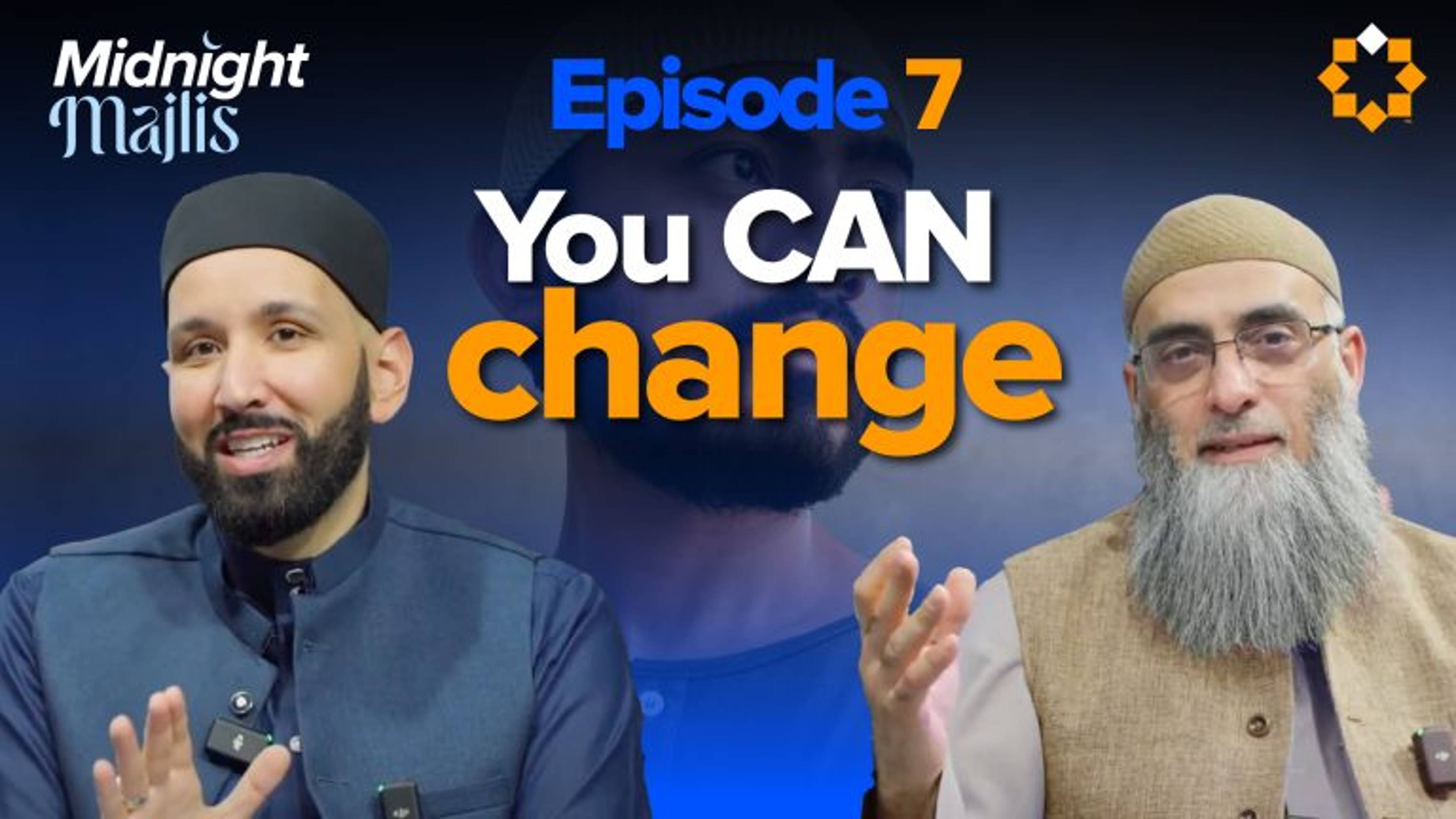
In this Midnight Majlis reflection, Dr. Omar Suleiman and Sh. Yaser Birjas explore Ibn Hazm’s advice about knowledge, ego, and the difference between true guidance and performative learning.

Ramadan is whirling by. Automate your donations for the last 10 nights.

This transcript was auto-generated using AI and may contain misspellings.
00:00As-salamu alaykum wa rahmatullahi wa barakatuhu. Al-hamdu lillahi rabbi al-'alamin, wa assalamu alaykum wa rahmatullahi wa barakatuhu. Wa ala nabiyyina Muhammadin wa ala alihi wa sahbihi wa sallam. Tasliman kathiran amma ba'd. Welcome back to the third night of the last ten nights. That's the 23rd night of Ramadan.
00:14This year from Valley Ranch Islamic Center. As we studied together the beautiful book of Imam Ibn Hazm. Al-Akhlaq wa al-Siyar. Morals and Behaviors. Al-hamdu lillahi, we have here Sheikh Omar.
00:28As always, we exchange these thoughts and ideas. And we were discussing this chapter actually earlier. On the subject of knowledge. So those who are having the English version of it. It's going to be Chapter 4, page 12. Insha'Allah. Chapter 4, page 12.
00:42You can follow with us insha'Allah. If you have the Arabic version, it's on page 87. Insha'Allah. Sheikh Omar, we were talking about this earlier. Subhan'Allah, the beginning of the night. How amazing this chapter is on the subject of knowledge. How Ibn Hazm, rahimahullah.
00:56The way he views the subject of knowledge. And its value. And how important it is for every human being. And every individual. It's very unique. So Bismillah, take us through that journey. Jazakumullah khair.
01:10So just to build. The first night we talked about what? The removal of what? As the goal of every human being. The removal of anxiety. And then yesterday we talked about what? The removal of ego.
01:24Right? So the type of knowledge that Ibn Hazm, rahimahullah. Is talking about here. Is that which removes. Anxiety and ego. Right? So basically he's talking about higher pursuits.
01:38And you're right. It's the pursuit of knowledge that ultimately he sees as such a high pursuit. So we'll start insha'Allah. Qala rahimahullah. Ibn Hazm. Ibn Hazm. Ibn Hazm.
01:52 Ibn Hazm. Ibn Hazm. Ibn Hazm. Ibn Hazm. Ibn Hazm. Ibn Hazm. Ibn Hazm.
02:06 Ibn Hazm. Ibn Hazm. Ibn Hazm. Ibn Hazm. Ibn Hazm. Ibn Hazm. Ibn Hazm.
02:20 Ibn Hazm. Ibn Hazm. Ibn Hazm. Ibn Hazm. Ibn Hazm. Ibn Hazm. Ibn Hazm.
02:34 Ibn Hazm. Ibn Hazm. Ibn Hazm. Ibn Hazm. Ibn Hazm. Ibn Hazm. Ibn Hazm.
02:48 Ibn Hazm. Ibn Hazm. Ibn Hazm. Ibn Hazm. Ibn Hazm. Ibn Hazm. Ibn Hazm.
03:02 Ibn Hazm. Ibn Hazm. Ibn Hazm. Ibn Hazm. Ibn Hazm. Ibn Hazm. Ibn Hazm.
03:16 Ibn Hazm. Ibn Hazm. Ibn Hazm. Ibn Hazm. Ibn Hazm. Ibn Hazm. Ibn Hazm.
03:30 Ibn Hazm. Ibn Hazm. Ibn Hazm. Ibn Hazm. Ibn Hazm. Ibn Hazm. Ibn Hazm.
03:44 Ibn Hazm. Ibn Hazm. Ibn Hazm. Ibn Hazm. Ibn Hazm. Ibn Hazm. Ibn Hazm.
03:58 Ibn Hazm. Ibn Hazm. Ibn Hazm. Ibn Hazm. Ibn Hazm. Ibn Hazm. Ibn Hazm.
04:12 Ibn Hazm. Ibn Hazm. Ibn Hazm. Ibn Hazm. Ibn Hazm. Ibn Hazm. Ibn Hazm.
04:26 Ibn Hazm. Ibn Hazm. Ibn Hazm. Ibn Hazm. Ibn Hazm. Ibn Hazm. Ibn Hazm.
04:40 Ibn Hazm. Ibn Hazm. Ibn Hazm. Ibn Hazm. Ibn Hazm. Ibn Hazm. Ibn Hazm.
04:54 Ibn Hazm. Ibn Hazm. Ibn Hazm. Ibn Hazm. Ibn Hazm. Ibn Hazm. Ibn Hazm.
05:08Ibn Hazm. Ibn Hazm. Ibn Hazm. Ibn Hazm. Ibn Hazm. Ibn Hazm. Ibn Hazm.
05:22Ibn Hazm. Ibn Hazm. Ibn Hazm. Ibn Hazm. Ibn Hazm. Ibn Hazm. Ibn Hazm.
05:36Ibn Hazm. Ibn Hazm. Ibn Hazm. Ibn Hazm. Ibn Hazm. Ibn Hazm. Ibn Hazm.
05:50Ibn Hazm. Ibn Hazm. Ibn Hazm. Ibn Hazm. Ibn Hazm. Ibn Hazm. Ibn Hazm.
06:04Ibn Hazm. Ibn Hazm. Ibn Hazm. Ibn Hazm. Ibn Hazm. Ibn Hazm. Ibn Hazm.
06:18Ibn Hazm. Ibn Hazm. Ibn Hazm. Ibn Hazm. Ibn Hazm. Ibn Hazm. Ibn Hazm.
06:32Ibn Hazm. Ibn Hazm. Ibn Hazm. Ibn Hazm. Ibn Hazm. Ibn Hazm. Ibn Hazm.
06:46Ibn Hazm. Ibn Hazm. Ibn Hazm. Ibn Hazm. Ibn Hazm. Ibn Hazm. Ibn Hazm.
07:00Ibn Hazm. Ibn Hazm. Ibn Hazm. Ibn Hazm. Ibn Hazm. Ibn Hazm. Ibn Hazm.
07:14Ibn Hazm. Ibn Hazm. Ibn Hazm. Ibn Hazm. Ibn Hazm. Ibn Hazm. Ibn Hazm.
07:28Ibn Hazm. Ibn Hazm. Ibn Hazm. Ibn Hazm. Ibn Hazm. Ibn Hazm. Ibn Hazm.
07:42Ibn Hazm. Ibn Hazm. Ibn Hazm. Ibn Hazm. Ibn Hazm. Ibn Hazm. Ibn Hazm.
07:56Ibn Hazm. Ibn Hazm. Ibn Hazm. Ibn Hazm. Ibn Hazm. Ibn Hazm. Ibn Hazm.
08:10Ibn Hazm. Ibn Hazm. Ibn Hazm. Ibn Hazm. Ibn Hazm. Ibn Hazm. Ibn Hazm.
08:24Ibn Hazm. Ibn Hazm. Ibn Hazm. Ibn Hazm. Ibn Hazm. Ibn Hazm. Ibn Hazm.
08:38Ibn Hazm. Ibn Hazm. Ibn Hazm. Ibn Hazm. Ibn Hazm. Ibn Hazm. Ibn Hazm.
08:52Ibn Hazm. Ibn Hazm. Ibn Hazm. Ibn Hazm. Ibn Hazm. Ibn Hazm. Ibn Hazm.
09:06Ibn Hazm. Ibn Hazm. Ibn Hazm. Ibn Hazm. Ibn Hazm. Ibn Hazm. Ibn Hazm.
09:20Ibn Hazm. Ibn Hazm. Ibn Hazm. Ibn Hazm. Ibn Hazm. Ibn Hazm. Ibn Hazm.
09:34Ibn Hazm. Ibn Hazm. Ibn Hazm. Ibn Hazm. It helps you. It removes all your doubtful thoughts.
09:48Like when you have knowledge, all doubts are gone. Alhamdulillah, Rabbi al-'Alamin. And these are exhausting doubts. You know, some people keep back and forth thinking about stuff that worries them. And start getting into anxiety.
10:00And they feel scared of these thoughts. He goes, knowledge will remove that for you. And also having false hopes for things. They keep trying to hope for things that will bring you nothing but pain.
10:14Like, for example, the pursuit of haram. They hope to get this much money so they can acquire a specific gain from this dunya. Or commit a sin. Just false hopes.
10:27Knowledge will help you cut those hopes out. And also, it will suffice you from going through thoughts and ideas. Building ideas will bring you nothing but pain.
10:40Keep trying to build in your mind an idea that is not even achievable. Or wrong. Or haram. And bring you nothing but pain. He says, if that is not enough as a rada, a deterrent.
10:53If the ilm is not enough to deter you from these thoughts. He goes, then I don't know what else I can tell you about its benefit. In addition to what we mentioned before. Then he made a comparison. He said, that's why you see the kings.
11:05He has animosity about the political class of his time, obviously. From what happened to him. That's why you see all these kings doing what? They don't have that himma. That high aspiration to pursue that knowledge. So what do they do?
11:19They go distract themselves with things like he mentioned over here. Playing chess. Playing games. And hunting. And drinking. And singing. And partying. And clubbing, basically.
11:32And that's what they do. Because they don't have that resolve. Or that himma. That high aspiration to be knowledgeable people. So he says, It's like, Like basically, what did I get out of this?
11:46Nothing. So is there any benefit from what they're doing? Absolutely nothing. Can I actually comment on his breakdown here? This is a different approach to ilm. Than any book of taskhiya.
11:59Where you read about the virtues of ilm. Usually, when you open up, like Mukhtasar Minhaj al-Qasideen. Which we study. Ilm comes very quickly. But when you're studying the virtues of knowledge, It's fadl al-ilm.
12:12The virtue of the scholar. Or the virtue of... But here he's actually talking about your psychological well-being. As a result of studying Islam. That's actually incredible. Your psychological well-being as a result of being thoroughly studied in Islam.
12:26So the first one is doubts. Your doubts are exhausting you. Okay, innama yakhsha allahu min ibadihi al-ulama. Those who truly are in awe of Allah. Are people of knowledge. Not people who, you know,
12:39Indulge themselves in theory. Or indulge themselves in all these philosophies. And talk about Islam in an academic way. You know, SubhanAllah, one of those beautiful things I heard from Sheikh Tahir. Why hafidh Allah. And I actually included it in my series. That some people know about Allah, but they don't know Allah.
12:53I loved how he said that. Some people know about Allah, but they don't know Allah. So I stole that from Sheikh Tahir. I've never stolen anything from Sheikh Yasser. I'll give you one. People have information about Allah.
13:06They don't have knowledge about Allah. Because Allah says, fa'alam annahu la ilaha illallah. Have the knowledge that there is no God worthy of worship but Allah. So people don't really have the knowledge of Allah. They have information about Allah. Which is, SubhanAllah, a lot of our younger generation today.
13:20And I see that as well. People come out, you know, boldly speaking about this. You know, on social media. Why they left Islam. Which brings a valid point. That you would say is based on knowledge.
13:32Yeah, and you don't see people that are students of knowledge leaving Islam. Like you see people that reach the epitome of knowledge in other traditions. Leaving those traditions to come to Islam as a natural progression.
13:45Like I came to a realization that this is the way of Abraham. This is the way of Ibrahim A.S. This is the way of Isa A.S. How many students of knowledge do you see leaving Islam? Because even when you're reading a book of Tahara. You're increasing in your yaqeen.
13:59You're increasing in your certainty. Sorry, it's a shameless plug. You're increasing in your certainty. You're increasing in your faith. I'm serious. You study water in the Shari'ah. You're like, if this is how much we have to learn about water.
14:13Then how much more is there? This is so clearly based in something divine. That Allah Azzawajal has given us the basis by which we can know. So much around us. That's why knowledge became a culture in Islam. How is it that ilm produced the greatest societies? How is it that Muslim scholars became at the forefront of mathematics and science and medicine?
14:27Because knowledge becomes addictive. And that's something that he's talking about here. Like it becomes an addiction. And it dispels exhausting doubts. So the first thing is you become solid in your faith. So the first, you know, when someone comes to me. And says that they're thinking about leaving Islam.
14:41Or that they're having questions about their faith. The first thing I say to them is. Well not everyone. Obviously it's a different situation here and there. But one of the first things I say to them is. You know, I'm not saying that you should leave Islam. It's a different situation here and there.
14:55But one of the first things I usually say to someone. Is like did you ever really give it a chance before you left it? Like did you ever really study it? In order for you to come to the conclusion that it's not for you. Most of the time it's a personal trauma. Or something that's inducing the doubt. Something emotional.
15:09But like hey did you ever really dive deep into this? Because there's something SubhanAllah. When you're in it. That peace of mind. Remember yesterday we were talking about peace of mind. Peace of mind. I know that I'm studying al-haqq.
15:23Like I study the Prophet's life. And every single time I open up a book of seerah. Or anything about the Prophet. Sadaqa Rasulullah. Sadaqa Rasulullah. Sadaqa Rasulullah. Like this man is indeed a Prophet of Allah.
15:37And he speaks the truth. You become more attached to it. So dispelling of doubts. And then he mentions the endless fantasies. That only produce stress. Right. So he's talking about this world.
15:51If you know the nature of this world. Then you won't be deceived by this world. So he's talking about the psychology of knowledge again. Like I want to memorize more. I want to learn more. I want to read more. I'm getting addicted to this.
16:05So I'm not going to be deceived by all of these other lowly pursuits. In this situation. And then the mental burden. Of a painful distraction. When you go through the natural difficulties of life. You will immediately. You will immediately.
16:19Go to Yusuf, alayhi assalam. You will go to Ayyub, alayhi assalam. You will go to this person and that person. You will go to Ta'if. You will go to Umm al-Huzn. You will go to these beautiful words. And these beautiful books of tazkiyah.
16:33And the tribulations of the scholars. And it will give you peace of mind. Like wait a minute. They went through this as well. You're elevating yourself. And you're putting yourself in the fraternity of these scholars. So be a scholar.
16:47Or be a student. Or be a follower. Be a scholar. Be a student. Be a lover or be a follower. But don't be a fifth thing. Don't exclude yourself from the fraternity that surrounds knowledge.
17:01And wallahi, what I want to share with you all. Dear brothers and sisters. Come to the halaqat in the masjid. After Ramadan is over. Come to the halaqat. Don't just suffice yourself with listening to lectures online. Go to the masjid.
17:15Sit in the circles of knowledge. Sheikh Yasir does tafsir. Where they're reading classical texts as well. Be a part of your local halaqat. Your local study circles. And you will see. That not only is your faith increasing.
17:29But your worries are decreasing. Like you're becoming a more purposeful person. When you're more purposeful. Then it puts everything in perspective. So knowledge improves your psychology as well. I want to comment on something that is very important. I don't want to offend anybody here.
17:43But again. One of the signs of truly seeking knowledge. The knowledge that stays with you. Is taking notes really. And if you're not taking notes. You're just only enjoying the moment. That's all.
17:57You feel that your iman is increasing. And I heard from a brother yesterday. He's here in the crowd as well. He goes. I was sitting there. And every second you say something. I'm going to write these ones.
18:11He goes. It was all amazing. I don't know which one to keep. I said. If you really were taking notes. You wouldn't miss any one of them. So my dear brothers and sisters.
18:25Our scholars say. First of all. Knowledge requires practice. Which means. If the knowledge is followed with practice. It stays. And also they said.
18:43Knowledge is just like a game. Like you go hunting for example. And your documentation. Is just like these strong ropes. That you hold these animals to. Or these games to. Make sure that you hold your prize.
18:59By tying it down very well. So documentation of knowledge is extremely, extremely important. The other thing, Sheikh, when you were talking about. As we were talking about knowledge.
19:10There is nothing little when it comes to the subject of knowledge. As long as it's truly a piece of knowledge. Or a piece of information. That translates into knowledge. It's always virtuous.
19:24Allah subhana wa ta'ala, when He says in the Qur'an. He said. Be Rabbani. By what you were teaching the Book. And what you were studying. But be Rabbani.
19:56To come talk about. Because that's what really, it's interesting. But to begin with something as basic as. How even to use the bathroom. For them, that's very inferior. And Hudhayfah, radiyallahu anhu. When he was asked one time by an unbeliever.
20:10He says. Like your messenger. He taught you everything. Including how to use the bathroom. He didn't use it that way. He actually used the actual slang word. For using the bathroom.
20:24I don't need that right now. We already had the "Romans risk" moment last year. Let's keep it clean. So he said to him. Your prophet taught you everything. No, no. Don't do it. Please don't do it.
20:38How to use the bathroom. He said yes he did. He taught us how to use the bathroom. He said basically when you come to the bathroom. You know how to enter with your left foot. And come out of course with your right. And don't use your right hand.
20:52And make du'a. The basic things. The basic thing that I can tell a lot of adults. Probably they don't really know them. Even though they probably have learned them at a young age. But we don't practice that. So knowledge.
21:06What he means by that again. Is the knowledge that stays with you. And that's when he comes next to the point. He said. He said.
21:24He said look. Someone who is capable of seeking higher level of knowledge. But they don't take that path. Like they don't pursue the higher level of knowledge. And education for themselves. In matters of dunya and the akhirah as well too. It doesn't really matter.
21:38Like if you can pursue higher education. To become more knowledgeable. And smarter. And hopefully have a depth of that knowledge. Because this is just like someone. Who is unfortunately planting corn. In a field that gives you wheat.
21:52Like yeah. You might get that corn. But it's not as valuable. It's not as good. It's not as maybe lucrative for you. So some of us are sitting here. Their talents.
22:06It's amazing. Unbelievable. And I think what's happening today. Is teaching many people to kind of summarize all their skills. Into one particular question. An equation I need to solve. So they can get a Ph.D. for it.
22:20And after that. That's it. They just kind of limit themselves. And their ability to become an encyclopedia of knowledge. Simply because they have been taught to take that path. I think, Sheikh. It's also like what I get from this text.
22:34Is why are you selling yourself so short? Like you look around. I memorize a couple of verses of the Qur'an. I know a little bit here and there. Who are you comparing yourself to? We know people that convert to Islam. And within a few years.
22:48They memorize the Qur'an. They speak Arabic. They read the text and understand it. Why are you comparing yourself to the "quote unquote" average Muslim? So yeah. You can say I know how to pray. I know how to do this.
23:02I know how to do that. Okay, you have been Muslim for 20, 25, 30 years. Why are you putting yourself at such a low level? You got your corn. You got a little bit here and there. And we are not saying the only alternative is to become a scholar. To become a Sheikh.
23:16To become Imam Bukhari. No, no. Why weren't you building yourself this entire time? You have more capability. And Allah will ask you about that capacity as well. Just like Allah will ask you about the capacity of your health. And your wealth and everything else.
23:30You had capacity to study more. To learn more. What caused you to learn less? By the way, Sheikh, one more thing. I just came to my mind from yesterday. Jahil. The word jahil.
23:44Of course, ignorance. We talk about jahil. Allah speaks of that pre-prophetic era as jahiliyyah. You know what the word jahil also means in Arabic poetry? Anyone know? Anger. Someone who is foul.
23:58Who is angry. Right? And subhan'Allah. This idea. That's actually how some of the scholars of tafsir would talk about the ayah. The servants of the Most Merciful. When the ignorant approach them.
24:12Ignorant of what? There are different Arabic contexts here. The word jahil. Ignorance here. Refers to a person who is actually foul-mouthed. Who has no sense of control over their temper. What are they ignorant of?
24:26They are ignorant of themselves. Right? They become fools. How are they acting foolish? How are they acting ignorant? The ignorance of Allah is the ignorance of self. You stop knowing how to behave.
24:40You stop knowing how to act. You stop knowing how to pursue. What to pursue. That ignorance is going to make you ignorant of purpose. Ignorant of potential. As is what is being described here. Why are you pursuing something so little?
24:54You know what you are capable of. You could have done this a long time ago. You could have read so much more. I ask each and every single one of you. As we come towards the end of Ramadan. Did you really read as much Qur'an as you were capable of? Why did you set the bar so low for yourself?
25:08You could have done more. You know that if you put a higher bar for yourself. You would have pushed yourself further. Why were you complacent with such a low goal for yourself? This is also part of what he is speaking about here. In this regard. Now he is moving to talk about.
25:22Now spreading that knowledge. His two points over here. Number one. Make sure you don't spread that knowledge. To the people who don't really appreciate that. Frankly, this is the most common today. In our social media era.
25:36Why? Because a lot of people. They look for controversial questions. And answers. And issues. And then they go and put maybe a one-minute. Two-minute video on that.
25:50Just for the sake of adding content. And eventually you can check the comment section. The comment section is just unbelievable. Because these people don't even understand the background of the matter. So everybody is giving their fatwa. Because they have a microphone. And they have access to a keyboard.
26:04So the idea is you have to be careful. Even as a student of knowledge. When you give knowledge. Give it to those who appreciate that. And make sure to gauge and scale your audience. Your people. Your crowd.
26:18Even online as well too. Because you have to be careful. Because you have to be careful. You have to be careful. You have to be careful. You have to be careful. You have to be careful.
26:32 You have to be careful. You have to be careful. You have to be careful. You have to be careful. You have to be careful. You have to be careful. You have to be careful.
26:46You have to be careful. You have to be careful. You have to be careful. You have to be careful. You have to be careful. You have to be careful. You have to be careful.
27:00You have to be careful. You have to be careful. You have to be careful. You have to be careful. You have to be careful. You have to be careful. You have to be careful.
27:14You have to be careful. You have to be careful. You have to be careful. You have to be careful. You have to be careful. You have to be careful. You have to be careful.
27:28You have to be careful. You have to be careful. You have to be careful. You have to be careful. You have to be careful. You have to be careful. You have to be careful.
27:42You have to be careful. You have to be careful. You have to be careful. You have to be careful. You have to be careful. You have to be careful. You have to be careful.
27:56You have to be careful. You have to be careful. You have to be careful. You have to be careful. You have to be careful. You have to be careful. You have to be careful.
28:10You have to be careful. You have to be careful. You have to be careful. You have to be careful. You have to be careful. You have to be careful. You have to be careful.
28:24You have to be careful. You have to be careful. You have to be careful. You have to be careful. You have to be careful. You have to be careful. You have to be careful.
28:38You have to be careful. You have to be careful. You have to be careful. You have to be careful. You have to be careful. You have to be careful. You have to be careful.
28:52You have to be careful. You have to be careful. You have to be careful. You have to be careful. You have to be careful. You have to be careful. You have to be careful.
29:06You have to be careful. You have to be careful. You have to be careful. You have to be careful. You have to be careful. You have to be careful. You have to be careful.
29:20You have to be careful. You have to be careful. You have to be careful. You have to be careful. You have to be careful. You have to be careful. You have to be careful.
29:34You have to be careful. You have to be careful. So, you know, we're not just talking about becoming a sheikh and then teaching people. If Allah has given you something, spread it for good. Use that knowledge for good.
29:48And we need people, by the way. We need people to step up. And you need to step up for your own sake. And this is something he says later on, Sheikh. I don't know if you want. He says, Of course. So he says,
30:02He says, He says that the best of knowledge is that which brings you close to your that which brings you close to your Creator and helps you to be pleasing to Him.
30:16This is the meaning of that verily those who truly fear Allah are the ulama. This ayah means two things, by the way. If one is not achieving the other, then there is a deficiency here. So, if you're not increasing in khashya,
30:30if you're not increasing in awe of God, then you're not really increasing in knowledge. And if you are supposedly increasing in awe, but that's not increasing you in knowledge, then you might go astray. Right? And this is where, you know,
30:44sort of people get into the whole spirituality market, right? Spiritual capitalism, is that what they call it? Right? Like people get into the industry of self-care, turn spirituality into self-care, and it makes me feel good,
30:58and I feel good about God, and I feel a connection to Him. So, if you're feeling that connection, but you're not increasing in knowledge, then you're not actually increasing in khashya. And if you're increasing in knowledge, but you're not actually increasing in awe of God,
31:12then you're not really increasing in knowledge. So, these two things actually balance each other out. And you have to ask yourself when you're studying, is this bringing me closer to Allah, Subhanahu wa ta'ala? The next time you start, you know, getting involved in something on YouTube, ask yourself,
31:26is this bringing me closer to Allah, Subhanahu wa ta'ala? Is this making me a better Muslim? Is this increasing me in good akhlaq? Is this increasing me in knowledge about Allah? Knowledge about the Prophet, peace be upon him? If the answer is no, run. Seriously, run. Because,
31:40even the Qur'an is a proof for you or against you on the day of judgment. If it's turning you away from Allah, run away as far as you can. Right? Because it's not going to bring you close to Allah, subhanahu wa ta'ala. This reminds me that some people,
31:54unfortunately, they feel attracted to what scholars call fitan. Like basically just like studying a subject online and it creates a controversy over it and it just kind of becomes the most popular thing. And people,
32:08they don't want to feel left out. They don't know what's going on with Sheikh Falan and Sheikh Falan and this and that. So they busy themselves with all these things that increase them in absolutely no knowledge and brings them not any closer to Allah, subhanahu wa ta'ala. Which is the premise
32:22of Ibn Hazm, for the point I mentioned, Sheikh, he says, He said, look, if your nafs is inclining towards one particular discipline of knowledge, then
32:36you should put more energy into it and don't try to divert your nafs to study something different. For example, some of us, mashallah, they love seerah. They love seerah, they read books, one book after the other, one book after the other, but then they see everybody else trying to study grammar.
32:50They want to study fiqh or usul. And as they try to study usul and fiqh, they feel resentful because now they're not enjoying it, they're not benefiting much from it, and they're now going away from what brings them closer to Allah, subhanahu wa ta'ala, which is reading the life of the
33:04beloved Rasulallah, sallallahu alaihi wa sallam. Some other people, they see their enjoyment is reading about 'aqidah and tawheed and theology because they would love to study about religion, comparative religion and so on. So as they do that, but they still, people, they tell them,
33:18hey, you still need to know a little bit of Arabic, you have to know grammar, you have to know this. And they try to study this, and it just diverts them from what brings them closer to Allah, subhanahu wa ta'ala. So Ibn Hazm says, look, nufus are not all equal. So don't compare yourself to somebody else.
33:32Some people, Allah blesses them, subhanallah, to be encyclopedias, meaning if they read a book on 'aqidah, they enjoy it. Book of tafsir, mashallah, they love it. Hadith, amazing. Usul, they're in love with knowledge regardless of the discipline.
33:46Other people don't have the time, don't have the energy, don't have the attention span, so they just focus on one particular field. If that one brings you closer to Allah, which is the point that Sheikh Umar was talking about, then that's enough for you. Just focus on what brings you to Allah, subhanahu
34:00wa ta'ala, not just give you a name or fame or just help you enjoy the controversy of that particular subject. So Sheikh, this sentence, because especially the last two nights we talked about this, we're all going to compare ourselves to people,
34:14right? Memorize this sentence well. Qala rahimahu Allah, unzur fil mali wa al-hali wa as-sihati ila man doonaka, wa unzur fil din wa al-'ilm wa al-fadhail ila man fawqaka. He says,
34:28when you compare yourself with others in regards to wealth, position, and health, so money, power, health, always look to those that have less than you.
34:42Always look to those that have less than you. The Prophet (ﷺ) told us this, by the way. This is an authentic narration, right? Look to those that have less than you. When you start seeing yourself envying someone because they have more money than you or they have more position than you or they've achieved
34:56more than you, anything that's worldly in its nature, stop it and look down instead. And say, instead of, I don't have that, remind yourself that I have this. That's a sign of ignorance of what the Akhirah is, what the dunya is. Yeah, so your perspective
35:10is skewed altogether. But he's saying, when it comes to deen, when it comes to knowledge, when it comes to religion, when it comes to al-fadhail, when it comes to virtuous qualities, always look to those who have more than you. SubhanAllah,
35:24it's actually an incredible perspective change. Right? And we talked about, like, someone might be looking down at someone who, you know, I pray more than this person, I read more Qur'an, at least I'm not that bad, at least I'm not that bad. Right? But do you do that with
35:38your worldly things? Do you say, at least I'm not that bad, at least I don't have it that bad, at least I don't have it that bad. No, you envy, you get mad, you start to get agitated, you start to wonder, how come this person's getting this, how come this person's getting that? All you have to do is look at Gaza.
35:52Are you still complaining? About anything in life? All you have to do is look at those people. I'm serious. And don't look at them like they're in a zoo. Look at them with the eye of empathy and wanting to help them and redirecting, instead of pursuing
36:06what you think everybody else has, look at those who have things taken away from them and channel what you have towards them. All you have to do is look at them. Right? Instead of looking at those who have more than you in this dunya. But when it comes to
36:20deen, always look up. Always look up. Never let your eye fall upon someone who, quote unquote, is less than you in knowledge or less than you in deen or less than you in virtue and say, well, at least, alhamdulillah, I'm not that.
36:34No. Always. You know, one of my favorite incidents of 'Umar ibn 'Abd al-'Aziz, rahimahullah, we talked about 'Umar ibn al-Khattab, radhiallahu ta'ala anhu, and subhanallah, his great grandson, 'Umar ibn 'Abd al-'Aziz, rahimahullah, who we saw in a dream. And he woke up so
36:48happy one day. And he said, "Who is this young man from my lineage? Right? Who has a scar on his face. And he's going to fill the earth with justice after it's been filled with injustice." He never lived
37:02to see him, by the way. But he saw a dream of him. And subhanAllah, what ended up happening is that 'Umar ibn 'Abd al-'Aziz comes from his offspring. Now, here's the beauty of this. 'Umar ibn 'Abd al-'Aziz, rahimahullah, was a copy of him. Like a copy of him, truly.
37:16And one of the things that happens with him, you know how we said that 'Umar used to look at Abu Bakr? 'Umar ibn 'Abd al-'Aziz, everyone praises him. I mean, there is nothing that you can't love about this man. He's just knowledgeable. He's lenient
37:30with the people. All of the virtues seem to be combined in him. But he goes around. And subhanAllah, he finds Mujahid, rahimahullah, the Mufassir of Qur'an. And he sees Mujahid making dhikr. And he starts to cry.
37:44And he says, "Woe to you, O Mujahid. How am I supposed to meet Allah on the same day that you're going to meet him? I'm afraid to meet Allah.
37:59And Allah questioned me at the same time he questions Mujahid. Because Mujahid is so much better than me." And his 'ulama, subhanAllah, his teachers. He said, "You know, I could rule the ummah, but Salih ibn Kaysan would rule me. And when he became the khalifah, he went and he knocked on his door.
38:13And Salih ibn Kaysan didn't answer him for like two hours. He said, 'What happened? Why didn't you answer the door? Like right away, when I knocked?' He said, 'I didn't want you to think that just because you're the khalifah now, right? I'm going to come running to the door when you come knocking.'
38:27He said, 'I'll rule the whole ummah, but this man will rule me.'" Always keep your eye looking up. And ask yourself, who are your role models? Who are your role models in deen? And what are you doing to be more like your role models in deen?
38:41Not just admire them. What are you doing to be more like your role models in this deen? Sheikh, to your point about Gaza, may Allah make it easy for the people of Gaza. I want to share something of personal experience. I remember after graduating from Medina University,
38:54you have spent four plus years in seeking knowledge and going to the 'ulama and the mashayikh and finishing books and attending these programs. You come out with, mashallah, a lot of 'ilm you would like to spread out there and share with people and so on.
39:07So in my young age, such a very, I would say, age and feeling that kind of pride and maybe a bit of arrogance, Allah knows, subhanAllah, that time. Going to Bosnia, because Bosnia came out of the war and that was a time for me to go and help out.
39:21I love humanitarian work. So I said, "You know what? I'm going to go to Bosnia to help people and change their lives." I swear they changed mine. Yes, subhanAllah. Wallahi, you go there with the intention to change their lives and they end up changing yours.
39:34Because you go there with this, alhamdulillah, everything is, mashallah, in your hand. You have the power of making changes and giving and doing and this and that and so on. And these people just came out of war. I mean, their homes are all destroyed, their lives are broken.
39:48Almost every household lost someone in their family, a beloved daughter, son, father, brother, sister, subhanAllah, everybody. And we're going there thinking that we're going to change their lives,
40:01insha'Allah, taba'a wa ta'ala. But seeing the humbleness, the humility, the kindness, the gentleness, you know, down to earth people and this and that, just like, and everything that you give them they'll appreciate it.
40:13I even, I still remember, we used to kind of like joke about it at some point in our relationship with the people in Badr, subhanAllah. Every time we present something to them, whether it's juice, tea, crackers, little things,
40:27they always say, "Mashallah, good tea. These are good biscuits. Good this and good," and me, and at the time my wife, I'm just like, "Look, I'm just like, hmm.
40:41I mean, yeah, they're admiring everything." Of course they're going to admire everything. They came from a situation that this was nobility at some point, subhanAllah. But truly, and that's an advice to my dear brothers and sisters, if anyone really wants to humble themselves and really understand the reality of life,
40:55wallahi, after spending four years in Bosnia and I came here to America, nothing impresses me anymore. Nothing really is impressive. No house, no car, no fancy things, because I've seen it. I've seen what life really means in reality
41:08with these people for four years. And now we're witnessing that almost everywhere we go, subhanAllah, so that 'ilm, again, it's not just about having the information. It's how much that should bring you closer to Allah, subhanahu wa ta'ala. Sheikh 'Umar said,
41:22rahimahullah, "Man arada khair al-akhirah wa hikmat al-dunya wa 'adl al-sirat wa al-ihtiwaa 'ala mahasin al-akhlaq kullaha wa istihqaq al-fadail bi asr'aha fa l-yaktadhi bi Muhammadin Rasulullah sallallahu 'alayhi wasallam
41:36wa l-yasta'mil akhlaqahu wa siratahu ma amkana hu aananallahu 'ala l-iqtida bihi sallallahu 'alayhi wasallam bi mannahi." Ameen. So he says, "Whoever seeks the reward of the hereafter and whoever is looking for wisdom in their conduct
41:50or the wisdom of this world, whoever is looking for integrity and whoever is looking to master all of the traits, the noble traits of character and whoever is looking to attain every virtue,
42:02then let him take Muhammad, the Messenger of Allah, sallallahu 'alayhi wasallam, as his example. Let him adopt the Prophet's character, sallallahu 'alayhi wasallam, and way of life as much as he can." May Allah aid us in emulating him by his grace.
42:15Allahumma ameen. So he makes a du'a in the middle of this diary. You know, I was thinking about the Prophet, sallallahu 'alayhi wasallam, in this regard. You know what's incredible? Is how relatable the Prophet, sallallahu 'alayhi wasallam, is 1400 years later. It still feels so human
42:29when you read about his struggles when you read about his struggles 'alayhi salatu wassalam, when you read about what he was able to do in his life and his family life and society and all those types of things. Like, it doesn't feel distant.
42:42Despite all of the cultural references and despite all of the differences of circumstance, Allah 'azza wa jall has made his example sallallahu 'alayhi wasallam as relevant to us as it was to the first generation of Muslims.
42:56And if you can't find a role model, this is your role model. If you can't find, if you look up and you feel disappointed when you look up, look at him sallallahu 'alayhi wasallam and he will never disappoint you. And that comes back to 'ilm.
43:10You know, subhan'Allah, the more you read about him 'alayhi salatu wassalam, the more you love him and the more you believe he's a prophet. The more you immerse yourself in his seerah, the more convinced you become. The more connected you become. And so this is the man 'alayhi salatu wassalam
43:24that you take as your ultimate example. And by the way, how did the Prophet sallallahu 'alayhi wasallam describe himself? As I think about it, subhan'Allah, the three men when they came looking, you know, to see what does he do, right? Does he stay up all night? Is he ever intimate with his spouses? Does he eat and drink?
43:38Does he, like, what kind of life does he live? The Prophet sallallahu 'alayhi wasallam said, "Ana a'lamukum I am the most knowledgeable of you of Allah. I know Allah better than all of you." It's one of the ways that he described it 'alayhi salatu wassalam. I know Allah,
43:52I have more knowledge of Allah than all of you. So he is 'alayhi salatu wassalam the greatest scholar, right? And the greatest student 'alayhi salatu wassalam. And the greatest leader and the greatest follower. Whatever Allah 'azza wa jall
44:05gave him 'alayhi salatu wassalam, the way he absorbed it and became an example for us, you've got to learn his seerah. And most generations of Muslims knew more of his seerah [and] less of his words.
44:19Because ahadith used to be limited in their distribution for the most part. His actual sayings were limited to the circles of knowledge for the most part. Except for some of these collections like Riyad al-Salihin and others. But most people knew the stories
44:33of the Prophet sallallahu 'alayhi wasallam. And the noble virtues were so obvious to a person at any level of literacy at any level of religiosity and in any culture and in any way. Sheikh, I think Rahimahullah ta'ala in putting this point
44:47in the context of knowledge, it seems that he is summarizing everything to us. He said, look, now that you understand how valuable knowledge is, what does it mean exactly, is the one that brings you closer to Allah subhanahu wa ta'ala and the akhirah, your source of knowledge
45:01and your example of applying that knowledge in your life should be known by the Prophet sallallahu 'alayhi wasallam. Like he is the one and only to be followed without any doubt, without even hesitation. As Imam Malik rahimahullah ta'ala when he went to the grave of the Prophet sallallahu 'alayhi wasallam
45:15in Medina, he said, "Kullu yukhada min qawlihi wa yuraddù illà sahib hàdha al-qabr." He said, look, everybody you can take from their words and leave some except for the one in this grave, Rasulallah sallallahu 'alayhi wasallam. He is infallible, his life is the example for us.
45:29So, basically what he is saying, if you want to live worry-free, if you want to have all anxieties, all your worries gone, if you want to have it all connected for the purpose of the akhirah
45:42and enjoy it in that fashion, he says, this is the example of Rasulallah sallallahu 'alayhi wasallam. Now, before we close, actually there is that point that we marveled at when we were talking earlier about it, subhan'Allah. I want you to read
45:56and translate that for us. I love this section. This is like the real Ibn Hazm. So, if there is any scholar in Islamic history that can be described as "no filter," it is Ibn Hazm rahimahullah by the way. Like I said, even that praised him. They said,
46:10sometimes his tongue was sharp on some of the other scholars and things of that sort. And he is very transparent, very honest about himself as well too. The whole chapter that he is going to speak about his own faults, subhan'Allah. Yeah, we have a chapter on his own faults where he writes about his faults.
46:24But he says, ghadiba ahlul jahl marratayni min 'umri. He said, ignorant people, again, if you were to use slang but we are not going to do that because we are not going to go viral, right. But ignorant people made me mad twice in my life. One,
46:38when I was, in my own days of ignorance, when they spoke about things that they had no idea about. So they spoke about things that they did not understand. And I was, I was very angry. and I was very angry and I was very angry and I was very angry and I was very angry and I was very angry and I was very angry
46:52 and I was very angry and I was very angry and I was very angry and I was very angry and I was very angry and I was very angry and I was very angry and I was very angry and I was very angry and I was very angry and I was very angry and I was very angry and I was very angry and I was very angry
47:06 and I was very angry and I was very angry and I was very angry and I was very angry and I was very angry and I was very angry and I was very angry and I was very angry and I was very angry and I was very angry and I was very angry and I was very angry and I was very angry and I was very angry
47:20 and I was very angry and I was very angry and I was very angry and I was very angry and I was very angry and I was very angry and I was very angry and I was very angry and I was very angry and I was very angry and I was very angry and I was very angry and I was very angry and I was very angry
47:34 and I was very angry and I was very angry and I was very angry and I was very angry and I was very angry and I was very angry and I was very angry and I was very angry and I was very angry and I was very angry and I was very angry and I was very angry and I was very angry and I was very angry
47:48 and I was very angry and I was very angry and I was very angry and I was very angry and I was very angry and I was very angry and I was very angry and I was very angry and I was very angry and I was very angry and I was very angry and I was very angry and I was very angry and I was very angry
48:02 and I was very angry and I was very angry and I was very angry and I was very angry and I was very angry and I was very angry and I was very angry and I was very angry and I was very angry and I was very angry and I was very angry and I was very angry and I was very angry and I was very angry
48:16 and I was very angry and I was very angry and I was very angry and I was very angry and I was very angry and I was very angry and I was very angry and I was very angry and I was very angry and I was very angry and I was very angry and I was very angry and I was very angry and I was very angry
48:30 and I was very angry and I was very angry and I was very angry and I was very angry and I was very angry and I was very angry and I was very angry and I was very angry and I was very angry and I was very angry and I was very angry and I was very angry and I was very angry and I was very angry
48:44 and I was very angry and I was very angry and I was very angry
56:12 and I was very angry and I was very angry and I was very angry and I was very angry and I was very angry and I was very angry and I was very angry and I was very angry and I was very angry
56:26and I was very angry and I was very angry and I was very angry and I was very angry and I was very angry and I was very angry and I was very angry and I was very angry and I was very angry and I was very angry and I was very angry and I was very angry and I was very angry and I was very angry
56:40and I was very angry and I was very angry and I was very angry and I was very angry and I was very angry and I was very angry So the first question, Sheikh, again. Okay. Should we leave our schools and pursue Western education to seek Islamic knowledge?
56:54Is that a good idea? Probably not. There are some... people that indeed, if you look, if you feel the passion, if you feel like you're up to it and insha'Allah ta'ala this is something that
57:06you want to do for the rest of your life. We need people of caliber and talent to obviously study Islam full-time. But what I would say is don't look at it as an all-or-nothing type of thing.
57:19So even if you're studying in your universities, we need people to excel in all of the different professions and the 'ulama didn't really have much of a dichotomy here in terms of knowledge, like sacred knowledge. Everything has the potential to be sacred and beneficial, bi'ithnillah ta'ala.
57:32But at least be structured in your Islamic education as well. So if you're studying full-time at a university, alhamdulillah, whatever degree you're taking, what's your Qur'an memorization schedule look like?
57:46What's your halaqah attendance look like? What's an online part-time structured program or on-site part-time structured program that you can be a part of insha'Allah ta'ala? And if you build that consistently, like you'd be amazed over four, five, or six years, what that type of
58:00consistency can do for you. Even just being a part of one or two halaqas for four, five, or six years, you'd be amazed what that builds for you. You could memorize, you know, five or ten juz of the Qur'an and once you kind of get that sweetness of memorizing five or ten,
58:13it's easy to then maybe take a gap year and go and memorize the Qur'an insha'Allah ta'ala, take it to the next level. So just be consistent. That's the point. Well, at the same point, a question from Canada says, okay, so
58:25I'm trying to finish my college degree, obviously, but if I'm gonna start studying Islamic studies as I'm finishing my degree, it's gonna be very hard. So is there a way to balance that? Studying at a university in Canada?
58:36I think so. I don't know how much value that's gonna really bring at the end of the day. Until it becomes another United States insha'Allah ta'ala. Until it becomes a 51st state, right? Right. But uh, I forgot the question. I'm sorry.
58:52I heard Canada and I just, it's too easy. They're too nice. Too nice, right? Too easy to... So again, they say, look, I want to finish my college degree, but at the same time, I want to also pursue Islamic knowledge, but I feel kind of conflicted over here.
59:06So is there a way to balance that without, you know, quitting my degree? And what do I do? Yeah, like I said, online program, on-site program, just be consistent with something insha'Allah ta'ala.
59:17Anything you suggest to begin with? Do I have to memorize the Qur'an first, study Arabic? What is it exactly? Start with that. Look, personally, I recommend people to really, I feel like if you have a good hifz regimen,
59:28if you get into the habit of memorizing the Qur'an and you're part of a hifz group, the structure that hifz brings to your life, even if it's at lower doses, like even if you have a halaqah, for example, and you're memorizing two or three pages a week,
59:43that's pretty low actually. Let's say three pages a week, but the point is like if you, no, it's not low, two or three pages a week. Like if you have a halaqah and you have a group of people that you're memorizing the Qur'an with, the structure that's gonna bring into your life, there's so much barakah that comes from the Qur'an.
59:58There's so much barakah that comes from the Qur'an, like there's no way to fully encapsulate it. So do so insha'Allah ta'ala. I would say it's not an either-or, but I'd say when it comes to structure and barakah, memorizing the Qur'an, being a part of a hifz group
01:00:11will definitely take you places, be it at night. Sheikh, anything that you have? I want to share, I want to add one more thing. When it comes to seeking knowledge, you have to have a teacher. You have to have a mentor. I know we live in a time when everybody, masha'Allah,
01:00:26studies online and takes everything, of course, from online resources. So we don't see the value of having a teacher. Like I do it on my own, right? You can't. Some disciplines in Islamic knowledge require me to study with a teacher because it's not really just about collecting the information,
01:00:40it's also about the akhlaq, the manners, the depth of it. And the Sheikh and the 'alim, since alhamdulillah, they might be higher in knowledge than you, so that 'ilm that you're reading about or learning about is
01:00:52interconnected with all the other disciplines. So he can give you a shortcut to a lot of information that can increase your knowledge insha'Allah. I'll also say this, don't belittle your imam or your Sheikh who's not famous.
01:01:06Like that's one of the biggest mistakes people make. You know, subhanAllah, when I went overseas, one of the best pieces of advice that I got was don't look for the big names. Because sometimes, like even that senior student of knowledge, that advanced student of knowledge that can give you time,
01:01:20that's gonna be able to be dedicated and you have maybe easier access to, you're gonna get so much out of that. SubhanAllah. So don't belittle your imam. Don't belittle like the mashaykh that are around you just because someone doesn't have a big name online.
01:01:33I mean, we have gems in our community, alhamdulillah. We have real scholars in our community, alhamdulillah. Benefit from them insha'Allah. Don't belittle that. Alhamdulillah. So any questions? Go ahead.
01:01:50Assalamu alaikum. Allah bless you both and make you of the people that Allah loves. I wanted to ask, both of you mentioned this idea of gathering information versus gaining knowledge.
01:02:00How do you hold yourself to account about which one is happening for you in your heart? Are you gathering information or gaining knowledge? Well, I think the idea of
01:02:11knowledge, we think of it to be something like you have to finish two, three, four years, ten years, and get a degree before you become a knowledgeable person. No, and the Prophet (ﷺ) said, right, he says teach or
01:02:24spread the knowledge, convey my message, even if it was one single ayah. So if a person, alhamdulillah, learns how to make wudu properly and they have the proper knowledge by studying it or reading it in a book and so on and so on from a shaykh, alhamdulillah, then teach that. That's knowledge.
01:02:39So knowledge grows. It just starts growing, alhamdulillah. The problem is that when people simply watch videos, listen to lectures, read books without really taking notes, for example, that's gathering information.
01:02:53That's collecting information because after you finish the book, if I ask you, okay, so can you teach this book? You would say, me? I don't think I can do that. But if I focus on one single chapter and you take notes and you ask the question to your shaykh and so on,
01:03:05from that chapter, if I ask you, can you now teach it to somebody else? You would say, I think I can for maybe ten or fifteen minutes, but at my level. So that's what we need from you. So again, when it comes to knowledge,
01:03:17it has to be actually pursued seriously, taking notes, learning from teachers. And the nature of knowledge, that's the thing about knowledge. The nature of knowledge is the more you take from it, the more you need to learn more.
01:03:30So basically the more you learn, the more ignorant you feel. So the 'ulama, they say, al-'ilmu tharatun la tathbaT. Knowledge is just like entering a distance of three spans of a hand.
01:03:44If you enter the first span, qal man dakhala al-shibar al-awwal takabbara. It breeds arrogance. Why? Because you know one mas'alah, you watch one video, you read one book, you think you know everything, right? So you start arguing with everybody. That breeds arrogance. Qal man dakhala al-shibar al-awwal takabbara.
01:03:59If you continue learning, it will breed humbleness and humility. Because now you realize, wait a minute, I mean, that was very, I mean, not smart of me saying these things before. Because you know there is much more to it right now.
01:04:12Qal man dakhala al-shibar al-thani yatadhaCC'u. Once you enter the third span, you realize you have absolutely no knowledge yet. Why? Because now you realize it's still there, it's open. I mean, the field of knowledge is, it keeps expanding.
01:04:27And that's something you learn as you grow into knowledge, insha'Allah ta'ala, that the more knowledge you have, the less likely you talk. And we learned that from Sheikh Muhammad Sheikh, rahimahu 'llahu ta'ala, in Medina as well.
01:04:40You can tell a senior student in Medina University from a junior student on how much they talk. Like we'd be having dinner together, all the freshman students are arguing about what the Sheikh said and what they're blah, blah, blah. And the senior students dig into their food.
01:04:53And then one of those young ones says, hey, do you have anything to say about this issue? He goes, Allahu alam, I don't know. Come on, you're about to graduate. He said, that's why I don't know, Allahu alam.
01:05:07It's bigger than what you guys think about it. So, wa alaikum assalam, I just keep eating. And that's the depth of knowledge. The more you learn, the first thing you understand is that you know about yourself more than anybody else.
01:05:20Again, if you're transparent, like Ibn Hazm is talking about, be genuine with yourself. If you recognize how much knowledge you have, you realize you have nothing yet. And that's going to make you humble. Hopefully, insha'Allah, with the right maybe training and structure from your teachers
01:05:34and mashayikh, they will help you to qualify yourself to start giving khutbas here, halaqah there, until insha'Allah you excel and become, insha'Allah, a proper student of knowledge, bi'idhn Allah ta'ala.
01:05:44As the saying, Sheikh Abdullah Mu'taz, rahimahu Allah, qala al-mutawadi'u fi talab al-'ilmi aktharuhum 'ilman kama anna al-makana min al-khafid akthar bi-al-qiyam. So, that a person that's humble in the pursuit of knowledge is the one who gains the most knowledge
01:05:57because if you think about the land, the lower the land, the more water it absorbs. The more you lower yourself, the more you're going to gain, the more you're going to absorb. So, if you're pursuing this already with like the wrong intentions, subhan'Allah, it's, you know,
01:06:11Imam al-Hasan al-Basri, rahimahu Allah, mentions like selling a weapon to a thief that you know is a thief. And that's why, you know, scholars used to be careful with who they would teach. And it is, I mean, let's be real, I mean, it's scary because everyone has access
01:06:25and so people can use what they access in very dangerous ways. And so, you have to really, basically the societal checks on your intentions are almost non-existent now. So, you have to check yourself and you have to ask yourself, am I being humble?
01:06:40Am I truly trying to pursue this for the sake of Allah, subhan'Allah? There's the narration of Ibn Mas'ud, radi'Allahu ta'ala anhu, that whoever seeks knowledge to argue with the ulama or to turn the faces of the ignorant towards him.
01:06:56What was the third one, Sheikh? To argue with the ulama, to turn, oh, to argue with the ulama, to shame the ignorant or to turn the faces of the people towards him.
01:07:09So, basically, to either argue with someone more knowledgeable than you or to put someone down or to shame, I'm sorry, to get attention. Allah 'Azza wa Jall will enter that person into hellfire. So, those are three intentions, right?
01:07:23One of them is you want to put yourself in the, argue with someone, you want to shame someone or you want attention from someone. Those three things, that person will actually end up going to hellfire as a result of that. May Allah 'Azza wa Jall protect us.
01:07:37Any question from the sister side? As-salamu alaykum. A scholar said knowledge calls to action. If it responds, it stays. If not, it departs.
01:07:50So, my question is, does one need to perfect every action before continuing to study? Like, does Allah veil more knowledge until you act upon what you already know?
01:08:02Or, if one is already doing all the obligatory acts, is it okay to apply knowledge gradually, like the voluntary acts of ibadah and continue studying?
01:08:14I mean, I think, by the way, in the question, masha'Allah, you're already kind of diagnosing it. There's obligatory knowledge and there's voluntary knowledge, right? There is the knowledge that's absolutely crucial to you in your journey as a Muslim.
01:08:24You need to really, really immerse yourself in that as much as possible and ask yourself how to apply it. And there's a sense of urgency there when it comes to voluntary knowledge and building yourself in the voluntary sense.
01:08:37Look, the point is, is that you have the intention to try to practice everything that you're learning. Most people that say, well, I'm not going to move on to the next bab, to the next chapter of knowledge until I've applied this properly, end up giving up the action and giving up the 'ilm and the 'amal, giving up the action and the knowledge.
01:08:52So, in an ideal scenario, you're learning and then you're applying right away and you're trying to apply. Realistically, you're just always, you know, subsequently learning and trying to apply, learning and trying to apply, learning and trying to apply,
01:09:05and interrogating yourself with what you are reading. Knowledge is like an interrogation process, too. Like, you're reading and you're like, all right, do I fit this or not? What can I change about myself to actually be able to apply this in a better way?
01:09:20Brothers, another question on the brother's side? Okay, sister's side? We have one here. Sisters, go ahead, ask your question.
01:09:29My question is that when you were mentioning the company that we keep, how we should be careful about it and the conversations that we have.
01:09:41So, what if, like, my question is that my family, or if we're surrounded by family that maybe doesn't have a good quality of topics, how can we balance?
01:09:55You know who I think about right away is I think about Abu Hurayrah, radi'Allahu ta'ala anhu, the man who narrated the most hadith on behalf of the Prophet (ﷺ). And while he was at home, his mom was not a Muslim and would curse the Prophet (ﷺ) and say all sorts of horrible things about Islam.
01:10:11And that went on for years before, alhamdulillah, she embraced Islam and the Prophet (ﷺ) made du'a for her and it became a beautiful story, right, of Abu Hurayrah, radi'Allahu ta'ala anhu and his mom, radi'Allahu anha. But for years, imagine, like, he was learning from the Prophet (ﷺ)
01:10:26and then he was going home and that's what he was hearing. That is in and of itself a test, that's a trial, when it's your own family that these bad manners are exhibited and that you have these things pulling away from you.
01:10:39So, there's an intentionality. If I'm spending time with someone from my family for the sake of silat al-rahim, which is in and of itself a noble pursuit for the sake of establishing the ties of kinship, how can I make that tie not sinful?
01:10:54At the bare minimum, how can I make it not sinful? To where, you know, I'm not tolerating or we're not going to allow backbiting, gossip, slander, whatever it is, or lowly things to happen just for the sake of upholding the ties of kinship.
01:11:07So, how can I start to at least root the sinful out? As for the pursuit of higher aspirations, sometimes that takes time. You trying to influence them in good ways, bringing them along, whatever it may be.
01:11:18But in the meantime, cut out the sinful and then the virtue of just silat al-rahim in and of itself and establishing the ties of kinship in and of itself makes that gathering matlub. It makes it a gathering that's good, bi'idhn Allah ta'ala, something that's good that can come out of it.
01:11:32Now, when it's your parents, when it's your grandparents, or if it's the elders, by the way, subhan'Allah, it's awkward sometimes, right? You're trying to cut out backbiting, but your parents are backbiting. Here's what you don't do.
01:11:44You don't go, mom, ittaqillah, you know, and start like making yourself Ibrahim 'alayhis assalam and your dad, the idol, you know, the God maker and going and like breaking TVs
01:11:55and like breaking laptops and like that's not how this works. You know what you do? You show some discomfort, change the subject. Keep changing the subject, quickly change the subject, right?
01:12:07As soon as they start going down that track, just talk about something else right away, throw something else out there, change the subject. So you can maintain the love and the respect. Eventually, the tenor of those conversations will change, insha'Allah ta'ala. And Allah 'Azza wa Jall will excuse you because it's noble.
01:12:20You don't want to, you don't want to fight your parents. You don't want to yell at your parents or like, and by the way, some parents, and I'll say this to the parents as well. Again, 'Umar ibn 'Abdulaziz, rahimahu Allah ta'ala, welcome your kids,
01:12:33welcome your kids admonishing you without being disrespectful in the sense of what? 'Umar ibn 'Abdulaziz, rahimahu Allah had a son, his favorite son was 'Abdul Malik. He had many kids, insha'Allah, one of them was 'Abdul Malik.
01:12:45And he said that this son of mine, when he passed away, 'Umar was so grieved. He said, wa'Allahi kana yu'inuni 'alal-khair. So this son of mine used to enjoin me towards good. Like I'd want to go to sleep at night and he would say, my father,
01:13:00what about all of the mazalim? What about all of the transgressions? What about this? What about that? What about this? Like he was, he used to, kana yunafisuni, he used to compete with me in tahajjud, he used to compete with me in these things. Open up, you, and by the way, this will only help you gain the respect of your kids.
01:13:14It will actually help you gain the respect of your kids. Not to invite them to disrespect you, but to say, hey, we're all in this together. Right, we're all trying to get better, insha'Allah. Hey, if you see me not praying sunnah, you know, say, mom, can we pray sunnah? Dad, can we pray sunnah? Can we go to the masjid? Can we do this?
01:13:29Or, you know, maybe we shouldn't talk about that person. Maybe we should do this, but this person is this, this person is that, in a good way. Invite that type of conversation in your house, and subhan'Allah, your kids will only respect you more as a result of that. Yeah.
01:13:42So a question: he says, "How do you know that you've learned enough to teach? For example, you have a master's in Islamic psychology or the likes, and so on." If I may just comment on this question, Sheikh. The most important thing is to understand it goes back to the intention. Intention, intention, intention.
01:13:56Our 'ulama, they say, whenever you seek knowledge, the first thing that should come to your mind is you're seeking this knowledge for the sake of Allah, subhanahu wa ta'ala, only for the sake of Allah, number one. Number two, you seek that knowledge to remove ignorance—to remove ignorance of yourself,
01:14:10which is what Ibn Hazm has been talking about all this time, because that removes the anxiety of not knowing, the worrying that I'm not doing enough well, and so on. So to remove that ignorance of yourself. The third one is to remove ignorance of the people,
01:14:24like helping people remove their ignorance, insha'Allah wa ta'ala. You have to continue to monitor your intention on the journey of knowledge, because it's a very slippery slope path, really. It brings a lot of attention, and if those are not ready for it, it can take them astray.
01:14:38But when you teach, you teach to what you know; don't expand. Which means if you know Islamic psychology, don't talk about Hajj, please. Like if that's your field, just stay there. Alhamdulillah, rabb al-'alamin.
01:14:51Some people, alhamdulillah, from experience, talk about the experience, but don't expand beyond what you don't have the knowledge of. So again, if we do that, insha'Allah wa ta'ala, you'll be fine, bi'idhnillahi wa ta'ala. We have a question from the brothers' side over there.
01:15:05He's been waiting. It better be a good question, man. I've been waiting for a long time. No pressure.
01:15:15So I noticed that you guys said to not collect information and to instead gather knowledge. What's the difference between information and knowledge?
01:15:29That's a great question, mashaAllah. What's the difference between information and knowledge? Information stays in the realm of ideas. Knowledge transcends into the realm of practice. Knowledge is practiced.
01:15:42Information is memorized and thought of. So the goal in Islam, 'ilm, is to take that knowledge and to practice it to the greatest extent possible.
01:15:53Otherwise, if it's just discussions and ideas, you know, there are entire professors of Islamic studies and they're not even Muslim. They have no 'ilm, they have no knowledge, right? They're talking about ideas and it's usually bad information, too, by the way, but it's just information, information, information.
01:16:08So knowledge is practiced. Information is only memorized, spoken about, listened to, and so on and so forth. Also, I might add to this, Sheikh, sometimes the information is useless, really. Like what?
01:16:20For example, you know, every player's game and how many hours they run and all these things, and so on. I mean, who cares, really?
01:16:29Like seriously, how is that going to change your lifestyle? I mean, yeah, it's okay to have the information so we can have a conversation with people.
01:16:39But if you spend more time in solidifying that information to become knowledge about the details, then that knowledge is not beneficial at all right now.
01:16:47Sheikh, the Mavs don't have any more players anyway, so no one knows their names, no one knows their stats, no one knows anything. Luka's gone, Kyrie's hurt. No one knows, Sheikh, it's okay.
01:16:59But the whole idea again, our life is short on this earth, really. So make sure that you spend your time, insha'Allah, in that which is beneficial to you, insha'Allah. Question from the sisters' side?
01:17:12Assalamu alaikum. You talked about checking upon yourself and your intentions while seeking knowledge. So how would I know that my intention is correct?
01:17:23Because my nafs or the whispers of Shaitan might tell me that I'm doing it for the right sake, but in reality I might not. So there are categories when it comes to intention.
01:17:37Number one, you never stop refining the intention. Just like you never stop learning, you never stop refining your intention. There is the one who acts and they know their intention is not for Allah.
01:17:49And there is the one who acts and they know their intention is solely for Allah. And then there is the one who initiates something with a good intention but Shaitan snatches away some of that intention. So what should a person do?
01:18:03To leave off the intention would be a problem and to leave off the action would be a problem. Both of those would be wins for Shaitan. And so you keep doing the action while trying to purify the intention all along.
01:18:16You never leave off the action. It's one of the tricks of Shaitan. He comes to you when you're doing something good and he says, "Oh, you know that you're not really doing this for Allah. And what about this person? What about that person?" He starts to pollute it. And you end up leaving off the action and the intention.
01:18:29So you keep the action and you try to purify the intention simultaneously. The only time it's really problematic is when you intentionally go out there and pursue something and you know it's not for Allah. Like I'm doing this for people and I know I'm doing this for people.
01:18:43I'm doing this to get praise and I know I'm doing it for praise. Not, "I'm trying to get the praise of Allah," but the natural tendency is starting to creep in. I'm doing this for Allah but then Shaitan tries to pollute the intention.
01:18:55So Shaitan will try to corrupt the intention or get you to abandon the action. Corrupt the intention, get you to abandon the action. So purify the intention and continue the action. That's the way that you keep him at bay in that regard.
01:19:09So a quick question, rapid insha'Allah question here. Someone asked about setting the bar for themselves, you know, between failure and reaching their expectations and goals. So how do you balance between setting a goal, reality, but also striving to learn?
01:19:23I would suggest to the brother or sister who's asking this question: again, 'ilm has to be structured.
01:19:30When you do it on your own and you create a specific schedule for yourself because you would like to go and jump from 0 to 60 and then you fail reaching even 30, definitely it's going to be depressing, really.
01:19:41But if you have insha'Allah a structured program that you are part of, that will help you insha'Allah have these little accomplishments, one course at a time, one session at a time, one question at a time. That makes a big difference in your life, insha'Allah.
01:19:54Another question from a mother who says, "I have little kids so I could barely finish reading a book without feeling exhausted and derailing from the path of seeking knowledge. What do I do in this situation?"
01:20:05Once again, seeking knowledge doesn't have to be by sitting for 10 hours or 5 hours or 2 hours, you know, a solid 2 hours to study. You don't have to do that. It could be just half an hour focused, half an hour on a specific mas'ala.
01:20:18It can make a big difference in your life, insha'Allah, because as long as it's sincere and makes change in your life, alhamdulillah, it's amazing. I remember in Medina, Sheikh, when we were in Madinah al-Nabi, this gentleman—definitely, may Allah have mercy on him by now—he was one of those older people in Madinah al-Nabi.
01:20:32You see him, you don't even pay attention to him because his clothes are very humble, he looks very old. Nobody cares about this gentleman, probably. But those who know who this man is, oh my God.
01:20:45So we used to go to him because he always carries his pouch on his back and has all these old manuscripts and books.
01:20:51This man is just like transported, I believe he moved from outer space, probably, or maybe traveled through time, subhanallah. But he's there and no one knows the depth of knowledge that he has.
01:21:04He comes to us every now and then, like randomly, he chooses one of the students, he goes, "Come." And he sits us down, he gives us a book, he goes, "Read for me, please." So we start reading for him, we have the pleasure of reading for him.
01:21:17So you read one paragraph and then he goes, "That's it. I have time, I can read more." "That's it, I don't want to read more, that's enough." And he grabs the book and he starts studying it and he puts his notes on it. I'm just like, "Wow!"
01:21:28Wallahi, I remember that moment for me was just like an eye-opener. Like this man taught you how to solidify your knowledge, one brick at a time. One paragraph at a time can sometimes change your life.
01:21:40So it doesn't have to be something so elaborate, something little, but you build on it, insha'Allah, that's true knowledge. Any last question, insha'Allah? I think this time from the brothers' side, I believe, right?
01:21:53Brother? Go ahead, go ahead. Assalamu alaikum. Sheikh, in the process of gaining knowledge, how do you control overthinking, especially when it comes to the nafs and waswas?
01:22:10. There is the productive type of thinking, the productive type of self-scrutiny, and then there is the paralyzing.
01:22:22Again, you know it by knowing the motive of your enemy. Your enemy wants to paralyze you, right? He wants to incapacitate you.
01:22:35So knowing that about Shaitan means that when your thinking starts to get to a point where it is making you as such, then you force yourself to learn, push yourself into action, insha'Allah ta'ala. I seek refuge with Allah; I seek refuge with Allah from Shaitan, the accursed one.
01:22:46And just go forth, bismillah, ta'ala. Also tie yourself to consistent groups of people, whether it's in regards to 'ilm or 'amal, because then they won't allow you to fall off altogether, right?
01:23:00So you'll keep on moving, insha'Allah ta'ala, at a somewhat steady pace, even when you find yourself getting stuck. One more thing I want to add to this, insha'Allah we close with that, bismillah ta'ala,
01:23:12is make sure as you seek knowledge, differentiate between getting yourself busy seeking knowledge and productively learning, really. Because many of us, they get busy, just like you read, you listen, you watch, but you're benefiting nothing.
01:23:21Because maybe you're too exhausted, you're too distracted, whatever the reason for it, or maybe you don't have a mentor who could explain that to you to make it so that instead of studying for an hour, it becomes maybe ten minutes better for you.
01:23:34So there's a difference between having a productive time in learning and just being busy trying to learn. So make sure to differentiate between these two, insha'Allah ta'ala. Jazakumullah khair, wa barakallahu feekum jami'an, insha'Allah ta'ala.
01:24:09We'll see you tomorrow. Assalamu alaikum wa rahmatullahi wa barakatuh.