
Palestine
Palestine is home to Masjid al-Aqsa, the first qibla and one of the three holiest sites for Muslims, in a land the Qur’an calls blessed and ties to many prophets. Below are clear, sourced answers to common questions about Jerusalem’s history, the Holy Land in scripture, the Nakba, Zionism, Gaza, and how Muslims can support Palestine.
Quick facts on Palestine
- Masjid al-Aqsa refers to the entire walled compound in Jerusalem, not only the Dome of the Rock, and is one of the three holiest sites for Muslims alongside the sacred mosques of Mecca and Medina. It was the first qibla, the direction Muslims faced in prayer for roughly sixteen to seventeen months after the migration to Medina. During the Night Journey, the Prophet Muhammad ﷺ led the earlier prophets in prayer there before ascending to the heavens. Source
- The Qur’an describes Palestine and the wider region of al-Sham as “the land that We blessed,” (21:71) home to Abraham, Solomon, Jesus, and many other prophets. It affirms that the Children of Israel were favored in their time, but Muslim scholars read that choosing as a religious responsibility, not a permanent ethnic claim to territory. The Qur’an ties inheritance of the land to righteousness, and its “Children of Israel” is a scriptural community, not the modern state founded in 1948. Source
- Jerusalem came under Muslim rule in 637, when Umar ibn al-Khattab accepted its peaceful surrender, guaranteed the safety of its people and places of worship, and allowed Jews to return after Byzantine exclusion. Salahuddin retook the city from the crusaders in 1187 and spared its inhabitants. For centuries Muslims, Christians, and Jews lived together across Palestine, and today’s conflict is rooted in colonialism and dispossession, not an ancient religious feud. Source
- The state of Israel was established through the Nakba of 1947 to 1948, when Zionist militias destroyed around 530 Palestinian villages and forced more than 700,000 Palestinians into exile. In March 2024, a report to the UN Human Rights Council concluded there are reasonable grounds to believe Israel is committing genocide in Gaza. Zionism is a political ideology distinct from Judaism; not all Jews are Zionists, not all Zionists are Jews, and opposing Zionism is not antisemitism. Source
- The suffering in Gaza is the result of human oppression, and the Qur’an presents such trials as a test for the oppressors, the oppressed, and everyone watching. Muslims are called to pair duʿāʾ (supplication) with action: giving charity, countering misinformation, speaking against injustice, joining ethical boycotts, building principled alliances, and fighting injustice. The Qur’an ties the future of Jerusalem to justice, warning that power built on oppression does not endure. Source
Al-Aqsa and the Holy Land
Why do Muslims care so much about Palestine?
Palestine is home to one of the three most sacred sites on Earth to Muslims, Masjid al-Aqsa (Al-Aqsa Mosque). It is the epicenter and metaphorical “beating heart” of the holy city of Jerusalem, and of the blessed region of the Levant (bilad al-Sham) more generally.
Masjid al-Aqsa served as the first qibla (direction of Muslim prayer) before God instructed the Muslims to pray toward the Kaaba in Mecca.
It is the hallowed ground upon which Muslims believe the Prophet Muhammad led all of God’s thousands upon thousands of prophets and messengers in prayer, from Adam to Abraham to Moses to Jesus and beyond, during his miraculous Night Journey (Isra) from Mecca to Jerusalem and Ascension (Miʿraj) to the heavens.
Beyond Masjid al-Aqsa and Jerusalem, other locations across Palestine wield great sacred significance to Muslims for having been lands upon which the stories of countless prophets and messengers of God unfolded.
To learn more about why the land of Gaza specifically is important in Islam, please refer to the article, Why is Gaza Important? Honoring a Land of Ribat.
Sources
What exactly is Masjid al-Aqsa? Is it just the Dome of the Rock? Is it the same thing as the Temple Mount? Or are these things different?
Was al-Aqsa really the first place Muslims prayed toward?
What is the Night Journey (Isra and Miʿraj), and what does it have to do with Jerusalem?
Which prophets are connected to Palestine and Jerusalem?
Why is Gaza so significant to Muslims?
History and Scripture
How did Muslims first come to rule Jerusalem?
Who was Salahuddin (Saladin)?
Does the Qur’an say the Holy Land was promised to the Jewish people?
How do the “Children of Israel” in the Qur’an differ from the citizens of the modern state of Israel?
Understanding the Conflict
Is the Palestinian-Israeli conflict a religious conflict?
Israelis and Palestinians … Muslims and Jews … “they’ve been fighting each other over there for thousands of years.” Is this accurate?
Did Palestinian Muslims and Christians resist colonial rule together?
Are all Palestinians Muslim?
Nakba, Zionism, and Genocide
What is the Nakba?
Is it accurate to describe what is happening in Palestine or specifically in Gaza as a genocide?
I have heard people describe Israel and Israelis as Zionists. What is Zionism and what does it mean to be a Zionist? Are all Jews Zionists?
Isn’t being anti-Zionist or anti-Israel anti-Semitic or anti-Jewish?
Faith and Action
What is the wisdom behind the suffering in Gaza?
What can Muslims actually do for Palestine?
What do the Qur’an and Sunnah say about the future of Jerusalem?
Research vetting process
Editorial Review
Evaluation by a senior editor for intellectual rigor, faith alignment, and accessibility to Yaqeen’s core audiences.
Peer Review
Scholarly assessment by subject-matter experts to strengthen the paper’s argument.
Ihsan Assurance
Final review to ensure accurate citations and alignment with mainstream Islamic thought.
Developmental Editing
Structural refinement to enhance clarity, logic, and flow.
Style and Copy Editing
Polishing for language, tone, formatting, and consistency with Yaqeen’s editorial standards.
Research scholars
 Imam Omar Suleiman
 is the Founder and President of the Yaqeen Institute for Islamic Research, and an Adjunct Professor of Islamic Studies in the Graduate Liberal Studies Program at SMU (Southern Methodist University).
read more Dr. Ovamir Anjum
 is the Imam Khattab Endowed Chair of Islamic Studies at the Department of Philosophy and Religious Studies at the University of Toledo. His work focuses on the nexus of theology, ethics, politics, and law in Islam, with comparative interest in Western thought. Trained as a historian, his work is essentially interdisciplinary, drawing on the fields of classical Islamic studies, political philosophy, and cultural anthropology.
read more Dr. Tesneem Alkiek
Dr. Tesneem obtained her undergraduate degree in Early Christianity and Islamic Studies from the University of Michigan. She went on to complete her Ph.D. in Islamic Studies at Georgetown University with a focus on Islamic law. She is also a Lecturer in the Department of Philosophy and Religion at Rutgers University-Camden.
read more Roohi Tahir
 is a Research Fellow at Yaqeen Institute for Islamic Research. She has a bachelor’s degree with honors in computer engineering from Boston University and is a graduate of the BMAIS higher Bridge to Masters diploma and currently pursuing a master's degree in Islamic Studies from the International Open University. She is also the Founder and Instructor of Nourish Your Soul, a platform for Islamic education.
read more Ustadha Jinan Yousef
Dr. Jinan Yousef has been an author for over a decade, and most recently published the book, "Reflecting on the Names of Allah" (Al-Buruj Press, 2020) and the "99 Names of Allah" guided journal (Towards Faith, 3rd ed; 2023). She has studied at Cambridge Islamic College, and currently studies tafsir and hadith at Al-Salam Institute.
read more Imam Tom Facchine
 is the Research Director of Islam and Society at the Yaqeen Institute for Islamic Research. He holds a BA in Political Science from Vassar College (2011) and studied in Madinah from 2015-2020, where he obtained a BA from the Faculty of Shariah at the Islamic University. His work largely focuses on Islamic Political thought and deconstructing contemporary ideologies.
read more Why is Gaza Important? Honoring a Land of Ribat | EssayYaqeen Institute
 Why do Muslims love Jerusalem?Dr. Tesneem Alkiek
 The Palestinian Struggle Through the Prophetic LensDr. Ovamir Anjum, Dr. Omar Suleiman
 Who Are the Chosen Ones? The Qur’an’s Correction of the Bible on the Election of the Children of IsraelDr. Louay Fatoohi
 From Gaza to Islam: Understanding the Qur'an's Transformative PowerRoohi Tahir
 How Gaza is Restoring Faith in God and Saving the World | EssayDr. Ovamir Anjum
 The Divine Wisdom in Allowing Evil to Exist: Perspectives from Ibn Al-QayyimTallal Zeni
 5 Du'as for Palestine and Gaza | BlogYaqeen Institute
 Confronting Today's Pharaoh and the Propaganda War on Palestine | EssayFaisal Malik
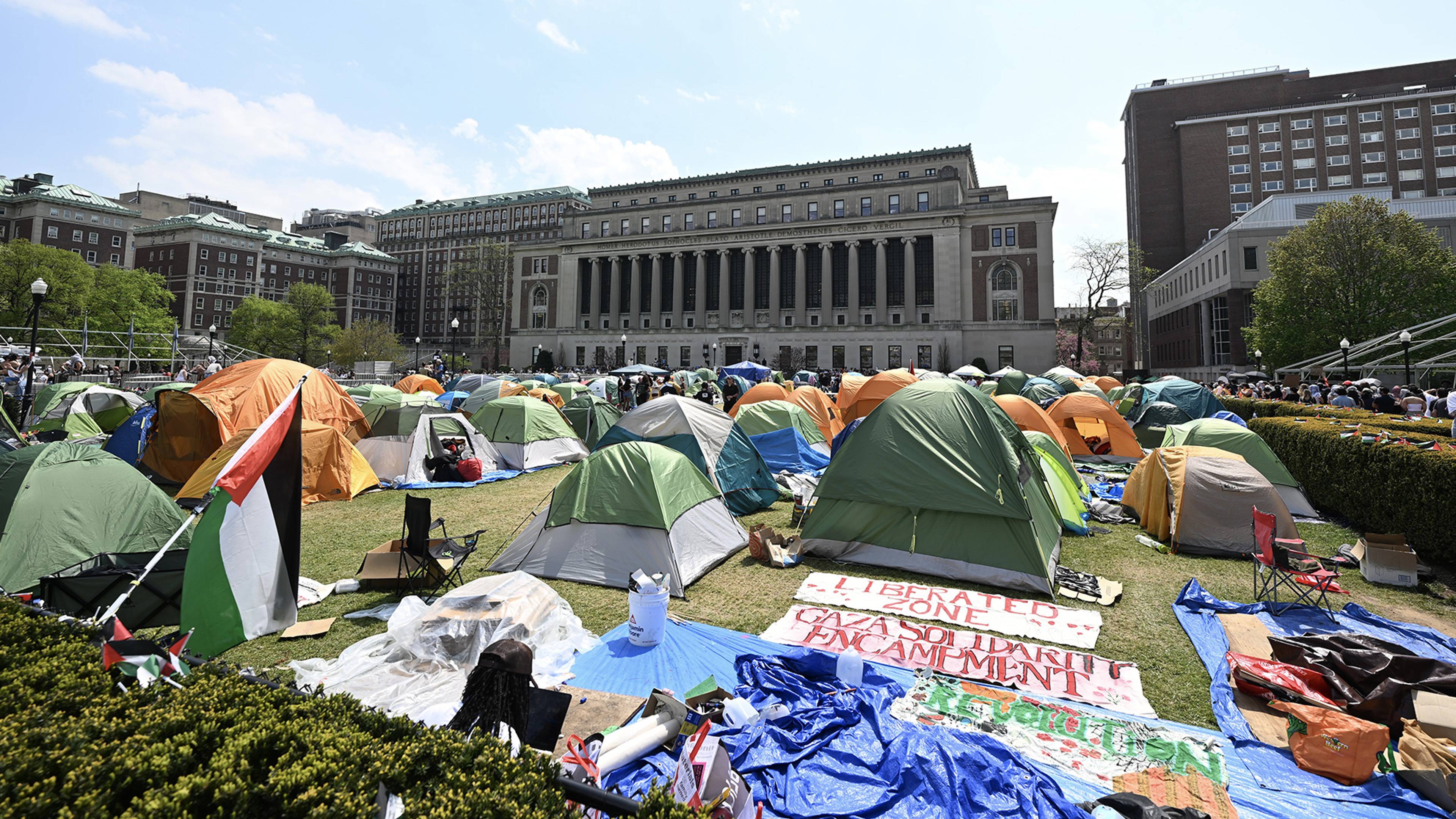 Four Ways of Confronting Islamophobia on Campus: Protecting Muslim Students from AbuseImam Khalid Latif, Dr. Salman Khan, Mazin Awad
 Why They Keep Calling Al-Aqsa the Temple Mount | Dr. Omar SuleimanDr. Omar Suleiman