Jump to:
Imam Tom Live
Why You Can’t Escape Organized Religion | Snapshots with Imam Tom Facchine

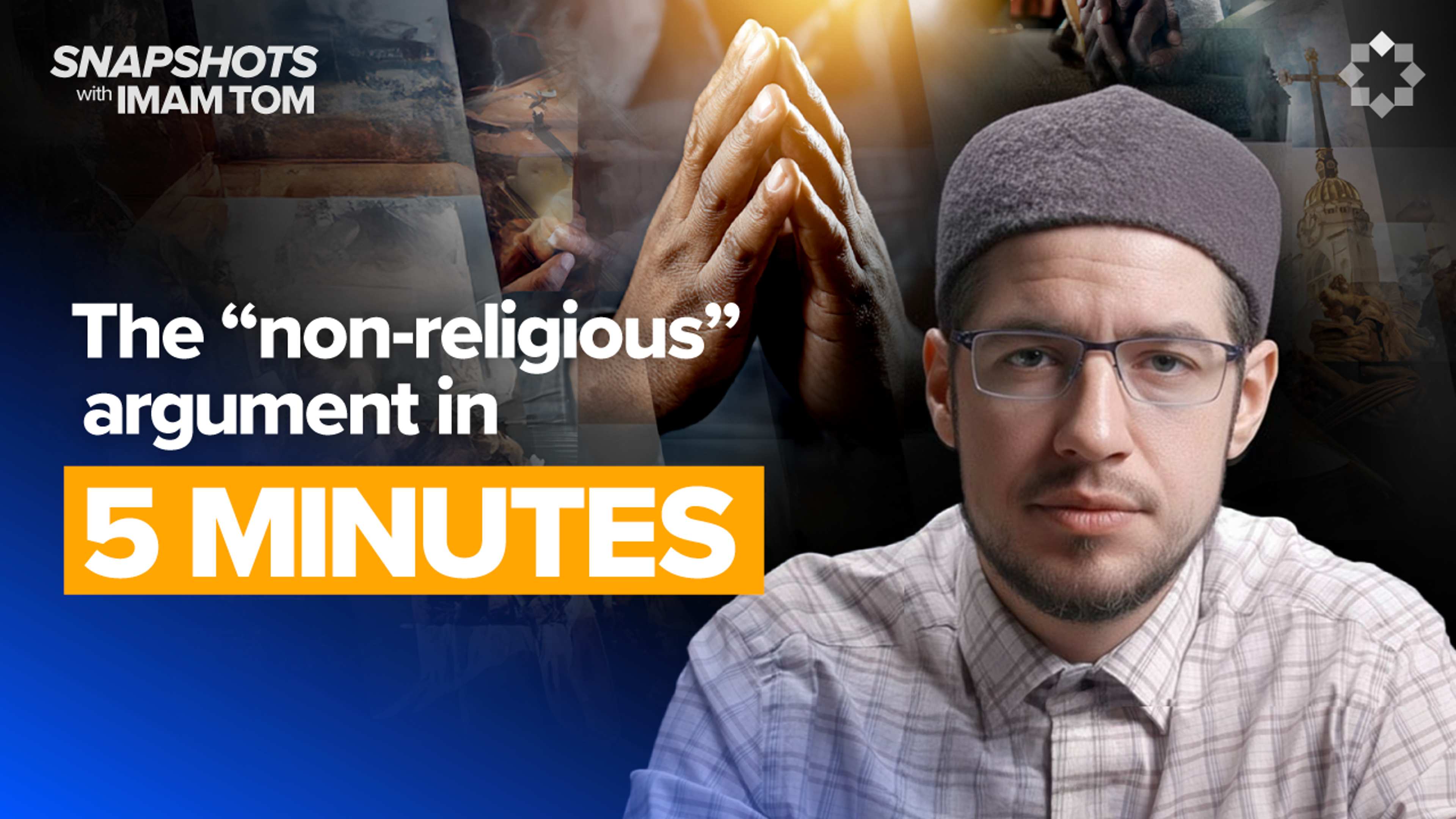
Trauma might have led them away from the idea of organized religion, but what happens when you dig deeper into that rejection? Do they actually have an issue with the structure of religion, or is there something deeper at play?
Imam Tom challenges the idea that it’s possible to navigate spirituality without guidance and presents questions to understand what’s most important when choosing faith.
This transcript was auto-generated using AI and may contain misspellings.
Some people say that they're spiritual but not religious. They say that organized religion is not really for them. This is a very appealing thought, but if you take
two seconds to think about it, it falls apart completely. And it shows us that there's something very important and true going on, but it's not what you think. So when people critique organized religion, they usually have had a
negative previous experience with one of the quote-unquote organized religions. And we'll talk about the problematic nature of that term in a second. Meaning that maybe you were a Christian, maybe you were a Jew, maybe you were something
else, and you had a negative experience and then that made you run away from it. I mean, I can relate. That was my experience of Christianity as well. Now for me, that set me on a path of discovery that led me to something
greater. But for a while, my idea was that all religions must be like the religion that I had experience with. That's the first mistake. All religions are not the same. There are differences. Some of them are actually better than
others, and better in the sense that they're more comprehensive, better in the sense that they're more intact, and they're more preserved, and that they're more authentic. And so there's really a very, very key question here is that the
person who says that they're spiritual but not religious, they're someone who has sensed something true, but they have misdiagnosed it. The thing that they sense is true is that there is some religious or spiritual malpractice going
on. They're able to feel and to sense that there's something off, that something is not authentic, that something is not right. However, the conclusion that they come to that, oh, all religion must be like this, or
organized religion. Whenever you mix human beings and religion, we hear this a lot. Human beings and religion don't mix. I'll figure out my spirituality myself. Which brings us to the second point is that there is no space in which
religious ideas are not organized. There's not like organized religion over here and what, disorganized religion over there. No, that's not how it works. You're really just talking about who is organizing your religion for you. If you
belong to a religion, then you are not the only person that's in control. There are other people, whether they're good or bad people, that's a separate question, but there's other people that have taken part in the shaping of your religious
practice and experience. If you are spiritual but not religious, or you're against organized religion, you're really just organizing your own religion. Right? You like meditation, you like yoga, you burn some incense sticks, whatever it
is, you're the one that's now picking and choosing. You're in the driver's seat. But the larger point here is that there's always going to be some organization of religion, whether it's you doing it exclusively or whether it's someone else
doing it. And if you have distrust of other people organizing your religion for you, why is it that you trust yourself to do it on your own? Don't you think that human beings can be misled?
Don't you think that human beings can be deluded? Don't you think that even things that you feel are right and true and good, you could potentially be very, very wrong about them? Right? We need a third party audit. You need a personal trainer in the gym.
You don't just go into the gym, start lifting weights and say, you know what? I think that's good enough. No, you need someone outside of yourself to give you a standard and to tell you, are you doing good enough or can you be doing more? Or are you doing too much? Right? This is important and it applies to religion as well.
And so what really is the heart of the matter is whether the religion is authentic or not. That if you're upset about other people having organized your religious
ideas or your religious experience for you, it's not necessarily that just anybody else was involved. It was if people interfered and meddled and changed what was actually a divine
revelation. Because in Islam, yes, there are people involved. There are people that recorded the hadith. There are people that recorded the Qur'an. There are people who authenticated them, people who read all of it and then extracted from it the essential things that you have to know, the creed and etc.,
etc. But what really matters is not whether people did that or not. It's whether they were faithful or not and whether that message actually reflects divine instruction or not.
So whenever religion, quote unquote, or that instruction departs from what is authentic divine guidance, that's what you're feeling and that's what's going to
be a problem. But your job is to, rather than try to be the master over all religion for yourself and be the one in the driver's seat selecting, making your personal playlist, I call this the playlistification of faith.
That's not your job. Your job is merely to find out which, if any, of these claimants to religion and religiosity and to represent the divine message, which of them are authentic? How would you be able to tell whether they're authentic?
That's rather what you should be concerned with rather than trying to take on everything yourself.