fbpixel
Preparing for Ramadan - Making the most in Shaban | Lecture by Sh. Mohammad Elshinawy
Is Islam to Blame for ISIS?
Is Islam to Blame for ISIS?

Islam’s Take on Modernity and Progress
Islam’s Take on Modernity and Progress

Prophet Muhammad - The Epitome Of Mercy
Prophet Muhammad - The Epitome Of Mercy

Cultivating Conviction (Yaqeen) - Mohammad Elshinawy
Cultivating Conviction (Yaqeen) - Mohammad Elshinawy

Why Some American Muslim Youth Are Doubting Their Faith
Why Some American Muslim Youth Are Doubting Their Faith

Rise up to Reclaim Our Narrative #SupportYaqeen
Rise up to Reclaim Our Narrative #SupportYaqeen

How Prophet Muhammad (PBUH) Dealt With His Enemies - Sh Omar Suleiman
How Prophet Muhammad (PBUH) Dealt With His Enemies - Sh Omar Suleiman

Dr. Jonathan Brown - How to Approach Hadith - Verifying and Understanding Hadith
Dr. Jonathan Brown - How to Approach Hadith - Verifying and Understanding Hadith

Religious Minorities Under Islamic Rule - Tesneem Alkiek

Religious Minorities Under Islamic Rule - Tesneem Alkiek

Reviving a Lost Sunnah: Adoption and Foster Care in Islam
Reviving a Lost Sunnah: Adoption and Foster Care in Islam

Reclaiming the Narrative About Our Prophet ﷺ | Part 1
Reclaiming the Narrative About Our Prophet ﷺ | Part 1

Reclaiming the Narrative About Our Prophet ﷺ | Part 2
Reclaiming the Narrative About Our Prophet ﷺ | Part 2

Why Do Innocent People Suffer? - Sh Omar Suleiman
Why Do Innocent People Suffer? - Sh Omar Suleiman

Repentance in Islam, Tawbah A Cornerstone of Faith - Roohi Tahir | 16th MAS-ICNA Convention

Repentance in Islam, Tawbah A Cornerstone of Faith - Roohi Tahir | 16th MAS-ICNA Convention

Dealing with Isolation: Learning from Islam’s Original Converts - Omar Suleiman | Lecture
Dealing with Isolation: Learning from Islam’s Original Converts - Omar Suleiman | Lecture

Does Islam Need Saving? An Analysis of Human Rights | Nour Soubani | 16th MAS-ICNA Convention
Does Islam Need Saving? An Analysis of Human Rights | Nour Soubani | 16th MAS-ICNA Convention

Islam, A Coherent Social Justice Tradition | Omar Suleiman | 16th MAS-ICNA Convention
Islam, A Coherent Social Justice Tradition | Omar Suleiman | 16th MAS-ICNA Convention

The Pursuit of Certainty - Sh. Yaser Birjas | Lecture
The Pursuit of Certainty - Sh. Yaser Birjas | Lecture

Seeds of Greatness: Malcolm X and Muhammad Ali
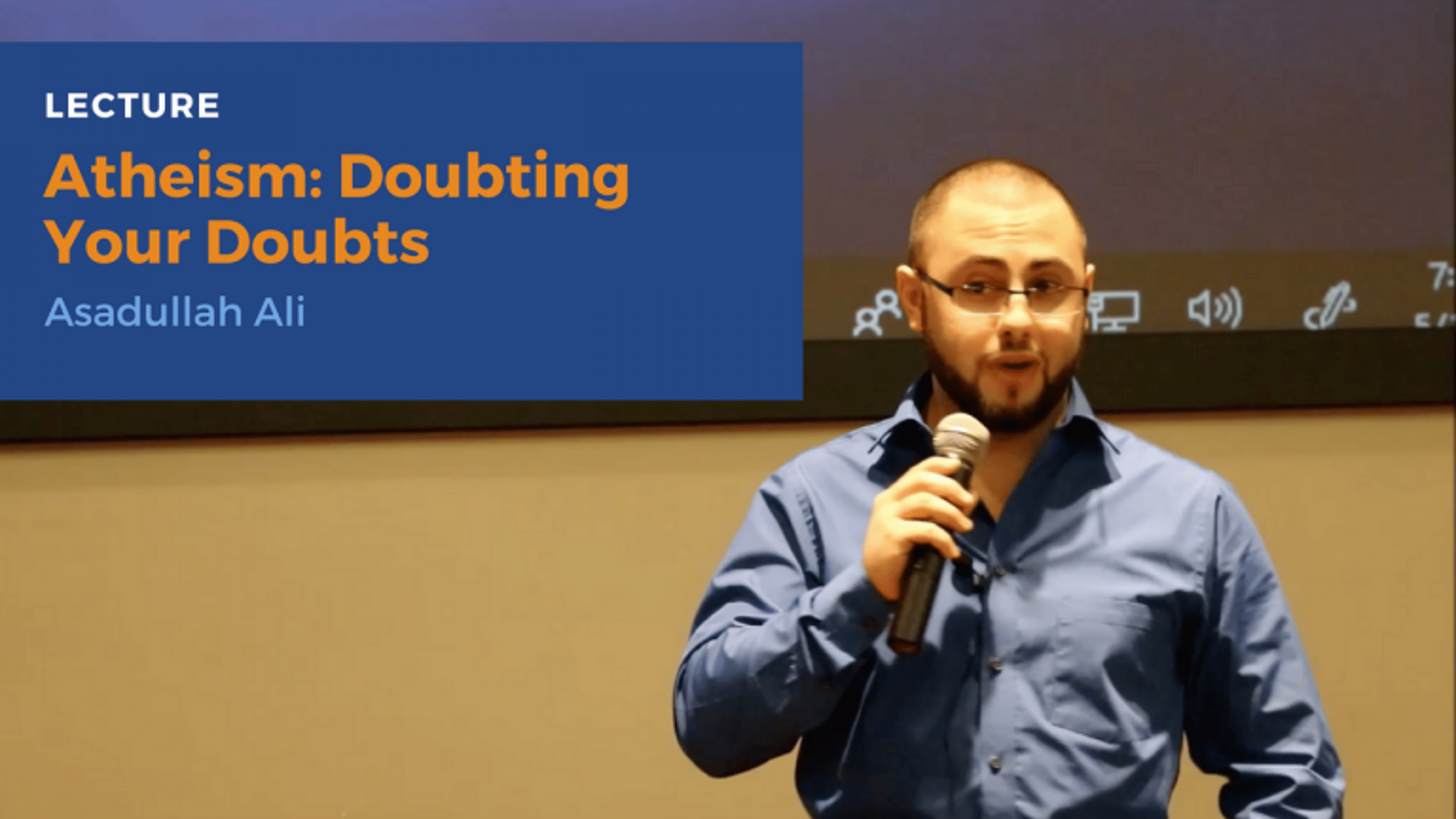
Seeds of Greatness: Malcolm X and Muhammad Ali

Atheism: Doubting Your Doubts - Asadullah Ali | Yaqeen in NY
Atheism: Doubting Your Doubts - Asadullah Ali | Yaqeen in NY

The Infinitely Merciful and the Question of Hellfire - Mohammad Elshinawy | YM Youth Conference 2017
The Infinitely Merciful and the Question of Hellfire - Mohammad Elshinawy | YM Youth Conference 2017

Appreciating Scholarship: Intro to Islamic Law - Tesneem Alkiek | Yaqeen in NY
Appreciating Scholarship: Intro to Islamic Law - Tesneem Alkiek | Yaqeen in NY

Station of Certainty | Lecture
Station of Certainty | Lecture

Personal Accountability in Life and Faith - Sh. Mohammad Elshinawy | Lecture
Personal Accountability in Life and Faith - Sh. Mohammad Elshinawy | Lecture

How Yaqeen Works to Educate the Public - Dr. Jonathan A.C. Brown | Making Principled Progress
How Yaqeen Works to Educate the Public - Dr. Jonathan A.C. Brown | Making Principled Progress

How Yaqeen Heals Internalized Islamophobia - Dalia Mogahed | Making Principled Progress
How Yaqeen Heals Internalized Islamophobia - Dalia Mogahed | Making Principled Progress

Contextualizing the Life and Mission of Jesus | Lecture
Contextualizing the Life and Mission of Jesus | Lecture

An Imam & A Pastor in Conversation on Loving Jesus
An Imam & A Pastor in Conversation on Loving Jesus

How Yaqeen is a Resource for Our Community - Sh. Omar Suleiman | Making Principled Progress
How Yaqeen is a Resource for Our Community - Sh. Omar Suleiman | Making Principled Progress

Conversations at The Carter Center: Harmonizing Religion and Human Rights
Conversations at The Carter Center: Harmonizing Religion and Human Rights

Meaningful Solidarity - Sh. Omar Suleiman | Lecture

Meaningful Solidarity - Sh. Omar Suleiman | Lecture

Combating Islamophobia with Marketing and Design | #SXSW19

Combating Islamophobia with Marketing and Design | #SXSW19

Racism in Our Ranks | Khutbahs with Purpose
Racism in Our Ranks | Khutbahs with Purpose

Spiritual Personality - Zohair Abdul-Rahman | 2018 Yaqeen/MAS Academic Conference
Spiritual Personality - Zohair Abdul-Rahman | 2018 Yaqeen/MAS Academic Conference

Conflict Resolution: The Line Between Justice and Peace - Sh. Omar Suleiman | Lecture
Conflict Resolution: The Line Between Justice and Peace - Sh. Omar Suleiman | Lecture

The Flexibility of Islamic Law - Tesneem Alkiek | 2018 Yaqeen/MAS Academic Conference
The Flexibility of Islamic Law - Tesneem Alkiek | 2018 Yaqeen/MAS Academic Conference

To Know Him is to Love Him | Introduction by Sh. Omar Suleiman
To Know Him is to Love Him | Introduction by Sh. Omar Suleiman

The Role of Parents in Instilling Faith - Roohi Tahir | Yaqeen/MAS Academic Conference
The Role of Parents in Instilling Faith - Roohi Tahir | Yaqeen/MAS Academic Conference

Perfection and Beauty | Episode 1 | To Know Him is to Love Him
Perfection and Beauty | Episode 1 | To Know Him is to Love Him

Hope and Potential | Episode 2 | To Know Him is to Love Him
Hope and Potential | Episode 2 | To Know Him is to Love Him

Bonds and Relations | Episode 3 | To Know Him is to Love Him
Bonds and Relations | Episode 3 | To Know Him is to Love Him

The Story of Hajar: Uncovering Certainty in Uncertainty - Sh. Omar Suleiman | Lecture
The Story of Hajar: Uncovering Certainty in Uncertainty - Sh. Omar Suleiman | Lecture

Gracious Dealings | Episode 4 | To Know Him is to Love Him
Gracious Dealings | Episode 4 | To Know Him is to Love Him

Gift Giving | Episode 5 | To Know Him is to Love Him

Gift Giving | Episode 5 | To Know Him is to Love Him

The Generous | Episode 6 | To Know Him is to Love Him
The Generous | Episode 6 | To Know Him is to Love Him

Navigating Adolescence - Dr. Altaf Husain | Reframing the Gender Question
Navigating Adolescence - Dr. Altaf Husain | Reframing the Gender Question

Keeping Masculinity from Trending Toxic - Dr. Jonathan Brown | Reframing the Gender Question
Keeping Masculinity from Trending Toxic - Dr. Jonathan Brown | Reframing the Gender Question

Why Does God Ask People to Worship Him? - Sh. Mohammad Elshinawy | Lecture
Why Does God Ask People to Worship Him? - Sh. Mohammad Elshinawy | Lecture

Addressing the Topic of Trauma and Faith - Sh. Omar Suleiman | ISNACON 2019
Addressing the Topic of Trauma and Faith - Sh. Omar Suleiman | ISNACON 2019

The Impact of Trauma on Faith - Sarah Sultan | ISNACON 2019
The Impact of Trauma on Faith - Sarah Sultan | ISNACON 2019

The Rising Tide of Atheism - Sh. Mohammad Elshinawy | ICNA 2019
The Rising Tide of Atheism - Sh. Mohammad Elshinawy | ICNA 2019

The Duha Approach: A New Model to Treat Trauma - Najwa Awad | ISNACON 2019
The Duha Approach: A New Model to Treat Trauma - Najwa Awad | ISNACON 2019

How Islam Addresses Grief - Dr. Altaf Husain | ISNACON 2019
How Islam Addresses Grief - Dr. Altaf Husain | ISNACON 2019

Understanding Traumatic Grief - Najwa Awad | ISNACON 2019
Understanding Traumatic Grief - Najwa Awad | ISNACON 2019

Calling Out to Allah With Meaning - Sh. Tahir Wyatt | Lecture

Calling Out to Allah With Meaning - Sh. Tahir Wyatt | Lecture

Slavery in Islam - Dr. Jonathan AC Brown | Lecture
Slavery in Islam - Dr. Jonathan AC Brown | Lecture

The Gift of Receiving Good Counsel - Dr. Hatem ElHaj | Lecture

The Gift of Receiving Good Counsel - Dr. Hatem ElHaj | Lecture

Roots and Implications of Pop Culture | Firm Roots
Roots and Implications of Pop Culture | Firm Roots

Effects of Islamophobia on the Brain - Dr. Jibran Khokhar | Firm Roots
Effects of Islamophobia on the Brain - Dr. Jibran Khokhar | Firm Roots

With Hardship Comes Ease | Dr. Omar Suleiman
With Hardship Comes Ease | Dr. Omar Suleiman

A Conversation with Afreen Fatima on the Plight of Indian Muslims | Dr. Omar Suleiman
A Conversation with Afreen Fatima on the Plight of Indian Muslims | Dr. Omar Suleiman

How the Prophet ﷺ Inspired Young People | Dr. Omar Suleiman
How the Prophet ﷺ Inspired Young People | Dr. Omar Suleiman

When the Qur’an Changes You | Dr. Omar Suleiman
When the Qur’an Changes You | Dr. Omar Suleiman

What Does Allah Really Want From Me? | Dr. Omar Suleiman
What Does Allah Really Want From Me? | Dr. Omar Suleiman

Fueling Your Faith: A Guide to Preparing for Ramadan | Dr. Omar Suleiman
Fueling Your Faith: A Guide to Preparing for Ramadan | Dr. Omar Suleiman

Be In This World A Stranger or a Wayfarer  | Dr. Omar Suleiman
Be In This World A Stranger or a Wayfarer | Dr. Omar Suleiman

Becoming the Best Version of Yourself | Dr. Omar Suleiman
Becoming the Best Version of Yourself | Dr. Omar Suleiman

Abu Bakr's (ra) Rare Speech | Dr. Omar Suleiman
Abu Bakr's (ra) Rare Speech | Dr. Omar Suleiman

To Love the Prophet ﷺ More Than Yourself | Dr. Omar Suleiman
To Love the Prophet ﷺ More Than Yourself | Dr. Omar Suleiman

Grieving Doctors of Gaza | Dr. Omar Suleiman
Grieving Doctors of Gaza | Dr. Omar Suleiman

Did the Prophet ﷺ See You in The Future? | Dr. Omar Suleiman
Did the Prophet ﷺ See You in The Future? | Dr. Omar Suleiman

Is Religion Making Us Complacent? I Dr. Omar Suleiman
Is Religion Making Us Complacent? I Dr. Omar Suleiman

Consumerism and The Inflation of Self | Black Friday | Dr. Omar Suleiman
Consumerism and The Inflation of Self | Black Friday | Dr. Omar Suleiman

Is Syria Really a Good Thing ? | Dr. Omar Suleiman
Is Syria Really a Good Thing ? | Dr. Omar Suleiman

Finding Solace Through Patience and Wisdom | Dr. Omar Suleiman
Finding Solace Through Patience and Wisdom | Dr. Omar Suleiman

Age is Nothing but a Number | Making An Impact | Dr. Omar Suleiman
Age is Nothing but a Number | Making An Impact | Dr. Omar Suleiman

Tested Like the Prophets | UK Tour Wembley Stadium Lecture by Dr. Omar Suleiman
Tested Like the Prophets | UK Tour Wembley Stadium Lecture by Dr. Omar Suleiman

Waiting for The Mahdi or A Miracle | Lecture by Dr. Omar Suleiman
Waiting for The Mahdi or A Miracle | Lecture by Dr. Omar Suleiman

Why Did Allah Mention The Number 19? Your Test of Faith | Dr. Omar Suleiman

Why Did Allah Mention The Number 19? Your Test of Faith | Dr. Omar Suleiman

Finding Resilience Beyond the Illusion of Power | Lecture by Dr. Omar Suleiman
Finding Resilience Beyond the Illusion of Power | Lecture by Dr. Omar Suleiman

Preparing for Ramadan - Making the most in Shaban | Lecture by Sh. Mohammad Elshinawy
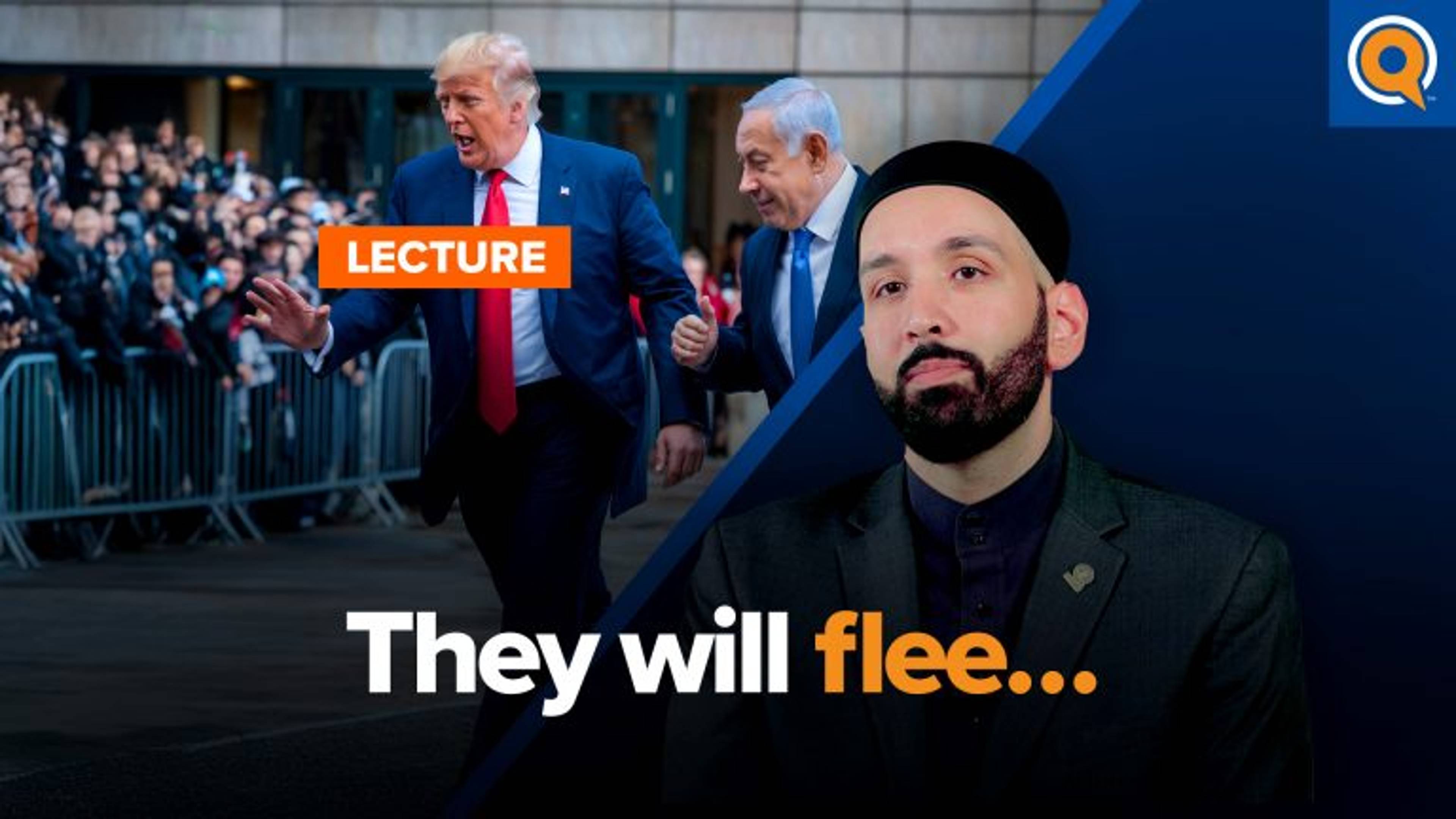
Playing

Preparing for Ramadan - Making the most in Shaban | Lecture by Sh. Mohammad Elshinawy

The People of Gaza Are Undisplaceable | Dr. Omar Suleiman
The People of Gaza Are Undisplaceable | Dr. Omar Suleiman

How to Reinvent Yourself This Ramadan | Dr. Omar Suleiman
How to Reinvent Yourself This Ramadan | Dr. Omar Suleiman

Kashmir Is Calling: Keynote at International War Crimes Tribunal, Bosnia | Dr. Omar Suleiman
Kashmir Is Calling: Keynote at International War Crimes Tribunal, Bosnia | Dr. Omar Suleiman

The Most Amazing Wedding I’ve Ever Been To | Dr. Omar Suleiman's South Africa Tour 2025
The Most Amazing Wedding I’ve Ever Been To | Dr. Omar Suleiman's South Africa Tour 2025

This Is What Made The Prophets Unstoppable | Lecture by Dr. Omar Suleiman
This Is What Made The Prophets Unstoppable | Lecture by Dr. Omar Suleiman

What Is Allah Preparing You For? | Lecture by Dr. Omar Suleiman
What Is Allah Preparing You For? | Lecture by Dr. Omar Suleiman

27th Night Special Du’a Stream by Dr. Omar Suleiman #LaylatulQadr
27th Night Special Du’a Stream by Dr. Omar Suleiman #LaylatulQadr

Khatm al-Quran Du’a 2026 by Dr. Omar Suleiman

Khatm al-Quran Du’a 2026 by Dr. Omar Suleiman

Lecture

Preparing for Ramadan - Making the most in Shaban | Lecture by Sh. Mohammad Elshinawy

In this insightful lecture, Sheikh Mohammad Elshinawy delves into the importance of purifying the heart in preparation for Ramadan. Discover practical guidance on self-reflection, sincere repentance, and spiritual growth, emphasizing the renewal of intentions and the cultivation of a closer relationship with Allah.

This transcript was auto-generated using AI and may contain misspellings.
You can't start elsewhere. We just heard our Lord subhanahu wa ta'ala, his words being recited by our good brother,
fasting has been prescribed for you, O believers, just as it was prescribed for those before you, so that you may attain taqwa.
So does that mean the believer needs to have taqwa, or does the believer already have taqwa, or the believer does not have taqwa unless they fast?
These are things to think about, and maybe we'll circle back to them later on in the lecture, in the talk, insha'Allah. But let us just remember, what is the purpose?
Ramadan is this priceless treasure that allows the believer to embrace his high season. By being a believer, we understand that there's no such thing as an off-season,
right? But there are high seasons, because Allah knows us, Allah knows how heedless we are, how distracted we get, how much stamina we lose in the mundanity and just the cycles and trials
of life. And so He grants us this enormous opportunity and stacks the odds in our favor
for new beginnings, for a refresh, for a reset, for a recharge, for a rediscovery of our purpose,
for a rediscovery also of our potential. And that is the single greatest benefit of the fast
that we find in that ayah, so that you will become more conscious of God, of Allah.
The very first benefit of fasting is restoring the centrality of Allah in our life. And Islam is so amazing, Allah, Islam is so wise, so genius, so perfectly fitting for us as human beings,
because the way anyone who simply fasts their month of Ramadan gets Allah re-centered in their
life is remarkable. It happens like subconsciously, you get rewired to where you're supposed to be. You know, and some of these examples are helpful. You think of like the first day of Ramadan,
you're driving out, you know, en route, halfway to your local coffee stop, not Starbucks, of course.
I need to restrain myself. I just had someone go on a tangent about why do the Muslims only boycott Starbucks? I think he likes Starbucks a lot. That's what the philosophical discussion
yielded in the end. He hates McDonald's, but McDonald's doesn't get trashed as much as Starbucks apparently in Muslim spaces. Anyway, focus, Mohammed, focus, okay.
You're driving to your local coffee shop and grabbing your coffee because that's your habit, right? And then all of a sudden you're like, oh no, wait, it's Ramadan. You turn, off we go.
What just happened there? Allah's in charge, right? That's it. You don't even feel it happening, but you're resetting this. The world doesn't revolve around me and sort of the passing winds
of my desires. You know, the hawa, the hawa, the desires come from the same word, root is the word hawa, the wind. You're no longer a feather in the wind. You're sort of anchored,
you're purposeful, you're centered around God, Azza wa Jal, Subhanahu wa Ta'ala. You know, and you think of those moments before Maghrib as well, like this bottle of water is absolutely
haram for me right now, right? Absolutely haram. And I'm making my dhikr and I'm making my du'a. And then a minute later, this same exact cup of water, bottle of water becomes not just halal,
it actually becomes mustahab. It's recommended and encouraged that you not delay in breaking your fast. What's the difference? Same, you know, the difference is he said so. It's the only
difference. Same bottle of water. And so restoring the centrality of Allah in your life,
that better not be mine. I'll take the coffee, but this is like royalty. I'm not the Persian emperor. Please don't put any grapes in my mouth. Jazakallah khair. Take it away because if it stays
up here for too long, what's going to happen is someone's going to hit it with the evil eye, and the first one I have, I'm going to choke on. So just, Jazakallah khair. Everyone's going to get it. I'll eat with everybody insha'Allah. So that's number one.
Number two, by the way, let's before we even jump to number two, because we're not in a rush. How much taqwa do you have? Right? Well, it depends. There's actually a way to measure it.
You need to know that every believer has taqwa. Because taqwa means to have pious restraint, right? Because of your piety, your recognition of God, your submissiveness with God, you're
going to restrain yourself from certain things. So taqwa basically boils down to your ability to avoid things for religious reasons, restraint, right? And every single Muslim does some of that.
We all are restrained from shirk. We all avoid worshipping idols or equating the creation with the creator or you don't perform shirk. So that in that sense, you have a taqwa that is manifested
or sort of embodied in your avoidance of shirk. So every believer is a person of taqwa. But there are levels to this. The next level of taqwa, we're oversimplifying just because that's helpful
sometimes, is enough taqwa to restrain you from committing the major sins. Allah Azza wa Jal,
when he speaks about our duty to compete in our racing for Jannah, this Jannah, he says,
this is Surah Ali Imran, it's been prepared, sitting there waiting for the competitors, it's been prepared for the people of taqwa. Part of that description in the second verse, after saying it's been prepared for the people of taqwa, it's now describing these people of taqwa.
They are those that if they commit a fahisha, fahisha here essentially is referring to a major sin. Or wrong themselves in any way, meaning by disobeying Allah, think of it as minor sins.
Then Allah comes to mind. So this ayah is implying that the people of taqwa, it's not that they're able to avoid every last major sin till the day they die. No, you can even be a person of
level two taqwa, if you will, a higher level of taqwa, and every once in a while your demons get to you, your weakness catches you off guard, and you commit even a major sin. But it doesn't say
they commit major sins, it says and if they happen to, so they're few and far in between. So if you're regularly missing a prayer, or sort of regularly performing one of the major
violations, whatever it may be, withholding your zakah, disrespecting your parents, not dressing appropriately, backbiting and lying, whatever it is, right? If this is not few and far in between,
then this means there is a major wound in your spiritual heart, a major deficiency in your taqwa.
Okay? So level two is essentially your ability to be conscious of Allah enough to be restrained from the major sins. You know it's very important in our Islamic discourse in general,
when we discuss Islam, da'wah, in our halaqas, in our gatherings, in our just, you know, informal discussions with each other, to never differentiate, never, I'm sorry, conflate,
confuse between empathy and between validation. And we do this sometimes. You want to give someone, no matter what violations they're committing right now, some sort of empathy. Like I understand,
and it's tough, and like shaitan is tag-teaming with your friends, tag-teaming with popular culture and everything else. You want to empathize. You don't want to, from a high horse, act like you can never be in that same pit. But we also want to not validate it. There is such a
thing called moral weakness. There is such a thing called sort of not enough taqwa. There is such a thing called a pit. It's a pit. We want to climb out of it, and we want others to climb out of it.
And so if we are not able to avoid the enormities, as the default, even if there might be some exceptions, then we're not at level two taqwa yet. Okay? There's another level of taqwa
that is referenced in the end of Surat al-A'raf, when Allah Azza wa Jal says,
The scholars say this is not just, this is a very elite class of people of taqwa.
The people of taqwa, once they're touched by a ta'if from shaitan. So what is a ta'if from shaitan? You know, tawaf? What's tawaf, guys? Like when you're going around the Kaaba. It's fast. It's pretty brief, right?
Just, you know, so shaitan blindsides you, basically. Quick jab, basically. He catches you off guard in a moment when you are blinking, right? Catches you spiritually blinking. So this
is a reference to an infrequent, minor, suboptimal decision or minor sin you commit. The people of taqwa, when shaitan just touches them in the least, they immediately come to their senses,
and swiftly, they have full insight again. Very quickly, they rebound from these things that aren't even major sins, right? All of a sudden, they're just insight. They see the hereafter in
front of them. Paradise, hellfire, grave, questions. It all sizes up very fast. They don't lose perspective for very long or on major issues. These become people that shaitan himself
doesn't want to attack anymore because they drive him crazy. Every time he makes a small suggestion, they punish him with doing 10 times as many good deeds than they were doing a minute ago
to compensate for it. May Allah make us of those people. Shaitan's afraid of these people. The more taqwa you have, the more shaitan is literally afraid of you. There are some people who shaitan
is restrained from them outside of Ramadan because of the levels of taqwa they have, which we have an opportunity to build in Ramadan, right? You see the equation now?
And of these people, of course, is Umar ibn Al-Khattab (رضي الله عنه). In Sahih al-Bukhari, Sa'd ibn Abi Waqqas narrated that the Prophet (ﷺ) said,
like how incredible you are, like, whoa, Umar, you're unbelievable. Every time shaitan sees you in a street, he takes the other street. Shaitan crosses the street literally.
As the youth say, he doesn't want the smoke, right? He doesn't want it. Because you know, that's the way it works, by the way. You know, Ibn Al-Qayyim, he says about shaitan, he says you will either punish shaitan
with your good deeds and your taqwa, your taqwa is like your flamethrower basically, or he will punish you in the hellfire. And that's what it means also when you read in the Qur'an. Many times people read in the Qur'an, people ask this question, it's a good
question. It means you're thinking, what does it mean shaitan is aduwwun mubeen, aduwwun mubeen, aduwwun, clear enemy, clear enemy, clear enemy. He's invisible. How is he a clear
enemy? Meaning he is the clearest in his enmity to you. Nobody is a clearer enemy for you. There's no negotiation with shaitan, there's no like maybe I can talk to him and he'll
start playing nice or like maybe I'll leave a cookie outside like we do for Santa or something. No! The moment you were born, he stabbed you. He declared war. Before you even knew your name he stabbed you. As the Prophet (ﷺ) said, right? That's why, one
of the reasons why the baby comes out screaming or immediately screams upon coming out. So it's a battle to the death and your greatest weapon in this battle is growing your taqwa.
Clear? Bismillah. It's not good I swear. Brother Hamdi, it's good I swear. Okay. So Ramadan
is the month to increase our taqwa and I hope I gave you a little bit of a gauge on how to measure your taqwa. It's time to pause and be honest with ourselves because if you can't measure something, it's a good management rule for your taqwa management. They use this in corporate management a lot. If you can't measure it, you can't improve it, right? If
you can't measure it, you can't improve it. A second very interrelated benefit of fasting
is fasting gives our spirits a chance to rise. You know, if we're constantly just thinking about food, it's not even just about being full. That's already a problem. I love Moroccans.
Any Moroccans in here? Except you guys. No, I'm just joking. I love all Moroccans. One of the nice parts of Moroccan culture is that you guys eat your iftar after taraweeh, right? You guys usually eat it at night or not you? You've been hanging out with too
many Egyptians, bro. So Moroccans, a lot of them, authentic Moroccans, a lot of times in some cultures, I think this is in the part of the Gulf culture as well, they'll have
something light. They'll break bread. They'll have some soup. Of course, water, dates, milk, the likes, but they won't have their meal meal. They won't go hard except after taraweeh.
And you should never really go hard as a Muslim, but at the very least, you don't sabotage your taraweeh, right? Because removing that constant cycle of how can I satiate my body,
you know, it's like my coffee and then my snack and then my, then we're going to Google what spot we're going to have for lunch and then like we got to try a new spot and this whole thing and then, you know, like grazing in between and the amount of, you know, mental
bandwidth that takes actually has spiritual detriment, has spiritual detriment. On the one side, you being full is already dangerous. That's why the Prophet (ﷺ),
warned us about full stomachs. And that's why, you know, Imam Ahmad, may Allah have mercy on him, when he was asked, can the heart sort of be soft and tender on a full stomach? He says, I don't see how that's possible. Like it's very, very unlikely. And this is
something, you know, I mean, you know how you feel brittle and fragile and broken and intimate in your du'a moments before iftar, then the moment you break your, your, not your wudu, your, your fast and you get up, it's already a little bit different. It's
even in the, I notice it like even in the two rakahs before maghrib, the du'a is just a little bit different. And so that reminds you of the push pull, you know, mechanism between the body and the spirit. You are not supposed to hurt yourself. Fasting is
haram if it's going to kill you, right? But the fasting does allow you not to taste hunger. We taste food all the time. But if you were to taste hunger, it can unlock for you new
horizons in your spirit. But if you're always just fixated on addressing the flesh that came from the earth and wants to eat more and more of the food that came from this earth,
because all food comes from the earth, our place of origin, even your, your Wagyu and your burgers are, they had grass, right? So it all, and likewise, your spirit is from
the heavens and it's looking for a heavenly experience. It's looking for what came from the heavens. And that is why the month of fasting where we try to downscale a little bit what we're eating, not just rearrange the schedule, same amount of calories, but
rearrange, you're supposed to downscale what you're eating a little bit. You're also connecting with the Quran, right? Body and spirit are supposed to switch places. Otherwise all year,
we've been suffocating the spirit, holding it down, allowing it sort of to be suppressed. Fasting is your opportunity to let it rise, let it taste taqwa because that's another
component of taqwa we should not fall short of recognizing and appreciating. Taqwa is the most enjoyable experience you can have because the same way your body sort of craves
food, drink, whatever else it may, your soul craves to love Allah and fear him and rely on him and have a relationship with him and see the veil sort of getting lifted little
by little, peeling away the layers between. That's the oxygen. That's the food. That's the drink. That's the exhilaration of the soul. And that's far eclipses the exhilaration
of the body. A person would effectively be dead if they would ignore the spirit altogether. That's why the Prophet (ﷺ), he said,
in the famous hadith of Musa, he said, the one who remembers his Lord, the one who doesn't remember his Lord is like the living and the dead. What is taqwa? Remembering your Lord, avoiding his prohibitions. Is there any greater remembrance of Allah than remembering him in your actions? Like you're remembering
him in your behavior. That is the remembrance of Allah. That is what brings your spirit back to life. So that's the second benefit. The third benefit very quickly of fasting
is that fasting is an exercise in moral restraint. Think of it in the context now between people, right? You all know the hadith about like, don't fight. And if someone fights you sort
of like, you know, deescalate it and say, I'm fasting and you all know this.
Fasting is patience and patience. Your capacity for patience is growable. And many people don't know that or many people refuse to remember that, you know, and the Prophet (ﷺ) brought us
teachings that remind us that no, it is possible. You know, the idea of like, I can't change just who I am. It's just my personality type. It's just this, that, and the third and not true. So many aspects of this are just not true. That's just sort of the easy way out.
It's a cheap way to end the conversation you don't want to have with yourself. Of where am I falling short in doing my part to improve myself morally, behaviorally. So he said,
(ﷺ), innama al-ilmu bith-ta'allum wa innama al-hilmu bith-tahallum wa innama as-sabru bith-tasabbur. That knowledge is only through learning, putting in the work,
right? And forbearance, putting up with offense, tolerating offenses is only through exercising forbearance and patience is only through exercising patience. It's a muscle to be grown. Sarah,
can I pick on you? Can I bother you? I'm so sorry. You remember why the relationship was between knowledge and morality in this hadith? You don't have to answer. No, it's fine. I'm
not just a bully. She's in my mishkat classes, one of our most dedicated students, masha'Allah. So I have to put her on the spot. Why do you think, okay, why do you think he said knowledge
is through learning and patience is through practicing patience? Anybody? Yes, sir. Okay.
So go ahead. Potentially, you're plagiarizing, you know that, right? And he doesn't have his
driver's license. Exactly. Okay. Now, these are both important angles. Anybody else? You see,
everyone knows that knowledge is through learning, right? It's almost like, why did he say that? We
all know the only way to learn, know something is to learn it, right? He's using that as sort of the analog. I'm not going to sort of use geeky terms here. I'm sorry. We all know that you can't
just say, listen, I'm just not smart. No, well, too bad. You got to learn. There's no such thing as I'm not smart. Yes, for sure. We have varying intellectual capacities. Okay. Well, you still got to try. You still got to go to school. No, I'm not sort of the intelligent type. Well, you still
got to max out in trying to, right? We all know this. No one accepts the excuse of that's just who I am when it comes to learning, when it comes to knowledge. But a whole lot of us try to pull
that excuse off when it comes to patience. So he's saying in the same way we will not accept, humans don't accept, I'm just not smart. We're going to say it's through learning. We all know
that's the only path. Likewise, patience, the only path to it is by exercising patience. It is a muscle to be grown and it can be grown and Allah gifts you Ramadan to show you you can. You can
stay away from the halal. You can't stay away from the haram, right? You can stay away from avenging yourself immediately even when sometimes it's fair, right? Not right now. I'm in a
boot camp. He's showing you, you can. And so practicing restraint is something that Ramadan is so powerful at inculcating in our personalities. The fourth and final one, and I'll be brief here
because I do want to pivot over to a similar subject, is that fasting benefits us in growing
our ability to care for others and to be selfless, right? No one was ever more generous than our
Prophet (ﷺ), right? But he was more generous than himself in Ramadan as Ibn Abbas (رضي الله عنه) said,
right? And there are many reasons for this. One of them is the fast itself. The other reason is Ibn Taymiyyah said is that you have increased nearness to the Quran and with your increased
nearness to the Quran you see yourself more and more as an agent of God, right? Not as an agent of self-serving pursuits. Some of us could be that. Never our Prophet (ﷺ). But he was even
increased in his selflessness (ﷺ). But let's just talk about the fasting itself. The Quran is for
another time, insha'Allah. The saying goes that a picture speaks a thousand words. We all know this, right? If I were to tell you people are struggling in Gaza right now, if you have a heart and you're
paying attention you will sort of be moved by this. But if I were to show you, that is a completely different story, right? As they say, the game-changer in the war of narratives when it
comes to Palestine is because social media has not just leveled the playing field. The Zionist side is basically telling the world what's happening and the Palestinian side is showing the world what's happening and so there's no contest anymore.
Right? May Allah be with them and allow for a quick vengeance to be seen by us to cure our hearts with it against their oppressors. Allahumma ameen.
May we see it within our lifetime. You like that du'a or no? Sid, I'm not going to hang out with you anti-Semites anymore.
I said may we see it within our lifetime. Allahumma ameen. Ya Rabb, may Allah make it a reality. Is that like a reference to seafood?
I'm trying to protect myself here, I got a long drive home. Seeing is so much more powerful than hearing, right?
But you know what's more powerful than seeing? Experiencing. And that is the power of the fast to carve in you long-standing empathy for those that
cannot break their fast at Maghrib time. It is not the primary function of the fast, it's one of the great wisdoms of the fast. I'm very glad by the way the Muslim community sort of stopped saying we fast so we can feel
how poor people feel because like that's not what the Qur'an says and that also doesn't make sense because the poor people need to be fasting as well so why are they fasting exactly, right? But is it one of the benefits? Yes it does.
It increases our ability to be empathic, to feel the suffering and the pain and the need of others, ourselves.
You know it was said that Yusuf (عليه السلام) during the famine, during the sort of the global hunger that was playing out during his adulthood, he would never eat.
He would refuse to eat until he fed everyone within reach, family and his relatives and the neighbors and everyone he could reach that day. And they would tell him sort of eat up, you need to strengthen yourself so you can be
a better servant of the people. He said I'm afraid to eat. I'm afraid to eat and forget what it feels like to be hungry. And there's some truth to this, right? There's always a balance but there is some truth to this.
And so building our capacity for empathy, not forgetting that we are not here to outdo
each other in our consumerism is a powerful, powerful, powerful bonus that we get out of a simple pillar of Islam, a basic entry level pillar of our great deen.
So how much of these four, because I said there's layers to it when I gave the example of taqwa, how much of these four will you get out of your fast? It depends on what you put into your fast. You think all people who fast, fast on the same level?
Absolutely not. Some of the scholars of the sulook or tazkiyah or tasawwuf, they say that fasting happens on three levels. There's going to be lots of threes tonight actually. It happens on three levels.
Level one is as-siyamu anil muftirat, for you to abstain from things that break your fast. If you do that, you stay away from the food and the drink and the marital relations and everything you know, inducing vomit and all that stuff.
If you do your basic homework, learn and you must learn where the red lines are or else how else do you submit to Allah when you don't know the framework of submission he expects from you? That's why knowledge and Islam are inseparable.
But once you do that, khalas, level one is in the books. But that level one does not mean you're going to be rewarded for your fast.
It just means Allah will not ask you why didn't you fast. It's a different issue. The validity of your fast from a legal perspective in Islamic law does not mean there's a fruit
that's coming out of your fast like the fruits we're talking about earlier in this talk, earlier tonight, right? It's not the same thing. The Prophet (ﷺ) said, rubba sa'imin laysa lahu min siyamihi illa al-ju'u wal-atash
Perhaps a fasting person, so he is fasting, he didn't nullify his fast, will get nothing out. There's no sort of fruit yielded. There's no benefit gained. There is no transformative experience happening.
Perhaps a fasting person will get nothing out of his fast except hunger and thirst. Like he's trying to tell us (ﷺ), do you really think that is why Allah ordained this on all the prophets to tell their people to fast so that our sugar
levels will go low and stuff just a little bit of hunger and like you think that's why it is? To become what is it hypo glycemic is the word? No one knows that I'm gonna make up words.
I think it's hypo or hyper which one is the hypo right? Dr. Badawi is here. Hypo? Yes, I got it right. So do you think that's the point of the fast?
A little bit of like chemical fluctuation in the bodies or no way. It's about this to bring you to a beautiful place. So that comes to level two. What is level two? There's a quite a parallel with the levels of taqwa I drew earlier right?
Level two is when you abstain fast from that which displeases Allah subhanahu wa ta'ala and that should be because like if we're staying away from the halal that should increase our
ability to stay even farther away from the haram and that is why these questions sometimes come that you know like Shaykh if if I did this or I did that or like I'm not wearing
this or I accidentally said that and does it break my fast? No it doesn't technically break your fast in terms of level one fasting right? Meaning at least according to the four madhab Ibn Hazm would disagree but according to the
four madhab you don't need to make up the day. It didn't invalidate your fast the way a food or drink would right? But it does mean there's the it did break the reward of your fast right?
You should be extra vigilant about the haram. Yes or else what are we doing? So that is the the second one sort of as-siyamu anil muharramat to stay away from the boundaries of Allah and that which he prohibited and deemed unlawful.
They said level three level three is as-siyamu don't get deflated don't get deflated as-siyamu
an ghayri Allah to stay away from everything but Allah subhanahu wa ta'ala. It's really beautiful for a lot of reasons but what does that mean?
That means you're no longer staying away from the things that may displease and anger Allah. You're not even avoiding what might like the gray area what might harm you in the hereafter.
Now you're so locked in it's a very ambitious station may Allah allow us to experience some of that say ameen. You're not staying away from what might harm in the hereafter no you're staying away from
whatever does not benefit me in the hereafter. Everything is mobilized towards the pleasure of Allah.
My sleep is for Allah my waking is for Allah my eating is for Allah my speaking is for Allah my silence is for Allah my thoughts and my reflection you're trying to do as much of that as possible.
That is the highest station it's a very beautiful station. That is the station 740 that is the station in which you are trying to be angelic you're
trying to be an angel and this is what will make you superior to the angels insha'Allah
right because think about Ramadan like even the Ramadan gradualism is very beautiful right you start off in this way and then by the last ten that's when he would stay up the entire night (ﷺ) and there's like laylatul qadr you know there's
a build up a gradual build up but you're pushing the hardest in the last ten right you're trying to fight off sleep. Can humans do without sleep? They can't do without sleep but you're trying.
Can humans do without food? They can't but you're trying. So it's culminating that's why just as easy as the example of the last ten it's culminating
this pursuit of the practice of the angels themselves and when you're trying to be an angel when I know I'm overusing this lately but the youth are always saying he's built
different she's built different right when the angels are built different yet you're trying to compete with them when you don't have what they have that makes you better
than them right or wrong? Of course it does like our imagine I'm locked up somewhere for ten years and you live in
a neighborhood with a bar for ten years should you praise me for not drinking alcohol for ten years no there was nothing available I'm waiting till get stuff for a lot but like I'm just you get it right but you you had to actively resist and go to war with your
self right against this and so likewise the angels don't need to sleep you said before la yafturuna 'an tasbihi laylan wa naharan they glorify Allah by night and by day they don't
grow tired the angels don't need to eat and so if you start competing with them even if you can't match them the fact that you're trying gives you an edge over them isn't that
beautiful and that is why as Abu Huraira (رضي الله عنه) is reported to have said when Allah says in
Surah Al-Bayyinah those who believe and work righteous deeds they are the best of creation
Abu Huraira said even better than the angels the angels are among the creation they're
created beings as well even better than the angels and this some scholars said is why in Surah Ar-Ra'd Allah Azza wa Jal said
وَالْمَلَائِكَةُ يَدْخُلُونَ عَلَيْهِمْ مِنْ كُلِّ بَابٍ in paradise may Allah gather us all there us and our loved ones the angels enter upon the people of paradise from every gate you know like a celebrity everyone's trying to
take a shot with like a snapshot with them or something the angels are entering from every gate but that's not the point here's the point of reference and they say what سَلَامٌ عَلَيْكُمْ بِمَا صَبَرْتُمْ
for the patience you've shown why the patience you've shown because the angels have never exhibited patience why have they never exhibited patience because they were never tempted they
don't have desires right they do this involuntarily lovingly without friction without resistance without challenge without the limitations of the human being and so when they see you
with all your limitations still pulling it off once you're rinsed of course because we are sinful creatures they're sinless once you're rinsed and you get to Jannah then there's only the pluses none of the minuses they're admiring you like man you had patience I was
it's amazing how'd you guys how do you humans do this that is the Cinderella story of sorry we're boycotting Disney I forgot but that is the story of the human experience with
our imperfections with all the wrong turns we make Allah will make it right for us insha'Allah and bring us to Jannah and have the angels themselves admire us we'll still arrive at the right location by his permission still be glorified and celebrated in front of the
sinless tireless angels and maybe this will be the last thing I share before I open the floor to questions this is also similar to what Ibn Taymiyyah reports
I forgot from who but he says that him and a number of the early Muslims used to say
that Allah created the animal with desires and no intellect
right obviously animals have intellect but they don't have our intellect Allah distinguished the human being with unique intellect desires and no intellect so they're impulsive creatures, compulsive creatures because they don't have the intellect to restrain them
he said and he created angels that have intellect of course they have intellect
and no desires there's no impulse temptation to pull them away from acting upon their intellect their pure intellects but then he created the human being in the middle
with desires and intellect and so if the human being allows his desires to smother to eclipse his intellect
they're not living for purpose they're not living you know to their potential as we said Ramadan does unlocks for us every year if they don't if their desires smother their intellect they become worse than the animals
because the animals couldn't do any better right and that is why you find all throughout the Qur'an like the donkey that carries a library like the dog that's always panting
they're just like livestock just like raising cattle rather they're more astray why? because they had the ability to not be that the animals didn't have any options
you did you didn't capitalize and show your gratitude to Allah for it so you become inferior to the animal he said on the flip side and if he reigns in his desires
restrains sabr fasting right if he restrains his desires using his intellect of course the intellect that Allah enlightens further with revelation right but you use your intellect to reign in your desires
you become superior to the angel so may Allah Azza wa Jal teach us that which benefits us and benefit us that which he has taught us and allow us to prepare correctly
if you know the value of what's in front of you you will not wait for it right you will prepare for it Anas (رضي الله عنه) said that when the month of Sha'ban which began tonight
walhamdulillah begins the Muslims meaning the sahaba that were around and the earliest tabi'een the generation after them the Muslims would all pay their zakah
they'd pay their zakah get it out now wankabbu ala al-masahif and they would fully dedicate themselves to their Qur'an because it's just too much at stake
I need to sort of prepare right I can't start stretching when marathon starts and Jabir (رضي الله عنه) another sahabi himself he used to say if you are fasting
make sure your hearing and your sight are fasting with you stop listening to those things now start unsubscribing from whatever's on your doom scroll feed now
right make sure fasting with you build up to it if you have to make sure fasting with you is your hearing and your sight he said and make sure your tongue is also fasting consistently
from lying and from any other sort of indecencies whether it's backbiting or vulgarity or otherwise make sure you're hearing your sight and your tongue are fasting and place yourself in a state
there should be visible to others about you the state of reverence, dignity, tranquility he said
and don't be that person that the day they're not fasting and the day they are fasting resemble each other, are equal a person who starts on day one or day 21 of Ramadan
usually becomes that person may Allah Azza wa Jall exclude us and you from not taking full advantage of what is in store ahead of us and allow us to see it Allahumma ameen