fbpixel
Umm Kulthum bint Ali (ra): Daughter of Nobility and Tragedy | The Firsts
The Firsts | The Forerunners of Islam

The Firsts | The Forerunners of Islam

Trendsetters, Revivers, and Strangers

Trendsetters, Revivers, and Strangers

Zaid Ibn Amr (ra): A One Man Ummah

Zaid Ibn Amr (ra): A One Man Ummah

Waraqa Ibn Nawfal: The First to Confirm Prophethood

Waraqa Ibn Nawfal: The First to Confirm Prophethood

Khadijah (ra): His First Love, Our First Mother
Khadijah (ra): His First Love, Our First Mother

Umm Ayman (ra): The Woman Who Never Stopped Caring

Umm Ayman (ra): The Woman Who Never Stopped Caring

Ali ibn Abi Talib (ra): Courageous & Steadfast

Ali ibn Abi Talib (ra): Courageous & Steadfast

The First Family: The Beautiful Marriage of Ali and Fatima
The First Family: The Beautiful Marriage of Ali and Fatima

The First Family - Part 2: From Love to the Pain of Death
The First Family - Part 2: From Love to the Pain of Death

Abu Bakr (ra): Second to None in the Pursuit of God

Abu Bakr (ra): Second to None in the Pursuit of God

Abu Bakr (ra) - Part 2: Setting His Own Standards
Abu Bakr (ra) - Part 2: Setting His Own Standards

Abu Bakr (ra) - Part 3: There Will Never Be Another One

Abu Bakr (ra) - Part 3: There Will Never Be Another One

The Plague that Killed Sahaba and the Coronavirus

The Plague that Killed Sahaba and the Coronavirus

Zayd Ibn Al Haritha (ra): Loved and Liberated

Zayd Ibn Al Haritha (ra): Loved and Liberated

Sumayyah (ra): The First Martyr

Sumayyah (ra): The First Martyr

Khabbab Ibn Al Aratt (ra) - Under Burning Hot Coals

Khabbab Ibn Al Aratt (ra) - Under Burning Hot Coals

Bilal ibn Rabah (ra): The Voice of Certainty

Bilal ibn Rabah (ra): The Voice of Certainty

Suhaib Ibn Sinan Al Rumi (ra): From Persia, to Rome, to Paradise

Suhaib Ibn Sinan Al Rumi (ra): From Persia, to Rome, to Paradise

Al-Arqam Ibn Abil Arqam: The House of Islam

Al-Arqam Ibn Abil Arqam: The House of Islam

Lubaba Bint Al-Harith (ra): The First Woman After Khadijah (ra)

Lubaba Bint Al-Harith (ra): The First Woman After Khadijah (ra)

Zaynab Bint Muhammad (saw): The First Daughter (ra)

Zaynab Bint Muhammad (saw): The First Daughter (ra)

Uthman Ibn Affan (ra): The Possessor of Two Lights

Uthman Ibn Affan (ra): The Possessor of Two Lights

Uthman Ibn Affan (ra) - Part 2: The Possessor of Two Lights

Uthman Ibn Affan (ra) - Part 2: The Possessor of Two Lights

Saad Ibn Abi Waqqas (ra): His Prayers Always Answered

Saad Ibn Abi Waqqas (ra): His Prayers Always Answered

Abdullah Ibn Masood (ra): A Mighty Legacy of Qur'an

Abdullah Ibn Masood (ra): A Mighty Legacy of Qur'an

Abu Dharr Al Ghifari (ra): Living and Dying Alone

Abu Dharr Al Ghifari (ra): Living and Dying Alone

Jafar Ibn Abi Talib (ra): Flying in Paradise

Jafar Ibn Abi Talib (ra): Flying in Paradise

Najashi - Ashama Ibn Abjar (ra): The Righteous King

Najashi - Ashama Ibn Abjar (ra): The Righteous King

Umm Salama (ra): A Separated Family (Part 1)

Umm Salama (ra): A Separated Family (Part 1)

Umm Salama (ra): A Legacy of Wisdom (Part 2)

Umm Salama (ra): A Legacy of Wisdom (Part 2)

Umm Habiba (ra): A Dream Come True (Part 1)

Umm Habiba (ra): A Dream Come True (Part 1)

Umm Habiba (ra) - Part 2: Royalty Redefined

Umm Habiba (ra) - Part 2: Royalty Redefined

Saffiyah Bint Abdul Mutallib (ra) : A Warrior Aunt

Saffiyah Bint Abdul Mutallib (ra) : A Warrior Aunt

Zubayr Ibn Awwam (ra): The Disciple

Zubayr Ibn Awwam (ra): The Disciple

Asma Bint Abi Bakr (ra) : The Possessor of Two Waist Belts

Asma Bint Abi Bakr (ra) : The Possessor of Two Waist Belts

Talha Ibn Ubaydillah (ra): The Living Martyr

Talha Ibn Ubaydillah (ra): The Living Martyr

Abu Hudhaifa Ibn Utbah (ra): Seeking Another Status

Abu Hudhaifa Ibn Utbah (ra): Seeking Another Status

Saalim Mawla Abu Hudhaifa (ra) : The Imam of the People of Quran

Saalim Mawla Abu Hudhaifa (ra) : The Imam of the People of Quran

Sawda Bint Zama’a (ra): The Prophet’s Joy

Sawda Bint Zama’a (ra): The Prophet’s Joy

Abu Ubaydah Ibn Al Jarrah (ra): The Trustworthy One

Abu Ubaydah Ibn Al Jarrah (ra): The Trustworthy One

Abdurrahman Ibn Awf (ra): A Generous Soul
Abdurrahman Ibn Awf (ra): A Generous Soul

Hamza Ibn Abdulmuttalib (ra): The Lion of Allah | The Firsts by Dr. Omar Suleiman

Hamza Ibn Abdulmuttalib (ra): The Lion of Allah | The Firsts by Dr. Omar Suleiman

Miqdad Ibn Aswad (ra) : Better Than A Thousand Men | The Firsts

Miqdad Ibn Aswad (ra) : Better Than A Thousand Men | The Firsts

Khawla Bint Hakim & Uthman Ibn Madhun: The Righteous Couple | The Firsts

Khawla Bint Hakim & Uthman Ibn Madhun: The Righteous Couple | The Firsts

Omar Ibn Al Khattab (ra) - The Convert Who Changed The World | The Firsts

Omar Ibn Al Khattab (ra) - The Convert Who Changed The World | The Firsts

Omar Ibn Al Khattab (ra): 10 Unique Virtues | The Firsts

Omar Ibn Al Khattab (ra): 10 Unique Virtues | The Firsts

Omar Ibn Al Khattab (ra): The Opening of Jerusalem | The Firsts with Dr. Omar Suleiman

Omar Ibn Al Khattab (ra): The Opening of Jerusalem | The Firsts with Dr. Omar Suleiman

Omar Ibn Al Khattab (ra): His Leadership, His Legacy, His Death | The Firsts

Omar Ibn Al Khattab (ra): His Leadership, His Legacy, His Death | The Firsts

Abu Jandal, Abdullah, & Suhayl Ibn Amr (ra) : Switching Sides | The Firsts

Abu Jandal, Abdullah, & Suhayl Ibn Amr (ra) : Switching Sides | The Firsts

Abdullah Ibn Umm Maktum (ra): After Abasa | The Firsts with Dr. Omar Suleiman

Abdullah Ibn Umm Maktum (ra): After Abasa | The Firsts with Dr. Omar Suleiman

Musab Ibn Umair (ra): The Man Who Gave It All | The Firsts

Musab Ibn Umair (ra): The Man Who Gave It All | The Firsts

Al-Shifa bint Abdullah (ra): The Healer and Scholar | The Firsts Shorts

Al-Shifa bint Abdullah (ra): The Healer and Scholar | The Firsts Shorts

Khunais ibn Hudhafah (ra): The First Husband of Hafsa (ra) | The Firsts Shorts

Khunais ibn Hudhafah (ra): The First Husband of Hafsa (ra) | The Firsts Shorts

Abdullah ibn Hudhafah (ra): The Man Who Wouldn't Flinch | The Firsts Shorts

Abdullah ibn Hudhafah (ra): The Man Who Wouldn't Flinch | The Firsts Shorts

Atika bint Zayd (ra) - The Wife of Many Martyrs | The Firsts Shorts

Atika bint Zayd (ra) - The Wife of Many Martyrs | The Firsts Shorts

Ayyash ibn Abi Rabiah (ra) - The Guilt Trip That Led To Captivity | The Firsts Shorts

Ayyash ibn Abi Rabiah (ra) - The Guilt Trip That Led To Captivity | The Firsts Shorts

Utbah ibn Ghazwan (ra) | The Humble Governor | The Firsts Shorts

Utbah ibn Ghazwan (ra) | The Humble Governor | The Firsts Shorts

Shurahbil Ibn Hasana (ra): The Scribe and Commander | The Firsts Shorts

Shurahbil Ibn Hasana (ra): The Scribe and Commander | The Firsts Shorts

Abdullah ibn Jahsh (ra): An Accepted Prayer | The Firsts Shorts

Abdullah ibn Jahsh (ra): An Accepted Prayer | The Firsts Shorts

Abu Ahmad Abd Ibn Jahsh (ra): The Other Blind Companion | The Firsts Shorts

Abu Ahmad Abd Ibn Jahsh (ra): The Other Blind Companion | The Firsts Shorts

Zaynab Bint Khuzayma (ra): The Mother of the Poor | The Firsts Shorts

Zaynab Bint Khuzayma (ra): The Mother of the Poor | The Firsts Shorts

Ukasha ibn al-Mihsan (ra): He Beat You To It | The Firsts Shorts

Ukasha ibn al-Mihsan (ra): He Beat You To It | The Firsts Shorts

Nuaym Ibn Abdullah (ra): Redirecting History | The Firsts Shorts

Nuaym Ibn Abdullah (ra): Redirecting History | The Firsts Shorts

Subay'a Al-Aslamiyya (ra): The Iddah of a Widow | The Firsts Shorts

Subay'a Al-Aslamiyya (ra): The Iddah of a Widow | The Firsts Shorts

Khalid Ibn Sa’id Ibn al-'As (ra): A Dream of the Prophet | The Firsts

Khalid Ibn Sa’id Ibn al-'As (ra): A Dream of the Prophet | The Firsts

Rayta Bint Al-Harith (ra): Poisoned on the Way | The Firsts Shorts

Rayta Bint Al-Harith (ra): Poisoned on the Way | The Firsts Shorts

Anisa, Al-Numan, and Amir (ra): On A Boat From Abysinnia | The Firsts

Anisa, Al-Numan, and Amir (ra): On A Boat From Abysinnia | The Firsts

Amir Ibn Fuhayra (ra): The Guide on the Hijrah | The Firsts

Amir Ibn Fuhayra (ra): The Guide on the Hijrah | The Firsts

Zinneera (ra) and Aflah (ra): The Tortured Ones | The Firsts

Zinneera (ra) and Aflah (ra): The Tortured Ones | The Firsts

Umm Kulthum Bint Uqbah Ibn Abi Muayt (ra): The Enemy's Daughter | The Firsts

Umm Kulthum Bint Uqbah Ibn Abi Muayt (ra): The Enemy's Daughter | The Firsts

Mihja, Umayr, and Ubayda (ra): The Martyrs of Badr | The Firsts

Mihja, Umayr, and Ubayda (ra): The Martyrs of Badr | The Firsts

Loving the Ansar | The Firsts

Loving the Ansar | The Firsts

As’ad Ibn Zurara (ra): The First Convert of Madinah | The Firsts

As’ad Ibn Zurara (ra): The First Convert of Madinah | The Firsts

Usayd Ibn Hudayr (ra): Transformed by the Quran | The Firsts

Usayd Ibn Hudayr (ra): Transformed by the Quran | The Firsts

Sa'ad Ibn Muadh (ra): The Man Who Shook The Throne | The Firsts

Sa'ad Ibn Muadh (ra): The Man Who Shook The Throne | The Firsts

Sa'ad Ibn Ubadah (ra): The Generous Chief | The Firsts

Sa'ad Ibn Ubadah (ra): The Generous Chief | The Firsts

Umm Sulaym (ra): Her Dowry Was Islam | The Firsts

Umm Sulaym (ra): Her Dowry Was Islam | The Firsts

Anas ibn Malik (ra): In Service of the Beloved | The Firsts

Anas ibn Malik (ra): In Service of the Beloved | The Firsts

Umm Haram (ra): When Dreams Come True | The Firsts

Umm Haram (ra): When Dreams Come True | The Firsts

Ubadah ibn al-Samit (ra): A Man Equal to a Thousand Men | The Firsts

Ubadah ibn al-Samit (ra): A Man Equal to a Thousand Men | The Firsts

Al Bara' Ibn Malik (ra): The Underestimated Hero | The Firsts

Al Bara' Ibn Malik (ra): The Underestimated Hero | The Firsts

Abu Ayyub Al Ansari (ra): The Host of the Prophet | The Firsts

Abu Ayyub Al Ansari (ra): The Host of the Prophet | The Firsts

Abdullah ibn Salam (ra): The Righteous Rabbi | The Firsts

Abdullah ibn Salam (ra): The Righteous Rabbi | The Firsts

Salman Al Farsi (ra): The Truth Seeker | The Firsts

Salman Al Farsi (ra): The Truth Seeker | The Firsts

Salman Al Farsi (ra): Back to Persia | The Firsts

Salman Al Farsi (ra): Back to Persia | The Firsts

Abu Darda (ra): The Scholar Who Wouldn't Sleep | The Firsts

Abu Darda (ra): The Scholar Who Wouldn't Sleep | The Firsts

Abdullah Ibn Rawahah (ra): The Warrior Poet | The Firsts

Abdullah Ibn Rawahah (ra): The Warrior Poet | The Firsts

Ka'ab Ibn Malik (ra): The Greatest Story of Repentance | The Firsts

Ka'ab Ibn Malik (ra): The Greatest Story of Repentance | The Firsts

Hassan Ibn Thabit (ra): The Master of All Poets | The Firsts

Hassan Ibn Thabit (ra): The Master of All Poets | The Firsts

Nusaybah bint Ka'ab (ra): The Woman Warrior | The Firsts

Nusaybah bint Ka'ab (ra): The Woman Warrior | The Firsts

Zayd ibn Thabit (ra): The Scribe of the Prophet ﷺ | The Firsts

Zayd ibn Thabit (ra): The Scribe of the Prophet ﷺ | The Firsts

Muadh Ibn Jabal (ra): Most Knowledgeable & Beloved | The Firsts

Muadh Ibn Jabal (ra): Most Knowledgeable & Beloved | The Firsts

Ubayy ibn Ka'b (ra): The Master of all Reciters | The Firsts

Ubayy ibn Ka'b (ra): The Master of all Reciters | The Firsts

Umm Waraqa bint Abdullah (ra): The Martyred Hafidha | The Firsts

Umm Waraqa bint Abdullah (ra): The Martyred Hafidha | The Firsts

Asma Bint Yazid (ra): The Orator of the Women | The Firsts

Asma Bint Yazid (ra): The Orator of the Women | The Firsts

Amr ibn Al Jamuh (ra): No Limping in Jannah | The Firsts

Amr ibn Al Jamuh (ra): No Limping in Jannah | The Firsts

Abdullah ibn Abdullah ibn Ubayy (ra): The son of the Chief Hypocrite | The Firsts

Abdullah ibn Abdullah ibn Ubayy (ra): The son of the Chief Hypocrite | The Firsts

Hanzala Ibn Abi Amr (ra) and Jameela (ra): When Angels Bathe You | The Firsts

Hanzala Ibn Abi Amr (ra) and Jameela (ra): When Angels Bathe You | The Firsts

Jabir ibn Abdullah (ra): The Orphan With 7 Sisters | The Firsts

Jabir ibn Abdullah (ra): The Orphan With 7 Sisters | The Firsts

Kulthum ibn al-Hadm (ra) and Sa'ad ibn Khaythamah (ra): The Hosts of Masjid Quba | The Firsts

Kulthum ibn al-Hadm (ra) and Sa'ad ibn Khaythamah (ra): The Hosts of Masjid Quba | The Firsts

Aisha bint Abu Bakr (ra): The Early Years of Sacrifice | The Firsts

Aisha bint Abu Bakr (ra): The Early Years of Sacrifice | The Firsts

Aisha bint Abu Bakr (ra): The Love Story | The Firsts

Aisha bint Abu Bakr (ra): The Love Story | The Firsts

Aisha bint Abu Bakr (ra): Slander and Death of the Prophet ﷺ | The Firsts

Aisha bint Abu Bakr (ra): Slander and Death of the Prophet ﷺ | The Firsts

Aisha bint Abu Bakr (ra): Legacy and Life after Rasulallah ﷺ | The Firsts

Aisha bint Abu Bakr (ra): Legacy and Life after Rasulallah ﷺ | The Firsts

Hafsa bint Umar (ra): Saved by Devotion | The Firsts

Hafsa bint Umar (ra): Saved by Devotion | The Firsts

Zaynab bint Jahsh (ra): The Longest Arm | The Firsts

Zaynab bint Jahsh (ra): The Longest Arm | The Firsts

Juwayriya bint al-Harith (ra): A Blessing to Her People | The Firsts

Juwayriya bint al-Harith (ra): A Blessing to Her People | The Firsts

Safiyya bint Huyayy (ra): A Heart of Gold | The Firsts

Safiyya bint Huyayy (ra): A Heart of Gold | The Firsts

Maymunah bint al-Harith (ra): A Blessed Wedding | The Firsts

Maymunah bint al-Harith (ra): A Blessed Wedding | The Firsts

Hudhayfah ibn al-Yaman (ra): The Secret Keeper | The Firsts

Hudhayfah ibn al-Yaman (ra): The Secret Keeper | The Firsts

Tufayl ibn Amr (ra): The Hidden Legend | The Firsts

Tufayl ibn Amr (ra): The Hidden Legend | The Firsts

Abu Huraira (ra): The Preserver of Hadith | The Firsts

Abu Huraira (ra): The Preserver of Hadith | The Firsts

Abu Musa al-Ash‘ari (ra): A Voice Like No Other | Sahaba Stories (The Firsts)

Abu Musa al-Ash‘ari (ra): A Voice Like No Other | Sahaba Stories (The Firsts)

Umm Ma’bad (ra): The Description of the Prophet ﷺ |  The Firsts

Umm Ma’bad (ra): The Description of the Prophet ﷺ | The Firsts

Suraqa ibn Malik (ra): The Bounty Hunter |  The Firsts

Suraqa ibn Malik (ra): The Bounty Hunter | The Firsts

Burayda ibn al-Husayb (ra): An Unlikely Convert | The Firsts

Burayda ibn al-Husayb (ra): An Unlikely Convert | The Firsts

The Amwas Plague | The Firsts Documentary Special

The Amwas Plague | The Firsts Documentary Special

Abu Dujana (ra): The Red Bandana | The Firsts

Abu Dujana (ra): The Red Bandana | The Firsts

Asim ibn Thabit (ra): Protector of Faith | The Firsts

Asim ibn Thabit (ra): Protector of Faith | The Firsts

Khubayb ibn Addiy (ra): A Prisoner of Many Miracles | The Firsts

Khubayb ibn Addiy (ra): A Prisoner of Many Miracles | The Firsts

Saeed ibn Amir (ra): Haunted by Murder | The Firsts

Saeed ibn Amir (ra): Haunted by Murder | The Firsts

Rabiah ibn Kab (ra): Falling in Love with the Prophet ﷺ | The Firsts

Rabiah ibn Kab (ra): Falling in Love with the Prophet ﷺ | The Firsts

Abu Saeed al-Khudri (ra): The Jewel of Madinah | The Firsts

Abu Saeed al-Khudri (ra): The Jewel of Madinah | The Firsts

Khalid ibn al-Walid (ra): Becoming the Sword of Allah | The Firsts

Khalid ibn al-Walid (ra): Becoming the Sword of Allah | The Firsts

Khalid ibn al-Walid (ra): The Legendary Military General | The Firsts

Khalid ibn al-Walid (ra): The Legendary Military General | The Firsts

Amr ibn al-As (ra): His Wicked Father and “Better” Brother | The Firsts

Amr ibn al-As (ra): His Wicked Father and “Better” Brother | The Firsts

Amr ibn al-As (ra): The Conqueror of Egypt | The Firsts

Amr ibn al-As (ra): The Conqueror of Egypt | The Firsts

Ikrimah ibn Abi Jahl (ra): The Pious Son of Pharoah | The Firsts

Ikrimah ibn Abi Jahl (ra): The Pious Son of Pharoah | The Firsts

Abu Sufyan ibn Harb (ra): Forgiving the Enemy | The Firsts

Abu Sufyan ibn Harb (ra): Forgiving the Enemy | The Firsts

The Prophet ﷺ’s Brother: Abu Sufyan ibn al-Harith (ra) | The Firsts

The Prophet ﷺ’s Brother: Abu Sufyan ibn al-Harith (ra) | The Firsts

Mothers of the Prophet ﷺ: Amina and Halima al-Sa’diyya | The Firsts

Mothers of the Prophet ﷺ: Amina and Halima al-Sa’diyya | The Firsts

Hakim ibn Hizam (ra): When Money Stops Mattering | The Firsts

Hakim ibn Hizam (ra): When Money Stops Mattering | The Firsts

When Allah Guided the Children of Abu Lahab | The Firsts

When Allah Guided the Children of Abu Lahab | The Firsts

The Most Honored Man By The Prophet ﷺ: Abbas ibn Abd al-Muttalib (ra) | The Firsts

The Most Honored Man By The Prophet ﷺ: Abbas ibn Abd al-Muttalib (ra) | The Firsts

Urwa ibn Masud (ra): The Chief Who Resembled Isa (as) | The Firsts

Urwa ibn Masud (ra): The Chief Who Resembled Isa (as) | The Firsts

The Prophet ﷺ’s Bodyguard: Mughira ibn Shu‘ba (ra) | The Firsts

The Prophet ﷺ’s Bodyguard: Mughira ibn Shu‘ba (ra) | The Firsts

Addas (ra) of Ta’if: The Brother of Yunus (as) | The Firsts

Addas (ra) of Ta’if: The Brother of Yunus (as) | The Firsts

The Jinn Who Became Muslim | The Firsts

The Jinn Who Became Muslim | The Firsts

Abu Bakra (ra): The Freed Slave of Allah | The Firsts

Abu Bakra (ra): The Freed Slave of Allah | The Firsts

Abu Mahdhura (ra): The Kid Who Mocked Adhan | The Firsts

Abu Mahdhura (ra): The Kid Who Mocked Adhan | The Firsts

The Children of Ta’if Who Stoned the Prophet ﷺ | The Firsts

The Children of Ta’if Who Stoned the Prophet ﷺ | The Firsts

A Foiled Conspiracy: Umayr ibn Wahb (ra) & Safwan ibn Umayyah (ra) | The Firsts

A Foiled Conspiracy: Umayr ibn Wahb (ra) & Safwan ibn Umayyah (ra) | The Firsts

Muhammad ibn Maslama (ra): The Knight of Rasulullah ﷺ | The Firsts

Muhammad ibn Maslama (ra): The Knight of Rasulullah ﷺ | The Firsts

Thumama ibn Uthal (ra): The most powerful Muslim of his time? | The Firsts

Thumama ibn Uthal (ra): The most powerful Muslim of his time? | The Firsts

Ka’b ibn Zuhayr (ra): The Story of the First Burda | The Firsts

Ka’b ibn Zuhayr (ra): The Story of the First Burda | The Firsts

Tulayha ibn Khuwaylid (ra): From False Prophet to Shaheed | The Firsts

Tulayha ibn Khuwaylid (ra): From False Prophet to Shaheed | The Firsts

Zayd ibn al-Khattab (ra): The Quiet Brother of Omar (ra) | The Firsts

Zayd ibn al-Khattab (ra): The Quiet Brother of Omar (ra) | The Firsts

Thabit ibn Qays (ra): Promised Jannah After A Sin | The Firsts

Thabit ibn Qays (ra): Promised Jannah After A Sin | The Firsts

Abbad ibn Bishr (ra): The Friend of the Qur’an | The Firsts

Abbad ibn Bishr (ra): The Friend of the Qur’an | The Firsts

Adi ibn Hatim al-Tai (ra): From Christian King to Companion | The Firsts

Adi ibn Hatim al-Tai (ra): From Christian King to Companion | The Firsts

Jarir ibn Abdullah (ra): The Yusuf of this Ummah | The Firsts

Jarir ibn Abdullah (ra): The Yusuf of this Ummah | The Firsts

Tamim al-Dari (ra): The Palestinian Sahabi That Met Dajjal | The Firsts

Tamim al-Dari (ra): The Palestinian Sahabi That Met Dajjal | The Firsts

Ammar ibn Yasir (ra): A Legacy of Sacrifice | The Firsts

Ammar ibn Yasir (ra): A Legacy of Sacrifice | The Firsts

Hasan ibn Ali (ra): The Beloved Grandson of the Prophet ﷺ | The Firsts

Hasan ibn Ali (ra): The Beloved Grandson of the Prophet ﷺ | The Firsts

Husayn ibn Ali (ra): Redefining Victory in Karbala | The Firsts

Husayn ibn Ali (ra): Redefining Victory in Karbala | The Firsts

Loving Husayn (ra) and Hating Yazid

Loving Husayn (ra) and Hating Yazid

Zaynab bint Ali (ra): A Voice of Courage | The Firsts
Zaynab bint Ali (ra): A Voice of Courage | The Firsts

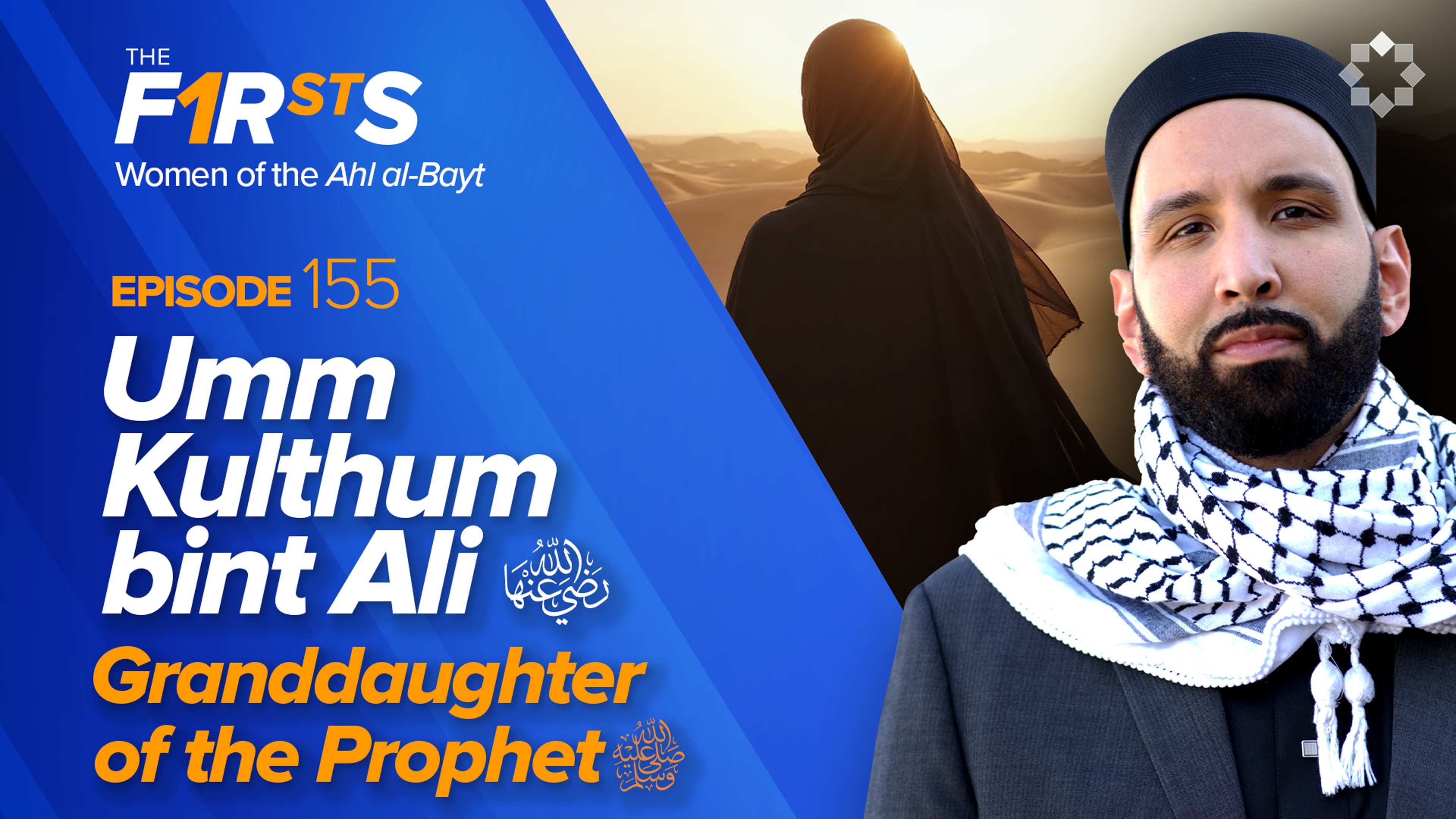
Umm Kulthum bint Ali (ra): Daughter of Nobility and Tragedy | The Firsts
Playing

Umm Kulthum bint Ali (ra): Daughter of Nobility and Tragedy | The Firsts

Abdullah ibn Ja’far (ra): The Story of My Mother’s Ancestor | The Firsts

Abdullah ibn Ja’far (ra): The Story of My Mother’s Ancestor | The Firsts

The Four Abdullahs (ra) Every Muslim Should Know | Dr. Omar Suleiman

The Four Abdullahs (ra) Every Muslim Should Know | Dr. Omar Suleiman

Abdullah ibn Abbas (ra): The Ocean of Knowledge | The Firsts

Abdullah ibn Abbas (ra): The Ocean of Knowledge | The Firsts

Fadl ibn Abbas (ra): How The Prophet ﷺ Made Him Lower His Gaze | The Firsts

Fadl ibn Abbas (ra): How The Prophet ﷺ Made Him Lower His Gaze | The Firsts

Ubaydullah ibn Abbas (ra): The Rich Little Brother | The Firsts

Ubaydullah ibn Abbas (ra): The Rich Little Brother | The Firsts

Qutham ibn Abbas (ra): The Prophet’s ﷺ Lookalike | The Firsts

Qutham ibn Abbas (ra): The Prophet’s ﷺ Lookalike | The Firsts

Abdullah ibn Umar (ra): The Prophet’s ﷺ Shadow | The Firsts

Abdullah ibn Umar (ra): The Prophet’s ﷺ Shadow | The Firsts

Abdullah ibn az-Zubayr (ra): The Defender of Mecca | The Firsts

Abdullah ibn az-Zubayr (ra): The Defender of Mecca | The Firsts

Urwa ibn az-Zubayr (ra): The First Muslim Historian | The Firsts

Urwa ibn az-Zubayr (ra): The First Muslim Historian | The Firsts

Abdullah ibn Amr (ra): The One Who Preserved The Sunnah | The Firsts

Abdullah ibn Amr (ra): The One Who Preserved The Sunnah | The Firsts

Usama ibn Zayd (ra): The Prophet ﷺ’s Chosen Grandson  | The Firsts

Usama ibn Zayd (ra): The Prophet ﷺ’s Chosen Grandson | The Firsts

Fatima bint Qays (ra): She Preserved Hadiths About Dajjal and Divorce | The Firsts

Fatima bint Qays (ra): She Preserved Hadiths About Dajjal and Divorce | The Firsts

Zayd ibn al-Arqam (ra): Exposer of Hypocrites | The Firsts

Zayd ibn al-Arqam (ra): Exposer of Hypocrites | The Firsts

Umayr ibn Sa’d (ra): The Young Man Who Exposed His Father | The Firsts

Umayr ibn Sa’d (ra): The Young Man Who Exposed His Father | The Firsts

Al-Baraa ibn Aazib (ra): With the Prophet ﷺ In the Trenches | The Firsts

Al-Baraa ibn Aazib (ra): With the Prophet ﷺ In the Trenches | The Firsts

Al-Baraa ibn Ma’roor (ra): He Made Two Good Mistakes | The Firsts

Al-Baraa ibn Ma’roor (ra): He Made Two Good Mistakes | The Firsts

Bishr ibn al-Baraa (ra): The Story Behind the Poisoning of the Prophet ﷺ | The Firsts

Bishr ibn al-Baraa (ra): The Story Behind the Poisoning of the Prophet ﷺ | The Firsts

Umm Mahjan (ra): The Woman Who Cleaned the Masjid | The Firsts

Umm Mahjan (ra): The Woman Who Cleaned the Masjid | The Firsts

Zahir ibn Haram (ra): Low Self-Esteem Until He Met the Prophet ﷺ | The Firsts

Zahir ibn Haram (ra): Low Self-Esteem Until He Met the Prophet ﷺ | The Firsts

Julaybib (ra): The Most Beautiful Story | The Firsts
Julaybib (ra): The Most Beautiful Story | The Firsts

Safina (ra): The Prophet’s ﷺ “Ship” | The Firsts

Safina (ra): The Prophet’s ﷺ “Ship” | The Firsts

Thawban (ra): The One Called “An-Nabawi” | The Firsts

Thawban (ra): The One Called “An-Nabawi” | The Firsts

Abu Muwayhiba (ra): What Happened on the Prophet’s ﷺ Final Nights | The Firsts

Abu Muwayhiba (ra): What Happened on the Prophet’s ﷺ Final Nights | The Firsts

Abu Rafi al-Qibti (ra): The Man Inside the Prophet’s ﷺ Home | The Firsts

Abu Rafi al-Qibti (ra): The Man Inside the Prophet’s ﷺ Home | The Firsts

Salma (ra) and Ubaydullah ibn Abu Rafi (ra): A Legacy of Serving the Ahl al-Bayt | The Firsts

Salma (ra) and Ubaydullah ibn Abu Rafi (ra): A Legacy of Serving the Ahl al-Bayt | The Firsts

Mariya al-Qibtiyya (ra): Mother of the Prophet’s ﷺ Last Child | The Firsts

Mariya al-Qibtiyya (ra): Mother of the Prophet’s ﷺ Last Child | The Firsts

The Firsts (Sahaba Stories) | The Forerunners of Islam

Umm Kulthum bint Ali (ra): Daughter of Nobility and Tragedy | The Firsts

“O daughter of the noble ones!” This was the way to address the younger granddaughter of the Prophet ﷺ, Umm Kulthum bint Ali (ra).

She was a woman of piety, like her mother Fatima (ra). In the glimpses we have into her life, we see her marrying Umar (ra) and then the sons of Ja’far (ra), stepping in to help a traveling woman give birth, patiently enduring the martyrdom of many loved ones, and dying alongside her son.

The Firsts is a weekly video series that chronicles the lives of the Sahaba (the companions of the Prophet ﷺ) during and after the time of the Prophet ﷺ.

This transcript was auto-generated using AI and may contain misspellings.
Let's move on to part two. The next daughter. So the next one is who? Umm Kulthum bint Ali
Umm Kulthum is younger than Zaynab. Umm Kulthum is younger than Zaynab. And her story begins almost immediately at the time of the death of the Prophet (ﷺ). So she would have been
born right before the death of the Prophet (ﷺ), probably too young to even remember the Prophet (ﷺ). And her story is also going to be a story marred with tragedy. But there's
something very specific that's going to define her. Umar bin al-Khattab, so this is the first
time we actually see the story of Umm Kulthum come up, bint Ali. Umar asked Ali to marry
Umm Kulthum bint Ali. Okay, so he proposed in marriage to Umm Kulthum bint Ali. So there are two things that come up. Number one, that ya Amirul Mu'mineen and Umm Kulthum,
that she's much younger than you, right? That there was a large age gap between the two. But the more predominant narration in this regard is actually where Ali (رضي الله
عنه) says, ya Amirul Mu'mineen, innama habastu banati ala bani Ja'far. I have reserved my daughters for the sons of Ja'far. Right? So I've reserved my daughters for the sons
of Ja'far, which is consistent with what Ali (رضي الله عنه) is doing. And he did with Zaynab (رضي الله عنها). Umar (رضي الله عنه) responds, and
he asks Ali (رضي الله عنه), and he says, ya Ali, let me marry her. Fawallahi maa ala dhahril ard rajlun yarusul min husni sahabatiha maa arsul. Oh Ali, let me marry
her. Because I swear by Allah that you will not find a man on the face of the earth who would care more for her companionship than I will. Meaning, not only do I really want
to marry her, but I'm going to treat her well. Right? I will treat your daughter well. And Ali (رضي الله عنه) responds, and he says, qad fa'alt, then let it be. Right?
And I'll marry her to you. So when Umm Kulthum (رضي الله عنها) reaches the time of marriage, she marries Umar (رضي الله عنه). And Umar (رضي الله
عنه) was so happy that he comes to the sahaba and he says, congratulate me. They said, why, ya Amirul Mu'mineen? He said, bi-ibnati Ali ibn Abi Talib, with the daughter of Ali ibn Abi Talib. And they said, okay, like, is it just because you got married? We don't, you
know, they got married all the time. Right? They didn't used to have the types of weddings that we have. Right? Like, is it really that? And he said that, no, because I heard the
Prophet (ﷺ) say that every lineage and every connection will be severed on the day of judgment, except for my lineage and my connection. Right? So now
I have another connection to the Messenger of Allah (ﷺ). And he said (رضي الله عنه), inni sami'atu annakum taqooloon, inni tazawwajtu li annaha
sagheera. Alaysa kathalik, he said, I'm hearing some of you say that I married her because she's young. Right? That I married her because she's young. He says, wallahi inni ma tazawwajtu
ha illa li hadithin qalahu rasoolallahi (ﷺ). He said, wallahi I did not marry her except for a hadith I heard from the Messenger of Allah (ﷺ). Inni sami'atu anabiyya (ﷺ) yaqool, I heard the Prophet (ﷺ)
say, kullu sababin, wa kullu nasabin, wa kullu sihrin. So follow it again closely. kullu sababin, wa kullu nasabin, wa kullu sihrin. The Prophet (ﷺ)
said, every sabab, every nasab, every sihr, yu'uda'u yawm al qiyamati illa sababi wa sihri. All of those three things will be cut off on the day of judgment except for my sabab,
my nasab, my sihr. What are these three words? What do they mean? kullu sabab, every sabab. A sabab is a cause, every cause. Meaning something that you earn or some sort of circumstance
or some sort of something that is pursued. Right? Every sabab is cut off. kullu nasab
and every lineage is cut off. Right? So lineage refers to the children and the grandchildren and beyond. Right? So every lineage is cut off on the day of judgment. It's every person
for themselves on the day of judgment. The mother will say my child on his own. The child will say my mother on her own. Everyone is cut off and separated on that day. wa kullu
sihr. Sihr is an in-law. Right? A connection through marriage. Right? So he's saying all of these things, the Prophet (ﷺ) says all three of these are cut off except for my sabab,
my nasab, and my sihr. So Umar (رضي الله عنه) said I already got two of them. So he said, I got the sabab because I'm a companion of the Prophet (ﷺ). To say the least,
right? Umar was given all sorts of glad tidings through his earnings, through his being with the Prophet (ﷺ), through the praise that he would receive. qala wa hasaltu nasab. And then I got
the nasab. Anni zawajtu, nati rasoolillahi (ﷺ). That I married the daughter of the Prophet (ﷺ).
Sorry. Hasaltu nasab. I achieved the nasab by marrying my daughter to the Prophet (ﷺ).
Right? Hafsa. He said, but the last thing that was missing was a sihr. Right? This last thing. So he says for that, I got married to Umm Kulthum (رضي الله عنها) so that now I could have nasab,
sabab, and sihr with the Prophet (ﷺ) so that I'm not cut off on the day of judgment from the Prophet (ﷺ) from any of the three ways. And so you have Umar (رضي الله عنه) now married to Umm Kulthum,
the daughter of Ali. May Allah be pleased with them all. Now what's narrated about this marriage in particular? For one Umar (رضي الله عنه) who gave Umm Kulthum a dowry of 40,000 and that was to honor
her lineage. And this was something that Umar (رضي الله عنه) had in him to honor Ahlul Bayt. Right? So he would give Al-Hassan and Al-Hussain, may Allah be pleased with them, the portion of their father Ali,
even though they were not people of Badr, they didn't check the boxes that others checked in terms of the earnings to honor that lineage. And there are multiple instances in this regard.
So that's the first thing. The second thing is that some of the famous incidents that would take place with Umar (رضي الله عنه) after his khilafah, she's in the background of those things. Okay?
She bore him two children. So they had Zayd ibn Umar and Ruqayya bint Umar. So I want you to
think about how interesting this is. Ali (رضي الله عنه) is a grandfather to the children of Umar (رضي الله عنه).
Right? SubhanAllah how these connections are being made. Ali (رضي الله عنه) is the grandfather to the children of Umar (رضي الله عنه). And he's the father-in-law of Umar (رضي الله عنه) now as well, in the way that this all works out.
Zayd, Zayd, if you go back to Zayd ibn al-Khattab, Zayd was the name of the brother of Umar,
who was this incredible man that Umar (رضي الله عنه) would say about him that he was better than me. Right? He beat me to Islam. He beat me to shahada. So he gets a Zayd ibn Umar from Umm Kulthum and Ruqayya
is the daughter of the Prophet (ﷺ), the sister of Umm Kulthum bint Muhammad (ﷺ). So you have another Ruqayya into the family. And if these names are getting you lost, then I'll just, don't worry
about it. Just to give you enough context as to what is happening here. So what's one of those famous incidents that's narrated by Umar and Umm Kulthum together in this regard? What's it like
to have this granddaughter of the Prophet (ﷺ) that is now married to Umar (رضي الله عنه). And one of the
famous night patrols of Umar (رضي الله عنه) where he would go out, he came across this really beaten up old
tent. So remember Umar used to go out at night when he was the khalifa and he would check up on the different parts of his ummah. And so he goes out and he sees this old tent and he sees this
man that's sitting outside the tent and the man is deeply stressed out. And there's a woman that's on the inside that's moaning in pain. So Umar (رضي الله عنه) who asked the man, what's going on? So he says,
you know, but carry, you know, go on and go on about your business basically. He doesn't know who Umar is. Right? He doesn't realize he's talking to the khalifa. He says, it's my business. Don't
worry about it. So Umar (رضي الله عنه) insists and he says, what's going on? So the man says, please go on. And Umar (رضي الله عنه) said, I insist that you tell me what's happening. I want to help you. So he says,
my wife is giving birth. So Umar (رضي الله عنه) says, is anyone with her? He says, no, she's alone.
So this woman is delivering inside the tent and basically they're travelers. They don't have anything. They don't know anybody in the city. And they're basically just set up on the outskirts
of Medina and Umar (رضي الله عنه) happens to be the one that comes upon them. Umar (رضي الله عنه) says, do you have any food? You got any supplies? He says, no, we're traveling. Just pitch the tent and she's giving
birth. So Umar (رضي الله عنه) goes home to Umm Kulthum bint Ali, his wife Umm Kulthum. And he says, oh, daughter of the noble ones, refers to her in that way. And he says,
do you want some good deeds that Allah has driven your way? That's a great way to get your spouse to do something good, by the way. Right? Do you want some really great ajr? Right? That Allah (سبحانه وتعالى) has
driven your way. So she says, of course, what is it? So he says, come with me. There's a woman that's giving birth. Let's go help them out. So Umar (رضي الله عنه) takes some flour. He takes some animal
fat. He takes some things basically to cook for them, puts it on his back. Umm Kulthum (رضي الله عنها) goes
out with Umar (رضي الله عنه). This is Umm Kulthum, the granddaughter of the Prophet (ﷺ) and Khadija
the daughter of Ali (رضي الله عنه) and Fatima (رضي الله عنها), the sister of Al-Hassan and Al-Hussain, may Allah be pleased with them. And they're just acting like they're normal people helping out these two people that
are on the outskirts of Medina. So they go there and Umm Kulthum goes in and basically helps the woman deliver her baby. While Umar (رضي الله عنه) tells the man, he says, go ahead and start up a fire. And
Umar (رضي الله عنه) starts to cook for him. And then Umm Kulthum yells out to Umar (رضي الله عنه) at some point,
O leader of the believers, tell the man that his wife gave birth to a son. It's a boy and that his wife is doing well. And that's when he realizes that that's the Khalifa that's with me, that's
cooking for me. And the wife is inside just helping this random lady deliver her baby. And SubhanAllah that shows you that these people never felt like they were above, neither because of ranks that
were given to them. In the case of Umar (رضي الله عنه), like how many times the Prophet (ﷺ) elevate his status, nor the lineage like Umm Kulthum could have easily said, you know who I am, right? She didn't feel
too proud due to her lineage. Umar (رضي الله عنه) did not feel too proud due to his accolades. This is the way that this noble family goes out and helps people. And so the man looks at him and says, Amirul
Mu'mineen, like you're the leader of the believers, the commander of the believers. Umar (رضي الله عنه) says, yeah, yeah, yeah, take the pot and go give it to your wife. You know, take some dinner and go take
it inside to your wife. And then Umar (رضي الله عنه) said, tomorrow I need you to come to me. I live here. I need you to come to me and I'm going to give you some money as well as a pension for your new child.
Right, to allot some sort of a pension for your newborn child. So this is a woman that is born in the end of the life of the Prophet (ﷺ), who really comes to be in her adulthood,
is a young bride of Umar (رضي الله عنه). And then she witnesses the assassination of her husband Umar at a very young age. Tragedy once again. She was one of those who was nursing the wounds of Umar
(رضي الله عنه) because Umar was stabbed multiple times. And he's also the father of her two children, two young children. So she's going to be a young widow with two young children. She's nursing the
wounds of her husband and her husband passes away (رضي الله عنه). Tragically, she goes back home to be with
Ali (رضي الله عنه) with her two young children. What happens next in the life of this woman? There's one story
SubhanAllah shows you the mindset of Ahlul Bayt once again, that at some point Ali (رضي الله عنه) becomes
the Khalifa. And Ali (رضي الله عنه) appointed Amr ibn Salama as the governor of Asfahan.
And he came back to Ali (رضي الله عنه) and he was carrying some butter and some honey. He had some containers
of butter and honey. And Umm Kulthum asked for two vessels of the honey and
that butter. And Ali (رضي الله عنه) when he finally got to the whole selection of everything that he brought, right?
For the benefit of the Muslims, Ali (رضي الله عنه) said, is anything missing? And he mentions two vessels that your daughter just requested. It's not a big deal, right? This is the granddaughter of the Prophet (ﷺ),
the blood of the Messenger of Allah (ﷺ), the blood of Ali and Fatima. It's not a big deal. Ali (رضي الله عنه) says, absolutely not. So he asks the traders to estimate how much was missing. So he goes to two vessels
and he returns the two vessels and she had only taken from the top of the honey at that point. He says, how much would you estimate that the honey that was taken from this bottle is worth?
So he said about three dirhams. So he goes and he takes three dirhams and he pays the traders. That we, the family of the Prophet (ﷺ), we operate with a sense of a different level of dignity.
Now, as per Ali's methodology, after Umar, he went back to marrying her to the children of who?
Ja'far, right? So he marries her to Awn ibn Ja'far. Then Awn ibn Ja'far dies.
So she's a widow again. Then Ali marries her to Muhammad ibn Ja'far. Again, another son of Ja'far.
Then Muhammad ibn Ja'far dies. She's been a widow now three times. Then what do you think Ali does? He marries her to another son of Ja'far.
And this is Abdullah ibn Ja'far, (رضي الله عنه), whose wife Zaynab bint Ali had passed away at that point. Because obviously it's haram to marry two sisters at the same time.
So Ali, (رضي الله عنه), marries his daughter Umm Kulthum, (رضي الله عنها), to Abdullah ibn Ja'far, (رضي الله عنهما). So SubhanAllah, this one woman married Umar al-Khattab
and she ended up marrying three sons of Ja'far ibn Abi Talib. And she actually said something, it's really, SubhanAllah, it's actually profound. But it shows you some of her character.
The mother, if you go back to the life of Abu Bakr as-Siddiq and Ja'far, the mother is Asma bint Umais. Asma bint Umais is also one of those famous widows. Because she was married to Ja'far, then Abu Bakr, then Ali.
So all three of these sons of Ja'far are her kids. So you know what she used to say? She says, wallahi inni astahi min Asma. She said, I'm shy for my mother-in-law Asma.
Matawaladaha'indi, two of her sons died with me. Wa akhaafu an yamoota thalithu'indi, I'm afraid that her third son will die with me as well. Like SubhanAllah, two of her kids, two of her sons die being married to me.
And I'm afraid that her third son will die as well while being married to me. But Allah Subhanahu Wa Ta'ala would decree it, that she would instead pass away while her husband was still alive.
And it was tragic. How does she pass away? So one night, there was a dispute that occurred amongst Banu Adi. Banu Adi is the tribe of Umar bin Khattab (رضي الله عنه).
And her son Zayd bin Umar, now growing up, he goes out to try to stop the skirmish. So there's a fight that's happening at night between people, late at night.
And Zayd goes out, the son of Umar, the son of Umm Kulthum, to try to solve things between them. In the process of trying to solve things between them,
Zayd got hit in the head and died. So they come to her that night and they say to her, Inna lillahi wa inna ilayhi raji'oon.
Your son Zayd was trying to solve people's problems, got into the skirmish, trying to stop people from fighting. And he got hit in the head with something and he died.
And so she started to cry and she died the very same night. Another tragedy in the household of the Prophet (ﷺ). This is the last one, SubhanAllah, look at all of the children of Ali and Fatima.
May Allah be pleased with them. And the next morning, the janazah would be prayed upon her and her son together. And Abdullah bin Umar, this is actually where we take some of the fiqh
of how you pray upon a woman and her son. Abdullah bin Umar (رضي الله عنهما), led the janazah of both Zayd bin Umar as well as Umm Kulthum bint Ali.
Zayd was placed closest to him and Umm Kulthum was placed ahead of Zayd. And the positioning of the head as we do, the imam standing at the middle of the woman's body,
at the head of the male body, all of that is sorted out. And he leads their janazah in Al-Madinah al-Munawwara. And so they are buried in Al-Baqee'. May Allah Subhanahu Wa Ta'ala be pleased with them.
And just an amazing woman, an amazing human being, the granddaughter of the Prophet (ﷺ) and a perfect woman Khadija, the daughter of Amir al-Mu'mineen Ali and Sayyidatun Nisa al-Jannah Fatima, the wife of Amir al-Mu'mineen Umar,
the sister to Amir al-Mu'mineen al-Hassan and the sister to al-Shaheed al-Imam al-Hussein. Like every, look at all of the people that came into her life and what she would have witnessed and what Allah Subhanahu Wa Ta'ala put in her way.
And the last note that I'll put here is when the ignorant start to try to revile and say things about the companions of the Prophet (ﷺ).
Many people would not have known that Ali (رضي الله عنه) married his daughter Umm Kulthum (رضي الله عنها) to Umar al-Khattab (رضي الله عنه), had children, right? And so I'll just mention this last story
because we've reached the time of Isha. That there was a man by the name of Ahmed ibn Ubawahi and he was someone that used to curse the companions of the Prophet (ﷺ), supposedly in the name of loving Ahlul Bayt. You can't curse the companions in the name of loving Ahlul Bayt
because Ahlul Bayt loved the companions of the Prophet (ﷺ). It's so contradictory. And so as he's coming, he's a new Muslim, someone who converts and he's converted in the midst of fitna and he's making these bold claims.
Someone walks up to him and says, I just realized that Ali married his daughter to Umar al-Khattab like nothing else. Married his daughter to Umar al-Khattab and had his grandkids. And he said, really? He said, I didn't know that.
And because of that, he makes tawbah and he spends basically the rest of his life seeking forgiveness from Allah Subhanahu Wa Ta'ala and giving charity as it was said and weeping over all the times he let his tongue loose on the companions
of the Prophet (ﷺ). So we love the family of the Prophet (ﷺ) we love the Khulafa Ar-Rashidin, we love the companions of the Prophet (ﷺ) and we take from SubhanAllah
these stories of trial and tribulation that Allah Subhanahu Wa Ta'ala tests those whom he loves most. And so surely what they went through was a sign of their noble rank. May Allah Subhanahu Wa Ta'ala send his peace and blessings
upon the Messenger of Allah (ﷺ) and his family. May Allah Subhanahu Wa Ta'ala be pleased with the companions of the Messenger of Allah (ﷺ). May Allah join us with our beloved Messenger (ﷺ), his family and his companions
and all of the prophets and the noble ones and the martyrs and the highest of all the Firdaws Al-A'la Allahuma Ameen. JazakumAllahu Khair Wassalamualaikum Warahmatullahi Wabarakatuhu